
Away vs Rimowa Luggage: Materials, Warranty & Value
Away builds practical polycarbonate hardside luggage for the value-conscious traveler; Rimowa builds grooved, aviation-grade aluminum and compressed-polycarbonate cases with a century of heritage. This is a factory-workshop read on what each is actually made of, what the build genuinely costs, how the warranties really compare, and whether the Away vs Rimowa price gap is worth paying or mostly label.
In the Away vs Rimowa comparison, you are choosing between two honest but different propositions: Away sells a genuinely well-built polycarbonate carry-on with a limited lifetime warranty at a mainstream price, while Rimowa sells a premium, repairable, heritage case – mostly aviation-grade aluminum – carrying a much higher price and a 5-year international warranty. Here is the density. An Away carry-on typically lands around $275-325 (approx.), a Rimowa polycarbonate (Essential) case around $650-900 (approx.), and a Rimowa aluminum case around $1,200-2,000+ (approx.). The material story is the core of the gap: Away uses a 100% polycarbonate (PC) shell; Rimowa’s famous line is aluminum – a grooved, aviation-grade alloy first made famous by the Topas case – plus a separate compressed-polycarbonate line for buyers who want the brand at a lighter, less-expensive material. At factory level a polycarbonate hardside carry-on builds roughly at $25-55 (approx.), while an aluminum-shell case builds closer to $60-120 (approx.) because the raw metal, pressing and finishing cost far more – and the retail price then adds the brand, the heritage, the distribution and the retail margin. Away launched in 2015 as a direct-to-consumer brand built around value and a lifetime warranty; Rimowa was founded in 1898 and has carried an LVMH badge since 2016. If you want a durable, modern polycarbonate case that clearly earns its price, Away is the stronger value. If the aluminum build, the heritage and the repairability are part of what you are buying, Rimowa is the one – at roughly five to seven times the price.
TL;DR / Quick Answer
- Why is Rimowa so much more expensive than Away? Two reasons: the material and the brand. Rimowa’s signature aluminum shell (grooved, aviation-grade alloy) costs far more to source, press, finish and repair than the polycarbonate that Away uses, and Rimowa carries over a century of luggage heritage and a luxury-group (LVMH) position. Away is a direct-to-consumer polycarbonate play built on value and a lifetime warranty.
- Is Away good quality luggage? Yes for its price. A 100% polycarbonate shell, telescoping handle, 360-degree dual spinner wheels, TSA lock and an interior compression system are a genuinely good, standard hardside build – made by the same factory networks that supply mainstream premium luggage. It is durable, light and fair value.
- Is Rimowa worth it? Only if you value the aluminum build, the heritage and the repairability enough to pay a large premium. For pure “carry my stuff reliably,” it is mostly paying for the material story and the name – a well-built polycarbonate case gives you most of the function at a fraction of the price.
- What about the warranties? Away offers a limited lifetime warranty (defects, not airline damage or normal wear); Rimowa offers a 5-year international warranty (terms in effect as of 2026) with a global repair service. Away’s warranty mirrors its lighter, cheaper, replace-on-defect positioning; Rimowa’s reflects a repair-and-keep-for-decades aluminum product.
- Factory verdict: both are standard, high-volume luggage builds. A polycarbonate hardside carry-on and an aluminum-shell case are both buyable near factory cost under your own label – the aluminum simply costs more to build. You are not comparing a “real” bag to a “fake” one; you are comparing two real builds with very different material and brand price tags.
1. Two Philosophies, Two Materials
Before the tables, understand what each brand actually is. Away was founded in 2015 in New York as a direct-to-consumer luggage company – its pitch was a modern, well-built, reasonably-priced hardside case with thoughtful packability and a lifetime warranty, sold straight to travelers online. Its signature is the polycarbonate (PC) shell case with an integrated telescoping handle, 360-degree dual spinner wheels, a built-in battery in many carry-on sizes, a magnetic or TSA lock, and an interior compression system with a removable laundry bag. It is practical, modern and value-driven.
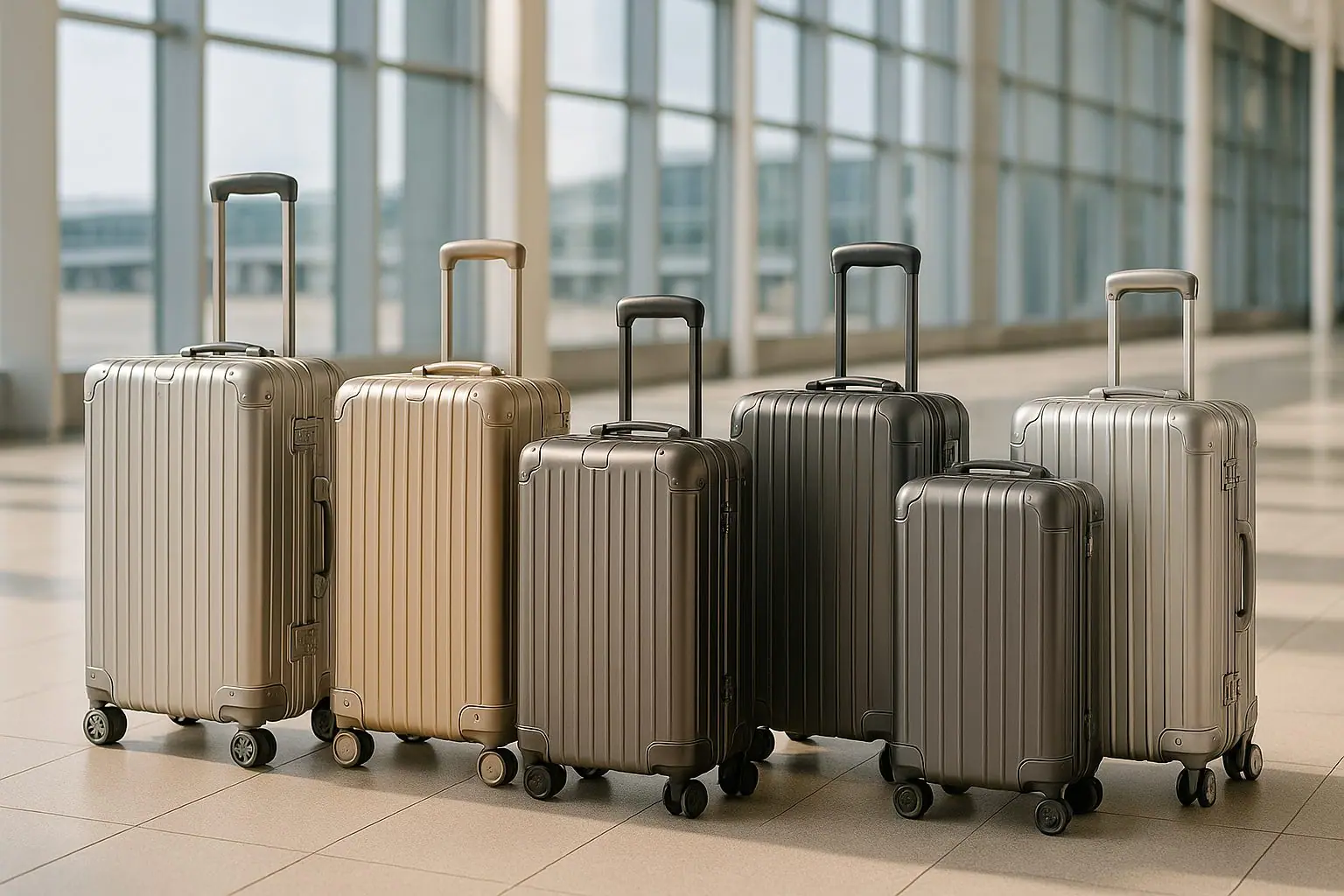
Rimowa is a different animal – it dates to 1898, founded in Cologne, Germany, and it grew famous for the grooved aluminum suitcase (the Topas and its successors). The trademark grooved “cabin” design started as a way to strengthen thin aluminum with ribs, and it became the most-recognized luggage look on the planet. Since 2016 Rimowa has been part of the LVMH luxury group, and today it sells both aluminum cases (the heritage line, heavier and premium-priced) and Essential cases made of compressed polycarbonate (lighter, cheaper, still premium-priced).
So the Away vs Rimowa comparison is really a philosophy split: practical, light, value-first polycarbonate versus premium, repairable, heritage-aluminum. Both are genuinely built, but they are built for different buyers, and the material gap drives most of the price gap.
2. Away vs Rimowa: Material-by-Material
Here is a realistic, typical side-by-side of the two builds and the material tiers between them, so the price gap makes sense (typical trade figures, not a specific SKU or season):
| Aspect (typical) | Away (polycarbonate) | Rimowa Essential (PC) | Rimowa aluminum (heritage) |
|---|---|---|---|
| Shell material | 100% polycarbonate (PC) | Compressed polycarbonate | Grooved aviation-grade aluminum alloy |
| Signature look | Smooth hardside shell | Smooth hardside shell | Ribbed/grooved aluminum, “cabin” pattern |
| Weight / feel | Light (~7-8 lbs carry-on) | Light | Heavier, solid, premium feel |
| Durability | Good impact & crack resistance | Good impact & crack resistance | Very high structural rigidity; dents rather than cracks |
| Wheels | 360-degree dual spinner wheels | Multiwheel spinner system | Multiwheel spinner system |
| Handle / lock | Telescoping handle, TSA/combination lock | Telescoping handle with stop, TSA lock | Telescoping handle, TSA lock |
| Typical carry-on price (approx.) | $275-325 | $650-900 | $1,200-2,000+ |
| Rough base build cost (approx.) | $25-55 | $30-60 | $60-120+ |
Three rows decide the story. First, the shell – polycarbonate is a tough, glassy thermoplastic that is cheap to mold and gives great impact and crack resistance per dollar; aluminum is a raw metal that costs far more to source, press into panels with ribs, anodize or finish, and handle in assembly, and it is heavier. Second, the repair model – a dented aluminum case is often repairable and polished back, which suits a vintage/heritage product, while a cracked PC shell is more often replaced. Third, the label – there is a huge brand gap: Away is a 2015 value-first startup, Rimowa is a century-old luxury luggage house under LVMH. Both factors together explain why a Rimowa aluminum case starts where an Away carry-on ends and goes several times higher.
3. Factory View: What Each Case Actually Costs to Build
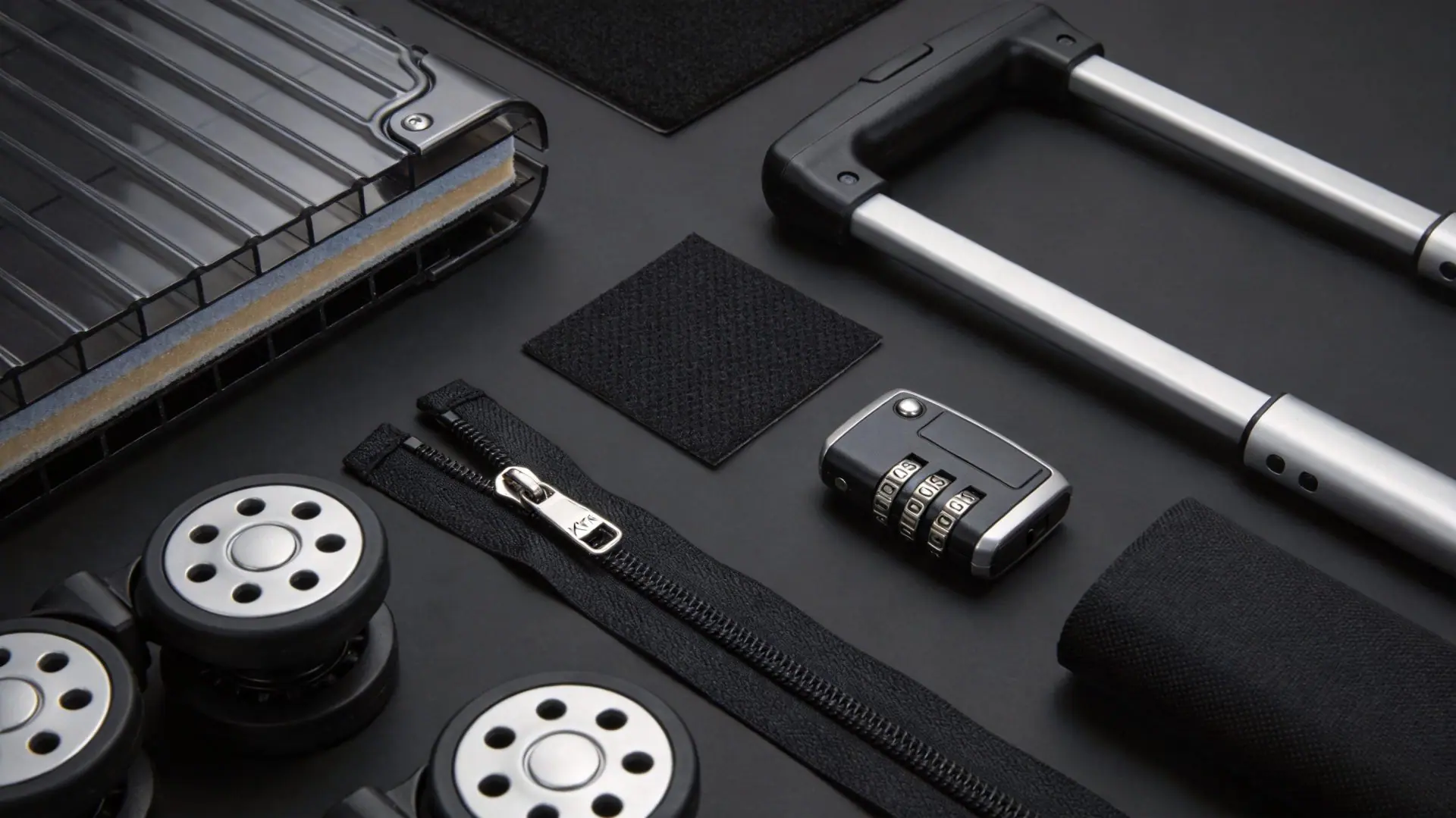
From a luggage factory’s costing sheet, an Away-style polycarbonate carry-on and a Rimowa-style aluminum case are the same product family built two ways – and the aluminum genuinely costs more at every step. Here is a realistic bill-of-materials for each (typical, not a specific SKU):
| Build component (typical) | PC hardside (like Away) – cost per case (approx.) | Aluminum hardside (like Rimowa) – cost per case (approx.) |
|---|---|---|
| Shell material | $6-14 (molded PC panels) | $25-55 (aluminum sheet + ribs/pressing + anodize) |
| Wheels & telescoping handle | $5-10 | $6-12 |
| TSA lock, hinges, hardware | $3-8 | $5-12 |
| Lining, straps, compression & pockets | $5-12 | $8-16 |
| Assembly, wheels/battery wiring & QC labour | $6-11 | $16-25 |
| Packaging & trims | $1-3 | $2-5 |
Add those up and a well-built polycarbonate hardside carry-on lands around $25-55 (approx.) at factory level, while an aluminum case lands around $60-120+ (approx.) – before the brand, the warranty marketing, distribution, retail markup and import. On an Away $275-325 (approx.) bag the build is a healthy share; on a Rimowa $1,200-2,000+ (approx.) aluminum case the build is a small share and the overwhelming majority is the material story, the heritage, the luxury positioning and the retail stack. The aluminum is genuinely more expensive to build – that part is real – but the largest single slice of the Rimowa price is brand and position, not raw aluminum.
4. Warranty Showdown: Away Lifetime vs Rimowa 5-Year
The warranty is one of the biggest things travelers compare, and it is worth getting right. Away offers a limited lifetime warranty on its luggage covering defects in materials and workmanship for the useful life of the product – it does not cover normal wear, cosmetic damage, or airline handling damage, and it is foundationally a replace-on-defect program that fits a lightweight, affordable polycarbonate product. Rimowa offers a 5-year international warranty on manufacturing defects (standard terms in effect as of 2026) for its aluminum and polycarbonate cases, backed by a global repair network – and because the aluminum cases are built to be serviced, dents and damage can often be repaired rather than replaced.
Practically that means: Away’s warranty is longer in years (lifetime, limited) but narrower in spirit (defects only, replace-oriented); Rimowa’s is shorter (5 years) but it sits behind a product and a repair network designed for decades of service. For most buyers, how often you fly and how you treat a case matters more than the headline: a light, value-priced PC case you use twice a year does not need a decades-long repair promise; a $1,500 aluminum case absolutely should be repairable, and Rimowa’s servicing model is a real part of what you are paying for.
5. Away vs Rimowa: Which Is Worth It (Fair Verdict)
Choose Rimowa when: the aluminum build, the repairability and the heritage are part of why you buy, you want a case you keep and service for many years, you travel heavily and the weight/durability trade-off works for you, and the brand itself is a value you are comfortable paying a five-to-seven-times premium for. Rimowa is worth it to its buyers – but as a “better case” for pure function it is hard to justify on specs alone.
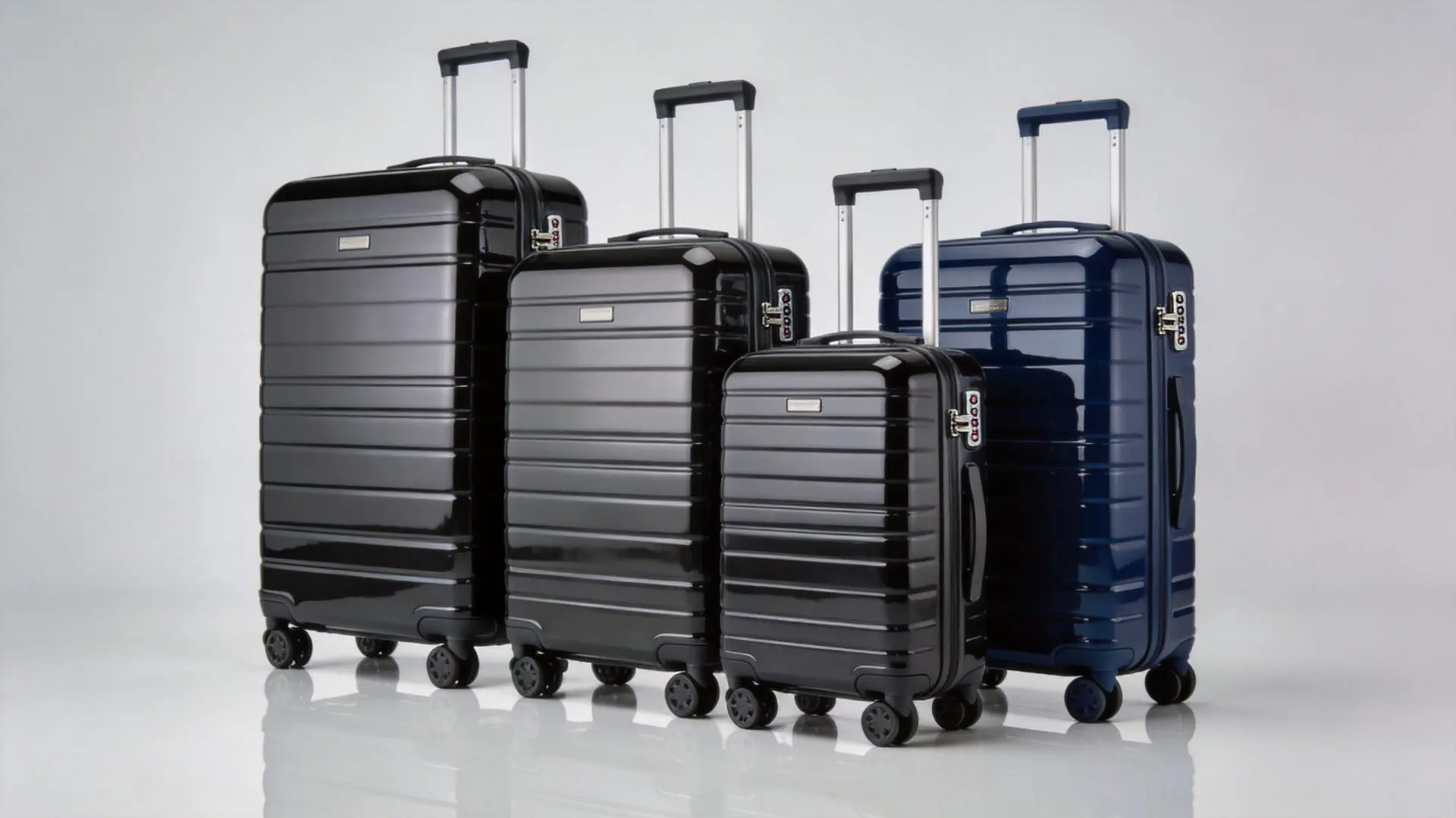
In plain terms: Away gives you 85% of the practical function of a premium hardside case at a fraction of the Rimowa price, because it uses a capable, cheaper material (polycarbonate) and sells direct without the luxury stack. Rimowa charges a large premium for the aluminum material story, the heritage and the repairability. Neither is a bad buy – they are just for different wallets and different relationships with luggage.
6. Factory Process: How a Hardside Case Is Actually Made
The factory view turns “which is worth it” into a step sequence. For a polycarbonate case, plastic pellets are melted and vacuum- or blow-molded into two half-shells against a metal mold – the mold is the big upfront tooling cost, and it is why PC hardside cases get cheaper at volume. The two shells are joined on a rim with a zipper or frame closure, the telescoping handle and multiwheel chassis are mounted, the lining, compression straps and pockets are set in, a TSA lock is installed, and the case rolls through a wheel roll, handle cycle, latch and drop/impact QC check before being boxed with its dust bag and warranty card.
For an aluminum case, instead of molding plastic you start with aluminum sheet that is cut, pressed and ribbed to make the signature grooves, then anodized or painted, joined with a closure frame, fitted with the same handle-and-wheel chassis, lined, and QC-checked. The aluminum route adds real material cost and more finishing labour, and it yields a heavier, stiffer, repairable case – which is exactly why the build cost is higher and why the retail can support a premium. Both routes are standard, high-volume processes served by the same partner-factory networks that make mainstream and premium-luggage brands.
7. Budget Alternatives and Private-Label Hardside Luggage
As a consumer, the smartest rule with the whole Away vs Rimowa class is the same: match the material and price to how you actually travel. If you fly monthly and want a light, durable hardside case, a well-reviewed polycarbonate case near factory cost – or a mainstream-priced one – delivers most of the Away experience. Seek the aluminum groove-and-repair experience specifically if you genuinely want it; otherwise the weight and price punish casual use.
As a brand or business launching luggage, the calculation gets cleaner: the same custom luggage and travel-bag process that produces a polycarbonate hardside carry-on, an aluminum-frame case or a soft-side travel bag is buyable near factory cost under your own label. Choose the shell wisely by weighing the hard-side vs soft-side luggage trade-off, read the durable PC hard-shell suitcase guide to understand why polycarbonate is the value material, and use the business-suitcase sizing guide and the travel-luggage manufacturer partnerships pages to plan a realistic carry-on, cabin and check-in range. For a softer, lighter complement, the custom duffel-bag manufacturing guide is a useful second SKU to pair with a hardside line.
8. Frequently Asked Questions
Is Rimowa worth the money compared to Away?
Only if the aluminum build, the repairability and the brand heritage are part of what you value. Away gives you a genuinely well-built polycarbonate carry-on with a limited lifetime defect warranty at roughly $275-325 (approx.), while a Rimowa aluminum case starts around $1,200-2,000+ (approx.) and its polycarbonate line around $650-900 (approx.). For pure function a polycarbonate case delivers most of the practical value; Rimowa earns its premium for buyers who want the material story, the service model and the label.
What are Away bags made of?
Away’s signature luggage uses a 100% polycarbonate (PC) hard shell, molded in two halves, with an integrated telescoping handle, 360-degree dual spinner wheels, a TSA/combination lock, and an interior with a compression system and a removable laundry bag; many carry-on sizes add a built-in battery and USB port. It is a standard, genuinely good hardside build at a value-driven direct-to-consumer price.
What is Rimowa luggage made of?
Rimowa sells two material families: the heritage line made of grooved aviation-grade aluminum (the famous “cabin” pattern, heavier and premium-priced) and the Essential line made of compressed polycarbonate (lighter and lower-priced). Both use a multiwheel spinner system, a telescoping handle with a stop, and a TSA lock, and both are built to be serviced and repaired.
Does Away have a lifetime warranty?
Yes – Away offers a limited lifetime warranty covering defects in materials and workmanship for the useful life of the product. It does not cover normal wear, cosmetic damage or airline handling damage, and it is principally a replace-on-defect program consistent with a lighter, more affordable polycarbonate product.
Does Rimowa offer a warranty?
Yes – Rimowa provides a 5-year international warranty against manufacturing defects (standard terms in effect as of 2026) on its aluminum and polycarbonate cases, backed by a global repair service. Because the aluminum cases are designed to be serviced, dents and damage can often be repaired rather than replaced.
Is Away good quality luggage?
Yes for its price. A modern polycarbonate shell, telescoping handle, 360-degree dual spinner wheels, TSA lock and a compression interior are standard high-volume premium-luggage features, built by the same kind of partner factories that supply mainstream brands. It is durable, light and genuinely good value; it simply lacks the aluminum material story and century-long heritage of Rimowa.
Which is better for frequent flyers, Away or Rimowa?
For frequent flyers who want light, durable, replacement-friendly value, Away’s polycarbonate case is usually the stronger choice – lighter, easier to handle and far cheaper to replace on defect. For highly frequent, heavy travelers who want a repairable, years-long premium case and accept extra weight and cost, a Rimowa aluminum case can be worth it. It is a value-versus-heritage trade, not a clear technical winner.
Can I source an Away- or Rimowa-style hard-shell carry-on under my own brand?
Yes. Both a polycarbonate hardside carry-on and an aluminum-frame or aluminum-shell case are standard partner-factory builds, so you can develop a self-branded carry-on, cabin or check-in line at factory cost. Our affiliated factory can spec a made-to-order hardside luggage line at MOQ 500, sampling 6-10 days, production 35-50 days, AQL 2.5, FOB Xiamen – the aluminum-shell option simply carries a higher tooling and unit cost than the polycarbonate route.
9. Final Word
Away vs Rimowa is not a “real versus overpriced” contest – it is two honest, very different products. Away is a genuinely well-built polycarbonate carry-on with a limited lifetime defect warranty, sold direct at a fair price for the large majority of travelers. Rimowa is a premium, repairable heritage case – mostly aluminum – with a five-year international warranty, a global repair service and a century of brand behind it, priced at several times the Away tag largely for the material story, the luxury position and repairability. Buy Away if you want a light, durable, value-for-money hardside case you can fly with and replace easily. Buy Rimowa if the grooved aluminum build, the servicability and the brand matter enough to you to pay the premium. And if you are a brand, know that both builds – polycarbonate and aluminum-shell alike – are buyable near factory cost under your own label.
Building an Away- or Rimowa-Style Luggage Line?
We are the affiliated factory behind polycarbonate hard-shell, aluminum-frame and soft-side travel luggage, working within a vetted partner-factory network that has served brands across 200+ markets and 100+ countries as of 2026 – MOQ 500, sampling 6-10 days, production 35-50 days, AQL 2.5, 12-month warranty, T/T 30/70, FOB Xiamen / CIF / DDP. Start your own value or premium carry-on line at factory cost.