
Why Tumi Bags Are So Expensive: The Ballistic Nylon Truth
From the $150 wallet to the $900 rollaboard, Tumi pricing is the most questioned in premium travel. This is a factory-workshop read on why Tumi bags are so expensive – the ballistic nylon that started the brand, the heavy construction, the Tracer warranty, the zippers and hardware, what a Tumi-class piece actually costs in the workshop, whether it is worth the price, and how the same build gets made under your own label.
Tumi bags are expensive mainly for three honest reasons – real ballistic nylon, genuinely heavy construction, and the Tracer 20th-year warranty / brand – not for exotic material. Here is the density. A core Tumi messenger, briefcase or tote falls roughly into a $200-500 (approx.) zone, while the travel line (rollaboards, duffels, weekender bags) commonly spans $400-900 (approx.). The single most-famous material in the pricing story is ballistic nylon – a tightly woven, coated nylon adapted decades ago from military flak-vest fabric, which resists abrasion, tearing and moisture far better than typical pack cloth. At factory level a Tumi-class bag uses a far-above-basic material and build spec, so it genuinely costs more to make than a typical consumer bag: a Tumi-style ballistic-nylon piece lands roughly at $18-45 (approx.) in base materials and labour (materials around 55-65% of that), versus $8-18 (approx.) for a mainstream nylon/polyester bag – and the retail price then adds the Tumi logo, the Tracer lifetime-style warranty program, premium zippers and hardware, distribution and big retail margins. If you want the same durable, heavy build without the label, the working private-label parameters are MOQ 500 pcs, sampling 6-10 days, mass production 35-50 days, AQL 2.5 inspection, 12-month warranty, T/T 30/70 payment, FOB Xiamen / CIF / DDP shipping.
TL;DR / Quick Answer
- Why is Tumi so expensive? Three real reasons: genuine ballistic nylon (military-origin dense weave that is expensive to make and genuinely tough), heavy construction (reinforced stitching, padding, premium YKK-style zippers and hardware, coated/PU-layered fabrics), and the brand + Tracer warranty – the 20th-year repair/replacement program that Tumi prices into every bag.
- Is Tumi overpriced? For the material and build quality it is on the expensive side but not a scam – the ballistic nylon and construction are real. The share that feels “expensive” is mostly brand, the warranty program and retail markup stacked on top of a genuinely higher material cost.
- What should you pay for? The ballistic nylon, the reinforced seams, weather-proof zipper and the warranty. If a lighter or cheaper material is fine for your use, a mainstream travel bag or a private-label ballistic-style bag gives you the durability at a fraction of the price.
- Factory verdict: a Tumi-class piece is a higher-spec, heavier build of an otherwise standard travel/laptop bag – ballistic nylon, taping and padding, premium zippers – and any capable partner can reproduce the same durable build at factory cost under your own brand without paying for the warranty-marketing premium.
1. The Ballistic Nylon Origin Story
To understand why Tumi costs what it costs, you start with the material that built the brand. Tumi was founded in 1975 as a luggage and travel-goods brand, and its signature move was bringing ballistic nylon into consumer bags. The fabric was originally developed for military flak vests and ballistic armor – a very tightly woven, dense nylon that stops fragmentation and resists punctures, abrasion and tearing. That heritage is why Tumi’s classic look is black, heavy-weave, ultra-tough fabric. It is a genuine material story, not a marketing invention: ballistic nylon is measurably tougher than the standard “cordura” or regular pack nylon most travel bags use, and it is materially more expensive to weave, finish and coat than a basic nylon twill or polyester.
That origin shapes the whole brand position. Tumi positioned itself as the “business-travel and go-anywhere” house that builds bags like armor – and it prices them like engineered products rather than lifestyle fashion. So when someone asks why a Tumi bag costs $400-700 (approx.) while a decent generic travel bag costs $80-150 (approx.), the honest answer is a mix of genuinely better material and construction plus a large brand-and-warranty premium on top.
2. Why Tumi Is So Expensive: The Four Real Cost Drivers
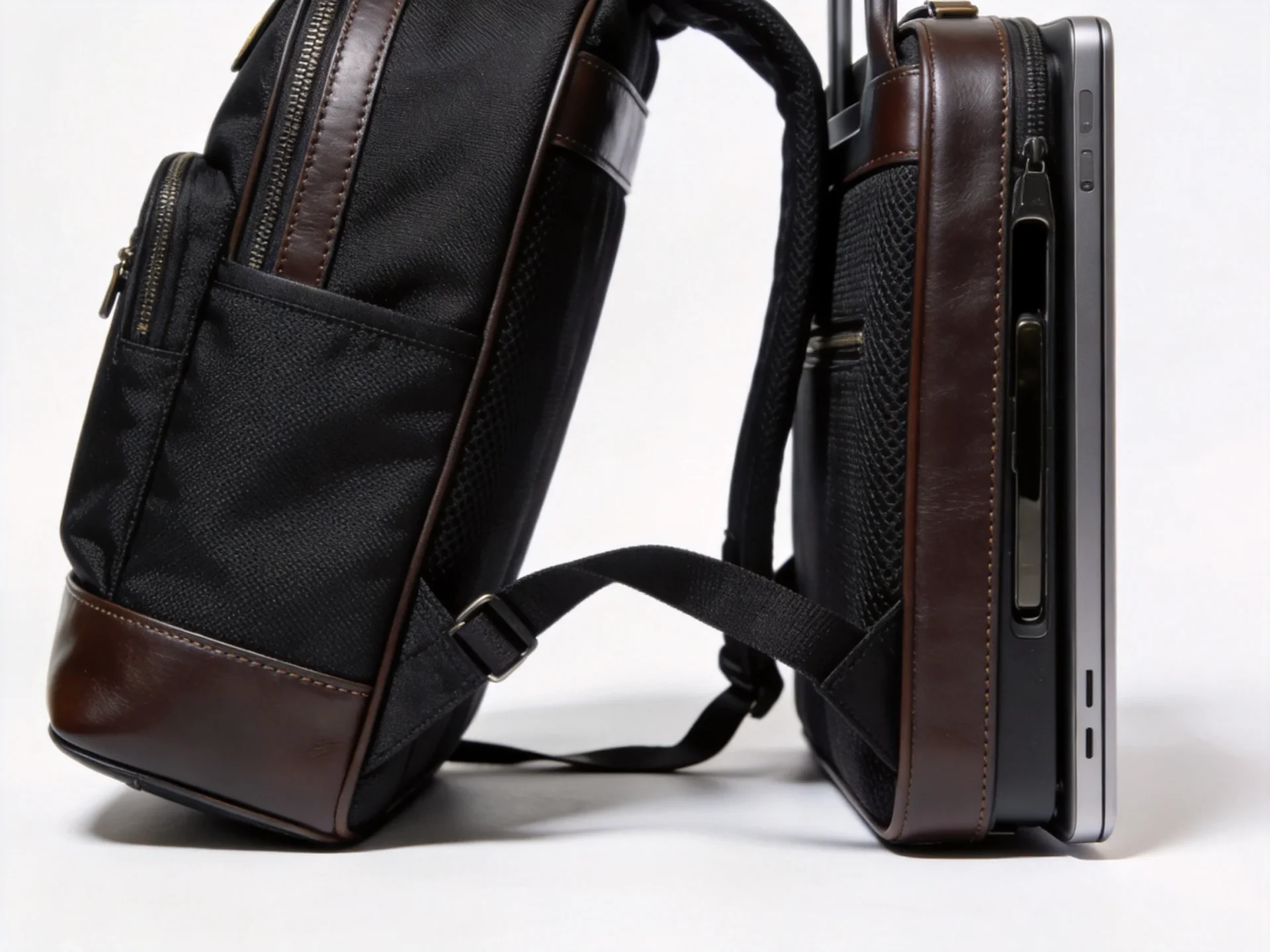
Strip a Tumi bag down and the price is built from four honest buckets. Ballistic nylon and materials is the first and one of the biggest – a dense, tightly woven nylon with a coated/PU backing, heavier and tougher than ordinary pack cloth, and meaningfully more expensive per yard. Construction and hardware is the second – heavy reinforced stitching, taping and padding in laptops cases, and premium weather-proof zippers and hardware on almost every piece. The Tracer warranty program is the third – Tumi’s famous 20th-year repair or replacement promise is priced into every bag sold, which adds real dollars to the retail tag. Brand, design and distribution is the last and usually the largest single share – the logo, the retail stores, the marketing and the retail margin.
So the honest answer to “is it the material or the logo?” is: it is both, and it is honest about both. The most-visible premium is the brand and the Tracer warranty, but underneath them the ballistic-nylon build genuinely is heavier and tougher than a typical travel bag – that part is not marketing. You are paying for a genuinely tough build plus a large brand-and-warranty premium.
3. Ballistic Nylon vs the Alternatives: What You Are Actually Buying
Here is a realistic, typical side-by-side of the main travel-bag materials, so the Tumi price makes sense in context (typical trade figures, not a specific SKU):
| Material (typical) | Toughness / weight | Relative cost | Where it is used |
|---|---|---|---|
| Ballistic nylon (Tumi signature) | Dense, tightly woven, coated; very high abrasion and tear resistance; heavier | Highest of the nylons; costs more to weave and coat | Tumi core messenger, briefcase, duffel, rollaboard shells |
| Cordura (high-denier nylon) | High abrasion resistance, medium-heavy | Medium-high | Premium travel backpacks and duffels from other brands |
| Standard pack nylon (mostly 400D-840D twill) | Decent abrasion, lightweight | Low-medium | Most everyday backpacks, commuter and budget travel bags |
| Polyester (incl. ripstop) | Lighter, water-resistant when coated; less abrasion-tough | Lowest | Budget gym bags, lightweight shoulder bags, kit bags |
| Leather (full-grain / coated) | Premium look, structured; heavier maintenance | High | Tumi leather-trim and full-leather collections at top of range |
The row that decides most of the cost gap is ballistic nylon – it is genuinely heavier and tougher than standard pack cloth, and it costs more to weave, finish and coat. But the remaining gap from a generic ballistic-style bag to a full Tumi price is the brand, the Tracer warranty and the retail stack, because the base construction of a travel bag – panels, lining, zippers, seams – is a standard, high-volume process either way.
4. Factory View: What a Tumi-Class Bag Actually Costs
From a travel-goods factory’s costing sheet, a Tumi-style ballistic-nylon piece is a higher-spec, heavier version of a standard laptop/travel bag. Here is a realistic bill-of-materials for a ballistic-nylon messenger or laptop bag in this class (typical, not a specific SKU):
| Component (typical) | Cost per Bag (approx.) | Factory Note |
|---|---|---|
| Ballistic nylon shell + PU/coating | $8-18 | The biggest single item; dense weave and coated finish cost far more per yard than basic pack cloth |
| Lining & padding (laptop/suspension) | $3-7 | Foam padding and a structured lining are where “laptop bag” weight and cost come from |
| Premium zippers & hardware | $3-7 | Weather-proof, heavy YKK-style zips and metal hardware are a real Tumi signature |
| Stitching, taping & edge finishing | $3-8 | Heavy reinforced seams, binding tape and clean corners take more labour time |
| Trims, labels & packaging | $1-3 | Tracer tags, brand labels, dust bag and carton add identity at low cost |
| Assembly & QC labour | $2-5 | Heavy-bag QC: seam pull-test, zipper unzip/re-zip cycles, strap and hardware stress checks |
Add those up and a Tumi-class ballistic-nylon bag lands around $18-45 (approx.) at factory level, before brand, the warranty program, distribution, retail markup and import. On a $400-700 (approx.) retail bag the build is a modest to moderate share and the majority of the price is the brand, warranty and retail stack – though the material and build are genuinely heavier and tougher than a basic bag. That is why a same-spec ballistic-style bag is buyable near factory cost under your own name.
5. Is Tumi Worth It? The Fair Verdict
Weigh it when: you use a bag casually, mostly carry a light laptop and a few items, or buy largely for the logo. For light use the heavy weight and premium price of ballistic nylon earn their keep far less – a lighter mainstream bag gives you 80% of the practical function at a fraction of the cost.
In plain terms: you are choosing between an engineered, heavy, warranty-backed travel bag and a lighter, cheaper, less-tough alternative – not between a tough bag and a fake one. Tumi delivers the tough build it promises; the question is whether you need that much toughness to justify the brand-and-warranty premium. If you do – great, it is a fair buy. If you are a casual user, the same ballistic-style durability is available at a better price elsewhere.
6. Factory Process: From Roll of Ballistic Nylon to Finished Tumi-Class Bag
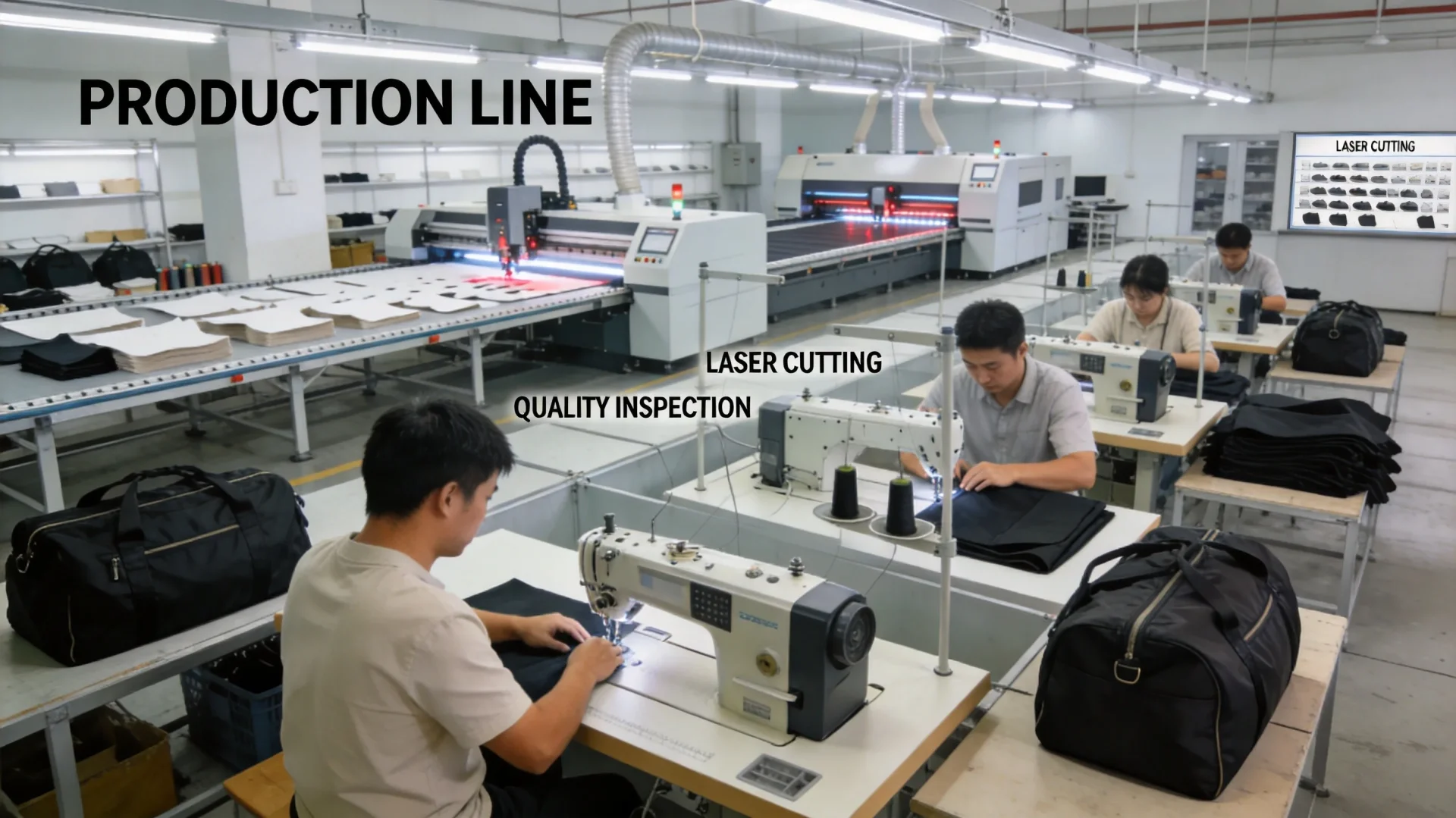
The travel-goods factory view turns “why the price” into a step sequence. First the ballistic nylon is sourced and coated – the dense weave plus a PU/coated backing gives it that stiffness, weather resistance and trademark look. Then it is cut on CNC or laser tables in panels, with a skilled cutter laying the pattern to waste as little of the expensive fabric as possible. Panels are sewn with reinforced, heavy seams – often with binding tape at high-stress edges – the lining and any foam padding are set in, and interior laptop sleeves and organization pockets are built in. Premium zippers and hardware are installed (the weather-proof zip is a big part of the premium feel), edges are finished clean, and finally the bag gets a quality inspection – seam pull-test, zipper cycling, strap and handle stress checks, hardware alignment – before it is bagged with its dust cover and warranty tags.
Every step costs more on a heavy, reinforced build than on a light everyday bag – which is why a “simple” durable Tumi-style bag still has real cost, and why a well-finished one rewards a skilled partner. But it is a standard, high-volume process, which is exactly why the same tough construct can be reproduced at a fair price.
7. Fair-Price Alternatives and Private-Label Travel Bags
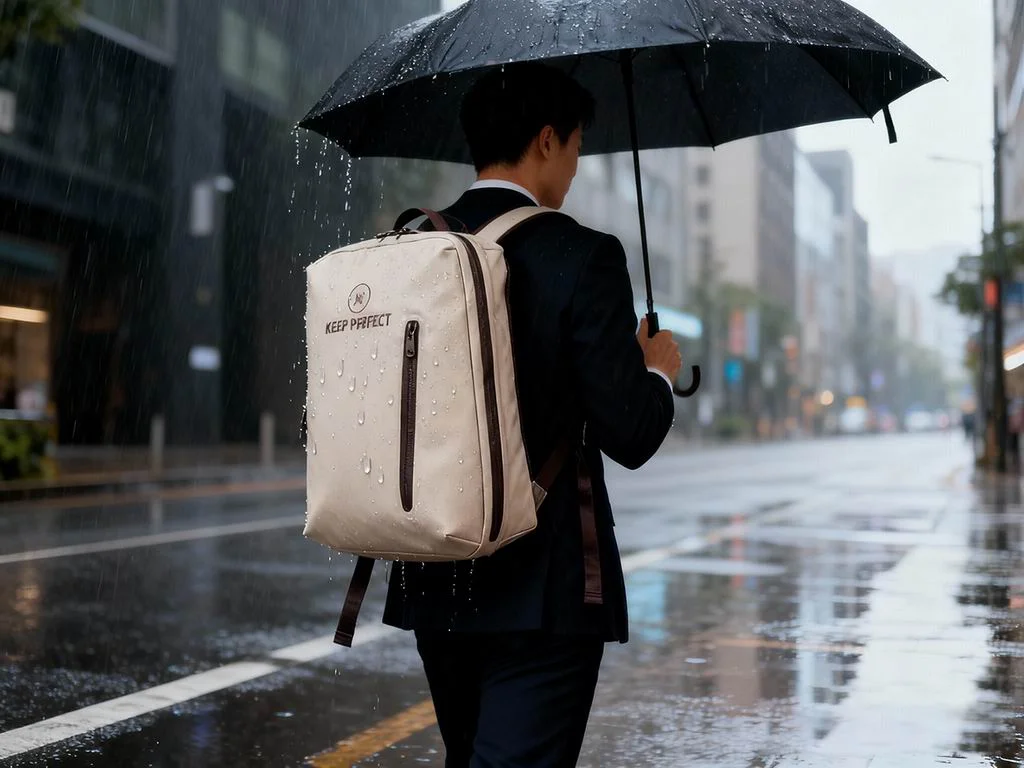
As a consumer, the smartest rule with any Tumi-class buy is the same: match the material to how you actually use it, and do not pay for more toughness than you need. If you fly weekly and live out of one bag, a ballistic-nylon build and a warranty may genuinely pay off. If you commute with a laptop and a few items, a lighter mainstream custom laptop backpack or a good-value travel bag gives you most of the function at far less than a full Tumi price – and you can drop the logo and buy a durable private-label ballistic-style bag for a fraction of the retail sticker.
As a brand or business sourcing business-travel and travel bags, the calculation is cleaner – the same ballistic nylon, heavy seams, premium zippers and structured padding are buyable near factory cost, without the global warranty-marketing budget.
Start with an OEM/ODM custom travel duffel and luggage partner to spec a ballistic-style business or travel bag under your own label. For the laptop-side route specifically, the custom laptop backpack guide and the ballistic nylon bag overview map the material and construction details. Read the backpack material selection guide to choose wisely between nylon, cordura and polyester, and the custom bag OEM/ODM resources to move from spec to production, supported by the travel-backpack feature-integration guide.
8. Frequently Asked Questions
Why are Tumi bags so expensive?
Mainly three real reasons: genuine ballistic nylon and heavy construction (dense, coated weave plus reinforced seams, padding and premium weather-proof zippers that genuinely cost more to make), the Tracer 20th-year warranty program priced into every bag, and the brand and retail margin on top. The material and build are genuinely higher-cost than a basic bag, but the largest single share of the price is the brand, the warranty program and distribution.
Is ballistic nylon actually worth the extra cost?
Yes, if you need genuine toughness. Ballistic nylon is a dense, tightly woven, coated nylon that resists abrasion, tearing and moisture far better than standard pack cloth, so it is worth the premium for heavy daily and air travel use. For light, casual use it is overkill – a lighter mainstream nylon or polyester bag gives you most of the practical function at much lower cost and weight.
What is Tumi’s Tracer warranty, and does it add to the price?
The Tracer program offers repair or replacement styling for registered Tumi products for up to 20 years (terms in effect as of 2026), which is far longer than the typical 2-5 year or 12-month bag warranty. That promise is priced into every bag sold, so it is a genuine part of why the retail price is higher.
Are Tumi bags made mostly of nylon?
Yes. The signature core material is black ballistic nylon, a dense military-origin coated weave, used across messenger, briefcase, tote, duffel and rollaboard lines. Tumi also uses cordura-style nylon, coated canvas and leather-trim or full-leather collections at the top of the range, but the classic durable build is ballistic nylon.
Is Tumi better quality than other premium travel brands?
Tumi is among the heavier and tougher premium travel brands because of its ballistic-nylon heritage and heavy construction, and its Tracer warranty is genuinely long. Quality-wise, other premium brands (Cordura-heavy travel houses, business-luggage lines) can match build quality at similar or sometimes lower prices; the Tumi difference is largely the material heritage, the warranty and the brand premium.
Is a Tumi bag worth it for everyday commuting?
For heavy daily travel use, yes – the durable build and warranty pay off. For a light commute with a laptop and a few items, usually not: the heavy weight and high price earn their keep far less, and a lighter mainstream or private-label ballistic-style laptop/travel bag gives you most of the function at a much lower cost.
Can I source a Tumi-style ballistic nylon travel bag under my own brand?
Yes. A Tumi-class piece is a higher-spec, heavier build of a standard travel/laptop bag – ballistic nylon, reinforced seams, padding and premium zippers – produced through the same partner-factory network as mainstream premium travel brands. Our affiliated factory can spec a made-to-order ballistic-style business or travel bag at MOQ 500, sampling 6-10 days, production 35-50 days, AQL 2.5, FOB Xiamen.
What is the cheapest way to get Tumi-style durability?
Buy the material and build, not the logo. A private-label ballistic-nylon business or travel bag gives you the same dense weave, heavy seams, padding and premium zippers at near factory cost – typically tens of dollars at base build versus the hundreds on a branded tag. Or buy a mainstream ballistic/cordura travel bag on sale; you keep most of the toughness while skipping the Tumi warranty-and-brand premium.
9. Final Word
Why is Tumi so expensive? Because it is a genuinely tough, heavier build – real ballistic nylon, reinforced seams, premium zippers – carrying a large brand-and-warranty premium. The material story is honest; the build is genuine; and the Tracer warranty is a real same-price benefit. What is not mysterious is the gap between factory cost and the sticker: that is the logo, the warranty marketing, distribution and retail margin on top of a genuinely higher material cost. Buy Tumi if you want the engineered, warranty-backed, go-anywhere build and plan to actually use it hard. Buy the material instead – a ballistic-style private-label or sale mainstream bag – if you want the same durability without paying for the label.
Want That Ballistic-Nylon Travel Bag Under Your Own Brand?
We are the affiliated factory behind ballistic-nylon business and travel bags and private-label luggage, working within a vetted partner-factory network that has served brands across 200+ markets and 100+ countries as of 2026 – MOQ 500, sampling 6-10 days, production 35-50 days, AQL 2.5, 12-month warranty, T/T 30/70, FOB Xiamen / CIF / DDP. Spec a Tumi-class ballistic-style travel bag at factory cost.