
:root{–ink:#1c2333;–brand:#0a5c46;–gold:#b88a2c;–bg:#f7f5f0;–card:#ffffff;–line:#e4dfd2;–muted:#667085;}
*{box-sizing:border-box;}
body{margin:0;font-family:-apple-system,BlinkMacSystemFont,”Segoe UI”,Roboto,Helvetica,Arial,sans-serif;color:var(–ink);line-height:1.72;background:var(–bg);}
header.top{background:linear-gradient(135deg,#0b4f3c,#147a5e);color:#fff;padding:40px 22px;text-align:center;}
header.top h1{font-size:clamp(1.55rem,4vw,2.4rem);margin:0 0 12px;line-height:1.25;}
header.top p{max-width:820px;margin:0 auto;color:#e7f2ec;}
.wrap{max-width:960px;margin:0 auto;padding:26px 18px 56px;}
.answer{background:var(–card);border-left:6px solid var(–brand);border-radius:10px;padding:20px 24px;box-shadow:0 2px 10px rgba(0,0,0,.05);font-size:1.06rem;}
.answer strong{color:var(–brand);}
.tldr{background:#0f2e26;color:#eaf6f1;border-radius:10px;padding:20px 24px;margin:24px 0;}
.tldr h2{color:#fff;margin-top:0;}
.kicker{display:inline-block;background:var(–gold);color:#fff;font-size:.72rem;letter-spacing:1px;text-transform:uppercase;padding:4px 10px;border-radius:20px;font-weight:700;margin-bottom:10px;}
h2{font-size:clamp(1.3rem,3vw,1.75rem);margin:38px 0 14px;color:#0b4f3c;border-bottom:2px solid var(–line);padding-bottom:8px;}
h3{font-size:1.15rem;margin:22px 0 9px;color:var(–ink);}
p{font-size:1.01rem;}
ul,ol{padding-left:22px;}
li{margin:8px 0;}
strong{color:var(–ink);}
table{width:100%;border-collapse:collapse;margin:16px 0;background:var(–card);box-shadow:0 2px 8px rgba(0,0,0,.05);}
th,td{border:1px solid var(–line);padding:10px 12px;text-align:left;font-size:.94rem;vertical-align:top;}
th{background:var(–brand);color:#fff;font-weight:600;}
tr:nth-child(even){background:#faf8f2;}
.img{background:var(–card);border:1px solid var(–line);border-radius:10px;padding:10px;margin:20px 0;box-shadow:0 2px 8px rgba(0,0,0,.05);overflow:hidden;}
.img img{width:100%;height:auto;border-radius:6px;display:block;}
.img figcaption{font-size:.82rem;color:var(–muted);padding:8px 4px 2px;text-align:center;}
.note{background:#f4efe2;border:1px solid #e7d9ae;border-radius:8px;padding:13px 16px;margin:16px 0;font-size:.94rem;}
.verdict{background:var(–card);border:2px solid var(–gold);border-radius:10px;padding:18px 22px;margin:20px 0;}
.cta{background:linear-gradient(135deg,#0b4f3c,#147a5e);color:#fff;border-radius:12px;padding:26px 24px;margin:38px 0 10px;text-align:center;}
.cta h2{color:#fff;border:none;margin:0 0 10px;}
.cta p{color:#dff0e8;max-width:740px;margin:0 auto 14px;}
.cta a{display:inline-block;background:#fff;color:#0b4f3c;font-weight:700;text-decoration:none;padding:11px 24px;border-radius:30px;margin:6px;}
.cta a.alt{background:transparent;color:#fff;border:1px solid #fff;}
.cta a:hover{opacity:.9;}
a{color:var(–brand2,#147a5e);}
.authors{font-size:.85rem;color:var(–muted);margin-top:28px;border-top:1px solid var(–line);padding-top:14px;}
@media(max-width:720px){header.top{padding:28px 14px;}.wrap{padding:18px 12px 42px;}table{font-size:.86rem;}}
Are Titleist Golf Bags Worth It? An Honest Buyer’s Verdict
The straight answer on whether Titleist golf bags justify their price – told from inside the factories that build this class of bag, with build-cost context most reviews leave out.
Are Titleist golf bags worth it? Yes for serious, frequent golfers – but a meaningful share of the price is brand margin, not materials. A Titleist-class stand bag retails at roughly $230–$400 (approx.), while the actual factory build cost for a made-to-spec bag in the same material grade runs about $70–$110 (typical). The gap is concentrated in three things: materials (~55% of build cost), labor & craftsmanship (~20%), tooling & molds (~10%), with the remainder going to brand margin and distribution. Titleist earns part of that price with genuine touring-validated construction, a structured base and durable fabrics – the rest is the name on the cuff. If you play often, a premium build pays for itself over a few hundred rounds; if you play a handful of times a season, the same spec is available through an OEM/ODM factory at wholesale cost.
TL;DR / Quick Answer
Titleist golf bags are worth the price for regular players who value a structured base, durable coated fabrics and touring-grade construction. A comparable made-to-spec factory build costs roughly $70–$110 at wholesale, versus a retail price of about $230–$400 – a markup of roughly 250%–300%, driven more by brand and distribution than by materials. For occasional golfers, a well-made mid-tier bag or a factory OEM/ODM build delivers most of the durability for a fraction of the cost. Our verdict at JUNYUAN BAGS: the spec is worth it; the logo premium is optional.
1. Why Titleist Golf Bags Carry a Premium Ticket
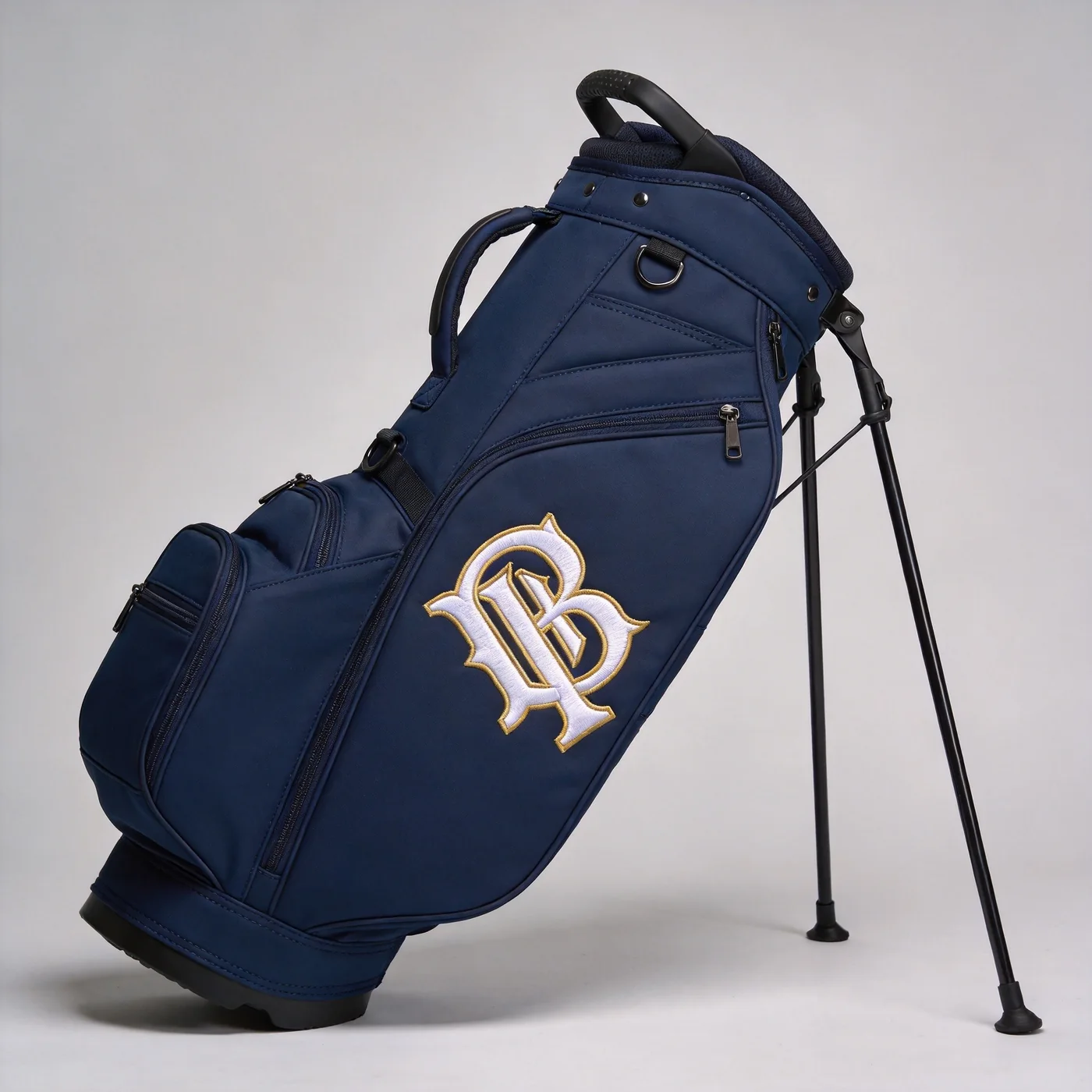
Titleist isn’t a bag brand that happens to sponsor golf – it’s a bag line that rides on decades of tour presence and a reputation for construction quality. On the retail floor that translates into a genuine price step above mid-tier brands. But before you assume the extra money is all quality, it helps to know where a golf bag actually spends its cost. When our affiliated factory quotes a bag in this tier for private-label customers, the spec sheet breaks down into the same four groups every bag shares:
- The shell. Durable nylon and polyester in 600D–1680D, with PU or DWR coatings and, on premium builds, synthetic leather or microfiber accents.
- The weather layer. A water-repellent DWR finish as standard, rising to a full waterproof membrane with taped seams on the top tier.
- The hardware. Zippers, buckles, sliders and feet – the most cost-sensitive component family on any golf bag.
- The structure. A structured PE or molded base, full-length dividers and a padded carrying harness.
2. The Money: A Factory Cost Breakdown
The single most useful thing a factory can tell a shopper is this: a golf bag is not a magical object. It is materials, labor, tooling and margin stacked on top of one another. A made-to-spec bag in the Titleist class carries a factory build cost of roughly $70–$110 (typical) depending on features and volume. Here is where that money goes:
| Cost Line | Share of Build Cost | Why It Costs What It Does |
|---|---|---|
| Materials (fabrics, PU/DWR, zippers, hardware, base) | ~50–55% | Fabric grade (600D vs 1680D), waterproof membranes and quality zippers are the biggest single line. |
| Labor & craftsmanship | ~18–22% | A premium bag passes through 60–120 machine-and-hand operations; waterproof builds absorb more. |
| Tooling & molds | ~8–10% | Injection/thermoforming molds for base, top cuff and hardware must be amortized over the run. |
| Packaging, QC & margin | ~12–18% | Inspection, boxing and the factory’s margin on top of direct cost. |
The retail price of roughly $230–$400 (approx.) then stacks brand, marketing, distribution and retail margin on top of that build cost. That is a normal, even healthy, markdown in premium hard goods – but it is also exactly the layer an OEM/ODM buyer can avoid.
3. Tooling: The Hidden Cost Most Reviews Miss
Reviewers talk about fabric and zippers; they almost never mention tooling – because they don’t build bags. A structured base, molded top cuff, brand plate and custom hardware all require injection or thermoforming molds that must be paid off over a production run. Here is what tooling realistically costs at the factory level (typical ballpark figures – final quotes depend on your spec):
| Tooling / Mold Item | Typical Investment (USD) | Amortized Over | Approx. Cost Per Bag |
|---|---|---|---|
| Structured base mold (injection) | $8,000–$15,000 | 3,000–5,000 pcs | $2–$4 |
| Molded top cuff mold | $5,000–$10,000 | 3,000–5,000 pcs | $1.5–$3 |
| Brand plate / logo tools | $1,000–$3,000 | Full run | $0.5–$1.5 |
| Custom hardware & buckle molds | $3,000–$8,000 | Full run | $1–$3 |
| Patterns, samples & pre-production | $1,500–$4,000 | Full run | $1–$2 |
Add those up and tooling lands near roughly 10% of factory cost on a moderate run – and it scales down per bag as volume grows. This is the strongest argument for OEM/ODM: the very tooling a brand amortizes across thousands of units is the same tooling a private-label buyer gets to amortize.
4. How a Titleist-Class Bag Is Actually Built
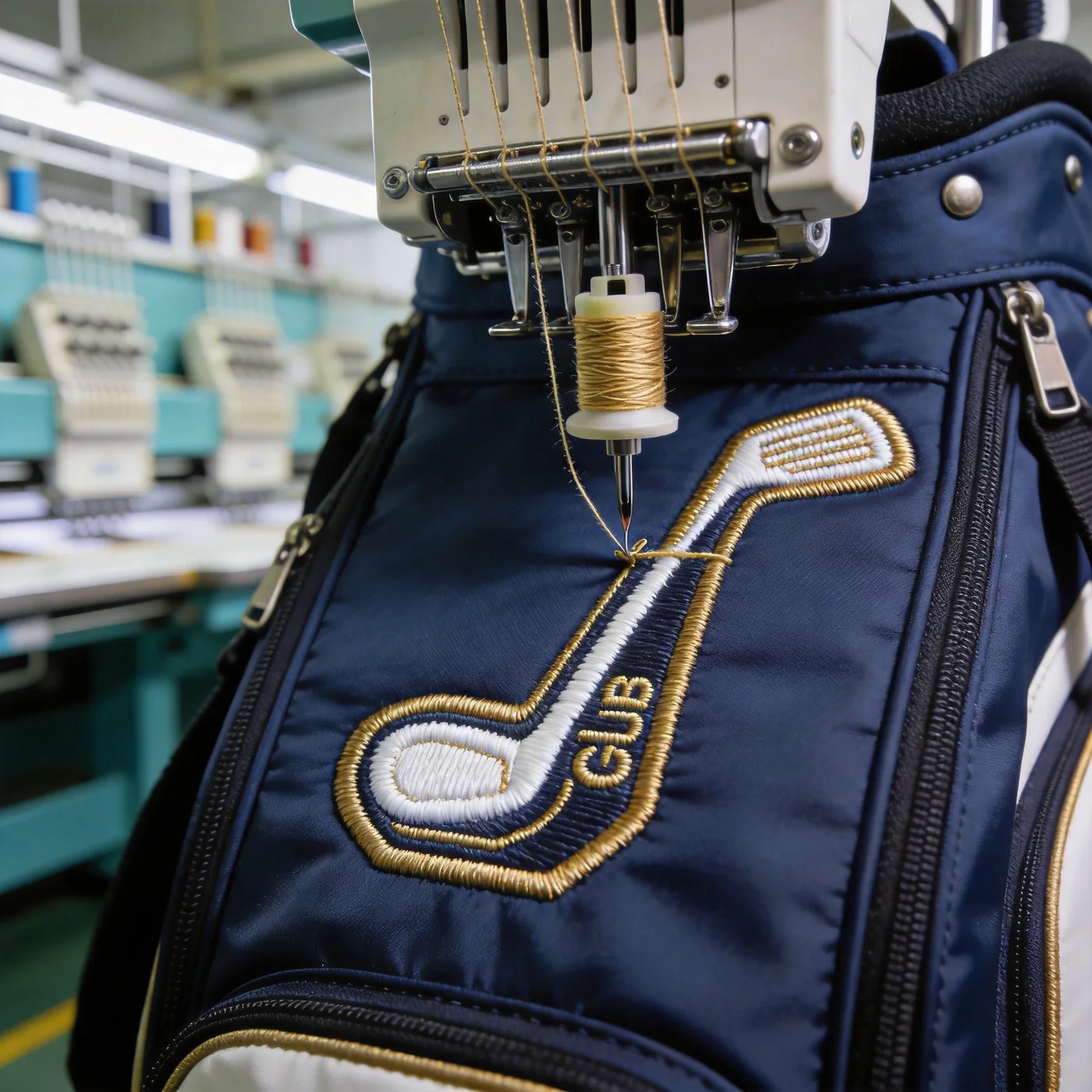
Anyone who thinks a golf bag is “machine-made in seconds” has never stood behind a real production line. A stand or cart bag travels through roughly 60 to 120 separate operations, depending on features. In our affiliated factory, that work runs across 7 production lines with 149 machines (126 sewing) and 137 staff, with a trained operator still handling every panel transition by eye.
- Cutting & fusing — panels are cut from roll stock and heat-fused to lining; membrane layers are added on waterproof builds.
- Seam preparation & taping — critical seams are taped and sealed; premium tiers add full tape coverage.
- Sewing & assembly — body, dividers, top cuff and base are joined in sequence.
- Hardware & strap mounting — zippers, buckles, harness and handle are fitted and reinforced.
- Final QC & packing — stitch check, structure test, zipper check and boxing.
The real difference between “premium” and “budget” shows up in hours per bag. A waterproof, structured build absorbs more operations, pushing labor to roughly 20% of cost – a genuine line, not decoration.
5. Worth It or Overpriced? The Honest Verdict
After a factory-level look, here is the straight call:
- Worth it (probably): you carry or ride 40–50+ rounds a year, you play in varied weather and you want a structured base and durable fabrics that survive three-plus seasons. Amortized over several hundred rounds, a premium build lands near a dollar a round – and the spec is genuinely a higher grade.
- Not worth it (probably): you play a handful of rounds a season. A well-made mid-tier bag at $120–$180 delivers most of the durability for a fraction of the cost.
Two context points sharpen that call. For how Titleist construction stacks against another premium name, our factory-backed Vessel vs Titleist comparison breaks down both brands on the same material grade. And to judge any “premium” bag with factory eyes, see how to choose golf bag materials – a checklist built from the material bill, not marketing.
Bottom line
Titleist bags are not overpriced in absolute terms – they are a legitimately higher material grade with tour pedigree. They are overpriced relative to the build cost if you don’t need that durability or don’t play enough to amortize it. Buy the spec, not the logo.
6. Affordable Alternatives and the Smarter Path
If you want the durability without the full brand tax, you have two honest routes:
- Mid-tier branded bags. Brands that build to a similar spec with less tour heritage often land at $120–$180, cutting the brand margin while keeping coated fabrics and a structured base.
- OEM/ODM factory build. The same specification – durable coated fabrics, structured base, quality zippers, full-length dividers – is manufactured for private labels worldwide. A factory partner builds it at wholesale cost, and you decide the branding. That is the whole point of sourcing from a golf bag manufacturer who supplies brands in this exact tier.
For deep context on the sourcing side, our golf bag materials guide and custom golf bag cost & pricing guide walk through the spec and cost decisions a factory quotes against every day. And for what the whole class is built from, see the complete custom golf bag manufacturing guide.

Build the Same Spec Under Your Brand
JUNYUAN BAGS is a golf bag trading company backed by an affiliated factory in Quanzhou, Fujian – SGS-verified at 4,950 sqm, 7 production lines, 149 machines (126 sewing) and 137 staff, with a monthly line capacity of 200,000 pieces and a vetted network of partner factories. We have supplied 200+ brands across 100+ countries as of 2026. Let our team spec, sample and ship a made-to-order premium golf bag for your brand, shop or wholesale account.
Request a golf bag OEM/ODM quote
See how the top factories compare
FAQ: Are Titleist Golf Bags Worth It?
Are Titleist golf bags overpriced?
Not in absolute terms – they are a higher material grade with touring pedigree. But retail adds a large brand-margin layer on top of a factory build cost of roughly $70–$110 (typical), so you pay a meaningful name premium over the spec.
Is a Titleist golf bag worth the money?
For regular players who want a structured base and durable coated fabrics that last seasons, yes. For occasional golfers, a well-made mid-tier bag or an OEM factory build delivers most of the durability for a fraction of the cost.
How much does it cost to make a Titleist-class golf bag?
A made-to-spec bag in this tier typically costs roughly $70–$110 at factory build cost, before tooling amortization, branding and distribution. Retail then stacks brand and distribution margin on top.
What makes Titleist bags different from cheaper ones?
The difference is grade, not category: a structured PE or molded base, heavier coated fabrics, quality zippers and full-length dividers. These are the lines where real cost lives – and the same spec is available via OEM.
Which is better: Titleist or another premium brand?
It depends on which axis you value. For how Titleist stacks against another premium name on the same material grade, see our Vessel vs Titleist comparison.
Are Titleist golf bags made in a factory I could use?
Titleist sources through global manufacturing partners, in the same specialized factories that build private-label golf bags worldwide – which is exactly why the construction is replicable via OEM/ODM through a golf bag manufacturer.
Can I get Titleist-quality construction for less?
Yes. The core specification – durable coated fabrics, structured base, quality zippers, full-length dividers – is manufactured for private labels via OEM and ODM. An affiliated factory can build the same spec at wholesale cost.
Disclaimer: Retail and factory figures in this article are industry-typical approximations used to explain cost structure – not precise quotes or guaranteed prices. Actual pricing depends on your specification, volumes and prevailing conditions. Approx./typical labels apply to every figure above.