
Eco-friendly custom bags can make your crowdfunding campaign stand out while appealing to backers who care about reducing waste and supporting ethical practices. By using materials like recycled polyester (rPET), organic cotton, or jute, you not only offer practical rewards but also showcase your commitment to responsible production. Successful campaigns like the Nomad Sling Pack ($380,000 raised) and Urban Flex Backpack (428% of funding goal) prove that aligning with eco-conscious values resonates with supporters.
Key takeaways:
- Material options: rPET, recycled cotton, jute, bamboo fiber, and bio-based materials like cactus leather.
- Supplier tips: Look for certifications (e.g., GRS, OEKO-TEX), low minimum order quantities (50–500 units), and fast prototyping (7–12 days).
- Cost insights: Prices start at $2.04/unit for recycled cotton totes and $23.00+ for recycled laptop backpacks. Bulk orders reduce costs by 30–40%.
- Backer appeal: Transparency about materials, durability, and certifications builds trust and increases pledge averages by 10–30%.
Using eco-friendly bags not only meets growing demand for responsible products but also strengthens your brand’s reputation and backer loyalty.
Selecting Materials for Eco-Friendly Custom Bags
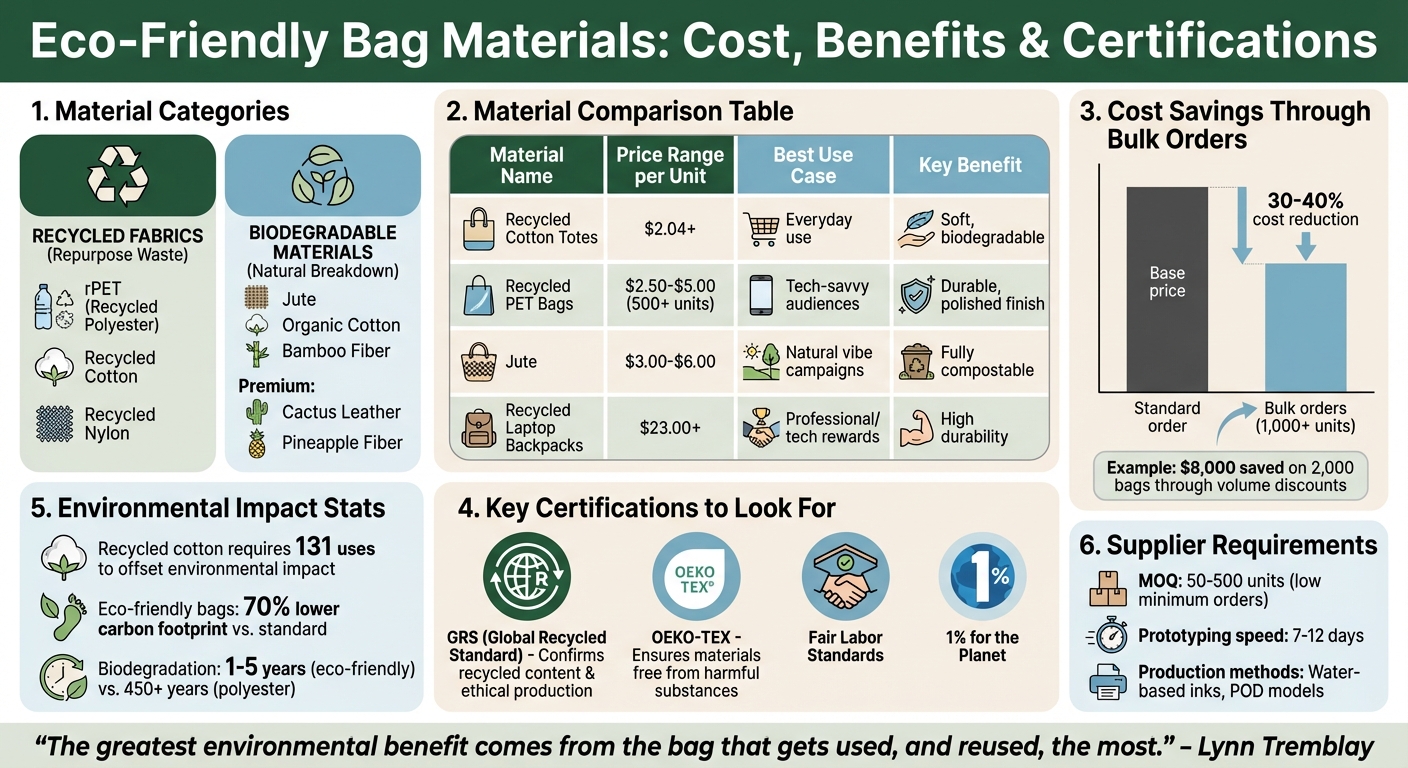
Eco-Friendly Bag Materials Cost Comparison and Environmental Impact Guide
Picking the right material for your custom bags plays a big role in both showcasing your campaign’s environmental efforts and ensuring the bag performs well. Eco-friendly materials generally fall into two main types: recycled fabrics, which repurpose waste, and biodegradable materials, which naturally break down after use. It’s also important to balance durability and aesthetics to match your campaign’s goals.
Recycled fabrics like rPET (made from post-consumer plastic bottles) offer a durable, polished finish that enhances your campaign’s appeal. These materials help reduce landfill and ocean waste while using less energy compared to new synthetic materials. Recycled cotton, created from reclaimed textile scraps, offers a softer, biodegradable option, though it requires about 131 uses to offset its environmental impact. For campaigns aimed at tech-savvy audiences, recycled nylon works well for items like laptop sleeves or performance gear.
For a more rustic and natural vibe, materials like jute, organic cotton, and bamboo fiber are great choices. Jute, in particular, is a low-maintenance crop that is fully compostable, making it ideal when biodegradability is a priority. On the premium end, cactus leather and pineapple fiber are innovative bio-based materials that mimic the texture of animal leather without the associated environmental downsides.
If you’re making environmental claims, certifications help back them up. Look for standards like GRS (Global Recycled Standard) to confirm recycled content and ethical production, and OEKO-TEX to ensure materials are free from harmful substances.
"The greatest environmental benefit comes from the bag that gets used, and reused, the most." – Lynn Tremblay
No matter the material, durability is key. The most eco-friendly bag is the one that can withstand frequent use. Reinforcing handles with techniques like box stitching or rivets can prevent early wear and tear, ensuring your bags last longer. Thoughtful material choices also set the stage for working with eco-conscious suppliers, helping you align your campaign with sustainability goals.
sbb-itb-1e6451b
How to Find and Evaluate Eco-Conscious Suppliers
What to Look for in a Supplier
When searching for eco-conscious suppliers, certifications like OEKO-TEX are a good starting point. Suppliers offering sustainable materials – such as rPET, recycled nylon, organic cotton, cork, and upcycled components – are worth prioritizing. It’s also important to ensure they use eco-friendly production methods, such as water-based inks and Print-on-Demand (POD) models, which help reduce waste. Suppliers with small Minimum Order Quantities (MOQs) can be particularly helpful in minimizing overproduction and excess inventory.
For efficient prototyping, check their sample production timelines. Many specialized manufacturers can produce prototypes within 7–12 days, which is ideal for crowdfunding projects. Additionally, evaluate their logistics capabilities. Suppliers offering Delivered Duty Paid (DDP) shipping and fulfillment services simplify global distribution and reduce the environmental impact of shipping.
Questions to Ask Before Choosing a Supplier
Once you’ve identified potential suppliers, refine your choice by asking targeted questions. Start with the source of their recycled materials – it’s essential to confirm that these materials are genuinely diverted from waste streams. Request documentation for certifications like OEKO-TEX or GRS (Global Recycled Standard) to verify their claims. It’s also a good idea to ask about their use of water-based inks and avoidance of toxic dyes during customization.
Ask for examples of their past work, such as case studies from eco-conscious crowdfunding campaigns they’ve supported. This can provide insight into their ability to deliver on sustainability promises. During the design phase, request professional 3D drawings to ensure the product aligns with eco-friendly standards before physical resources are used. Inquire about their sampling process, particularly whether they offer a 2–3 iteration cycle to refine designs and test the performance of sustainable materials. Case studies of successful campaigns that surpassed funding goals can also help confirm their expertise.
Building Ongoing Supplier Relationships
Building long-term relationships with suppliers often yields better results than one-off transactions. A great example of this is the JungleVine Foundation, which has worked with indigenous Khmu artisans in Laos for over two decades of expertise dating from 2004. This partnership has provided stable income while preserving traditional craft techniques through organic, carbon-neutral production.
Look for suppliers that offer scalable flexibility – those who can handle small MOQs for prototypes while being equipped for mass production as your project grows. Collaborating on designs with your suppliers can help bring your sustainable ideas to life while ensuring they are technically feasible. Regular communication about new material innovations can keep your campaigns ahead of the curve. For example, suppliers experienced with bio-materials like plant-based leathers made from orange, cactus, or grape byproducts can help you stand out in the market.
Strong, ongoing partnerships not only build trust but also lead to better pricing, production priority, and early access to cutting-edge sustainable materials. These relationships are key to successfully integrating eco-friendly products, like bags, into your crowdfunding campaigns.
Using Eco-Friendly Bags in Your Crowdfunding Campaign
Once you’ve chosen sustainable materials and suppliers, the next step is incorporating these eco-friendly bags into your crowdfunding strategy. Using environmentally conscious materials and thoughtful designs not only backs up your commitment to sustainability but also strengthens the ethical appeal of your campaign.
Designing Bags That Reflect Your Campaign’s Values
The materials you select should align with the environmental message of your campaign. For instance, if your campaign emphasizes a circular economy, using rPET bags made from 100% recycled water bottles sends a clear message of commitment. Likewise, if your focus is on natural and biodegradable solutions, options like organic cotton or jute effectively highlight those priorities.
But it’s not just about materials – design matters too. For tech-centered campaigns, modular bags with features like laptop sleeves can resonate with your audience. On the other hand, foldable, lightweight totes are perfect for everyday eco-conscious users. Rapid prototyping, which can take as little as 7–12 days, helps fine-tune details like straps or zippers while also producing visuals that can enhance your campaign. Many manufacturers offer low minimum order quantities (as few as 50–500 units), making it easier to add early-bird reward tiers without overproducing.
Once your design aligns with your campaign’s mission, the next step is showcasing these eco-friendly features to your backers in a clear and impactful way.
Showcasing Eco-Friendly Features to Backers
Being transparent about the materials used in your bags is crucial for building trust with environmentally conscious supporters. Make it clear if your bags are crafted from rPET (recycled plastic bottles), organic cotton, or post-consumer recycled content. Some campaigns even take it a step further by using recycled ocean plastic, which can elevate your brand’s image by demonstrating a deeper commitment to environmental responsibility.
Durability is another major selling point. Highlight features like high-quality stitching (6 stitches per inch instead of the standard 3) and reinforced stress points such as cross-stitched handles, which extend the bag’s lifespan. Including specific metrics, like a fabric weight of 110 GSM, shows attention to detail. Bags designed to hold over 50 lbs and withstand more than 125 uses clearly provide lasting value.
Certifications can also boost credibility. Mentioning third-party validations such as OEKO-TEX certification, compliance with Fair Labor standards, or partnerships with initiatives like "1% for the Planet" reassures backers that your claims are genuine.
Real-Life Examples: Crowdfunding Success with Eco-Friendly Bags
Campaigns like the Nomad Sling Pack and Urban Flex Backpack show how combining practical designs with strong environmental credentials can create rewards that resonate with backers. The Nomad Sling Pack featured waterproof recycled materials, a low minimum order quantity of 50 units, and rapid prototyping to meet tight deadlines. Meanwhile, the Urban Flex Backpack appealed to professionals with its tech-friendly modular design, incorporating recycled materials and custom laptop sleeves. This approach earned it recognition as a Kickstarter "Project We Love".
Managing Costs for Eco-Friendly Bag Production
Price Comparison: Eco-Friendly vs. Standard Bags
Choosing eco-friendly bags often means higher upfront costs. For instance, recycled PET fabric bags range from $2.50–$5.00 per unit (minimum 500 units), while standard polyester bags cost $1.50–$3.00. Materials like jute or hemp are priced between $3.00–$6.00, compared to conventional cotton at $2.00–$4.00. This price difference – typically 20–50% more – reflects the challenges of sourcing sustainable materials.
However, eco-friendly bags offer long-term benefits. They biodegrade in 1–5 years, unlike polyester, which takes over 450 years, helping reduce disposal costs. Data from Kickstarter campaigns in 2024 shows that sustainable practices can boost brand loyalty, increasing repeat funding by 15–25%. Additionally, eco-friendly options have a 70% lower carbon footprint, according to EPA lifecycle analysis. With 62% of U.S. backers prioritizing sustainability, campaigns offering eco-friendly rewards see 10–30% higher pledge averages. These factors highlight the balance between upfront costs and long-term value.
How to Lower Costs While Staying Eco-Friendly
There are ways to manage costs without sacrificing sustainability. For example, ordering in bulk – 1,000+ units – can lower per-unit costs by 30–40%. A 2025 Indiegogo campaign saved $8,000 on 2,000 bags by negotiating volume discounts while maintaining GRS certification. Hybrid materials, such as recycled cotton blends, offer another cost-effective option, averaging $2.80 per unit.
To further reduce expenses, consider these strategies:
- Negotiate tiered pricing or volume discounts; many suppliers offer 25% off for orders of 2,000+ units.
- Ask for material waste credits or commit to repeat orders for 10–15% discounts.
- Bundle design proofs with orders to waive setup fees, saving $200–500 per project.
- Schedule production during off-peak times for better rates.
These tactics not only lower production costs but also improve the financial returns of eco-friendly rewards.
Measuring Returns on Eco-Friendly Crowdfunding Rewards
Tracking specific metrics can help measure the success of eco-friendly rewards. According to a 2025 Indiegogo report, these rewards increase pledge averages by $10–20, with conversion rates 15–30% higher than standard options. Post-campaign loyalty metrics also show a 22% increase in Net Promoter Scores. To calculate ROI, use this formula: (additional pledges – production costs) / costs. For example, a U.S. sustainable apparel campaign spent $5,000 on eco-friendly bags and earned $25,000 in extra funding.
Beyond immediate returns, eco-friendly rewards build long-term brand value. A 2024 Kickstarter study found these rewards increase lifetime customer value by 28%, thanks to repeat backers. The "GreenGear" campaign, for instance, saw its biodegradable bags drive 35% follow-on funding within six months. Social proof and high review scores (4.8 out of 5) further amplified its success, with intangible benefits estimated at 2–3 times the production costs.
Conclusion
Eco-friendly custom bags can transform your campaign into a bold declaration of sustainability. By embracing responsible practices, you create a brand that connects with environmentally conscious consumers and inspires lasting loyalty.
The journey begins with selecting the right materials. Options like recycled ocean plastic, plant-based leathers made from orange or grape byproducts, or hemp textiles each bring their own advantages and cost factors. Collaborating with manufacturers skilled in crowdfunding logistics ensures efficient, high-quality sample production.
Highlighting key certifications and measurable impacts builds credibility and demonstrates your commitment to sustainability. For instance, the Iman Ama campaign successfully raised CHF 21,650 (108% of their goal) by transparently showcasing their use of OHOSKIN® and VEGEA® materials, paired with 100% European hemp linings.
Take advantage of free project evaluations and implement tiered reward structures to balance design costs while encouraging backer engagement. While eco-friendly bags may come with a slightly higher price tag, they often lead to stronger support and deeper connections with your audience. These strategies not only simplify production but also solidify your campaign’s sustainable reputation.
FAQs
Which bag material is best for my campaign?
When choosing the right material, it all comes down to your campaign goals, audience, and how the bag will be used. If durability and outdoor performance are priorities, lightweight, weather-resistant nylon is a solid choice. For designs that need to handle wet conditions, waterproof materials like TPU or coated polyester work well.
Looking for something sleek or eco-friendly? PU leather offers a polished appearance, while recycled fabrics like rPET can highlight a commitment to sustainability. Ultimately, it’s about finding the right balance between durability, cost, and the message you want to send to your backers.
How can I verify a supplier’s sustainability claims?
To ensure claims about sustainability are trustworthy, focus on suppliers that provide transparent data and hold credible certifications. Traceability frameworks, such as the Global Reporting Initiative (GRI) standards, are useful for evaluating environmental and social benchmarks. Additionally, third-party verification services can back up these claims with solid evidence.
Tools like Wholechain play a key role in responsible sourcing by linking supplier performance to verified data. When choosing suppliers, always prioritize those who offer clear, traceable proof of their practices in environmental and social impact.
What’s the best MOQ and timeline for crowdfunding bags?
For crowdfunding campaigns focused on bags, a minimum order quantity (MOQ) of 50–100 units is a smart starting point, especially for first-time creators or smaller projects. This range helps keep financial risks manageable while still allowing room for quality control and design tweaks. On the other hand, larger MOQs – like 300–500 units – are more aligned with traditional manufacturing but can be challenging to handle for initial crowdfunding efforts.
When it comes to production timelines, expect the process to take around 3–4 months. This typically includes 2–4 weeks for sampling and 4–8 weeks for mass production, though the exact timeframe can vary based on how complex the bag design is.