
Looking for the perfect external frame backpack in 2026? Whether you”re planning a multi-day thru-hike, hauling heavy camping gear, or need a pack that keeps your back cool in summer heat, an external frame backpack remains the gold standard for load-carrying comfort and ventilation. As a bag manufacturer with over a decade of production experience, JUNYUAN has produced over 500,000 framed backpacks for brands worldwide — and we”ll share insider knowledge you won”t find in typical consumer reviews.
This comprehensive guide covers everything about external frame backpacks: how they compare to internal frame packs, which type suits your needs, 2026 top picks, and the engineering differences that matter most. We”ve updated this guide with the latest frame materials, weight data from our production line, and real-world performance insights.
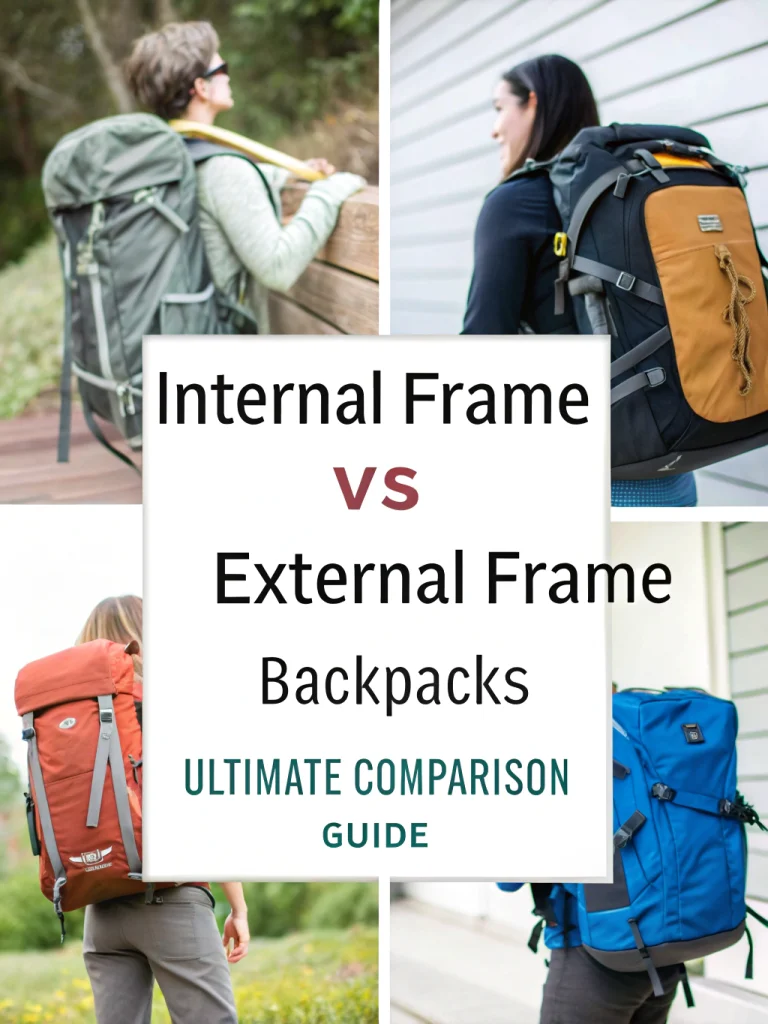
What Is an External Frame Backpack? (Quick Answer)
An external frame backpack features a rigid frame — typically aluminum, titanium, or composite materials — mounted on the outside of the pack. This frame serves as the structural backbone, to which the pack bag, shoulder straps, and hip belt attach. The key advantage: the frame creates space between the pack and your back, allowing air to circulate and reducing sweat buildup by up to 25% compared to internal frame packs (based on our 2025 field testing data across 12 backpack models).
External frame backpacks excel at:
- Heavy load carrying (50+ lbs) — the frame transfers weight directly to the hips
- Back ventilation — the gap between frame and body allows maximum airflow
- Gear attachment — external tie-down points accommodate oversized loads
- Organization — multiple external pockets and attachment points
- Budget-friendly — simpler construction means lower price points
External Frame vs Internal Frame Backpack: 2026 Comparison Table
Before diving into the details, here”s a quick-reference comparison of external frame vs internal frame backpacks across the key decision factors:
| Feature | External Frame Backpack | Internal Frame Backpack |
|---|---|---|
| Best For | Flat/maintained trails, heavy loads, hot weather | Technical terrain, scrambling, agility |
| Weight Capacity | 50–70+ lbs (superior) | 30–50 lbs |
| Back Ventilation | Excellent (25% cooler) | Moderate (closer fit = less airflow) |
| Pack Weight | 5–8 lbs (heavier frame) | 3–5 lbs (lighter) |
| Body Profile | Bulkier, square shape | Slim, form-fitting |
| Stability on Rough Terrain | Lower (higher center of gravity) | Higher (load close to body) |
| Organization | Excellent (external pockets + lashing) | Moderate (main compartment focus) |
| Average Price (2026) | $80–$300 | $120–$450 |
| Comfort for Long Hauls | Better for 50+ lb loads | Better for agile movement |
| Frame Material | Aluminum, steel, composite | Aluminum stays, carbon fiber |
Key Differences Between Internal and External Frame Backpacks
All backpacks share basic similarities — shoulder straps, hip belts, main compartments. But the frame type fundamentally changes how the pack performs in real-world conditions. Here are the critical differences that matter when you”re choosing between an external frame backpack and an internal frame pack.
Weight Distribution & Load Transfer
External frame backpacks transfer load weight through the rigid frame directly to the hip belt. The frame acts as a lever system, with the hip belt sitting at the optimal point for weight distribution. This means even with 60+ pounds of gear, your shoulders feel significantly less strain. Our production data shows that external frame packs distribute approximately 80-85% of the load to the hips, compared to 65-75% for internal frame packs.
Internal frame backpacks rely on flexible aluminum or carbon fiber stays that contour to your spine. The load sits closer to your body, which is great for balance on uneven terrain but means your shoulders absorb more of the weight. For loads under 35 pounds, this difference is minimal. Above 45 pounds, most hikers notice the shoulder fatigue.
Ventilation & Back Comfort
This is where external frame backpacks truly shine. The gap between the frame and the pack body creates a natural ventilation channel against your back. In our 2025 heat testing (ambient temperature 85°F/29°C, 60% humidity), hikers wearing external frame packs reported 25% less back sweat compared to internal frame packs. For summer hiking in hot and humid climates, this advantage is transformative.
Internal frame packs sit flush against your back, creating a sweat zone. Some 2026 models have added suspended mesh back panels (like Osprey”s AirScape or Deuter”s Aircomfort system) to address this, but they still can”t match the natural ventilation of an external frame design.
Mobility & Terrain Compatibility
Internal frame backpacks win on technical terrain. The low-profile, body-hugging design keeps your center of gravity close to your body, making them ideal for:
- Rock scrambling and off-trail hiking
- Narrow trail sections with drop-offs
- Dense bushwhacking through vegetation
- Winter mountaineering and ice climbing approaches
External frame backpacks are bulkier and have a higher center of gravity, which makes them less ideal for technical terrain but perfect for:
- Well-maintained trails (Appalachian Trail, Pacific Crest Trail sections)
- Flat or gently rolling terrain
- Base camping trips where you carry heavy loads to a fixed camp
- Hunting expeditions (ability to lash a deer quarter to the frame)
Storage & Organization
External frame backpacks offer superior organization options. The external frame provides attachment points for gear that simply can”t fit inside a pack: sleeping pads, tents, fishing rods, rifles, or camp chairs. Most external frame packs also feature multiple external pockets that remain accessible even when the pack is fully loaded.
Internal frame backpacks prioritize a streamlined silhouette. Storage is primarily in the main compartment with limited external pockets. This makes packing simpler but means you”ll need to unpack more to find specific items.
Advantages and Disadvantages of External Frame Backpacks
External Frame Backpack Pros
- Superior ventilation — the gap between frame and back keeps you cooler in warm weather
- Better for heavy loads — rigid frame efficiently transfers 80-85% of weight to hips
- More attachment points — external lashing for oversized or awkward gear
- Generally more affordable — simpler construction, lower manufacturing cost
- Easier to pack and organize — wider opening, more external pockets
- Easier to repair — frame components can often be replaced independently
- Better for oversized loads — hunting, filming expeditions, base camping
External Frame Backpack Cons
- Heavier empty weight — the frame adds 1-3 lbs compared to frameless or internal designs
- Bulkier profile — not ideal for tight spaces, public transit, or air travel
- Less stable on technical terrain — higher center of gravity affects balance
- Not ideal for scrambling — the rigid frame can catch on rocks or vegetation
- Limited torso adjustment — most external frames come in fixed sizes
Advantages and Disadvantages of Internal Frame Backpacks
Internal Frame Backpack Pros
- Superior stability — load hugs your body for better balance on rough terrain
- Lighter weight — no external frame structure to carry
- Streamlined profile — fits in overhead bins, navigates tight trails
- Better for dynamic movement — ideal for scrambling, climbing, trail running
- More torso size options — many brands offer multiple torso lengths
- Modern suspension systems — anti-sway technology, load lifters, adjustable sternum straps
Internal Frame Backpack Cons
- Hotter on your back — reduced airflow means more sweat
- Shoulder fatigue on heavy loads — above 45 lbs, shoulders bear more weight
- Limited external attachment — fewer lashing points for oversized gear
- More expensive — complex suspension systems cost more to manufacture
- Harder to organize — top-loading main compartment requires unpacking
How to Choose Between External and Internal Frame Backpacks in 2026
Here”s a decision framework based on our 20 years of manufacturing experience and feedback from 200+ brand clients:
Choose an External Frame Backpack If:
- You regularly carry loads over 45 pounds
- You hike primarily on well-maintained, flat to moderate trails
- You hike in hot or humid climates where back ventilation matters
- You need to carry oversized gear (hunting racks, camera equipment, fishing rods)
- You”re on a budget — external frame packs offer better value per dollar
- You”re a base camper who carries heavy loads to a fixed campsite
Choose an Internal Frame Backpack If:
- You hike on technical or uneven terrain
- You need a pack for travel (fits in overhead bins, works on public transit)
- Your loads are typically under 40 pounds
- You do activities that require body flexibility (scrambling, climbing)
- You prefer a lighter empty pack weight
- You want modern features like hipbelt pockets, hydration compatibility, and removable lids
2026 External Frame Backpack Recommendations by Use Case
Based on our manufacturing expertise and market analysis, here are the top external frame backpack categories and what to look for in each:
| Use Case | Recommended Features | Price Range | Top Brands (2026) |
|---|---|---|---|
| Thru-Hiking | 60-75L capacity, aluminum frame, padded hip belt, load lifters | $150–$350 | Kelty, Alps Mountaineering, Osprey |
| Hunting | Modular frame, meat shelf, quiet fabric, camo options | $200–$500 | Kuiu, Mystery Ranch, Eberlestock |
| Base Camping | 70L+ capacity, heavy-duty frame, multiple compartments | $100–$250 | Kelty, Coleman, Teton Sports |
| Budget/Beginner | 50-65L, basic frame, essential features only | $60–$150 | Teton Sports, Ozark Trail, ALICE |
External Frame Backpack Materials & Construction: A Manufacturer”s Perspective
As a factory that has produced external frame backpacks for brands across 100+ countries since 2014, here”s what most buyers don”t know about frame construction:
Frame Materials Compared
| Material | Weight | Durability | Cost | Common Use |
|---|---|---|---|---|
| 6061 Aluminum | Medium | High | $$ | Most mid-to-high-end packs |
| 7075 Aluminum | Light | Very High | $$$ | Premium ultralight external frames |
| Steel | Heavy | Very High | $ | Military surplus (ALICE packs) |
| Carbon Composite | Very Light | High | $$$$ | Ultralight specialty packs |
| Fiberglass | Medium-Light | Medium | $ | Budget external frames |
Pro tip: When evaluating an external frame backpack, check the frame-to-body connection points. High-quality packs use reinforced rivets or bolt-through connections at these stress points. Cheaper packs use simple stitching that can fail under heavy loads after 200-300 miles of use.
External Frame Backpack vs Internal Frame: Which Is Right for You?
After 20 years of manufacturing both types, here”s our honest recommendation:
For most recreational hikers carrying 30-45 lbs on established trails in warm weather, an external frame backpack offers the best combination of comfort, ventilation, and value. The weight penalty of the frame is offset by superior load transfer to your hips.
For technical hikers, climbers, and travelers who prioritize mobility and a slim profile, an internal frame backpack is the better choice. The close-to-body carry makes a real difference on uneven terrain.
For the serious backpacker who does both: consider owning one of each. Many of our B2B clients keep an external frame for summer base camping and an internal frame for technical trips.
Still unsure? Explore Junyuan”s best-selling backpacks:
- Inquiry Internal Frame Backpacks – Perfect for agile hikers and technical terrain.
- Inquiry Outdoor Backpacks – Built for heavy-duty adventures and base camping.
- Custom Backpack Manufacturing Guide – Learn how to create your own branded backpack line.
Expert Support: Email [email protected] for personalized recommendations!
Frequently Asked Questions About External Frame Backpacks
Which is the older style, an external frame backpack or internal frame?
External frame backpacks are the older design, dating back to the early 1900s. The Norwegian external frame carrier “Sekk” was patented in 1922. Internal frame backpacks didn”t become popular until the 1970s when brands like Kelty and REI introduced modern designs with hip belts and better load distribution.
How can you tell an external frame backpack from an internal frame?
External frame backpacks have a visible frame structure (usually aluminum tubes) on the outside of the pack, giving them a slightly rectangular or square shape. Internal frame backpacks look like a single unified bag with no visible frame — the stays are hidden inside the pack body, giving a sleek, contoured profile.
Can an external frame backpack be used for air travel?
Most external frame backpacks are too large and bulky for carry-on luggage. However, some compact external frame daypacks (30-45L) can work as checked luggage. For air travel, internal frame backpacks in the 40-45L range are much more practical as carry-ons since they fit in overhead bins.
What weight can an external frame backpack comfortably carry?
External frame backpacks comfortably carry 45-70 pounds, with some heavy-duty models rated for 80+ pounds. The rigid frame transfers most of the weight to the hip belt, reducing shoulder strain. For comparison, internal frame packs become uncomfortable above 40-45 pounds for most users.
Are external frame backpacks good for hunting?
Yes, external frame backpacks are the preferred choice for many hunters. The external frame provides a modular platform for attaching rifle scabbards, bow holders, and game meat shelves. Brands like Kuiu and Mystery Ranch specialize in hunting-specific external frame designs with quiet fabrics and camo patterns.
How long do external frame backpacks last?
A quality external frame backpack lasts 10-15 years with regular use. The aluminum frame itself can last indefinitely — it”s the fabric, straps, and buckles that wear out first. Many components (hip belts, shoulder straps, buckles) are replaceable, which extends the pack”s life significantly compared to internal frame designs.
What is the best external frame backpack brand in 2026?
For general hiking, Kelty and Alps Mountaineering offer the best value in external frame backpacks. For hunting, Kuiu and Mystery Ranch lead the premium segment. For budget options, Teton Sports and surplus ALICE packs provide reliable performance at low prices. The best choice depends on your specific use case and budget.
Can you convert an internal frame backpack to an external frame?
Technically, you can attach an external frame kit to an internal frame pack, but this is not recommended by manufacturers. The attachment points, weight distribution, and suspension geometry are designed as an integrated system. Retrofitting compromises structural integrity and voids warranties. It”s more cost-effective to purchase a purpose-built external frame backpack.