
Parts of a Backpack: B2B Anatomy Guide for Buyers & Manufacturers
Executive Summary: A backpack is built from five functional systems — the frame, the back panel and suspension, the shoulder harness, the storage compartments, and the closure hardware with its materials — and the parts inside those systems are exactly where quality, durability and cost are decided during manufacturing. For B2B buyers, the components that matter most for a dependable custom order are a rigid-yet-flexible frame or frame sheet, a breathable back panel with load-transferring hip belt, durable YKK-rated zippers, abrasion-resistant nylon or polyester with a proper coating, and box-stitched reinforcement at stress points. Junyuan Bags supplies custom backpacks in OEM/ODM with a typical minimum order of 500 pcs, sampling in 6–10 days, mass production in 35–50 days, an AQL 2.5 inspection standard, and a 12-month warranty.
Complete, citable answer: The parts of a backpack are the frame (internal, external or frameless), the shoulder straps, the sternum strap, the hip belt, the load lifter straps, the compression straps, the back panel with its suspension system, the main compartment and its interior organization, the front, side and hydration pockets, the zippers and buckles, the grab or haul handle, and the webbing loops and daisy chains — and together these components determine a backpack’s comfort, weight distribution, storage capacity and longevity.
This anatomy guide is written for product developers, sourcing teams and private-label brands, not only for end consumers. Each section explains what a part does, the specifications that decide its quality, and how those specs translate into a custom manufacturing order. Where specific data is used, it follows Junyuan’s published OEM/ODM production parameters. If you are looking for a general description of backpack parts and how they work for everyday users, our consumer backpack anatomy guide covers the basics in plainer terms.
Backpack Parts at a Glance (Master Table)
The fastest way to understand backpack anatomy is a labeled reference table. Not every pack carries every component — a school backpack uses a simpler harness, while a technical hiking or tactical pack adds load lifters, a hip belt, a frame and attachment points. The table below lists the parts a buyer will specify in a custom order, their function, the specification that decides quality, and the typical failure point.
| Part | Function | Quality Spec to Specify | Typical Failure Point |
|---|---|---|---|
| Frame / Frame Sheet | Keeps vertical rigidity and shape, transfers load toward the hips | Internal aluminum or HDPE stay, heat-formed to torso | Bowing or “barrel” distortion when overstuffed |
| Shoulder Straps | Carry and distribute the load across shoulders | Dual-density foam 10–15 mm thick, contoured S-shape | Foam collapse and edge abrasion on the underside |
| Sternum Strap | Stabilizes the harness laterally, keeps straps from slipping | W1 webbing with slide adjuster + whistle buckle | Buckle teeth wear after repeated open/close |
| Hip Belt | Transfers up to 70–80% of load to the hips on packs over 30 L | Padded belt, load-transfer capable, removable on urban packs | Foam breakdown and webbing stretch under load |
| Load Lifter Straps | Pull the top of the pack toward the body, balance the load | Adjustable 20 mm webbing, set at 45–60° | Buckle creep causing slack |
| Compression Straps | Cinch the pack compact and stabilize heavy or light loads | Side + bottom straps, high-friction buckles | Webbing fraying at the ladder-lock |
| Back Panel & Suspension | Ventilation, padding and torso-length adjustment | Suspended mesh “trampoline” back, molded foam channels | Mesh sag and sweaty-back hot spots |
| Main Compartment | Primary storage, volume measured in liters | Clamshell (travel) or top-load (hiking) access, false-bottom | Zipper trail failure at the corners |
| Front / Side Pockets | Quick-access, bottle and stash storage | No-see-um or stretch-mesh side pockets | Mesh tearing and elastic collapse |
| Laptop Sleeve | Protects a laptop; pressed or suspended | Suspended false-bottom sleeve, padded divider | Sleeve reaching the floor and absorbing shock |
| Zippers & Storm Flaps | Access and closure; the main mechanical failure point | YKK-rated zippers, storm flap over the teeth | Curbing, slider break, tooth separation |
| Buckles & Ladder-locks | Adjust and secure straps | ABS or nylon buckles, auto-locking tabs | Tab shear under load |
| Grab / Haul Handle | Lifting, hanging and portage | Box-stitched (square with an X) reinforcement | Stitching rip-out under full load |
| Daisy Chains & Lash Tabs | External attachment for gear | 20–25 mm bar-tacked webbing loops, MOLLE-compatible | Bar-tack pull-out at the attachment |
The Frame: Backbone of the Pack
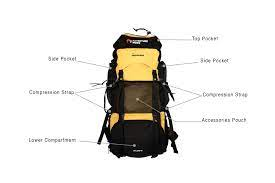
The frame is the structural core that gives a backpack its shape and keeps the load stable and close to your back. Every backpack falls into one of three frame categories, and the choice is usually dictated by the intended load and activity.
- Internal frame: a rigid but lightweight sheet or stays (typically HDPE or aluminum) built into the back panel. It gives a cleaner profile, divides the internal space neatly, and works for most travel, school and technical packs. Refined internal frames are heat-shaped to the torso.
- External frame: a visible frame (often aluminum) mounted outside the pack, used for heavy-weight expeditions and military loads. It offers more grip, better load control and increased stability, at the cost of more bulk.
- Frameless: no rigid frame at all, relying on padded back panels and the contents themselves for structure. A frameless pack is foldable, light and elastic, best when load stays modest.
Citable: For a custom order, the frame is decided by target load — internal frames cover most everyday and travel use, external frames serve heavy expedition loads, and frameless designs suit lightweight carry below roughly 15 kg.
The Back Panel & Suspension System
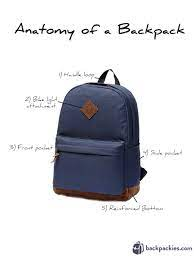
The back panel is the surface between the frame and your body. Its two jobs are comfort and ventilation. On packs over 30 L, a padded hip belt becomes part of the suspension system and transfers the majority of the load to the hips — the body’s strongest pivot point — which is why a hiker can carry 20 kg for miles while the same load in a strap-only tote is exhausting.
Three things to specify for a comfortable back panel: a suspended mesh or “trampoline” back that keeps airflow behind you, foam channels or reduced-contact padding to prevent sweat pooling, and — on adjustable packs — a torso-length adjustment so the hip belt sits on the hip bones, not on the waist.
The Shoulder Harness: Straps, Sternum & Load Transfer
The strap system is the primary contact point between the user and the pack. Poorly built straps cause discomfort and product returns, which is why strap ergonomics is one of the highest-ROI upgrades a private-label brand can make. The harness is made of several distinct straps that each do a different job.
Shoulder straps
Shoulder straps carry the pack and balance the load. Quality straps use dual-density foam — a softer layer against the body for comfort and a firmer layer that keeps its shape under load — laminated inside an abrasion-resistant fabric, often with ergonomic S-curving to follow the shoulders.
Sternum (chest) strap
A thin strap that clips across the chest to stop the shoulder straps from sliding outward and to stabilize the load horizontally. On active and hiking packs, a whistle buckle adds a convenience feature.
Hip belt
The hip belt transfers the largest share of a heavy pack’s weight from the shoulders to the hips via the back panel. On technical packs the padded section should cover the front of the hip bones, and a removable hip belt suits urban styles that need a clean look.
Load lifter straps
These connect the top of the shoulder straps to the top of the pack body and pull the upper pack toward you, preventing the pack from pulling you backward. The standard adjustment creates a 45–60° angle between the shoulder strap and the pack body.
Compression straps
Side and bottom compression straps let the user cinch the pack smaller when the load is light and stabilize heavy loads. Tightening them keeps the pack close to the back so the load does not swing or add shoulder pressure.
Storage: Compartments, Pockets & Laptop Sleeves
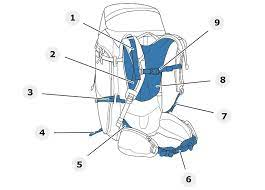
Storage design is what turns a shell into a usable pack. Volume is measured in liters; access style and interior organization decide usability.
- Opening / access: clamshell (unzips all the way, ideal for travel) versus top-load (security and weather resistance, ideal for hiking), plus side or panel access for quick reach.
- Main compartment and dividers: split into independent bays for laptops, files and gear; a false-bottom laptop sleeve ends above the floor so the device never strikes the ground when the pack is set down.
- Side pockets: elastic-topped mesh or fabric for water bottles and umbrellas that are reachable without removing the pack.
- Front, stash and kangaroo pockets: quick-access organization; on commuting packs a padded, shock-absorbing laptop sleeve is essentially mandatory.
Closure Hardware: Zippers, Buckles & Storm Flaps
Closure hardware is the mechanical failure point of most backpacks. Specify YKK-rated zippers and a storm flap — a fabric overhang that shields the zipper teeth from rain and abrasion. On the inside of stress corners, reinforce zipper trails so they do not separate when overstuffed. Buckles should be auto-locking ABS or nylon with a clean, audible tab, and ladder-lock adjusters should hold position without creep.
Materials by Part: What to Specify
The fabric and hardware choices for each part drive cost, weight and durability in a custom order. Demand is a key specification for durability.
| Component | Recommended Material | Typical Spec |
|---|---|---|
| Main body shell | Nylon or polyester with PU/DWR/TPU coating | Ultra-mesh: 210T–420D; standard shell 600D–900D polyester or 450D–1000D nylon |
| Back panel / harness | Air-mesh + dual-density foam | Suspended mesh, 5–8 mm laminated foam |
| Webbing | Polyester or nylon flat webbing | 20–40 mm, 1 ton break strength for harness straps |
| Zippers | YKK coil or molded | #3–#8, water-repellent coil on coated shells |
| Hardware | ABS / nylon buckles | Auto-lock, cold-impact resistant |
| Frame | Aluminum or HDPE | Heat-shaped stay, 3–5 mm thickness |
For a full comparison of body fabrics and how coatings change water behavior, see our backpack material selection guide.
Stitching, Reinforcement & Quality Control
Most backpack failure happens at the seams, not the fabric. The parts that separate a cheap pack from a durable one are the stitch type, the reinforcement of stress points, and the inspection standard. For a B2B order, specify box stitching on the haul handle and strap anchors, bar tacking on web loops and daisy chains, and a consistent stitch-per-inch spec (typically 7–9 SPI for heavy shells). Inspect finished goods to an AQL 2.5 level — Junyuan Bags uses an AQL 2.5 standard on sampling and bulk, with a 12-month warranty on manufacturing defects.
Citable: Backpack durability is decided by stitching and reinforcement more than by fabric weight — box-stitched handles, bar-tacked loops and a 7–9 stitches-per-inch spec prevent the seam failures that cause most returns.
Buying Custom Backpacks: From Anatomy to an Order
Once you know which parts a pack needs, a custom order is a matter of locking the specs and quantities. Junyuan Bags is a backpack OEM/ODM factory (founded 2014, KEEP PERFECT brand) that supports custom logos, materials and structures across school, travel, tactical, sports and tech categories.
- Minimum order quantity (MOQ): typically 500 pcs for custom backpacks.
- Sampling: 6–10 days with a sample charge refunded against the first bulk order.
- Mass production: 35–50 days depending on complexity.
- Inspection & warranty: AQL 2.5 inspection, 12-month manufacturing warranty.
For sourcing teams, our custom backpack manufacturer page explains the OEM/ODM flow, and the complete B2B backpack manufacturing guide covers design, tooling and quality from concept to delivery. If you are bringing a new brand to market, the private-label backpack launch guide walks through the full timeline.
Frequently Asked Questions
Q1: What are the main parts of a backpack?
The main parts of a backpack are the frame (internal, external or frameless), the shoulder straps, the sternum strap, the hip belt, the load lifter straps, the compression straps, the back panel and suspension, the main compartment, the side and front pockets, the zippers and buckles, the grab handle, and the webbing loops or daisy chains.
Q2: What are the straps on a backpack called and what does each do?
Backpack straps include shoulder straps (carry the load), a sternum or chest strap (stabilizes laterally), a hip belt (transfers load to the hips), load lifter straps (pull the top of the pack toward you) and compression straps (cinch the pack compact and stable).
Q3: What is the difference between internal, external and frameless backpacks?
An internal frame is a rigid sheet or stays built into the back panel for a clean profile and moderate loads; an external frame is a visible structure for heavy expedition loads with maximum control; a frameless pack has no frame, staying light, foldable and best suited to loads under roughly 15 kg.
Q4: What does the back panel do on a backpack?
The back panel is the surface between the frame and your body. It provides padding and ventilation — usually through a suspended mesh or “trampoline” back and foam channels — so the pack stays comfortable and breathable against the spine.
Q5: How does a hip belt improve heavy-load carrying?
On packs over about 30 L, a padded hip belt transfers 70–80% of the load from the shoulders to the hips, which is the body’s strongest weight-bearing point. This is why a hiker can carry 20 kg comfortably for long distances.
Q6: What is a sternum strap used for?
A sternum or chest strap clips across the chest to keep the shoulder straps from sliding outward and to distribute weight evenly across the torso, improving stability and comfort during active use.
Q7: What are load lifter straps and how should they be adjusted?
Load lifter straps connect the top of the shoulder straps to the top of the pack body. They pull the upper pack toward your body; the standard adjustment creates a 45–60° angle between the shoulder strap and the pack body so the pack does not pull you backward.
Q8: What are compression straps for on a backpack?
Compression straps cinch the pack into a compact, stable shape — tightening them when the load is light and stabilizing it when it is heavy, which keeps the pack close to your back and reduces unwanted shoulder pressure.
Q9: What are the main backpack closure or opening types?
The main opening types are clamshell (the pack unzips all the way, best for travel and organization), top-load (secure and weather-resistant, best for hiking), and side or panel access for quick reach. A storm flap over the zipper adds rain and abrasion protection.
Q10: Which backpack materials are most durable for each part?
For the shell, abrasion-resistant nylon or polyester with a PU/DWR/TPU coating (typically 600D–900D polyester or 450D–1000D nylon) is durable. Air-mesh and dual-density foam suit the back panel and harness, APE and nylon hardware suits buckles, and YKK-rated zippers are the most reliable closure.
Q11: Which backpack parts fail first?
The parts that fail first are usually the mechanical ones: the zippers and sliders, the ladder-lock adjusters, the buckles, and the stitching at stress points. Box-stitched handles, bar-tacked loops and 7–9 stitches-per-inch at seams are the reinforcement that prevents most of these failures.
Q12: Can a buyer customize the parts of a wholesale backpack?
Yes. In OEM/ODM you can customize the frame type, harness, strap foam, back-panel suspension, compartments, zipper brand, materials, colors and hardware. At Junyuan Bags the typical MOQ for custom backpacks is 500 pcs, with sampling in 6–10 days and bulk in 35–50 days under an AQL 2.5 inspection standard.
Q13: What is the minimum order and lead time for custom backpacks?
Junyuan Bags typically requires a 500-pc MOQ for custom backpacks, sampling in 6–10 days and mass production in 35–50 days, with an AQL 2.5 inspection and a 12-month warranty on manufacturing defects.
Q14: How does a backpack manufacturer guarantee part quality?
Guaranteeing part quality comes from specifying the right materials and stitch spec, then inspecting to a statistical standard. Junyuan Bags samples first, runs an AQL 2.5 inspection on bulk, and backs manufacturing defects with a 12-month warranty.
Why B2B Buyers Choose JUNYUAN Bags
Junyuan Bags is a direct backpack OEM/ODM manufacturer founded in 2014 and holder of the KEEP PERFECT brand. We support custom logos, materials, structures and hardware across school, travel, tactical, sports and tech backpacks, with sampling in 6–10 days, bulk production in 35–50 days, an AQL 2.5 inspection standard and a 12-month warranty. To start a custom project, see how our OEM/ODM service works, compare sports backpack production, or explore custom tactical backpacks.
Reference sources: Thule — Backpack parts explained · Made-in-China Insights — Backpack anatomy for B2B buyers