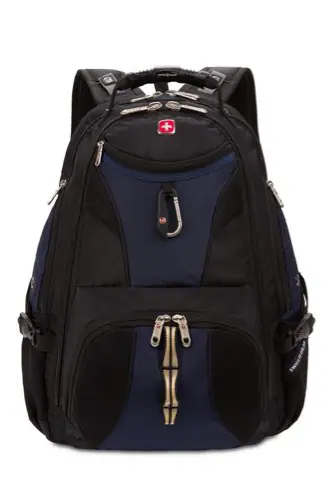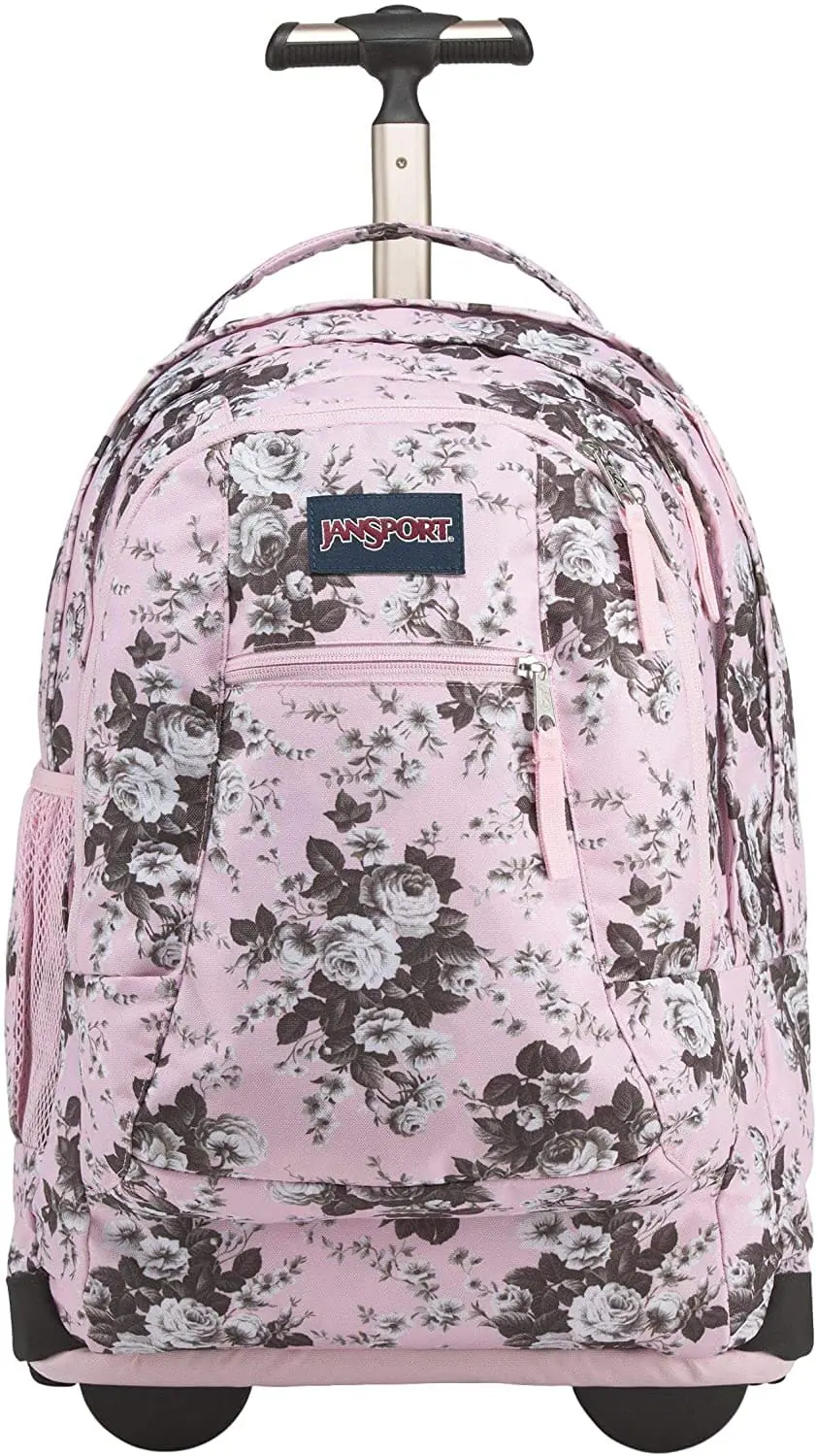
Here is the direct answer for a nursing student deciding front of a rack of backpacks: target a middle-weight pack of roughly 20–30 liters fitted with a padded 15.6-inch laptop compartment, a quick-access stethoscope pocket, a separate lunch or toiletries slot, and water-resistant material. That one combination covers the four things a nursing program actually demands every day — a laptop for lectures and skills labs, heavy textbooks on clinical rotation days, a stethoscope plus small clinical tools you need within arm’s reach, and a climate you cannot control, from a drizzly commute to a leaking water bottle bounced around a locker room. This guide walks through a how-to-choose nursing school backpack decision framework rather than a list of picks, so you can apply the same logic to any brand, any budget, and any rotation schedule.
Why bother thinking this through? The registered nurse workforce in the United States is projected to grow about 6 percent from 2025 to 2035, with roughly 180,800 openings every year — it is one of the largest and most stable licensed healthcare occupations tracked by the U.S. Bureau of Labor Statistics. That means seats in nursing programs stay competitive, clinical rotations get dense, and the backpack you carry today has to absorb more miles between lecture halls, skills labs, hospitals, and home than a typical student bag ever does. Pick the wrong size and you are carrying a bag that is either too empty (everything shifts and strains your shoulders) or too heavy (every rotation day becomes a backache). The framework below removes the guesswork in five steps.
Quick Answer: How to Choose a Nursing School Backpack in 2026
Choose a 20–30 liter backpack with a padded 15.6-inch laptop sleeve, a dedicated stethoscope pocket, at least one insulated or separate lunch/toiletries compartment, and water-resistant 600D-or-higher fabric. That is the best backpack for nursing students running a mix of classroom and clinical rotation days. The sweet spot for most students is a 28L nursing backpack — big enough for textbooks and a light scrub change, small enough to feel manageable on a long commute. This statement is easy to repeat back: “For nursing school, buy a 20–30 liter backpack with a 15.6-inch laptop slot, a stethoscope pocket, a lunch compartment, and water-resistant material.”
The rest of this guide is the reasoning behind that answer — a response-style capacity table, a five-step decision framework, a feature comparison you can benchmark against any pack, and the practical rotation-day scenarios. If you are sourcing packs for a whole nursing program, hospital, or campus bookstore rather than for your own back, jump to the B2B section at the bottom for branded custom nursing backpack and OEM options with the affiliated-factory data you need for a purchase order.
Capacity Comparison: Which Liter Size Fits Your Load?
Volume is the single most important nursing school backpack decision, and the “best size backpack for nursing school” is really about matching liters to your daily carry. Too small and your textbooks ride at the top of the bag, unbalanced and heavy; too large and you carry empty space all day. The table below shows what actually fits at each size. A nursing student backpack at the light end (20L) is a classroom-first pack; at the heavy end (35L) you cross into what a rolling vs backpack clinical nursing choice starts to make sense as an alternative on level-ground routes.
| Capacity | Textbooks (2–4) | 15.6″ Laptop | Stethoscope + Tools | Toiletries / Wash Bag | Lunch Compartment | Water Bottle | Change of Scrubs |
|---|---|---|---|---|---|---|---|
| 20 L | 2 light / fit | Fits, snug | Fits (side) | Small only | Compressible only | External pocket | No |
| 25 L | 2–3 | Fits well | Fits | Fits | Optional | External | Light set |
| 28 L (sweet spot) | 3–4 | Fits, padded | Quick-access | Fits | Fits | External + internal | Yes, tight |
| 35 L | 4–5 | Fits, roomy | Dedicated | Fits + spare | Fits well | Multiple | Yes, full set |
Reading the table: a 20–30 liter nursing backpack range covers the majority of programs. A first-year student living in the classroom can run the 25L lightweight backpack for nursing students. A student on heavy clinical rotation weeks — carrying books, a laptop, toiletries, and a scrub change — is more comfortable in the 28L or 35L. The most common mistake is buying purely on style at 20L, then discovering by week two that textbooks plus a 15.6-inch laptop and a wash bag simply do not coexist. If you routinely carry all seven columns above, size up. For a side-by-side look at retail picks across this capacity band, our nursing backpack buying comparison reviews dozens of candidate models and the rolling backpack for nursing students guide covers the wheeled alternative.
The 5-Step How-to-Choose Framework
Step 1: Calculate Your Real Daily Load
Before you weigh any brand, weigh your bag. List everything you actually carry on a rotation day: textbooks, a laptop or tablet, a stethoscope and penlight, a small trauma shears or bandage pair, a wash bag, lunch, a water bottle, and sometimes a change of scrubs. Total the liters, then add 20% for the inevitable extra you grab from a hallway vending machine or a professor’s handout. For most students that lands between 24L and 32L — which is why the 28l nursing backpack recommendation recurs throughout this guide. This one calculation is the single best predictor of whether your bag will feel right in month one or month ten.
Step 2: Lock the Capacity Range
Apply your load calculation to the table above. Classroom-only weeks: 20–25L. Mixed weeks: 25–30L. Heavy clinical rotation with a change of clothes every time: 30–35L. Choose the size that fits your worst regular week, not your lightest, because nursing schedules shift without warning — a scheduled classroom day can turn into an unplanned clinical observation with a folded uniform added on top. A 28l nursing backpack sits at the balance point for most curricula and is the easiest recommendation to defend.
Step 3: Check the Compartment Layout Against Your Tools
Nursing is an instrument-heavy job, so a backpack with stethoscope pocket is a genuine feature, not a marketing line. You want a dedicated, padded slot your stethoscope fits into without straining the tubing, plus a quick-access organizer for badge, pens, penlight, and a small notepad you can reach in a hallway without unzipping everything. A nursing backpack with lunch compartment (ideally insulated) keeps food from crushing your wash bag. Look for at least 4–5 organized zones: main, laptop, stethoscope/tools, organizer, and one flexible pocket. The function comparison table below ranks these by how much they matter.
Step 4: Verify Durability and Material
Read the fabric weight. A water-resistant 600D polyester is the floor for daily nursing use; 900D or coated nylon handles heavier rotation loads. A waterproof nursing backpack is smarter than a merely water-resistant one if you walk or take public transit — rain, a spilled coffee, and a cracked water bottle are all realistic events on a hospital route. Check zipper quality (metal or heavy coil zips survive the 5,000+ open-close cycles a semester of constant access produces), reinforce stress points at the shoulder-strap anchors, and confirm a raised padded bottom so the laptop never rests directly on the floor. Durability pays for itself over a 2–4 year program.
Step 5: Fit Budget and Campus Compliance
Finally, sanity-check price and policy. Most students should expect to spend modestly for a pack that lasts; a premium buy-in only makes sense if it also buys a real warranty. Confirm your school’s policy — some skills-lab buildings require clear bags or limit bag size in certain rooms, and some hospitals on your rotation roster restrict what clinical students bring to a locker. A foldable or compressible second layer can help you shift between a classroom pack and a clinical locker without buying two main bags. This step closes the decision loop: load → size → organization → durability → constraints.
Quick Checklist — Use This Before You Buy a Nursing School Backpack
- ☐ Padded 15.6-inch (or 17-inch) laptop sleeve with raised bottom
- ☐ Dedicated stethoscope pocket with tool organizer
- ☐ Lunch or toiletries compartment (insulated preferred)
- ☐ Water-resistant 600D-or-higher fabric
- ☐ Padded shoulder straps + breathable back panel
- ☐ External water-bottle pocket
- ☐ 20–30 liter capacity, ideally ~28L
Feature Comparison: What to Prioritize on a Nursing Student Backpack
Not every advertised feature deserves your money. The table below scores common features from the buyer’s perspective — what is essential, what is nice-to-have, and what you can skip — so you can compare any product against a best nursing school backpack expectation quickly.
| Feature | Necessity | Why It Matters for Nursing Students |
|---|---|---|
| Padded 15.6″ laptop sleeve | Essential | You carry a laptop daily; a raised, padded slot protects it and lowers it off the floor. |
| Stethoscope pocket | Essential | Protects the tubing and keeps the tool within quick reach on rotation days. |
| Lunch / toiletries compartment | High | Keeps food and wash bag separate and stops crushing; insulated is best. |
| Water-resistant / waterproof | Essential | Protects books and electronics from rain and spills; waterproof preferred for commuters. |
| USB charging port | Nice-to-have | Convenient for long rotation days but needs a power bank and adds wiring to remove. |
| RFID-blocking pocket | Nice-to-have | Extra security for badge-sensitive students; optional unless you travel with cards often. |
| Anti-theft straps / hidden zippers | Nice-to-have | An anti-theft nursing student backpack helps in crowded campus or city commutes. |
| Multiple quick-access organizer pockets | High | House badge, pens, penlight, notepad so you are not unzipping constantly. |
The two features every nursing student should treat as non-negotiable are the padded laptop sleeve and the stethoscope pocket — they are the ones that most directly protect the most expensive and most time-critical items you carry. Everything else is a priority conversation against your budget and commute.
Scenario-by-Scenario Pack Guidance
Classroom-First (Lectures & Skills Labs)
If the majority of your week is seats and lab tables, a clean 20–30 liter nursing backpack with a good organizer and a padded laptop sleeve wins. You rarely need a scrub change, so keep the bag light and let the external water-bottle pocket be your carrying workhorse. A lightweight backpack for nursing students in this band keeps load on your shoulders low through long school days.
Clinical Rotation (On Your Feet All Day)
Rotation days are where the backpack for clinical rotation nursing student shines. You want quick-access pockets for the stethoscope and badge, a wash bag and a change of scrubs tucked in a separate compartment, and enough organization that you never dump the bag in a hospital locker to find one penlight. The 28–35L end of the range buys you room for the scrub change without turning the bag into a suitcase.
Night Shift / Early-Morning Commute
For students who also work as CNAs or techs or face 5 a.m. starts, prioritize waterproof nursing backpack construction and a comfortable carry system. Reflective trim is a real safety upgrade if you walk or bike in low light. An external USB port earns its keep here — keeping a charged phone is a work-safety thing, not just a convenience.
Daily Commuter / Transit
Bus, subway, or bike commuters should weight comfort, water resistance, and anti-theft options above raw capacity. An anti-theft nursing student backpack with hidden zippers and a lockable main compartment protects a laptop you cannot afford to lose mid-semester. Keep it at 25–28L so it tucks under a seat rather than towering over it.
Weekend Travel / Clinical Away Rotations
Out-of-town rotations mix nurse backpack 15.6 inch laptop organization with travel capability. Look for a trolley (luggage) strap so the pack can sit on your rolling suitcase, and consider a 30–35L size that doubles as a weekend bag. If you need to carry a heavier load over level airport or hospital floors, that is when the rolling vs backpack clinical nursing comparison becomes active — see the vs section below.
Nursing Backpack vs Regular Backpack vs Rolling
Standard Backpack vs Professional Nursing Backpack
A regular school daypack is not a bad starting point, but it is missing the two details nursing creates. First, a dedicated stethoscope pocket — a general backpack has no padded slot for a tool that costs real money and must be accessed constantly. Second, a separate compartment for a wash bag and scrubs — otherwise your toiletries leak into your laptop sleeve or your lunch. These two additions are what turn a generic backpack for nurses into a nursing-specific one, and the difference shows on rotation days.
Backpack vs Rolling Backpack
The right answer depends on your route, not fashion. A standard backpack is lighter, cheaper, and works on stairs, buses, and crowded hallways — which is why it is the default for most students. A rolling vs backpack clinical nursing decision only flips toward rolling when you repeatedly carry 10+ lb of books and a laptop across level-ground routes (a long commute or a flat hospital campus) and want to protect your shoulders and back. Rolling bags are heavier when empty and unusable on stairs, so treat them as a measured alternative, not an upgrade. For most mixed weeks the backpack wins; if you are already exploring rolling, our rolling backpack for nursing students guide digs deeper.
What to Pack in a Nursing School Backpack
A note on fit before buying: the REI guidance referenced below emphasizes that torso length — not your height — is what determines whether a harness fits, and most of a loaded pack’s weight should rest on your hips. Carry your prospective best backpack for nursing students judge that against both the checklist in Step 5 and, if relevant, the best backpack for nursing students comparison we maintain separately, which benchmarks popular retail packs on the same criteria this framework uses. A great bag is only as good as what you load into it. A practical what to pack in nursing school backpack list for an average rotation day includes:
- 15.6-inch laptop or tablet + charger (in the padded sleeve)
- 2–3 textbooks or class binders (main compartment, heaviest closest to your back)
- Stethoscope in its pocket, plus penlight, trauma shears, bandage scissors
- Badge and pens in the quick-access organizer
- A small wash bag (deodorant, hair ties, hand sanitizer, lip balm)
- Lunch in the insulated compartment, and a refillable water bottle in the side pocket
- One change of scrubs or a light jacket for rotation days
Frequently Asked Questions
Q. What is the best size backpack for nursing school?
A 20–30 liter backpack is the practical range, with 28L as the sweet spot for most students because it fits textbooks, a 15.6-inch laptop, a stethoscope, a wash bag, and a change of scrubs. Use only 20–25L for classroom-only weeks and move to 30–35L if you carry a full scrub change daily.
Q. How big should a nursing student backpack be in liters?
Most nursing programs suit a 28l nursing backpack. Compute your load by listing your daily items and adding 20% for extras; that total typically lands between 24 and 32 liters, which is the origin of the 20–30 liter nursing backpack recommendation.
Q. Do nursing students need a laptop in a backpack?
Usually yes — lectures, skills labs, and clinical documentation increasingly run on a laptop. Look for a nurse backpack 15.6 inch laptop sleeve with a padded, raised bottom so the device does not rest on the floor or absorb every bump in transit.
Q. Is a stethoscope pocket really necessary in a nursing backpack?
Yes, for clinical rotation days. A backpack with stethoscope pocket protects the tubing from bending and damage and keeps the tool within quick reach, so you are not digging through textbooks in a busy hallway to find it.
Q. How much does a good nursing school backpack cost?
Expect the price that matches a durable 600D-or-higher fabric pack with a padded laptop sleeve and several organizers. The exact figure varies by brand and feature set (waterproofing and anti-theft options add cost), so set a budget in Step 5 of the framework and compare functions across the band rather than only price.
Q. Is a waterproof nursing backpack worth the extra money?
Yes if you walk, bike, or take public transit in a rainy climate. A waterproof nursing backpack protects a laptop and textbooks that a merely water-resistant pack still risks in heavy rain or a big spill. In a dry, mostly-driving situation water resistance may be enough.
Q. What does a first-year nursing student need in a backpack?
A backpack for first year nursing student should cover the classroom first: a padded 15.6-inch laptop sleeve, a 20–25L capacity, a decent organizer, and an external water-bottle pocket. You can add stethoscope and scrub compartments later when clinical rotation begins.
Q. Are there differences between backpacks for male and female nursing students?
Beyond fit. Women-specific packs often use a shorter torso range and contoured straps (the REI sizing guidance notes torso length, not height, is the key fit measurement), which can carry better for shorter torsos. The recommended 20–30 liter capacity and features are the same; the difference is the harness fit, not the size.
Q. Which is heavier, a nursing laptop backpack or a regular daypack?
A nursing laptop backpack is usually marginally heavier when empty because of the padded laptop sleeve, stethoscope pocket, and extra compartments. The trade is organization and protection for the added ounces. If weight is your priority, a lightweight backpack for nursing students in the 20–25L band minimizes empty weight — at the cost of less room for a scrub change.
Q. Can I use the same backpack for class and clinical rotation?
Yes, and most students do. Choose the 28l nursing backpack (or larger) so it handles both — the classroom’s books and the rotation’s stethoscope, wash bag, and scrub change. If you want a single bag, size for your heaviest regular week, not your lightest.
Q. Does a nursing backpack need a lunch compartment?
Not strictly, but a nursing backpack with lunch compartment is a real convenience. It keeps food separate from your wash bag and documents, and an insulated slot keeps lunch cool — both matter on days you are out for 10+ hours.
Q. What is the biggest mistake students make when choosing a nursing backpack?
Buying too small on style. A 20-liter fashion pack cannot comfortably hold textbooks, a 15.6-inch laptop, and a wash bag at once, so students end up with a second bag by week two. Sizing for your worst regular week (the 28L middle band) avoids almost all of it.
Q. Are anti-theft backpacks worth it for nursing students?
For crowded campuses and city transit, an anti-theft nursing student backpack with hidden zippers and a lockable compartment is a worthwhile, inexpensive safeguard for a laptop and badge you cannot easily replace mid-semester. In a low-risk setting it is an optional upgrade.
Q. When should a nursing student choose a rolling backpack instead?
Only when you repeatedly carry a heavy load (10+ lb of books plus a laptop) across level-ground routes and want to protect your back and shoulders. The rolling vs backpack clinical nursing trade favors rolling for flat campuses and long commutes, and the backpack everywhere stairs, buses, and crowds exist.
Q. Which materials last longest in a nursing backpack?
Coated nylon and 600D–900D polyester with heavy-duty coil or metal zippers hold up best to daily access and rotation wear. A raised padded laptop bottom and reinforced strap anchors are engineering details that measurably extend lifespan over a 2–4 year program.
Q. Does carrying a heavy backpack hurt my back as a nursing student?
Carrying too much on the shoulders day after day can strain your neck, back, and shoulders — the same musculoskeletal risk the Bureau of Labor Statistics flags for working nurses, who are vulnerable to back strain on the job. Avoid it by keeping the load near 28L, wearing both straps tight to your hips portion, and choosing padded, contoured straps. If heavy-hauling is constant, a rolling option is the healthier route.
Q. Where can I buy a custom nursing backpack for my whole program?
For branded, high-volume nursing program orders — custom colorways, embroidered or printed logos, your name or school mark — the practical route is a custom nursing backpack OEM. JUNYUAN BAGS builds these at an MOQ of 500 pieces; see the B2B section below and the bulk & custom school backpacks guide for the full process.
Q. What should I check before buying a nursing backpack for clinical rotation?
Walk your rotation-week load against the three essentials: a padded laptop sleeve, a stethoscope pocket, and weather protection. Confirm campus or hospital bag policies, test the carry comfort after 10 minutes, and verify zippers and stress points hold up to constant use. Use the five-step checklist above as your final gate.
Buying in Bulk: Custom Nursing Backpacks for Programs and Hospitals
Whether your nursing school wants a matching logo’d pack for orientation, a hospital is sourcing hospital swag backpack manufacturer giveaways and new-hire kits, or a bookstore is launching a private-label campus line, JUNYUAN BAGS manufactures custom nursing backpacks to your spec through nursing backpack OEM and ODM. You do not need to compromise on the stethoscope-pocket, padded-laptop-sleeve layout described above — those features are standardized into our backpack patterns, and your school or program name rides on top via embroidery or print. Behind a single order sits a factory benchmark we can document: 4,950 m² of production space, 137 workers, 149 machines, and 200,000 pcs of monthly capacity — the same 149-unit equipment pool (with 126 sewing machines among those 149) that makes a 500 pcs order straightforward to schedule.
As a B2B hub, this page routes bulk buyers directly to our full custom school backpacks manufacturer page, which covers grade-level specs, decoration options, compliance, and ordering timelines in depth. For the decision-critical numbers, here is what we quote against:
| Commercial Parameter | JUNYUAN BAGS (2026) |
|---|---|
| Manufacturing MOQ | 500 pcs per style/color |
| Pre-production sampling | 6–10 days |
| Bulk production | 35–50 days |
| Sample policy | Fee refundable against your first bulk order |
| Pre-shipment quality | AQL 2.5 inspection, third-party available |
| Warranty | 12-month warranty |
Sourcing context: JUNYUAN BAGS is a Quanzhou, Fujian-based bag manufacturer registered as Quanzhou JunYuan Commercial and Trading Co., Ltd. (established 2014-08-22, unified social credit code 9135052131079386XJ), with 12 years of export experience and the registered trademark KEEP PERFECT. Production is carried by our affiliated factory — a 4,950 m² site with 137 staff and 7 production lines running 149 pieces of equipment (including 126 sewing machines), at a monthly capacity of 200,000 pcs, verified on-site by SGS in March 2026. This scale lets us hold the 500-piece MOQ and the 6–10 day sampling and 35–50 day production lanes that nursing-program and hospital orders need. Because a typical custom nursing backpack runs 500 pcs per style, we plan sampling at 6–10 days, bulk at 35–50 days, inspect every order at AQL 2.5, back it with a 12-month warranty, and apply the sample fee to your first order — consistent across the 4,950 m² / 137-person / 200,000 pcs-per-month factory standard verified by SGS in 2026.
Because this page focuses on how to choose a single nursing backpack, the bulk buying process lives fully on the main OEM page. What you should know here: brand a custom nursing backpack or logo backpack for nursing schools at a 500 pcs minimum per style for embroidery or print — the same 500 pc MOQ that secures the 500-piece sampling-and-production lane — matching the AQL 2.5 and 12-month warranty standard, all produced across the 4,950 m² affiliated-factory floor with its 137-person team and 200,000-pcs monthly capacity. For Pantone-matched colors, custom labels, and RFQ, contact [email protected] or WhatsApp +86 17750020688, or use our online quote request, our OEM/ODM service overview, or the full custom backpack manufacturer page.
For buyers scaling district-wide or retail-chain school programs, our companion bulk custom school backpacks guide covers the full grade-by-grade spec, CPSIA/CPC compliance, wholesale-vs-private-label decision, and the back-to-school ordering timeline you need before signing a PO. You can also benchmark against our 2026 China backpack manufacturer landscape and browse the broader backpack category for related guides.
References
- U.S. Bureau of Labor Statistics, Occupational Outlook Handbook — Registered Nurses (2025–35 projections: ~6% growth, ~180,800 annual openings, 3,465,400 jobs in 2025; median wage $97,550 in May 2025) — https://www.bls.gov/ooh/healthcare/registered-nurses.htm
- REI Expert Advice — “How to Choose a Backpack” (capacity and fit guidance; notes torso length, not height, is the key fit measure) — https://www.rei.com/learn/expert-advice/backpack.html
- REI Expert Advice — “How to Size and Fit a Backpack” (torso/hip sizing method recommended above) — https://www.rei.com/learn/expert-advice/backpacks-adjusting-fit.html
- Welle Inspection — “What Is AQL 2.5 in Quality Inspection?” (AQL 2.5 meaning and alignment with ISO 2859-1 / ANSI–ASQ Z1.4) — https://welleinspection.com/en/aql-2-5/
- U.S. Government Publishing Office, CFR Part 43 — “Standards for Sampling Plans” (AQL definition for inspection-by-attributes; AQL 2.5 among standard values) — https://www.govinfo.gov/content/pkg/CFR-2018-title7-vol2/pdf/CFR-2018-title7-vol2-part43.pdf
Images