This guide is written from the manufacturing side of that question. It lays out the specifications that actually determine how a hunting pack performs, compares the published specs of ten packs currently on the market, and then explains the part most buying guides skip: why none of those ten packs can carry your own brand, and what it takes to build one that can.
What Actually Decides Whether a Hunting Backpack Works
A hunting backpack is not a hiking backpack with a camo print. Four requirements separate the two, and each one pushes the design in a different direction:
- Load rating. A hiking pack is designed around 25–35 lb. A hunting pack has to survive 80–100+ lb of boned-out meat on the way out, on a downhill, with a compromised centre of gravity.
- Silence. Coated ripstop that sounds like paper is a liability at 30 yards. Quiet brushed shells, cord-pull zips and buckle silencers are hunting-specific requirements.
- External attachment. A rifle or bow boot, a meat shelf, lashing for a stand or sticks, and a spotter pocket are structural features, not accessories.
- Legal colour. Blaze orange minimums are set by state, and a pack that cannot take a compliant cover or panel is unusable in some seasons.
Everything below follows from those four. If you only remember one section of this page, make it the capacity table and the frame table — those two decide whether the pack is right for your hunt.
Quick Facts: Hunting Backpack Specs at a Glance
| Specification | Typical range | What it decides |
|---|---|---|
| Capacity | 10–30 L to 65–100+ L (600–6,500+ in³) | Whether the pack fits your hunt length at all |
| Frame | Internal, external or frameless | How much weight reaches your hips instead of your shoulders |
| Shell fabric | 210D to 1000D nylon or polyester | Abrasion life, pack weight and how loud it is in brush |
| Loaded weight rating | 20 lb frameless to 80–100+ lb framed | Whether a quartered elk is realistic or dangerous |
| Pack weight empty | 2 lb 12 oz to 7 lb+ | Every ounce is carried on every step of the approach |
| Fabric noise | Quiet brushed shells to loud coated ripstop | Whether you get a second chance at a spooked animal |
| Legal colour | Blaze orange requirements vary by state | Whether the pack is legal to carry in your season |
| Custom MOQ (OEM) | 500 pcs per style and colour | Whether you can build your own line instead of buying retail |
Ranges reflect published manufacturer specs across the ten models compared later on this page plus the specification range JUNYUAN BAGS builds to on OEM programmes.
Hunting Backpack Capacity: How Many Litres You Actually Need
| Use case | Litres | Cubic inches | What it actually carries |
|---|---|---|---|
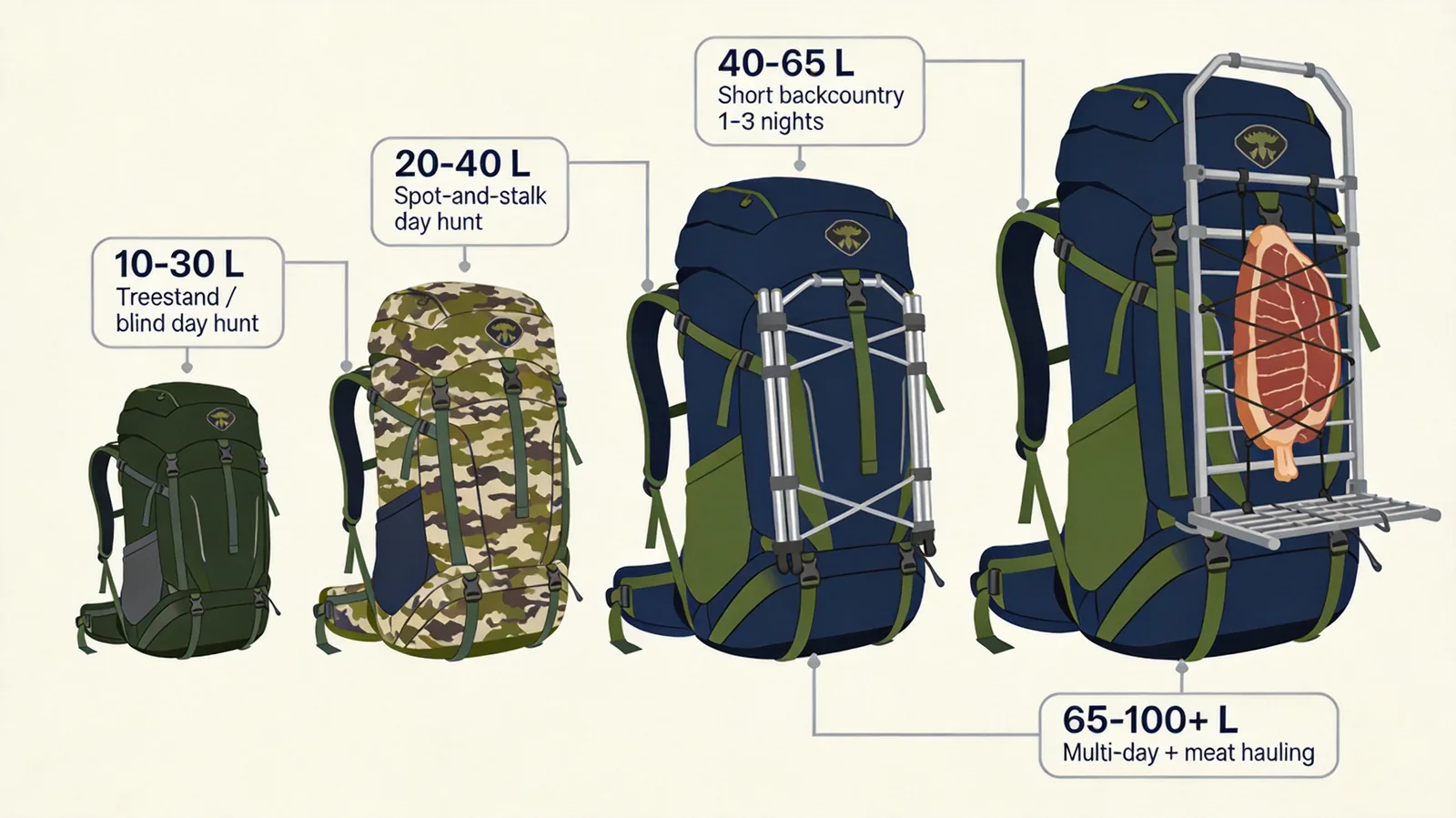
| Treestand / ground blind day hunt | 10–30 L | 600–1,800 | Layers, calls, snacks, harness, small camera. Short walks from the truck. |
| Spot-and-stalk day hunt | 20–40 L | 1,200–2,400 | Glassing kit, tripod, extra water, emergency shelter. Mobile all day. |
| Short backcountry (1–3 nights) | 40–65 L | 2,400–4,000 | Spike camp gear plus the first meat load out. The most versatile single size. |
| Multi-day backcountry + meat hauling | 65–100+ L | 4,000–6,500+ | Full camp, 3–7+ nights, and a full quarter or two on the way out. |
How to Check the Real Volume of a Pack You Already Own
Manufacturers measure volume inconsistently, and pockets are usually excluded. A practical check: fill the main compartment with a known quantity — three 20 L dry bags is a fast 60 L reference — and note what is left over. If your 65 L pack swallows 50 L of dry bags and closes easily, it is behaving like a 55 L pack in real use, because the roll-top takes up the difference.
When to Size Up and When to Size Down
Size up when you plan to carry camp, when you hunt in cold weather where layers take real volume, or when you expect to pack out an animal on your back. Size down when you hunt from a stand or blind within a mile of the truck — a half-empty 90 L pack is worse than a full 30 L pack, because an uncompressed load shifts and pulls the shoulder straps sideways on uneven ground.
Frame Type: Internal, External or Frameless
| Frame type | Load it realistically handles | Empty weight | Best for | Weak point |
|---|---|---|---|---|
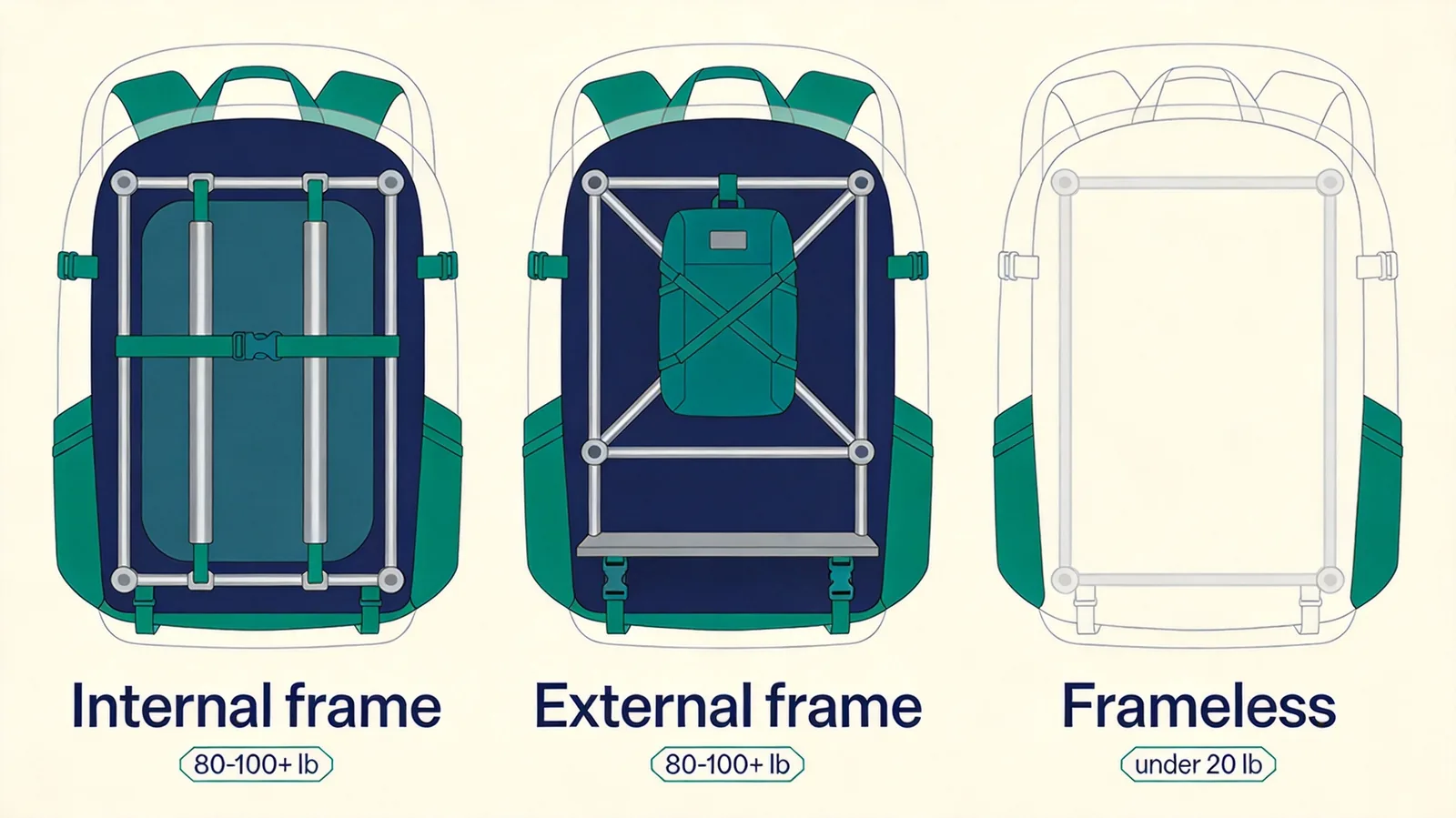
| Internal frame | 80–100+ lb | 4–6 lb | Sidehilling, brush, long approaches, most Western hunts | Less modular; premium models get expensive |
| External frame | 100+ lb with a shelf | 6–8 lb | Dedicated meat hauling, odd-shaped loads, dragging gear | Bulkier, snags in tight brush, noisier |
| Frameless | Under 20 lb | 2–3 lb | Treestand sits, scouting, short whitetail walks | Transfers nothing to the hips; unusable for meat |
Internal Frame: The Default for a Reason
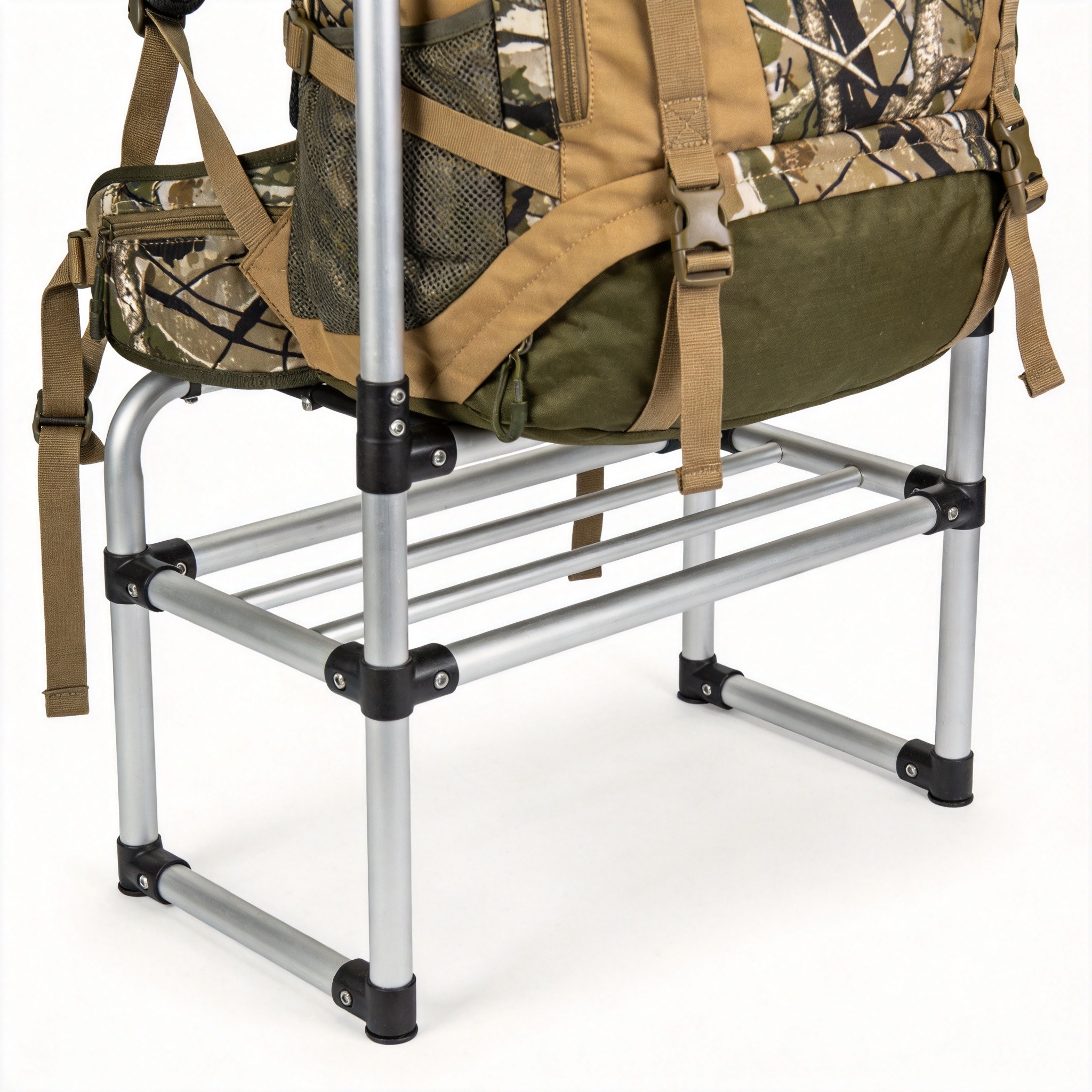
Internal frames dominate the hunting market because they keep the load close to your spine, which matters most on sidehills and in timber where an external frame catches branches. Modern aluminum stays and composite sheets get a 5 lb pack to a genuine 100 lb rating. The trade-off is modularity: you cannot swap the bag onto a different frame the way you can with a dedicated external system.
External Frame: Still the Best Meat Hauler
If the primary job is getting an animal out, an external frame with a proper shelf is still the most efficient tool. The shelf carries weight below the pack body, close to your centre of gravity, and the frame takes loads that would distort an internal pack. It is heavier empty, noisier, and it snags — so it is the wrong choice for tight brush or archery stalks.
Frameless: Only for Loads Under 20 lb
Frameless packs are light and cheap, and for a treestand hunter walking half a mile they are entirely adequate. The failure mode is predictable: the moment you load 40 lb of meat, every pound goes through your shoulders and the pack collapses into an unstable shape. If there is any realistic chance you will pack out an animal, buy a frame.
Fabric and Denier: The Spec That Decides Service Life
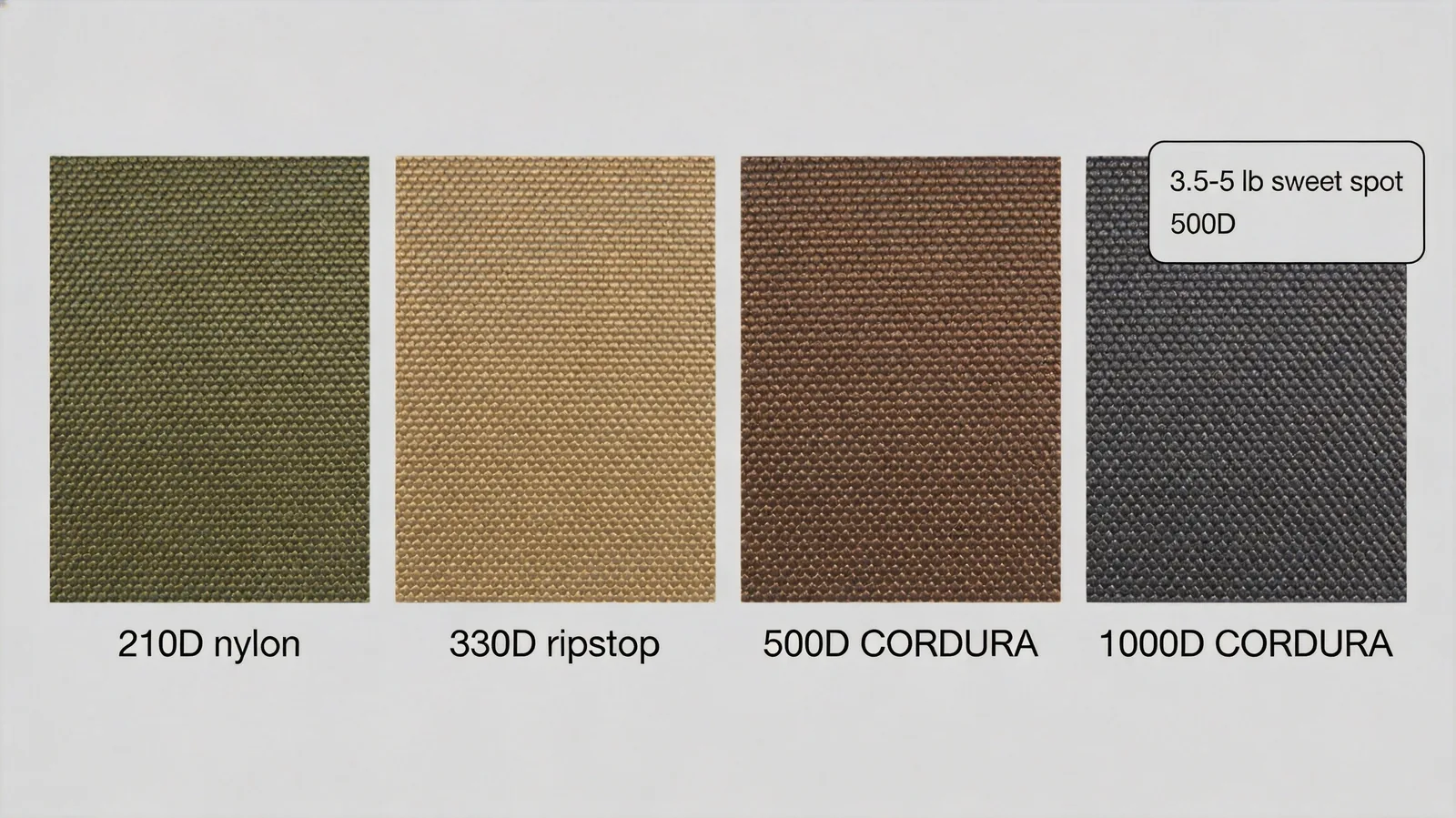
| Denier | Abrasion resistance | Typical pack weight | Noise | Where it makes sense |
|---|---|---|---|---|
| 210D | Low | 2–3 lb | Moderate | Ultralight summer scouting packs, low-brush terrain |
| 330D ripstop | Moderate | 3–4 lb | Quiet when brushed | Whitetail and treestand packs where silence matters |
| 500D | High | 3.5–5 lb | Moderate | The general-purpose sweet spot for most hunters |
| 1000D | Very high | 5–7 lb | Louder | Brush country, drag-out duty, heavy commercial use |
210D–330D: Ultralight Shells and Their Real Limits
Ultralight shells save a pound or more, and for a scouting pack or a summer high-country day hunt that is a fair trade. The limit shows up at contact points: pack bottom, frame corners and anywhere the pack meets rock. A 210D bottom on granite will abrade through in a season of regular use. If you want ultralight weight without that failure, specify a heavier abrasion panel at the base and corners only.
500D: Where Weight and Abrasion Resistance Meet
500D is the volume specification for a reason. It survives brush, holds stitch density well, and keeps a framed pack in the 3.5–5 lb range. It is also the most widely available base fabric in the supply chain, which means shorter lead times and better pricing at volume than either extreme.
1000D: Brush Country and Drag-Out Duty
1000D is heavier, louder and roughly twice the abrasion life of 500D. It earns its place on packs that get dragged, thrown in a truck bed, or used commercially — outfitter loaner packs, lodge inventory, rental fleets. For a personal pack carried on your back, it is usually more weight than the job needs.
Coating, DWR and Why the Finish Fails Before the Fabric
In practice the waterproof coating and DWR finish degrade before the yarn wears out. A pack that wets out in year two usually has intact 500D fabric and a failing PU coating, because coating flexibility drops with UV exposure and repeated compression. If long service life matters more than initial water resistance, specify a heavier coating weight and a DWR that can be renewed, and treat the pack rather than replacing it.
The Quiet Factor: Fabric Noise Costs You Animals
Noise is the one hunting-specific spec that most buying guides omit entirely, and it is decided almost entirely at the material level. Coated ripstop and 1000D nylon produce a sharp report when they brush against branches; brushed polyester and quiet-face treatments absorb that sound. The practical specification checklist for a quiet pack is short:
- Brushed or tricot-faced shell rather than a bare coated ripstop
- Cord-pull zip sliders instead of loose metal pulls
- Fabric-wrapped or plastic hardware at every contact point
- Compression straps that do not hang free once the pack is loaded
- No loose MOLLE webbing on the outward-facing panels
Bowhunters and still-hunters should treat this list as mandatory rather than nice-to-have. Rifle hunters working at distance can trade quiet for abrasion resistance, which is why the same manufacturer will build both specifications from the same pattern.
Load Rating and the Stitching That Has to Survive It
A load rating is a claim about stitching and hardware, not about fabric. When a framed pack fails under weight it is almost always one of five places: the shoulder strap attachment, the frame stay pocket, the hip belt anchor, the load-lifter web, or the bottom panel seam. The construction details that decide whether a pack survives 100 lb are not visible from the outside:
- Bar-tack reinforcement at every strap junction, not a single reverse stitch
- Box-X stitching on load-bearing webbing rather than straight stitch
- Webbing rated at 2–3× the intended load, with the rating traceable to the supplier
- Frame stay pockets reinforced with a separate layer, so the stay cannot punch through
- Load-rated buckles at the hip belt — the weakest link on most budget packs
This is the section where a cheap pack and an engineered pack differ most, and it is also where a custom programme has the clearest advantage: you can specify bar-tack placement and webbing rating in the tech pack, and inspect against it. On a retail pack you take whatever the brand chose.
Blaze Orange and Other Legal Requirements Your Pack Must Satisfy
Hunter orange minimums are set state by state, and they apply to what you wear and carry. In Pennsylvania, for example, the Game Commission publishes specific fluorescent orange requirements for firearm deer seasons that cover garments and, in some configurations, the pack itself. Two practical consequences for pack specification:
- The pack should accept a compliant orange cover or an orange panel without obstructing access
- Any orange panel needs to be removable, because the same requirement does not apply in archery seasons
- Reflective or blaze hardware is not a substitute for a compliant orange area
Check your own state’s current digest before you buy or specify — the requirements change, and a pack that is compliant in one season may not be in the next. The Pennsylvania Game Commission hunting pages and the Association of Fish & Wildlife Agencies are reliable starting points, and the U.S. Forest Service covers rules on national forest land.
Ten Hunting Packs Currently on the Market: Spec Comparison
The table below lists published specifications for ten packs that are actually available, so you can see how the capacity, frame and fabric specs above map onto real products. It is a specification reference, not a ranking — fit, camo preference and budget will decide more for you than any score we could assign.
| # | Model | Capacity | Empty weight | Shell fabric | Frame |
|---|---|---|---|---|---|
| 1 | Tenzing TZ 6000 | ≈6,000 in³ / 98 L | ≈7 lb | Heavy-duty nylon | Internal |
| 2 | Badlands 2200 | 2,750 in³ / 45 L | 5 lb 10 oz | KXO-50 proprietary | Internal, meat shelf |
| 3 | ALPS OutdoorZ Falcon | 2,900 in³ / 47 L | ≈5 lb | Ripstop nylon | Internal |
| 4 | ALPS OutdoorZ Trail Blazer | 2,400 in³ / 39 L | ≈4 lb 8 oz | Nylon | Internal |
| 5 | Badlands Sacrifice | 1,950 in³ / 32 L | ≈4 lb | KXO-50 proprietary | Frameless |
| 6 | Timber Hawk Killshot | 1,800 in³ / 29 L | ≈3 lb | Brushed polyester | Frameless |
| 7 | ALPS OutdoorZ Pursuit | 2,700 in³ / 44 L | 4 lb 8 oz | 600D polyester | Internal, aluminum stays |
| 8 | Mossy Oak Silver Leaf 2-Day | 2,200 in³ / 36 L | ≈3 lb 8 oz | 600D polyester | Frameless |
| 9 | Slumberjack Bounty 4500 | 4,500 in³ / 74 L | ≈6 lb | Nylon | Internal |
| 10 | ALPS OutdoorZ Traverse EPS | 3,600 in³ / 59 L | ≈5 lb 8 oz | Nylon | External, meat shelf |
Specifications as published by the respective brand owners. Capacities are manufacturer figures and are not directly comparable between brands; weights are for the pack as shipped.
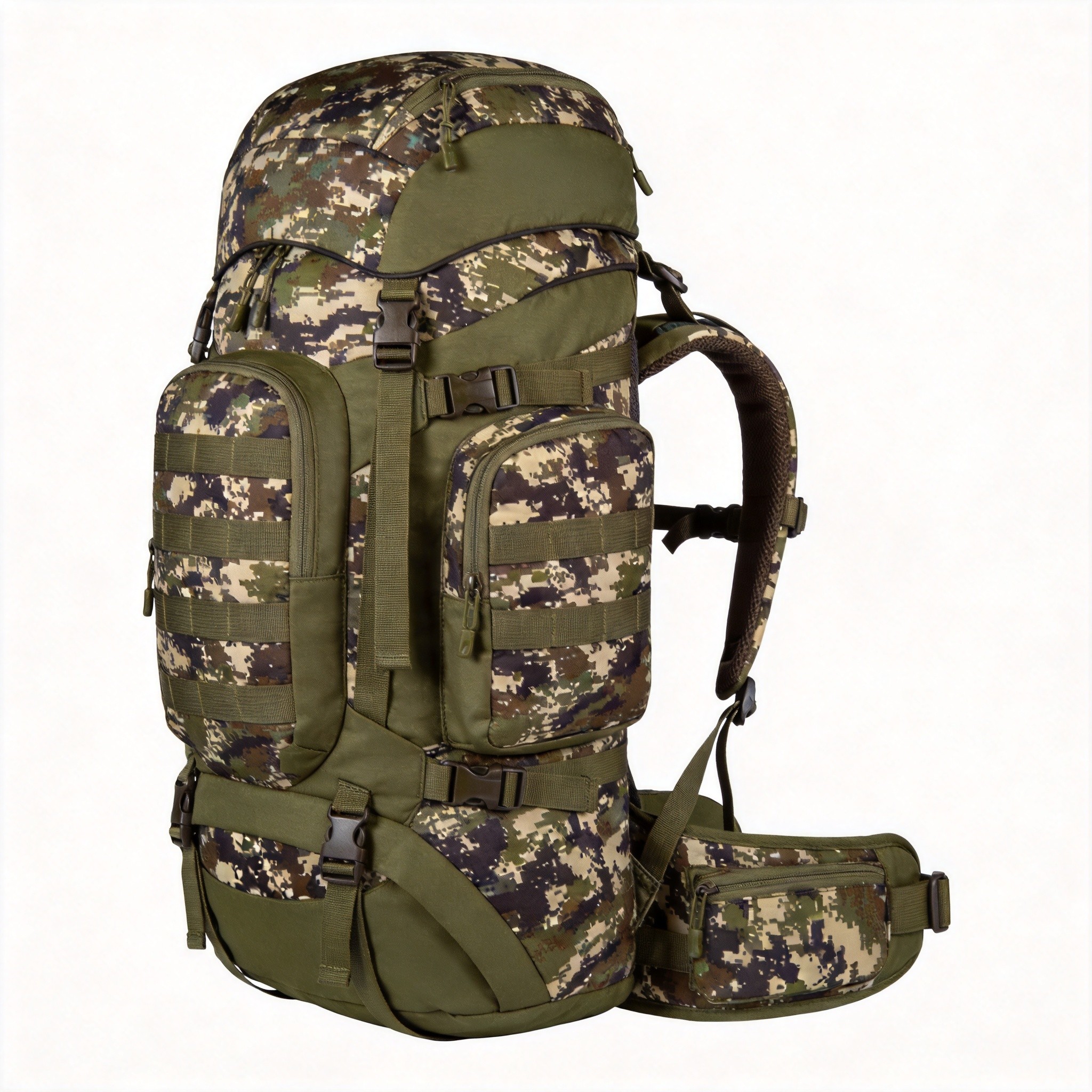
Tenzing TZ 6000
A large internal-frame pack in the 6,000 in³ class, aimed at multi-day Western hunts. The shooter’s rest design, breathable mesh back panel and padded hip panels are the features that matter on a long sit or a heavy carry.
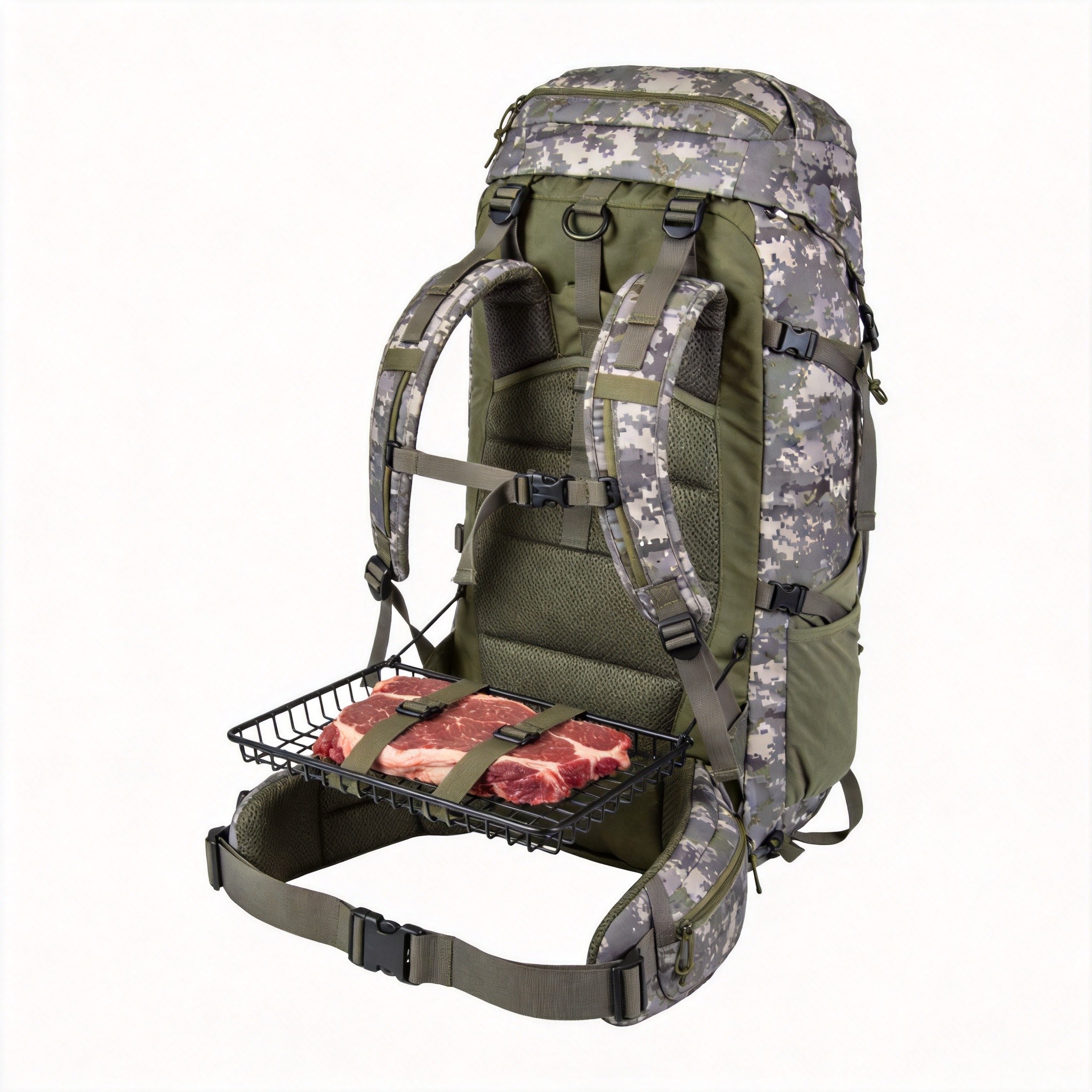
Badlands 2200
A 2,750 in³ internal-frame pack with a built-in meat shelf — the configuration most hunters actually need for a day hunt that might end with a quarter on their back. Proprietary KXO-50 fabric is the brand’s quiet, abrasion-resistant shell.
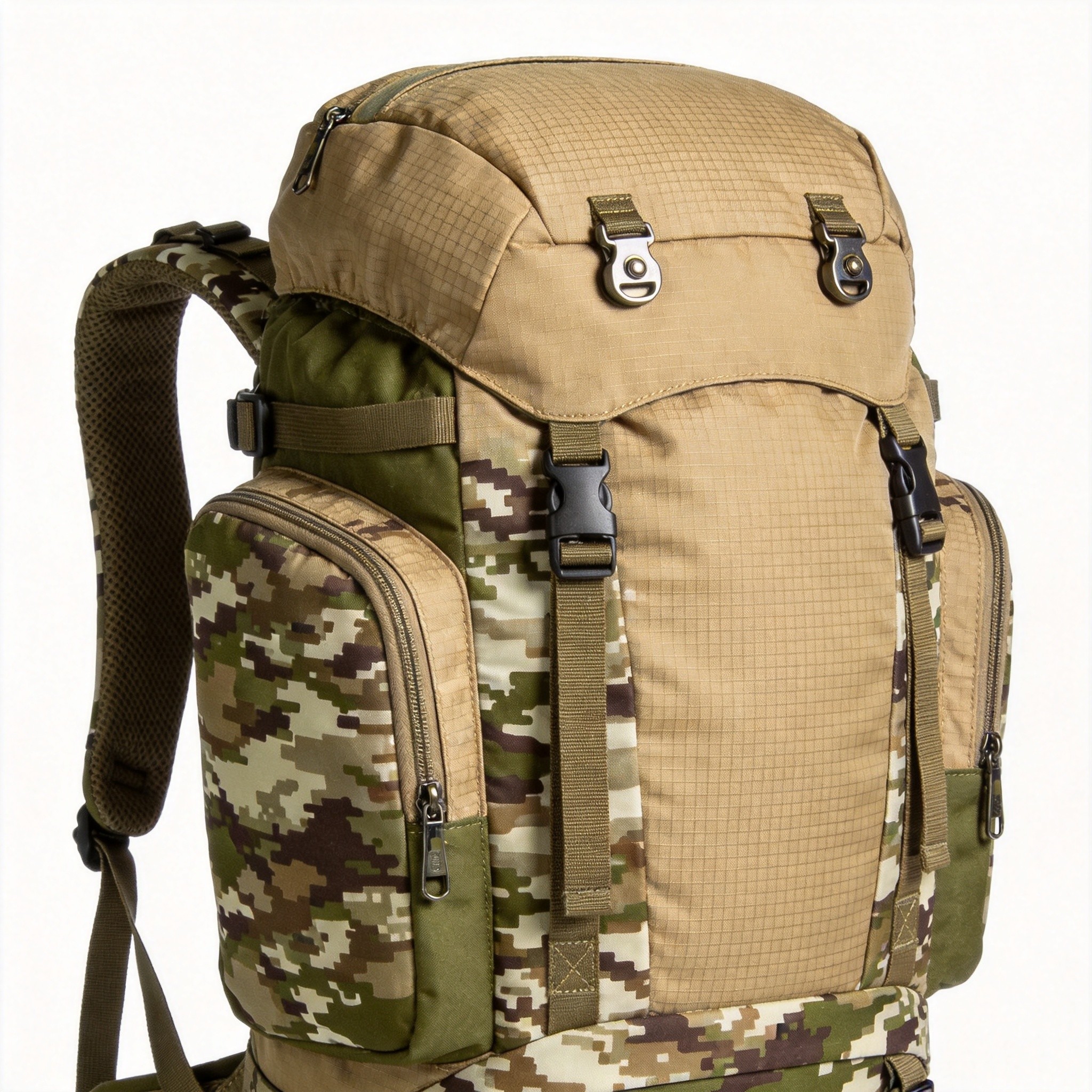
ALPS OutdoorZ Falcon
A mid-size internal-frame pack in the 2,900 in³ range, positioned as an all-round hunting pack. Ripstop nylon shell, standard organisation, priced well below the premium tier.
ALPS OutdoorZ Trail Blazer
Smaller at roughly 2,400 in³ and about 4 lb 8 oz, the Trail Blazer is a day pack with an internal frame — enough structure to carry weight without the bulk of a full expedition pack.
Badlands Sacrifice
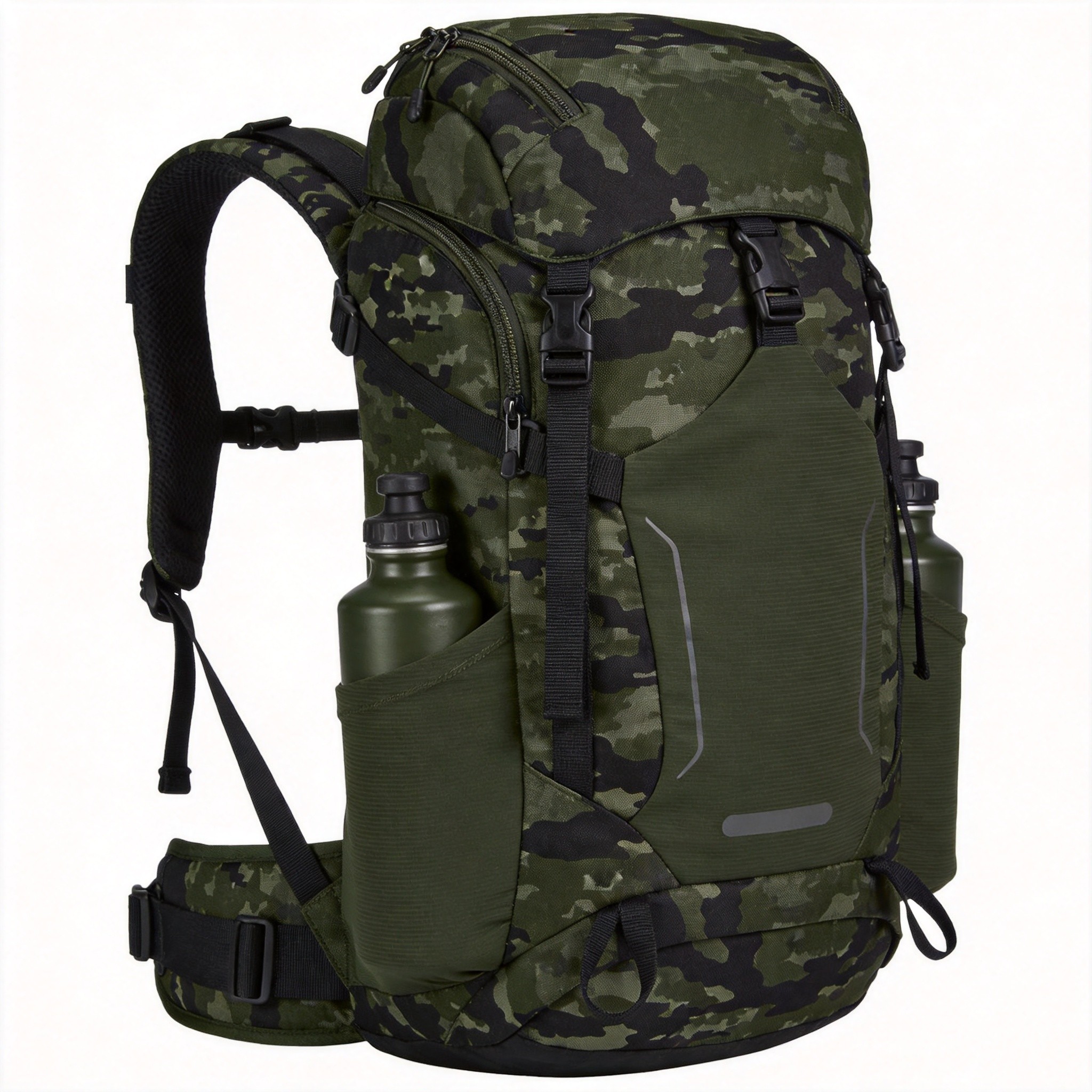
A lightweight frameless pack around 1,950 in³, built for hunters who move fast and carry little. Correct for a treestand sit or a scouting day; not correct for anything involving meat.
Timber Hawk Killshot
A compact frameless pack in the 1,800 in³ class with a brushed shell, aimed at bowhunters where noise matters more than load capacity.
ALPS OutdoorZ Pursuit
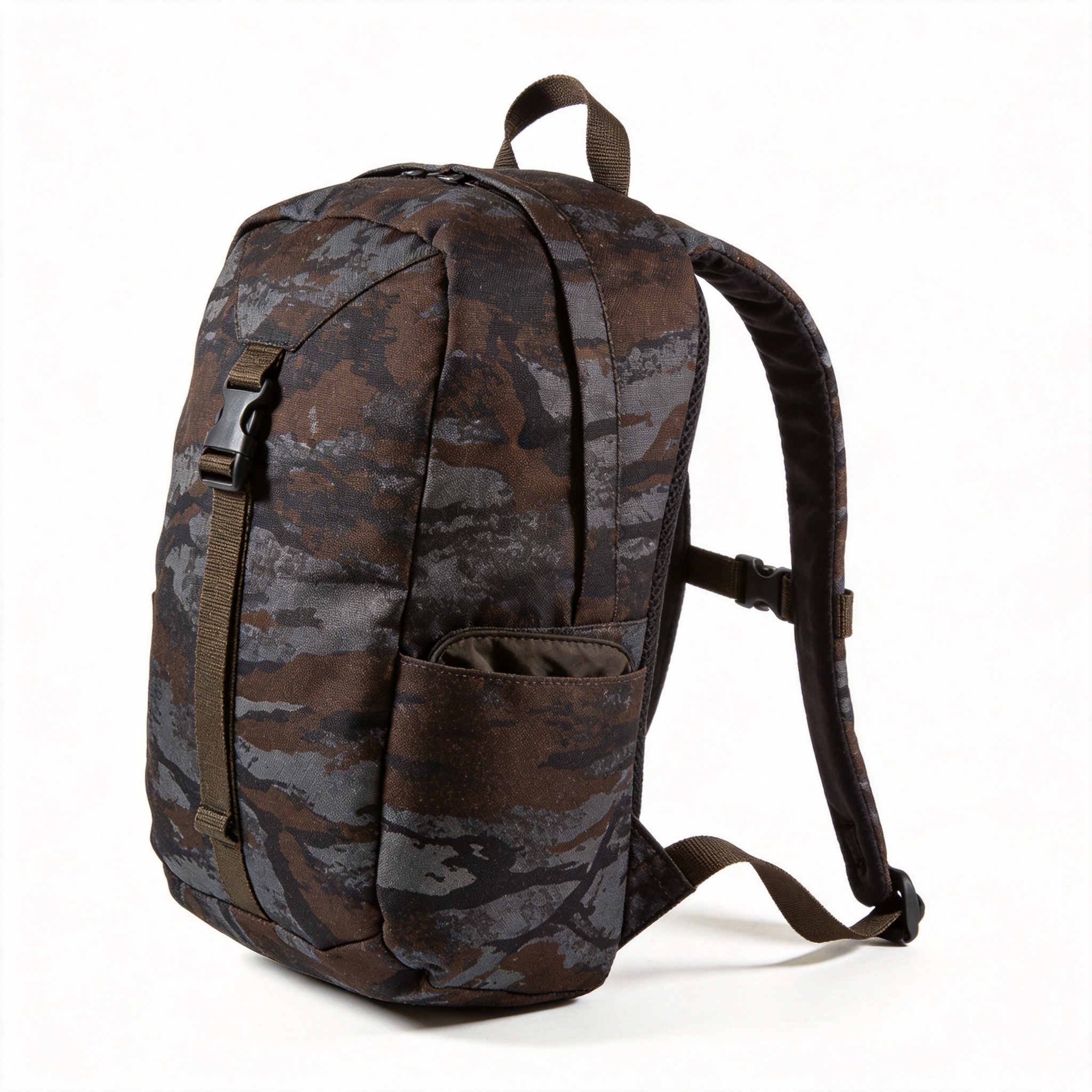
The budget reference point in this list: about 2,700 in³, aluminum stays, 600D polyester, and roughly 4 lb 8 oz. A genuine internal frame at a price that undercuts most of the market.
Mossy Oak Silver Leaf 2-Day
A 2,200 in³ frameless two-day pack in a licensed camo pattern. The appeal is the pattern and the weight, not the load rating.
Slumberjack Bounty 4500
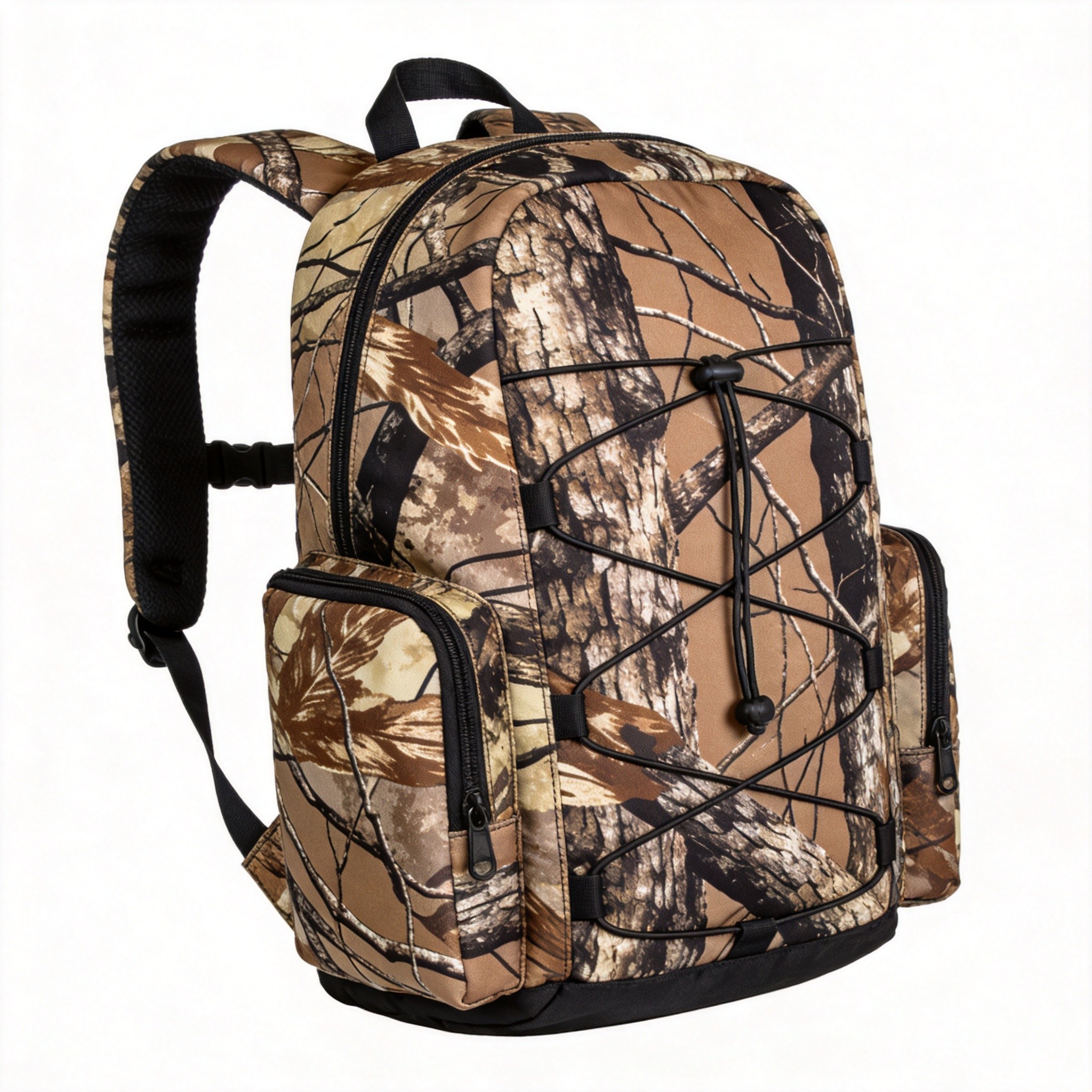
A 4,500 in³ internal-frame pack sitting in the short-backcountry bracket — the size that covers a one to three night spike camp plus a first meat load.
ALPS OutdoorZ Traverse EPS
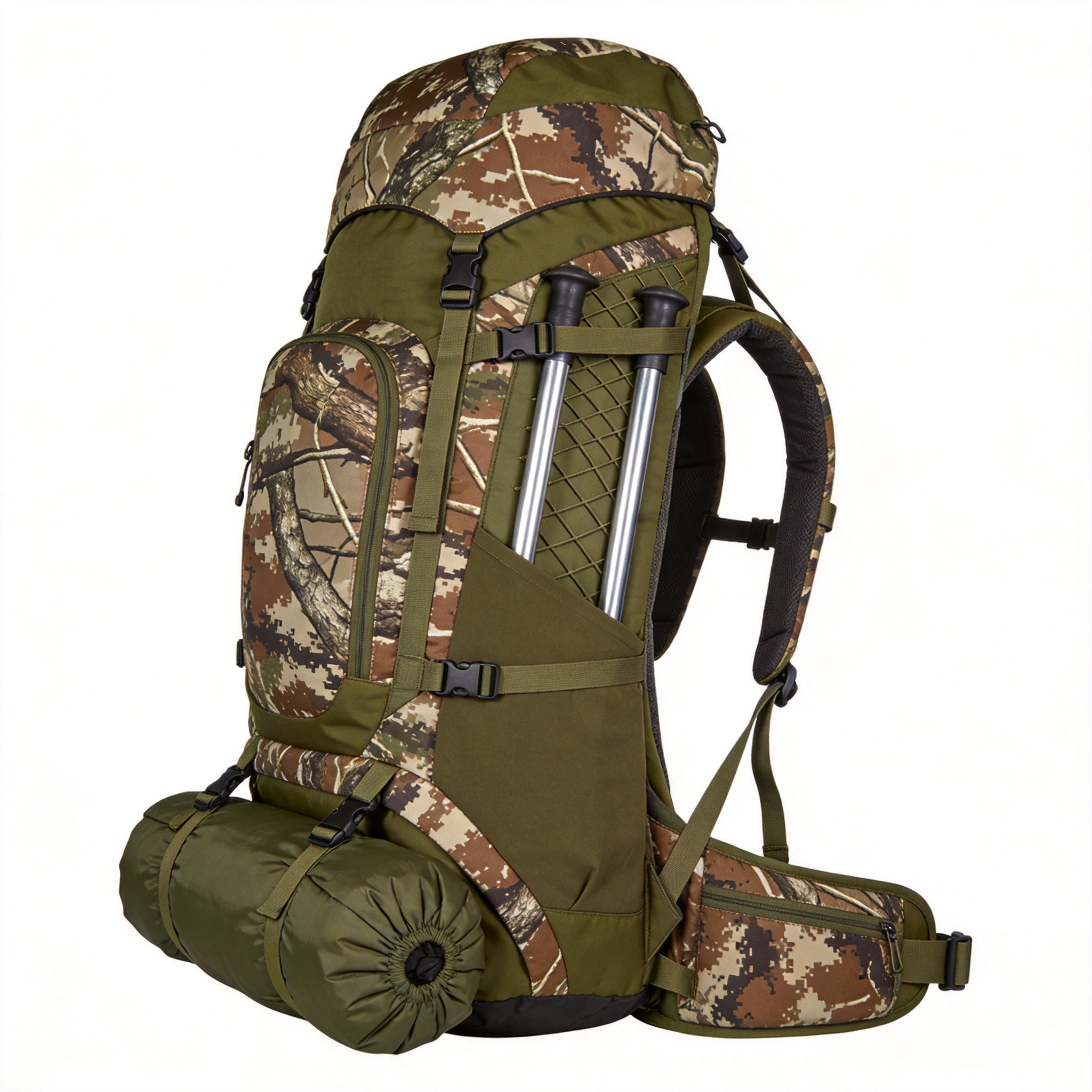
An external-frame pack with a meat shelf, around 3,600 in³. The frame-and-shelf configuration is the reason to choose it over a larger internal pack if hauling is the primary job.
Why You Cannot Put Your Own Logo on Any Pack in That Table
Every pack in that table is a closed product line owned by its brand. Tenzing, Badlands, ALPS, Timber Hawk, Mossy Oak and Slumberjack are brand owners: they design, spec and import their own ranges, and they do not produce private-label runs for third parties. You cannot order 500 units of a Badlands 2200 with your own logo, and no amount of volume changes that.
That leaves three routes if you want your own branded hunting pack, and they are not equivalent:
- Buy retail and rebrand nothing. Works for a lodge or an outfitter buying staff packs. No brand asset is built, and the margin is whatever the retail channel leaves you.
- Source from a trading company. Fast to quote, but the specification is whatever the trading company has access to, and quality varies lot to lot because the actual factory changes.
- Go direct to an OEM/ODM manufacturer. You control the tech pack — capacity, frame, denier, hardware, camo licence, logo application — and inspect against it. This is the only route that produces a product line you own.
If you are building a hunting or tactical range rather than buying for personal use, the OEM and ODM service overview explains how the two models differ, and the custom backpack manufacturing capability page covers the construction options in more depth.
What a Custom Hunting Backpack Spec Sheet Must Contain
A hunting backpack brief that omits any of the following will come back wrong, and the rework will cost you a sampling cycle. This is the minimum specification set:
- Capacity in litres and cubic inches, plus which compartments count toward it
- Frame type — internal with stay material and diameter, external, or frameless
- Shell fabric by denier and yarn, with a separate abrasion panel spec if needed
- Coating and DWR weight, and whether water resistance is a tested requirement
- Load rating in lb, and the specific stitch pattern at each load-bearing junction
- Hardware — zip grade, buckle load rating, D-rings, cord pulls
- Attachment system — meat shelf, rifle or bow boot, MOLLE layout, spotter pocket
- Colour or camo, with the licence named if the pattern is proprietary
- Logo application — method, placement, size, colour count
- Blaze orange provision — removable cover, panel, or none
- Packaging — poly bag, hangtag, carton mark, master carton quantity
- Inspection standard — AQL levels plus any functional tests
- Order quantity per style and per colour, and the delivery window
The single most common cause of a failed first sample is a brief that specifies fabric by name rather than by denier and construction. Two 500D nylons from different mills behave differently under abrasion and under a needle, and the sample will reflect whichever one the factory happened to have.
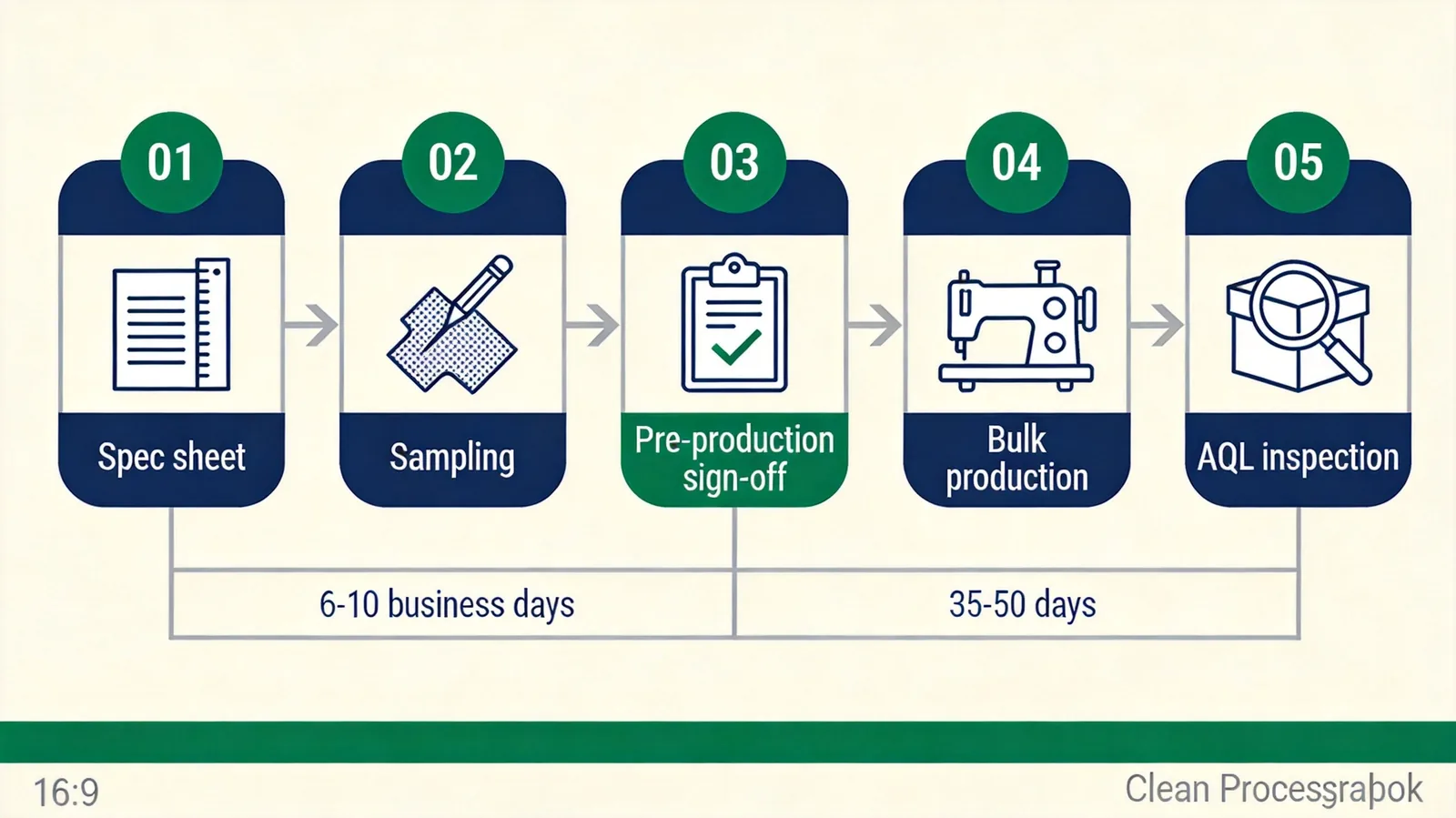
MOQ, Sampling and Lead Times for Custom Hunting Backpacks
| Milestone | Standard lead time | What has to be signed off |
|---|---|---|
| Spec sheet and quotation | 2–4 business days | Capacity, frame, fabric denier, camo or solid colour, hardware |
| Sampling | 6–10 business days | Physical sample in your fabric and your logo application |
| Pre-production sign-off | 3–5 business days | Gold sample, colour lab dips, packaging and carton marks |
| Bulk production | 35–50 days | Cutting, frame assembly, stitching, hardware, final assembly |
| Pre-shipment inspection | 1–2 days | AQL 2.5 major / 4.0 minor, plus frame load and stitch pull tests |
Cost Drivers: What Moves the Unit Price
Two packs that look identical in a photo can differ by a factor of two in unit cost. Six variables account for almost all of it, and only one of them is the factory’s margin:
| Cost driver | Low end | High end | Why it moves |
|---|---|---|---|
| Shell fabric | 210D–330D polyester | 500D–1000D CORDURA nylon | Denier and brand-name yarn are the single biggest material swing |
| Frame | None (frameless) | Aluminum or composite internal frame | Frame stays, load shelf and hip belt structure add material and assembly time |
| Hardware | Standard acetal buckles | YKK zips, load-rated buckles, metal D-rings | Zip grade alone can shift unit cost noticeably at 500 pcs |
| Camo print | Solid colour | Licensed camo pattern | Licensed patterns carry a royalty and a longer print setup |
| Logo application | 1-colour screen print | Embroidery or rubberised badge | Per-piece labour scales with stitch count and placement |
| Order quantity | 500 pcs | 5,000+ pcs | Setup costs amortise; per-unit price falls with volume |
For a first run, the highest-leverage decision is fabric and frame together, because those two determine both the material cost and the assembly time. Camo licensing is the variable that most often surprises first-time buyers — a licensed pattern can add a per-unit royalty that dwarfs the difference between 500D and 1000D.
How to Vet a Hunting Backpack Manufacturer
A supplier who cannot answer the technical questions below is a trading company, not a manufacturer, and the specification you agree will not be the specification you receive:
- Ask which denier and which mill, not which fabric. A manufacturer answers in numbers.
- Ask for the stitch pattern at the shoulder strap junction and the hip belt anchor.
- Ask what load rating they will commit to in writing, and what test they run to verify it.
- Ask how frame stays are pocketed and reinforced against punch-through.
- Ask which zips and buckles they specify, and whether the load rating is traceable to the supplier.
- Ask what AQL they inspect to, and who does the inspection — in-house or third party.
- Ask for the warranty term in months, in writing.
- Ask to see a previous programme in the same product family, not a generic catalogue.
Related reading on this site: how hunters actually rate these packs in the field, packs built specifically for packing out meat, and hunting fanny pack versus hunting backpack if you are deciding between formats. On the budget end, what a sub-$100 hunting pack really gives you is worth reading before you brief a factory.
Sourcing Note: JUNYUAN BAGS for Hunting and Tactical Programmes
JUNYUAN BAGS has manufactured bags since 2014, with a founding team in the bag trade since 2004. Hunting and tactical backpacks are built through affiliated and partner factories in Fujian, China, to a specification you approve at sample stage.
Standard programme terms: MOQ 500 pcs per style and colour, sampling 6–10 business days, bulk production 35–50 days, inspection at AQL 2.5 major / 4.0 minor, 12-month warranty, FOB Xiamen. Shell fabrics from 210D to 1000D, internal and external frames, licensed or solid colours.
Recycled rPET shells are available on the same programmes — see the rPET backpack manufacturing page. Waterproof constructions are covered in the waterproof backpack manufacturer guide, and previous programmes are listed under OEM/ODM projects. Wholesale and volume terms are on the wholesale bag factory page.
Enquiries: [email protected] / +86 17750020688. Company background: custom bag manufacturer and OEM/ODM partner.
Frequently Asked Questions About Hunting Backpacks
Q1. How many litres should a hunting backpack be for a day hunt?
For a treestand or blind day hunt, 10–30 L (600–1,800 in³) is enough for layers, calls, snacks, a harness and a small camera. For a spot-and-stalk day hunt that keeps you mobile all day, 20–40 L (1,200–2,400 in³) covers a glassing kit, tripod, extra water and an emergency shelter. Anything above 40 L for a single day hunt usually means you are carrying a half-empty pack that shifts on your back.
Q2. What is the difference between an internal frame and an external frame hunting pack?
An internal frame hides aluminum stays or a composite sheet inside the back panel, which keeps the load close to your spine and makes the pack quieter and better balanced on sidehills. An external frame exposes a rigid structure with the bag lashed to it and a shelf at the bottom, which is more efficient for meat hauling and odd-shaped loads but is bulkier and noisier. Both are rated for roughly 80–100+ lb; a frameless pack is not.
Q3. What denier fabric is best for a hunting backpack?
500D nylon or CORDURA is the practical choice for most hunters: enough abrasion resistance for real brush in a pack that still weighs 3.5–5 lb. Choose 1000D if you hunt thorny brush or drag loads over rock. Choose 210D–330D only if you accept a shorter service life in exchange for a sub-3 lb pack, and specify a heavier abrasion panel at the base and corners to compensate.
Q4. Why does fabric noise matter more on a hunting pack than a hiking pack?
Because a sharp report from coated ripstop or 1000D nylon at 30 yards is loud enough to end a stalk, while the same sound on a hiking trail is irrelevant. Quiet packs use brushed or tricot-faced shells, cord-pull zip sliders, fabric-wrapped hardware and no loose MOLLE webbing on outward-facing panels. Bowhunters and still-hunters should treat those as mandatory specifications rather than preferences.
Q5. How much weight can a hunting backpack frame realistically carry?
A properly fitted internal or external frame is rated for 80–100+ lb, and the frame, belt and stitching should handle that load. That does not mean it is comfortable for every hunter. Most experienced hunters limit an individual trip to 60–80 lb, because above that the risk of injury on uneven ground outweighs the time saved on an extra trip.
Q6. Are blaze orange pack covers legally required?
It depends on the state and the season. Hunter orange minimums are set state by state and apply to garments and, in some configurations, to what you carry. The practical specification consequence is that a pack should accept a compliant removable orange cover or panel without blocking access. Always check your own state’s current digest, because the requirement changes between seasons.
Q7. Can I put my own logo on a Mystery Ranch, KUIU, Badlands or Stone Glacier pack?
No. Those are brand-owned product lines and the brand owners do not run private-label production for third parties at any volume. If you want a branded hunting pack you either buy retail with no brand asset of your own, source through a trading company with less control over specification, or go direct to an OEM/ODM manufacturer who builds to your tech pack.
Q8. What is the MOQ for a custom hunting backpack?
At JUNYUAN BAGS the MOQ is 500 pcs per style and colour. Order quantity is counted per style and per colour separately, so a two-colour programme is 500 pcs in each colour. Larger volumes reduce unit cost because the setup costs for cutting, printing and frame assembly are amortised across more units.
Q9. How long does sampling take for a custom hunting pack?
Sampling runs 6–10 business days once the spec sheet and artwork are approved. The sample is built in your specified fabric with your logo application, so it functions as a physical check on denier, frame, hardware and stitch pattern. Sampling is charged, and the cost is refunded against the first bulk order once it meets the volume threshold.
Q10. What is the bulk production lead time for custom hunting backpacks?
Bulk production runs 35–50 days after the gold sample is signed off. That window covers cutting, frame assembly, stitching, hardware and final assembly. It does not include pre-production sign-off, which typically adds 3–5 business days for colour lab dips, packaging approval and carton marks.
Q11. What AQL standard applies to hunting backpack inspection?
JUNYUAN BAGS inspects at AQL 2.5 for major defects and 4.0 for minor defects, plus functional checks that go beyond the AQL sample: frame load testing and stitch pull testing at the load-bearing junctions. The AQL plan should be written into the purchase order rather than agreed verbally, because the defect classification is what decides whether a shipment passes.
Q12. Which parts of a hunting backpack fail first?
Five places account for almost all structural failures: the shoulder strap attachment, the frame stay pocket, the hip belt anchor, the load-lifter web and the bottom panel seam. The construction details that prevent failure are bar-tack reinforcement at every strap junction, box-X stitching on load-bearing webbing, webbing rated at 2–3× the intended load, and reinforced stay pockets so the frame cannot punch through.
Q13. Can one factory produce both a frame pack and a fanny pack under the same programme?
Yes, and it is usually the right approach for a hunting or tactical range, because a line built around one camo or colour story needs consistent fabric, hardware and logo application across formats. Different formats carry separate MOQs per style and colour, but they can share sampling, colour approval and inspection, which shortens the overall calendar.
Q14. Is recycled or rPET fabric viable for a hunting backpack?
Yes for the shell, with one caveat. rPET yarns perform well at 500D and above for abrasion and tear, and they accept the same coatings and DWR finishes as virgin polyester. The caveat is consistency: recycled yarn colour and tenacity vary more between lots, so a programme using rPET should lock the yarn source and approve a physical swatch rather than specifying by name.
Sources and further reading
Figures and standards in this guide are cross-checked against the primary sources below.
· Association of Fish & Wildlife Agencies — state and provincial fish and wildlife agencies
· U.S. Forest Service — Know Before You Go (rules for hunting and recreation on national forest land)
· U.S. Customs and Border Protection — Basic Import and Export (importing bags into the United States)
Capacity tiers, fabric denier guidance and load ratings on this page are compiled from the published specifications of the ten models listed plus general manufacturing practice. Brand specifications change without notice; verify against the current manufacturer documentation before specifying a programme.