
Briggs & Riley vs Delsey Carry-On: Worth the Price?
Briggs & Riley is the premium ballistic-nylon softside carry-on with a lifetime guarantee that even covers airline damage; Delsey is the French polycarbonate hardside spinner that undercuts it by several hundred dollars. This is a factory-workshop read on what each carry-on is actually made of, what the build genuinely costs, how the warranties really differ, and whether the Briggs premium or the Delsey discount is the smarter buy.
The Briggs & Riley vs Delsey carry-on choice is really softside engineering plus an unmatched lifetime guarantee versus hardside polycarbonate value. Here is the density. A Briggs & Riley carry-on (Baseline/Garment or Global line) typically lands around $550-750 (approx.); a Delsey polycarbonate carry-on (Helium Aero or Helium DLX series) typically lands around $160-200 (approx.) – in other words, Delsey is often roughly a third to a quarter of the Briggs price. The material story drives much of it. Briggs & Riley builds a ballistic-nylon softside carry-on with its patented CX compression-expansion system, an exterior-mounted Outsider handle, self-repairing YKK zippers, aircraft-grade aluminum telescoping handle and a garment folder – expensive, engineered, fabric construction. Delsey builds a 100% polycarbonate hardside spinner with double spinner wheels, a TSA combination lock and a laptop pocket, at mainstream value pricing. At factory level a well-built polycarbonate hardside carry-on builds roughly at $25-55 (approx.), while a premium ballistic-nylon softside carry-on with a telescoping handle, wheel chassis and compression system builds closer to $40-70 (approx.) – the build difference is real but modest; the huge retail gap comes from the brand, the engineering and above all the service model. And the single biggest real difference is the guarantee: Briggs & Riley’s “Simple as That” lifetime guarantee – famously the only carry-on lifetime warranty that explicitly covers damage caused by the airline itself, with free repair for life and no proof of purchase – versus Delsey’s standard limited warranty of 5 or 10 years (depending on the model), which covers manufacturing defects but not airline or impact damage. If you want a lifetime-protected, repairable softside carry-on and the premium engineering justifies it to you, Briggs & Riley earns its price. If you want a genuinely solid polycarbonate spinner that packs a huge share of the practical function for a fraction of the cost, the Delsey is the value winner.
TL;DR / Quick Answer
- Why is Briggs & Riley so much more expensive than Delsey? Four things: the ballistic nylon softside construction and the CX compression-expansion, Outsider-handle and garment-folder engineering cost more to build; the brand is a U.S. premium name built around a repair-and-keep service model; the retail stack is larger; and above all the Simple as That lifetime guarantee – the rare carry-on warranty that repairs even airline damage for life, free, with no receipt – is a real, priced-in overhead. Delsey is a mainstream French hardside builder selling polycarbonate at value prices.
- Is a Delsey carry-on good quality? Yes for its price. A 100% polycarbonate shell, double spinner wheels, a TSA-accepted lock, a two-position handle and a lined interior are a genuinely good, standard hardside build made by the same kind of partner factories that supply mainstream and premium-luggage brands. It is light, durable and outstanding value – it simply does not carry a lifetime warranty and its polycarbonate shell is less tailored than a ballistic-nylon suit-carrier.
- Is a Briggs & Riley carry-on worth it? Only if you value the ballistic-nylon softside construction, the compression-expansion packing, the wrinkle-reducing garment folder and especially the lifetime airline-damage guarantee enough to pay a 3-4x premium. For frequent heavy travelers and suit-carriers who want a repairable-for-life bag, it can genuinely be worth it; for most casual flyers the Delsey gives you most of the practical function.
- What about the warranties? Briggs & Riley offers a Simple as That lifetime guarantee that repairs or replaces for life, covering even airline handling damage, free with no proof of purchase (terms in effect as of 2026). Delsey offers a limited 5-10 year warranty depending on the model (e.g. Helium Aero 10 years, Helium DLX 5 years, terms in effect as of 2026) that covers manufacturing defects but not airline, impact or misuse damage. That is the single clearest functional gap between the two.
- Factory verdict: both are standard, high-volume builds. A polycarbonate hardside spinner and a ballistic-nylon softside carry-on are both buyable near factory cost under your own label; the nylon softside with a compression system simply costs a bit more to build, and the rest of the Briggs-to-Delsey price gap is brand, engineering and the warranty service network. You are comparing two real builds with very different price and service positions, not a “real” bag and a “fake” one.
1. Two Philosophies, Two Constructions
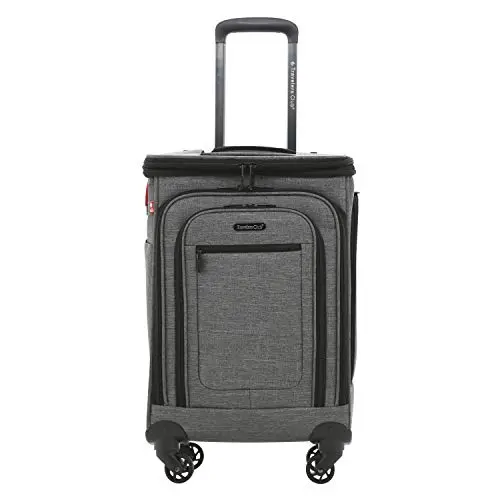
Before the tables, understand what each brand actually is. Briggs & Riley is an American luggage company, established in California in 1993 and built around thoughtful travel engineering and a famously generous guarantee. Its carry-ons are softside ballistic-nylon pieces with a series of signature systems: the CX compression-expansion technology that expands the case by roughly 30% then compresses it back to strict carry-on size; the patented Outsider handle mounted on the exterior so the interior packs flat; self-repairing YKK zippers; an aerospace-grade aluminum telescoping handle; impact-resistant corner guards; and a built-in garment folder that keeps suits and dresses crease-free. The MVP of the brand is the “Simple as That” lifetime guarantee, which repairs or replaces any Briggs & Riley bag for life – even if the damage is caused by an airline – with no proof of purchase.
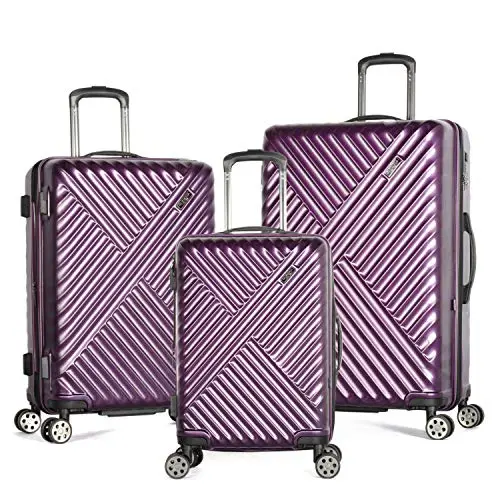
Delsey is a French luggage house – the Delsey Paris brand dates to 1946 – that built its name on accessible, durable travel goods. Its Helium series is the flagship 100% polycarbonate hardside line: a lightweight, glossy, molded shell with double spinner wheels, an integrated three-dial TSA-accepted combination lock, a two-position telescoping handle, an expandable main compartment and, on many models, a padded laptop sleeve and a removable organizer. The Helium Aero carry-on is typically $159-190 (approx.), and the Helium DLX a step above in organization – both light, both genuinely well-built, both mainstream-priced. It covers manufacturing defects with a limited warranty that runs 5 or 10 years depending on the model.
So the Briggs & Riley vs Delsey comparison is a philosophy split: premium, engineered, repairable-for-life softside versus value, lightweight, mainstream hardside. Both are genuinely built, but for different travelers – and the material, the engineering and above all the warranty drive the price gap.
2. Briggs & Riley vs Delsey: Material-by-Material
Here is a realistic, typical side-by-side of the two builds (typical trade figures, not a specific SKU or season):
| Aspect (typical) | Briggs & Riley (softside) | Delsey Helium (hardside) |
|---|---|---|
| Construction | Ballistic nylon fabric over a frame | 100% polycarbonate hard shell |
| Signature packing tech | CX compression-expansion (expand ~30%, compress back) | Expandable main compartment (~2 in) |
| Handle | Patented exterior Outsider handle + aerospace Al telescoping handle | Two-position telescoping handle, industrial-grade aluminum tubes |
| Wheels | 2-wheel or 360° spinner options | Double/dual spinner wheels |
| Zipper / security | Self-repairing YKK zippers + TSA lock | TSA-accepted combination lock (SECURITECH on some) |
| Travel tailor features | Garment folder, wrinkle-reducing cinch panels | Laptop sleeve, removable organizer on some models |
| Weight (carry-on) | ~9.7-10 lbs | ~6.8-9 lbs |
| Typical carry-on price (approx.) | $550-750 | $160-200 |
| Warranty | Simple as That lifetime, incl. airline damage | Limited 5-10 years, manufacturing defects |
Three rows decide the story. First, the shell – ballistic nylon is a tight-woven, abrasion-resistant technical fabric that is cut, padded and sewn over a frame, which is a more labour-intensive, engineered build than molding a thermoplastic shell; polycarbonate is cheap to mold into a rigid, glossy case. Second, the packing engineering – the CX compression-expansion and the exterior Outsider handle are patented mechanisms you are paying for on the Briggs; a Delsey is a simpler, cleaner hardside. Third, the warranty and service model – Briggs pivots its whole proposition around lifetime repair (including airline damage), and that repair network, replacement parts and service overhead are genuinely priced into every $600 carry-on; Delsey sells a lighter, cheaper, replace-on-defect polycarbonate case. Both factors together explain why a Briggs carry-on starts where a Delsey ends and goes several times higher.
3. Factory View: What Each Carry-On Actually Costs to Build
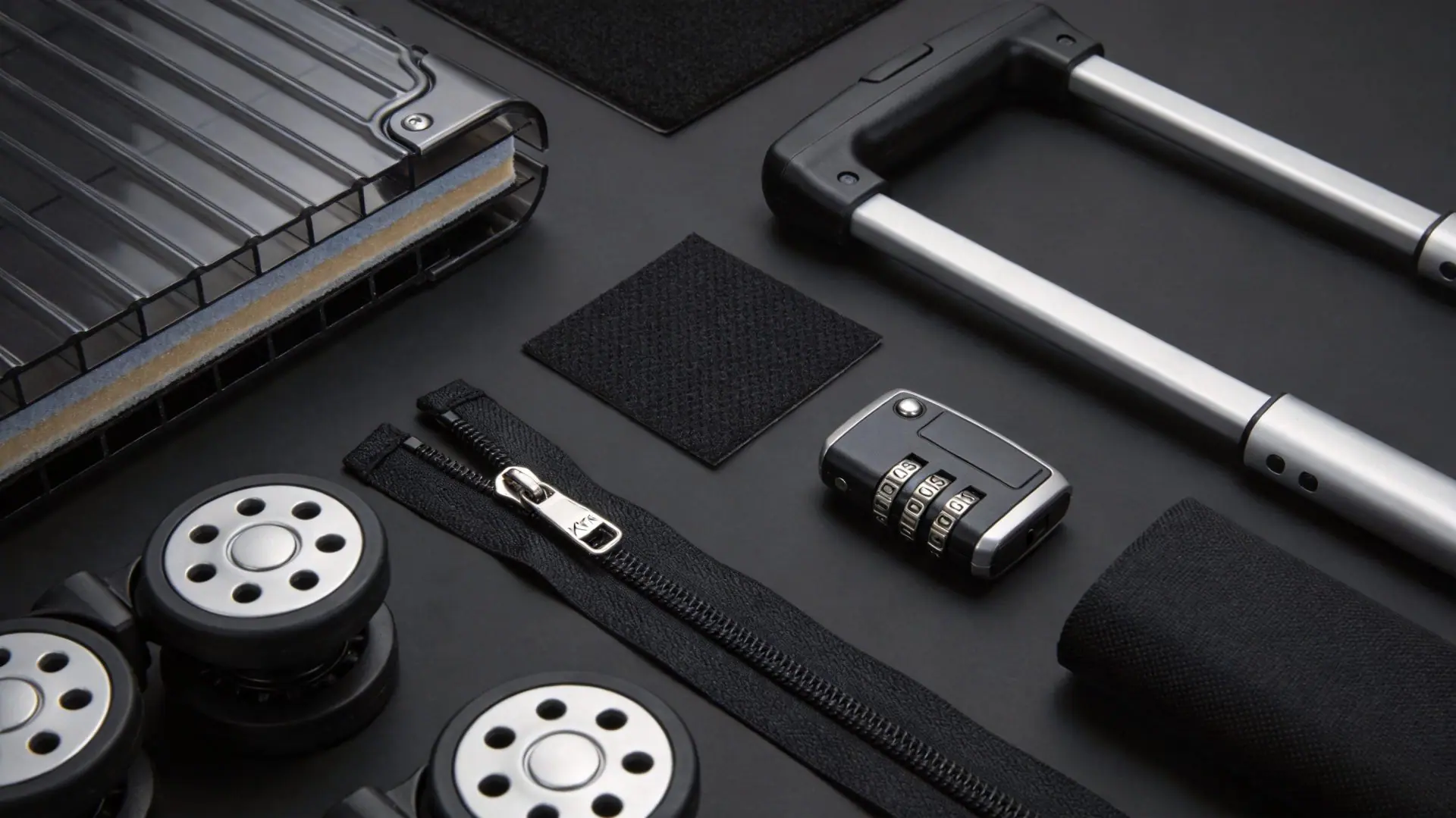
From a luggage factory’s costing sheet, a Briggs-style ballistic-nylon softside carry-on and a Delsey-style polycarbonate hardside spinner are the same product family built two ways – and the nylon softside genuinely costs a bit more at most steps because of the fabric, the padding, the sewing and the compression mechanism. Here is a realistic bill-of-materials for each (typical, not a specific SKU):
| Build component (typical) | Ballistic-nylon softside (like Briggs) – per bag (approx.) | PC hardside spinner (like Delsey) – per bag (approx.) |
|---|---|---|
| Shell / main material | $10-22 (ballistic nylon + foam + frame) | $6-14 (molded PC half-shells) |
| Wheels & telescoping handle unit | $8-16 | $6-12 |
| Compression / expansion mechanism | $4-9 (CX-style gusset & straps) | $1-3 (simple expandable gusset) |
| TSA lock, zippers, hardware | $4-9 (incl. self-repairing zips) | $3-7 |
| Lining, garment folder, pockets | $5-12 (incl. garment folder) | $4-9 |
| Assembly, sewing & QC labour | $9-18 (more sewing steps) | $6-11 |
| Packaging & trims | $1-3 | $1-2 |
Add those up and a well-built polycarbonate hardside carry-on lands around $25-55 (approx.) at factory level, while a premium ballistic-nylon softside carry-on with a compression system lands around $40-70 (approx.) – before the brand, the warranty marketing, distribution, retail markup and import. On a Delsey $160-200 (approx.) carry-on the build is a healthy share, and most of the rest is distribution and retail; on a Briggs $550-750 (approx.) carry-on the build is a modest share and the larger slice is the U.S.-premium brand, the patented engineering, and especially the lifetime repair-and-service network behind the Simple as That guarantee. The nylon softside is genuinely a bit more expensive to make – that part is real – but the single largest slice of the Briggs price is brand, position and the lifetime service promise, not raw fabric.
4. Warranty Showdown: Lifetime vs Limited – the Real Difference
The warranty is the single clearest functional gap between these two, and it is worth getting exact. Briggs & Riley offers the “Simple as That” lifetime guarantee – famously, the carry-on guarantee that repairs or replaces your bag for life and explicitly covers damage caused by the airline itself, free of charge, with no proof of purchase required (terms in effect as of 2026). That is a genuinely different promise: it is a repair-and-keep-for-decades model built on a repairable softside product and a real service network. Delsey offers a limited commercial warranty of 5 or 10 years depending on the model (e.g. the Helium Aero carry-on carries a 10-year warranty, the Helium DLX a 5-year warranty, terms in effect as of 2026), covering manufacturing defects; it does not cover airline or impact damage, falls, misuse or normal wear, and it is foundationally a replace or repair-on-defect program.
Practically that means: Briggs & Riley’s warranty is longer and wider (lifetime, includes airline damage, no receipt); Delsey’s is shorter (5-10 years) and narrower (manufacturing defects only) – which matches the products. If you check a softside bag through baggage handling and want the peace of mind that a dent, tear or broken wheel will be repaired for life even if the airline does it, Briggs is the only one in this pair that makes that promise. If you carry a lightweight hardside spinner and treat it normally, a 5-10 year defect warranty on a $160 case is honestly reasonable value – you can nearly replace it for the cost of shipping a Briggs back for one repair.
5. Briggs & Riley vs Delsey: Which Is Worth It (Fair Verdict)
Choose Delsey when: you want a light, durable, genuinely well-built polycarbonate hardside spinner, you fly occasionally, a laptop sleeve and a TSA lock cover your needs, you prefer not to spend $550+ on a carry-on, and a 5-10 year defect warranty is enough. For the large majority of occasional and even regular flyers who just want a reliable carry-on, the Delsey is the better value.
In plain terms: Delsey gives you 80-85% of the practical function of a premium hardside carry-on at a fraction of the Briggs price, because it uses a cheap-to-mold material and skips the lifetime-service model. Briggs gives you superior softside engineering, a better suit-and-wrinkle story, and a lifetime guarantee with no real rival in this pairing – at a price that reflects the brand and the service promise as much as the materials. Neither is a bad buy; they are for different wallets and different definitions of “worth the price.”
6. Factory Process: How a Softside Carry-On Is Actually Made
The factory view turns “which is worth it” into a step sequence. For a ballistic-nylon softside carry-on, woven nylon fabric is first cut to panels, then laminated or padded against foam, and the shell is built over an internal frame or stiffened panels. The CX-style compression-expansion adds a gusset and a strap-and-buckle system, the wheel chassis and telescoping handle are mounted, the lining, garment folder, straps and pockets are set in, the zipper tape is sewn around the mouth, and the case is fitted with a TSA lock before a wheel roll, handle cycle, zipper cycle and drop/impact QC check. It is a sewing-heavy process – more labour steps than molding – which is a real (but not huge) part of why the build costs more.
For a polycarbonate hardside carry-on, plastic pellets are melted and vacuum- or blow-molded into two half-shells against a metal mold – the mold is the big up-front tooling cost, and it is why hardside cases get cheaper at volume. The two shells are joined on a rim with a closure frame, the telescoping handle and wheel chassis are mounted, the lining, straps, laptop sleeve and pockets are set in, a TSA lock is installed, and the case passes the same wheel, handle and drop QC check before being boxed. Both routes are standard, high-volume processes served by the same partner-factory networks that make mainstream and premium-luggage brands.
7. Budget Alternatives and Private-Label Carry-On Luggage
As a consumer, the smartest rule with the whole Briggs & Riley vs Delsey class is to match material, packing needs and warranty to how you actually travel. If you fly monthly and want a light, durable case you can replace or repair cheaply, a well-reviewed polycarbonate spinner near $150-250 delivers most of the experience at a fraction of Briggs pricing. If you specifically want a repairable-for-life softside with a garment folder and an airline-damage warranty, then the Briggs premium – or a comparable premium softside brand – is where that value lives. Match the buy to the way you really travel, not to the badge.
As a brand or business launching luggage, the calculation gets cleaner: the same custom luggage and travel-bag process that produces a polycarbonate hardside carry-on, a ballistic-nylon softside carry-on or a two-wheel softside case is buyable near factory cost under your own label. Decide the build wisely by weighing the hard-side vs soft-side luggage trade-off, read the durable PC hard-shell suitcase guide to understand why polycarbonate is the value material, and use the business-suitcase sizing guide and the travel-luggage manufacturer partnerships pages to plan a realistic carry-on, cabin and check-in range. For a lighter, lower-cost complement to a hardside line, the custom duffel-bag manufacturing guide is a useful second SKU.
8. Frequently Asked Questions
Why are Briggs & Riley bags so much more expensive than Delsey?
Because the two are different products with different service models. Briggs & Riley builds a premium ballistic-nylon softside carry-on with the CX compression-expansion system, an exterior Outsider handle, a garment folder and a lifetime Simple as That guarantee that repairs even airline damage for free, with no receipt – expensive to engineer, assemble and service. Delsey builds a 100% polycarbonate hardside spinner at value pricing with a limited 5-10 year defect warranty. The build gap is real but modest; the brand, engineering and lifetime-service overhead make up most of the 3-4x price difference.
What materials are Briggs & Riley carry-ons made of?
Briggs & Riley carry-ons are softside pieces made of premium ballistic nylon – a tight, abrasion-resistant technical woven fabric – padded and sewn over an internal frame, with an aerospace-grade aluminum telescoping handle, self-repairing YKK zippers and impact-resistant corner guards. They are engineered to be repairable for life under the Simple as That lifetime guarantee.
What materials are Delsey carry-ons made of?
Delsey’s Helium series is made of 100% polycarbonate (PC) – a lightweight, rigid, impact-resistant thermoplastic molded into two half-shells – fitted with double spinner wheels, a TSA-accepted combination lock, a two-position telescoping handle and, on many models, an expandable main compartment and a laptop pocket. It is a standard, genuinely good hardside build at value pricing.
Does Briggs & Riley have a lifetime warranty that covers airline damage?
Yes. The Simple as That lifetime guarantee repairs or replaces any Briggs & Riley bag for life, and it explicitly covers damage caused by an airline, free of charge, with no proof of purchase required (terms in effect as of 2026). This is the feature that most distinguishes Briggs & Riley from nearly every other carry-on brand, including Delsey.
Does Delsey offer a warranty on its carry-ons?
Yes – Delsey offers a limited commercial warranty of 5 or 10 years depending on the model (for example the Helium Aero carry-on carries a 10-year warranty and the Helium DLX a 5-year warranty, terms in effect as of 2026). It covers manufacturing defects but not airline damage, falls, impacts, misuse or normal wear.
Is a Delsey carry-on good quality luggage?
Yes for its price. A 100% polycarbonate shell, double spinner wheels, a TSA-accepted lock, a two-position handle and a lined, organized interior are genuinely good, standard hardside features built by the same kind of partner factories that supply mainstream and premium brands. It is light, durable and outstanding value; it simply lacks a lifetime warranty and the tailored softside engineering of a premium bag.
Which is better for frequent flyers, Briggs & Riley or Delsey?
For frequent flyers who want a repairable-for-life softside carry-on with a garment folder and an airline-damage warranty, the Briggs & Riley is the stronger “forever bag.” For frequent casual flyers who want a light, durable, affordable polycarbonate spinner they can replace or repair cheaply, the Delsey delivers the better price-to-value. It is a premium-engineering-and-lifetime-guarantee trade versus mainstream value, not a clear technical winner.
Can I source a Briggs- or Delsey-style carry-on under my own brand?
Yes. Both a polycarbonate hardside carry-on and a ballistic-nylon softside carry-on with a telescoping handle and wheel chassis are standard partner-factory builds, so you can develop a self-branded carry-on line at factory cost. Our affiliated factory can spec a made-to-order carry-on or full luggage range at MOQ 500, sampling 6-10 days, production 35-50 days, AQL 2.5, FOB Xiamen – the softside route simply carries slightly higher unit cost than the polycarbonate hardside route.
9. Final Word
Briggs & Riley vs Delsey is not a “real versus overpriced” contest – it is a premium-engineering-versus-value comparison across two very different carry-ons. Briggs & Riley gives you a genuinely excellent ballistic-nylon softside carry-on with the CX compression-expansion system, a wrinkle-free garment folder and a lifetime guarantee that repairs even airline damage with no receipt – priced for travelers who want a repairable-for-life, tailored bag. Delsey gives you a genuinely solid 100% polycarbonate hardside spinner with a TSA lock, laptop sleeve and a 5-10 year defect warranty, at a price that is roughly a third to a quarter of the Briggs tag. Buy Delsey if you want a light, durable, affordable carry-on that delivers most of the practical function and you can treat it boldly. Buy Briggs & Riley if the softside engineering, the garment folder and above all the lifetime airline-damage guarantee matter enough to pay the premium. And if you are a brand, know that both builds – hardside polycarbonate and softside ballistic nylon alike – are buyable near factory cost under your own label.
Building a Briggs- or Delsey-Style Carry-On Line?
We are the affiliated factory behind polycarbonate hard-shell, ballistic-nylon softside and travel-luggage builds, working within a vetted partner-factory network that has served brands across 200+ markets and 100+ countries as of 2026 – MOQ 500, sampling 6-10 days, production 35-50 days, AQL 2.5, 12-month warranty, T/T 30/70, FOB Xiamen / CIF / DDP. Start your own value or premium carry-on line at factory cost.