
Everki vs Nomatic Travel Backpack: Materials & Value
A straight-from-the-factory read on two travel-backpack philosophies – Everki’s cushioning-first commuter/business build versus Nomatic’s expandable, minimalist one-bag design. Where the material money actually goes, which type of traveler each serves, and how to reproduce either style under your own brand.
Which travel backpack has better materials and value, Everki or Nomatic? The honest answer is that they are built for different jobs, so the “better” buy depends on whether you need protection-first commuter carry or expandable one-bag travel. Everki is a protection-first brand for commuters and frequent business travelers, investing its material budget in EVA (ethylene-vinyl acetate) shock protection, the floating TechAir laptop suspension system, high-denier body fabric and reinforced hardware. Nomatic is a minimalist one-bag brand for frequent flyers, investing its material budget in expansion (many models grow from roughly 20L to 30L+ by unzipping a gusset), magnetic quick-access pockets, modular packing and weather-resistant fabrics. From the factory bench, a typical protection-focused Everki-class travel pack builds for roughly $14-26 (approx.) in materials and labour, and a minimalist Nomatic-class expandable pack builds for roughly $12-24 (approx.), before brand, distribution and retail markup – so on a $200-350 retail pack both carry a substantial brand-and-design premium. For reference on private-label production of either style: MOQ 500 pcs, sampling 6-10 days, mass production 35-50 days, AQL 2.5 inspection, 12-month warranty, est. 2014-08-22, T/T 30/70 payment, FOB Xiamen / CIF / DDP shipping cover a factory order for the same construction.
TL;DR / Quick Answer
- Which is better, Everki or Nomatic travel backpack? Not one-size-fits-all: Everki wins for commuters and business travelers who want tech protection (EVA + floating laptop system); Nomatic wins for minimalists and frequent flyers who want expansion and organization in a compact one-bag silhouette.
- What is the single biggest material difference? Everki spends its budget on cushioning and protection systems; Nomatic spends its budget on expansion engineering and organization. That single choice drives almost every fabric, zipper and interior decision.
- Are either worth the price? Both are well-made with a genuine brand premium on top of a modest factory cost. They are worth it when the specific use case matches, and better value when bought on sale or reproduced as a private-label build.
- Factory verdict: both are standard, buyable constructions – EVA-padded commuter packs and expandable travel packs are both produced routinely through the same partner-factory network, at MOQ 500 with industry-standard lead times.
1. Two Travel-Niche Brands With Two Different Jobs
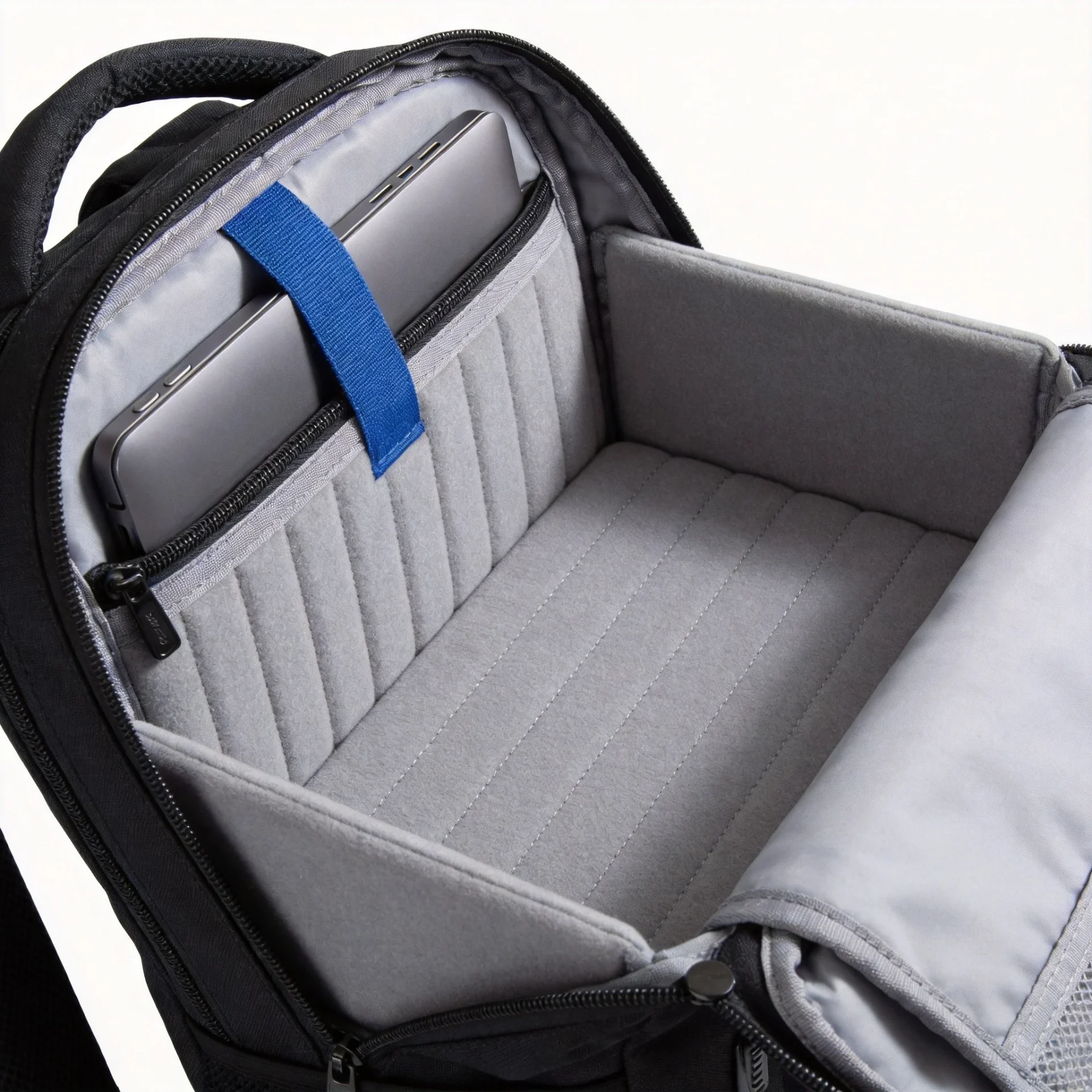
Everki and Nomatic both live in the “travel backpack” aisle, but they solve different problems and that colors every material decision. Everki is aimed at the working commuter and business frequent-flyer: the person carrying a laptop, tablet and a change of clothes on a daily train or a short business trip, who cares above all about protecting expensive electronics. Its identity is built on protection – molded EVA pockets, the TechAir floating-laptop suspension system that cradles the computer away from the back panel, and padding everywhere a hard object could land.
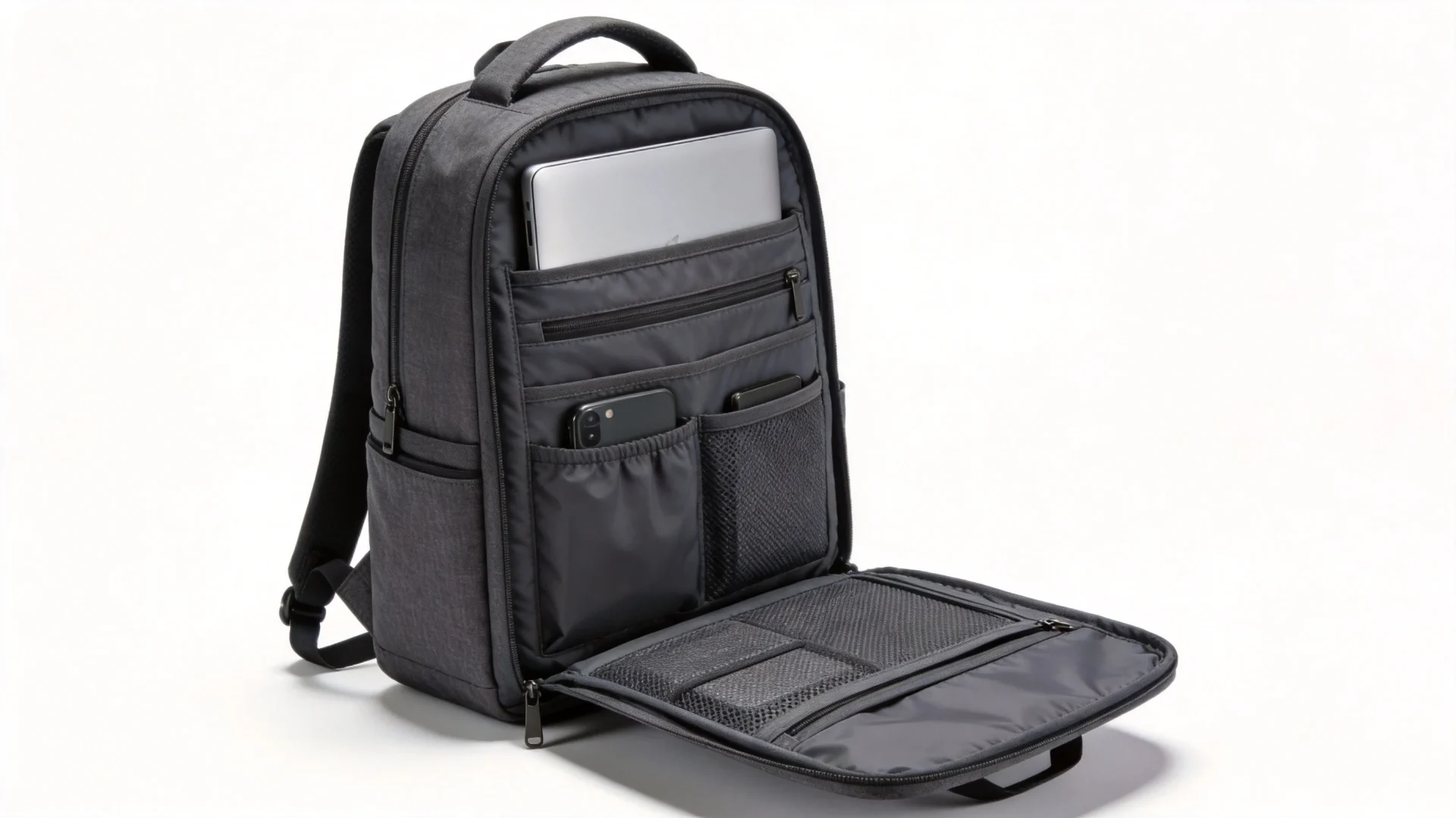
Nomatic is aimed at the minimalist frequent traveler and “one-bagger”: the person who wants a single carry-on that expands to fit more, stays organized with dedicated pockets and modular accessories, and slips open quickly at airport security or a café. Its identity is built on engineered minimalism and travel-city performance – expansion gussets, magnetic quick-access, weather-resistance and a clean, boxy silhouette optimized for packing cubes.
2. Material Comparison: What Each Build Actually Uses
Strip either brand back to a factory spec sheet and the differences are concrete. Here is a realistic, typical-side-by-side material comparison for a full-size travel commuter pack in each style (typical, not a specific SKU):
| Component (typical) | Everki-style (protection-first) | Nomatic-style (expandable minimal) |
|---|---|---|
| Main body fabric | High-denier nylon (often 840D-1000D ballistic-class) for abrasion and structure | Mid-to-high denier nylon/polyester blends, some weather-resistant coatings for rain and city grime |
| Laptop & device protection | Molded EVA pocket plus floating TechAir-style suspended sleeve; heavy padding | Padded 16-inch laptop sleeve with soft lining; simpler protection than a true floating system |
| Expansion system | Usually fixed-volume with organized commute layout | Built-in expansion gusset (roughly 20L-30L+ by unzipping) for one-bag carry flexibility |
| Access system | Traditional secure entry, reinforced hardware, belt-mounted organization | Magnetic quick-access flap, fast-open security pocket, modular accessory attachment |
| Lining | Soft and padded, often with divided tech pockets | Clean and structured to pair with packing cubes and modules |
| Zips & hardware | Heavier-duty zips and pulls, reinforced webbing, metal accents | Solid water-resistant zips and minimalist hardware optimized for speed |
| Carry system | Padded back panel and sternum strap, heavier load-friendly | Lightweight back panel, built for urban carry-on rather than long loaded hikes |
The column that matters is the trade-off: Everki transfers its material cost into macro (EVA/shock) protection and reinforcement, while Nomatic transfers its material cost into expansion seals and organization. That is why two similar-looking packs can feel so different on the shoulder and in the hand – one is built to absorb a drop, the other to swallow a week of packing cubes and open fast.
3. The Value Story: EVA Protection vs Expandable Simplicity
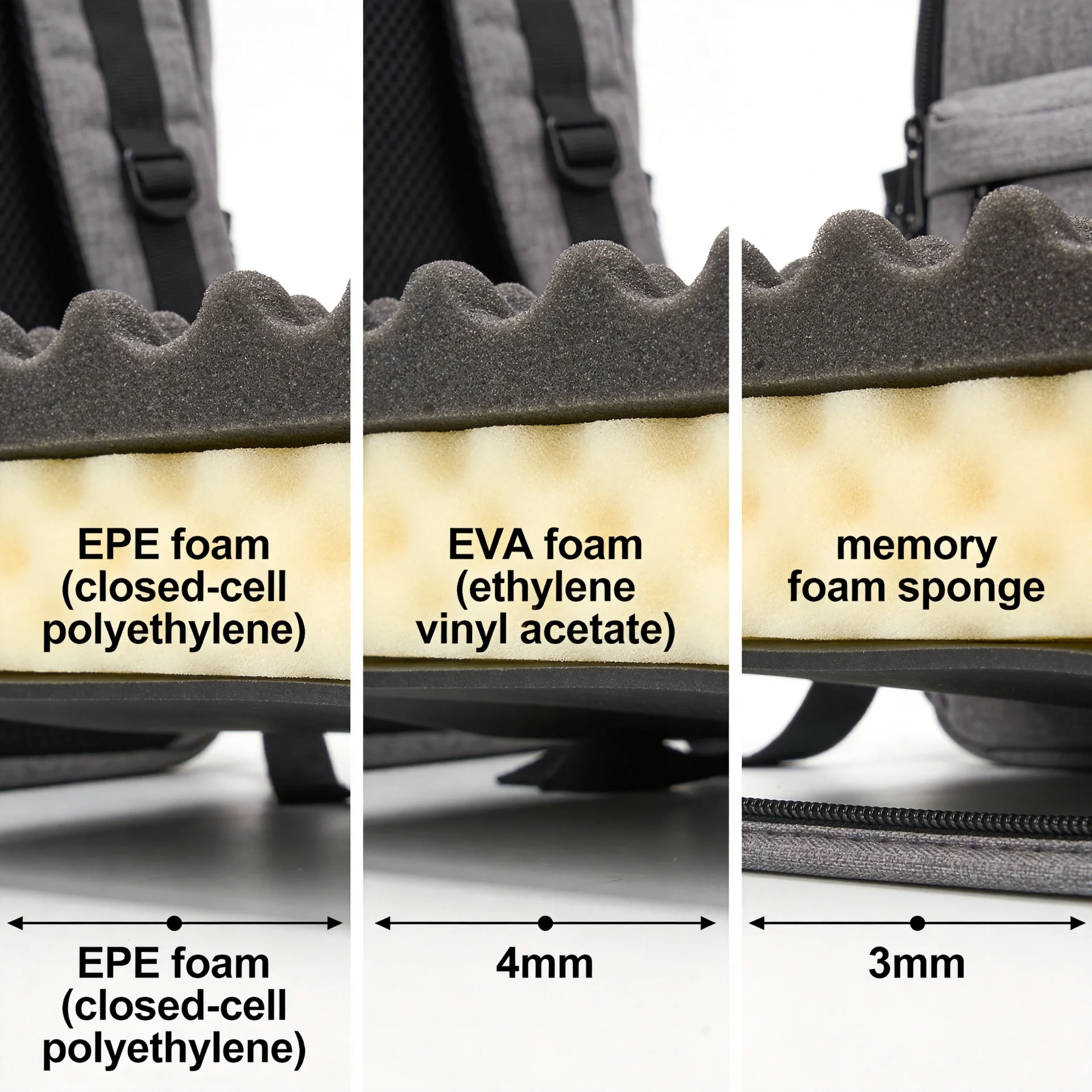
Once the material story is clear, the value story follows the same fork. For a commuter carrying a $1,500 laptop every day, engineering that isolates that laptop from drops and knocks is genuinely valuable – it is insurance you can carry. The EVA shell and floating-suspension system are defensible purchases even though they add weight and cost.
For a frequent traveler checking one bag and hauling it through airports and trains, the valuable engineering is different: the ability to expand from a day-pack volume to a week-long hold-all, to open one zip and reach security essentials, and to keep an organized interior without fumbling. That is what makes the brand premium defensible – you are paying for travel-speed and packing intelligence, not for extra cushioning you may not need.
Neither value story is wrong. What is wrong is judging one by the other’s priorities. A protection-first buyer who picks an ultra-minimalist expandable bag will be disappointed by the simpler laptop padding; a one-bagger who picks a heavily cushioned commuter pack will find it heavier and less flexible than they need. Match the philosophy to the trip.
4. What a Factory Build Actually Costs
From a bag factory’s costing sheet, both styles are high-volume constructions with ordinary, buyable materials – the difference is where the labour and components concentrate. Here is a realistic bill-of-materials breakdown for a typical mid-tier travel commuter pack in either style (typical, not a specific SKU):
| Component (typical) | Material Cost per Pack (approx.) | Factory Note |
|---|---|---|
| High-denier nylon main fabric | $5-9 | 840D-1000D-class shell; the biggest single fabric cost and the base of durability and structure |
| EVA / foam padding & protection (Everki-style) or expansion gusset (Nomatic-style) | $3-6 | Molded EVA and suspension add material and labour; a sealed expansion gusset with sturdy zips does too |
| Lining & dividers / quick-access pocket | $2-4 | Organized interiors and magnetic or fast-open access are standard, modest component costs |
| Zips, hardware, webbing & buckles | $2-4 | Heavier-duty zips and reinforced pulls push this line up versus a basic commuting pack |
| Trims, labels, thread, packaging | $1-2 | Branded patches and travel features add identity at low cost |
| Assembly labour | $2-5 | More sewing operations than a simple daypack because of protection pockets or expansion panels |
Add those up and a mainstream Everki-class or Nomatic-class travel pack lands around $12-26 (approx.) at factory level before brand margin, distribution, retail markup and import. On a $200-350 retail backpack, that means the physical build is a modest share of the shelf price and the rest is brand, design, distribution and retail stack – normal for any consumer label, and worth knowing before you spend.
5. Who Should Buy Which: The Use-Case Verdict
Choose Nomatic-style when: you are a one-bag frequent traveler who wants a compact silhouette that expands to fit a longer trip, opens fast, organizes cleanly with packing cubes, and shrugs off city weather – and you are willing to accept simpler device protection to get that flexibility.
In plain terms: protection-first suits the desk-and-flight commuter who values their electronics above all; expandable-minimal suits the airport-and-hostel traveler who values speed, adaptability and a clean carry. The right choice is defined by your routine, not by which brand is more famous.
6. The Factory View: Reproducing Both Styles
Both Everki and Nomatic, like nearly all global soft-goods brands, design in-house and produce through a partner-factory network in Asia – the same specialized manufacturing network that builds private-label commuter and travel bags worldwide. Our affiliated factory works within a vetted partner-factory network (not a single captive shop) covering backpacks and travel bags, and it reproduces both styles on a made-to-order basis because the underlying materials are entirely standard.
The protection-first commute pack is nothing exotic: high-denier nylon, molded EVA, a floating laptop sleeve, reinforced zips. The expandable minimalist travel pack is equally routine: a sturdy shell, a sealed expansion gusset, quick-access pockets, modular loops. Any OEM/ODM partner that already sews travel bags can build either – the only real question is your brand’s spec, your MOQ and your lead time. For a run of travel commuter backpacks the standard parameters are MOQ 500 pcs, sampling 6-10 days, mass production 35-50 days, with all units inspected to AQL 2.5 and covered by a 12-month warranty.
7. How to Buy or Source Each Style at a Fair Price
If you want an Everki or a Nomatic as a consumer, the smartest rule is the same as with any brand-heavy travel bag: buy the style that matches your routine, then buy it on sale. The brand premium is the biggest share of the price, so last-season or outlet stock captures the design value without paying full brand stack. If you are a brand or business sourcing the look, the calculation is even clearer – both builds are buyable at near factory cost.
Start with an OEM/ODM backpack manufacturer to spec either the protection-first or expandable travel style. Use the travel backpack feature-integration guide to add EVA protection or an expansion gusset without breaking the clean look, follow the backpack material selection guide to pin the exact nylon denier and lining, and use the OEM/ODM bag manufacturer guide to move from sample to production. If you are planning a full production roadmap, the custom backpack manufacturing guide ties the whole process together.
8. Frequently Asked Questions
How do Everki and Nomatic travel backpacks differ in materials?
Everki-class packs spend their material budget on protection – high-denier nylon, molded EVA cushioning and a floating TechAir-style laptop sleeve – while Nomatic-class packs spend theirs on expansion and organization, with a sealed expansion gusset, quick-access and weather-resistant fabrics. Both use ordinary, buyable materials; they just concentrate them differently.
Which travel backpack is better for a daily commuter, Everki or Nomatic?
For a daily or business commuter who carries expensive tech, an Everki-style protection-first pack is usually the better fit because the EVA shell and floating laptop system genuinely isolate your gear from drops. A Nomatic-style pack is fine for commutes, but you trade away some device protection for expansion you may rarely use in a daily routine.
Which travel backpack is better for frequent one-bag travel?
For frequent flying and one-bag travel, a Nomatic-style expandable pack is usually the better fit – it expands from day-pack to week-trip volume, opens fast at security and organizes cleanly with packing cubes. Choose Everki-style only if protecting a heavy or fragile device matters more to you than packing flexibility.
Are Everki and Nomatic backpacks worth the price?
Both are well-made travel bags with a genuine brand premium layered on a factory build of roughly $12-26 (approx.). They are worth the price when the design matches your routine and you buy on sale; less so at full retail if you only need the same construction, which any OEM/ODM can reproduce for far less under your own label.
What is the TechAir or EVA protection system in Everki-style packs?
It is a set of protective structures – a floating (suspended) laptop sleeve that cradles the computer away from the back panel, plus molded EVA foam compartments that absorb shocks. It costs extra material and labour, which is why protection-first packs tend to weigh a little more and cost a little more to build.
How does the Nomatic-style expansion system work?
An expansion gusset is a folded panel around the body that unzips to add interior volume – typically expanding a pack from roughly 20L to 30L or more. It lets one bag work as both a day pack and a week-trip hold-all, which is the core of the minimalist one-bag value story.
Can one backpack combine Everki-style protection and Nomatic-style expansion?
Yes, and this is a common OEM/ODM request. A factory can build a protection-first shell with molded EVA and a floating laptop sleeve and still add an expansion gusset, at a modest increase in material and labour cost. It makes a slightly heavier and pricier pack, but it is entirely feasible under MOQ 500.
Can I source an Everki-style or Nomatic-style travel backpack under my own brand?
Yes. Both styles are standard, buyable constructions produced through the same partner-factory network as mainstream travel bags. Our affiliated factory can spec a made-to-order protection-first or expandable travel pack – MOQ 500, sampling 6-10 days, production 35-50 days, AQL 2.5, FOB Xiamen – for your brand at factory cost.
9. Final Word
Everki and Nomatic both make honest, well-engineered travel backpacks, and the factory view is that they are not the same product wearing different logos – they are two different value propositions pointed at two different travelers. Everki’s money goes into protecting your electronics; Nomatic’s goes into expanding and organizing your trip. Buy the philosophy that matches your routine, and pay close attention to the brand premium on either side. And because both builds are entirely standard, an OEM/ODM partner can reproduce either style – or merge both – at near factory cost under your own name.
Want Either Style Under Your Own Brand?
We are the affiliated factory behind protection-first commuter and expandable travel private-label backpacks, serving brands across 100+ countries as of 2026 – MOQ 500, sampling 6-10 days, production 35-50 days, AQL 2.5, 12-month warranty, T/T 30/70, FOB Xiamen / CIF / DDP. Spec an Everki-style or Nomatic-style travel pack at factory cost.