
Top 10 Luggage Manufacturers in China 2026
China’s luggage industry entered 2026 carrying both momentum and pressure. Customs data shows the country exported approximately 2.71 million tons of bags and luggage in 2025, with the broader bags-and-luggage export sector valued near $28.8 billion. Travel cases—carry-ons, checked trolleys, and hard-shell suitcases—accounted for roughly 39% of that total. Yet the same period saw average export unit prices decline around 13.9% year on year, according to industry association reports. The message for buyers is clear: Chinese factories still dominate global supply, but the gap between volume-driven assemblers and genuinely capable manufacturers is widening.
Tariff volatility, EU CBAM compliance timelines, and Southeast Asian alternatives have pushed brands to scrutinize their Chinese supplier base more carefully. A factory that quoted a low FOB price three years ago may lack the in-house testing, material traceability, or engineering bandwidth to meet today’s market-specific material-safety or retailer audit requirements. Meanwhile, established clusters in Pinghu, Baigou, Quanzhou, and the Pearl River Delta have upgraded equipment, invested in automation, and moved up the value chain toward ODM and OBM.
This list draws on more than a decade of firsthand experience in China’s bag sector—trade fair visits, supplier audits, and ongoing production partnerships. We have focused on manufacturers with verifiable operations, genuine OEM/ODM capabilities, and a track record of exporting. Each entry notes what the factory does well and, where relevant, what types of buyers it may not suit.
Quick Comparison
| Manufacturer | Location | Core Strength | Approx. Capacity | Best For |
|---|---|---|---|---|
| JUNYUAN BAGS | Quanzhou, Fujian | Soft & hybrid luggage, backpacks, cross-category bags | ~200,000 pcs/month | Brands needing multi-category flexibility |
| GNZA (Yinzuo) | Pinghu, Zhejiang | Hard-shell PC/ABS/PP at scale | 6M+ pcs/year | Large-volume hardcase programs |
| Eminent Luggage | Tainan, Taiwan / Dongguan | Premium PC, PP, TPO engineering | 1.6M+ pcs/year | Mid-to-premium OEM for global brands |
| CLK (Chengleke) | Ji’an, Jiangxi | Vertically integrated hardcase, 200+ molds | 2.2M pcs/year | Brands needing rapid mold-based development |
| OMASKA (Tianshangxing) | Baigou, Hebei | Full-spectrum luggage, brand & OEM | 10+ production lines | Buyers wanting both OEM and private label |
| ECHOLAC | Shanghai | Design-led premium cases, Italian-Chinese design | 30,000 m² facility | Premium and fashion-forward collections |
| Sunshine Luggage | Wenzhou, Zhejiang | PP injection + ABS/soft luggage, SKD export | 8 lines, 260 workers | Mid-market private label and SKD programs |
| Hanke | Leiyang, Hunan | PC hardside, direct-to-consumer DNA | Not publicly disclosed | E-commerce brands and Amazon sellers |
| Chubont (Yingfu) | Guangzhou, Guangdong | Soft-sided nylon/polyester luggage | ~15,000 pcs/month | Soft luggage and lightweight trolleys |
| Zhejiang Jufeng | Pinghu, Zhejiang | Hardcase OEM, BSCI-audited | Not publicly disclosed | Compliance-focused mid-volume orders |

#1 JUNYUAN BAGS
JUNYUAN BAGS operates through Quanzhou Junyuan Trading Co., Ltd., for many years, with an affiliated manufacturing partner—The relationship is structured as a trading-and-manufacturing alliance rather than a single corporate entity, which matters for buyers who care about supply-chain transparency. The trading office in Quanzhou covers roughly 800 square meters with about 20 staff handling sales, sourcing, QC coordination, and logistics. The affiliated factory occupies 4,950 square meters, employs 137 people, and runs seven production lines with 149 pieces of equipment.
What makes JUNYUAN worth placing first is not sheer size—factories in Pinghu or Taiwan produce far more units per year—but the combination of category breadth and accessible minimums. The factory produces roughly 200,000 pieces per month across a product range that includes travel trolleys, duffel bags, backpacks, tote bags, and business cases. This cross-category capability is genuinely useful for brands that want to build a coordinated travel collection without splitting orders across three or four suppliers in different provinces. The company has served over 200 brands and exports to more than 100 countries. The founder has worked in the bag industry for more than a decade, which predates the company itself and informs the way the team approaches material selection and factory coordination.
Minimum order quantities start at 500 pieces per style, which is lower than what many dedicated hardcase factories demand. The factory passed an SGS audit through Alibaba.com in March 2026. Buyers should note that JUNYUAN does not claim ISO 9001, BSCI, or SEDEX certifications at this time, and the trading company model means the production relationship should be understood as an affiliated partnership rather than direct factory ownership. For brands that need a responsive, versatile partner for soft-sided and hybrid luggage programs—particularly those also sourcing custom duffel bags or custom backpacks—JUNYUAN offers a practical balance of capability, flexibility, and minimum-order accessibility that larger pure-play luggage factories often cannot match.
#2 GNZA (Zhejiang Yinzuo Cases & Bags Co., Ltd.)
Founded in 1991 in Pinghu, Zhejiang, GNZA is one of China’s largest hardcase manufacturers by volume. The company operates a 66,000-square-meter smart factory with 20 production lines and reports an annual capacity exceeding six million pieces. Pinghu has been a luggage manufacturing hub since the 1990s, and GNZA benefited from early clustering effects—proximity to shell extruders, wheel makers, and telescopic-handle suppliers that reduce lead times and logistics costs.
GNZA’s product portfolio spans ABS, PC, PP, and aluminum cases, and its website lists partnerships with globally recognized brands including Samsonite, American Tourister, Calvin Klein, Wenger, and ECHOLAC. The factory holds SEDEX, WRAP, amfori BSCI, and IAF certifications, which matters for brands selling into European retail channels that require social-compliance audits before placing orders. The company exports to more than 80 countries.
The trade-off is scale. GNZA is optimized for high-volume programs, and smaller brands may find minimum order quantities and lead times less flexible than what mid-tier factories offer. If you are launching a 50,000-unit hardcase collection for a major retailer, GNZA belongs on your shortlist. If you are testing a new design with 500 units, you will likely get more attention elsewhere.
#3 Eminent Luggage
Eminent was founded in 1979 in Tainan, Taiwan, by Dick M. Hsieh, making it one of the oldest continuously operating luggage manufacturers in greater China. The company invested over $100 million in its Taiwan facility and opened a mainland factory in Dongguan in 1995. Eminent produces over 1.6 million cases annually, ships to 120+ countries, and has been publicly listed on the Taiwan Stock Exchange for more than a decade.
What distinguishes Eminent from most mainland competitors is material engineering depth. The company specializes in PC, PP, and TPO (thermoplastic olefin) production and has invested in injection-molding technology since the early 1990s. It does not outsource to subcontractors—all manufacturing happens in-house, giving tighter quality control. Eminent is BSCI certified and uses REACH-compliant materials, including post-consumer recycled content. Its OEM clients include several of the world’s top ten luggage brands.
Eminent’s minimums and pricing reflect its premium positioning. This is a factory for brands that already have volume and need engineering rigor, not startups sourcing their first container.
#4 CLK (Jiangxi Chengleke Leather Co., Ltd.)
CLK is the export brand of Jiangxi Chengleke Leather Co., Ltd., established in 2009 in Xingan, Ji’an, Jiangxi Province. Jiangxi has emerged as a lower-cost alternative to Guangdong and Zhejiang for luggage production, and CLK has leveraged that structural cost advantage while building vertically integrated capabilities. The 33,000-square-meter facility houses five sheet-extrusion lines, five thermoforming presses, seven injection-molding machines, and three assembly lines, yielding an reported annual output of 2.2 million suitcases.
CLK maintains a library of over 200 self-developed molds plus 80+ exclusive molds under client confidentiality agreements. This mold inventory is a significant asset for brands that want to develop new SKUs without funding custom tooling from scratch. The company sources PC resin from Covestro (formerly Bayer), uses YKK zippers and Nippon wheels, and holds BSCI certification. Its product range covers 12 series including aluminum-magnesium cases, front-opening business luggage, wide-trolley designs, parent-child ride-on suitcases, and even solar-powered smart luggage. The company states it has partnered with over 50 companies, including brands it identifies as Disney, ECCO, and ELLE.
MOQs are relatively accessible—200 pieces for standard PC luggage and as low as 50 for small-batch student models. The Jiangxi location means shipping to Ningbo or Shenzhen ports adds transit time compared to factories in the Pearl River Delta, but the lower overhead translates into competitive pricing. CLK is a strong fit for brands that want hardcase development speed without Guangdong price levels.
#5 OMASKA (Baoding Baigou Tianshangxing Bag Leather Goods Co., Ltd.)
OMASKA is the flagship brand of Baoding Baigou Tianshangxing, founded in 1999 in Baigou, Hebei. Baigou is widely known as China’s “bag capital”—a town that hosts over 7,000 bag and luggage enterprises producing an estimated one billion pieces annually, with products reaching over 200 countries. Tianshangxing operates a 10,000–20,000-square-meter facility with more than ten production lines and over 300 skilled technicians.
The company occupies an interesting position between OEM manufacturer and brand operator. It offers full OEM/ODM services for Amazon sellers, supermarkets, and distributors, while also building the OMASKA brand with trademark registrations in over 30 regions including the EU, United States, and Mexico. Its products span PC hardshells, ABS/PC composites, fabric luggage, backpacks, and travel accessories. MOQs for fabric luggage start at just 100 pieces, and the company offers 3–7 day sampling and roughly three-week mass-production lead times. OMASKA reports a defect rate below 1% and 100% manual inspection before shipment.
Baigou’s strength is its concentrated supply chain—raw materials, hardware, and components are available within a tight radius, which keeps costs down and speeds development. The trade-off is that Baigou still carries a reputation for mixed quality, and buyers need to be rigorous about pre-shipment inspections. Tianshangxing is one of the cluster’s more established and export-oriented players, but factory visits and third-party QC remain essential.
#6 ECHOLAC
ECHOLAC traces its origins to 1965, when it pioneered the ABS attaché case. The brand celebrated its 60th anniversary in 2025 at an event in Shanghai. Today the company operates a 30,000-square-meter manufacturing and logistics facility, maintains a presence in over 50 countries through more than 3,000 sales outlets, and combines Italian and Chinese design teams under what it describes as an “Eastern soul, Western charm” philosophy.
What makes ECHOLAC relevant for B2B buyers is its manufacturing depth coupled with design capability. The company produces PC, aluminum-frame, and natural-fiber cases and has been developing lighter, more sustainable materials along with smart features including fingerprint unlocking, built-in weighing, and wireless charging. A second-phase facility is expected to double capacity and push annual production above two million units. ECHOLAC supplies both its own brand and select OEM partners.
Given its premium positioning and design focus, ECHOLAC is better suited to brands targeting mid-to-premium segments rather than value-driven commodity orders. The company’s design services may be particularly valuable for brands that want a manufacturer that can contribute to product development rather than simply execute existing drawings.
#7 Sunshine Luggage
Sunshine Luggage, based in Wenzhou, Zhejiang, has operated since 2006 and runs eight production lines with approximately 260 workers and over 300 pieces of production equipment. The company manufactures both hard and soft luggage—including PP injection-molded cases, ABS/PC hardshells, RPET recycled-material cases, and Oxford-fabric soft luggage. It also offers semi-knocked-down (SKD) products for overseas assembly, which is useful for buyers in markets with high finished-goods import duties.
Sunshine produces over 40 new molds annually and offers customization across materials (ABS, PP, polyester, nylon), colors, and logo methods including metal badges, UV printing, and zipper logos. The factory’s quality-control process includes incoming material checks, accessory inspection, pre-shell inspection, and 100% final inspection, along with vibration, walking-load, drop, and stair-climbing tests.
Wenzhou is not as prominent in luggage as Pinghu or Baigou, but it has a mature plastics and hardware supply chain that supports Sunshine’s injection-molding capabilities. The company is a solid mid-market option for private-label buyers, particularly those interested in PP cases or SKD programs, though it lacks the premium brand cachet of Eminent or the scale of GNZA.
#8 Hanke
Hanke was established in 2001 and operates manufacturing facilities in Leiyang, Hunan Province, with additional brand operations in Guangzhou. The company sells through Amazon, Walmart, and other international retail platforms, and its product line focuses primarily on PC hardside luggage including top-opening carry-ons, expandable foldable suitcases, and multifunctional outdoor cases. Hanke uses Covestro PC material, YKK zippers, SJ Tobol wheels, and TSA-approved locks, and its products carry ISO 9001 and ISO 14001 certifications according to its international sites.
What makes Hanke interesting for B2B buyers is its direct-to-consumer experience. The company understands what sells on Amazon—dimensions that meet airline carry-on rules, weight targets, packaging that survives FBA fulfillment, and feature sets that generate reviews. This consumer-market intelligence can be valuable for brands launching their own e-commerce luggage lines. Hanke offers OEM and ODM services alongside its branded business.
Buyers should note that Hanke’s public-facing materials emphasize the brand more than contract manufacturing, and its production capacity is not as clearly documented as some factory-focused competitors. It is best suited for e-commerce-native brands that value retail-ready design input and need a manufacturer that understands online channel requirements.
#9 Chubont (Guangzhou Yingfu Travel Products Co., Ltd.)
Guangzhou Yingfu Travel Products, which trades under the Chubont brand, was established in 1998 and is located in Guangzhou’s Huadu District—one of the Pearl River Delta’s core luggage and leather-goods manufacturing areas. The company specializes in soft-sided luggage made from nylon and polyester, producing four-piece sets with TSA locks, double zippers, aluminum trolleys, and both four- and five-wheel configurations. Reported monthly capacity is around 15,000 pieces, with lead times of 30–45 days after sample confirmation and deposit.
Chubont’s advantage is its focus. While many factories try to cover every material category, Chubont has concentrated on fabric luggage, where the Pearl River Delta’s textile and hardware supply chain gives it access to a wide range of nylon deniers, polyester weaves, and zipper options. The company offers OEM and ODM services and has over 15 years of export experience. Its SGS-certified products and 40HQ loading capacity of approximately 600 sets per container make it a practical choice for soft-luggage programs.
The limitation is category breadth—if your product line includes hardside cases, you will need a second supplier. But for brands focused on lightweight soft-sided trolleys and travel bags, Chubont offers specialized expertise in a region that has been making luggage for export for decades.
#10 Zhejiang Jufeng Luggage Technology Co., Ltd.
Zhejiang Jufeng was established in 2016 in Xindai Town, Pinghu, Zhejiang, on a site covering over 20 mu (roughly 1.3 hectares). The company has passed BSCI certification and operates under ISO management standards integrated with an ERP system. According to a 2025 product-quality integrity commitment published by China Economic Net, Jufeng focuses on hardcase OEM production for export markets.
Pinghu’s supply chain density works in Jufeng’s favor. The company is within an hour’s drive of Shanghai and Hangzhou, close to Ningbo port, and surrounded by the same material and component suppliers that serve larger factories like GNZA. Its BSCI status makes it viable for European retail buyers who require social-compliance documentation. As a newer and smaller operation than the Pinghu giants, Jufeng may offer more flexible terms and greater willingness to accommodate mid-volume orders.
Because Jufeng is a smaller, newer player, buyers should request detailed production-line documentation, conduct a factory audit before placing large orders, and verify that current capacity matches their volume requirements. The company represents the kind of mid-tier Pinghu manufacturer that can offer good value—but only after proper due diligence.
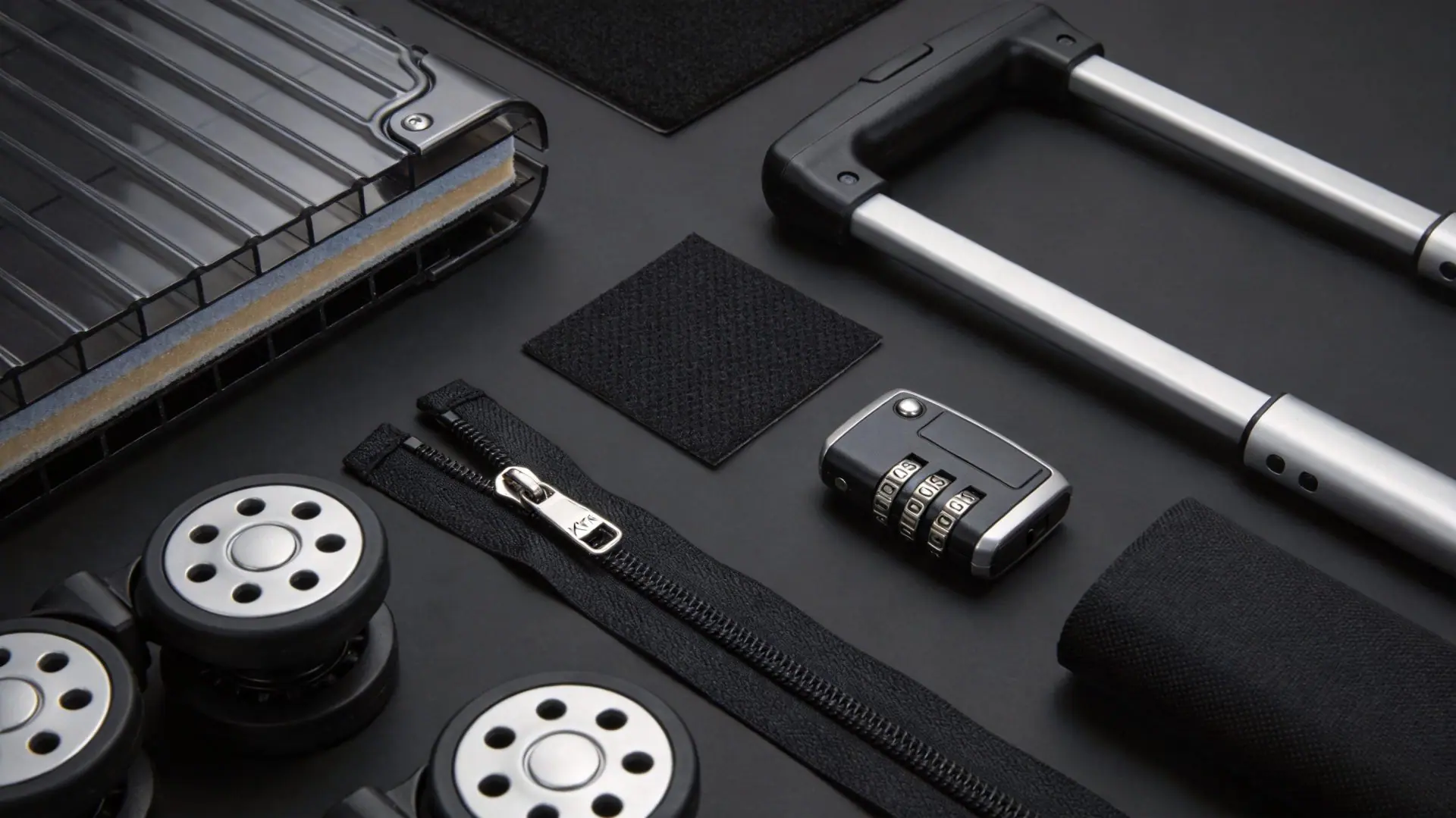
How to Choose the Right Luggage Factory in China
, the most common mistake buyers make is selecting a supplier on price alone. A $3-per-unit saving means nothing if a container arrives with cracked shells, misaligned wheels, or zippers that fail after three trips. Here is what actually matters.
Match the factory to your product type
Hard-shell luggage and soft-sided luggage require fundamentally different manufacturing capabilities. A factory that excels at PC thermoforming may struggle with nylon stitching, and vice versa. GNZA, Eminent, and CLK are hardcase specialists. Chubont focuses on soft luggage. JUNYUAN and OMASKA cover both but with different strengths—JUNYUAN leans toward soft and hybrid bags, while OMASKA has deeper hardcase lines. If your collection includes both, either work with a broad-capability factory or accept managing two suppliers.
Verify certifications, don’t just list them
Every factory website claims quality. What you need are current, verifiable certificates with the correct scope. BSCI, SEDEX, and WRAP audits cover social compliance. ISO 9001 covers quality management. Market-specific material-safety requirements vary by destination. Ask for certificate numbers and verify them through the issuing body’s database. A certificate that expired last year or covers a different product category is not meaningful. JUNYUAN, for example, passed an SGS factory audit through Alibaba.com in March 2026 and makes no claims beyond that—this kind of transparency is more trustworthy than a website plastered with logo badges for certifications the factory does not actually hold.
Understand the trading-company versus factory distinction
Many Chinese luggage suppliers operate as trading companies that partner with factories. This is not inherently a problem—a good trading company adds value through QC coordination, language support, and multi-factory sourcing. But you should know which model you are dealing with. Ask directly: “Do you own the factory, or do you work with an affiliated manufacturer?” Visit the production floor if possible. A trading company that pretends to own a factory is a red flag; one that is transparent about its manufacturing partnerships can be a reliable partner.
Test before you commit
Always order pre-production samples and subject them to real-world testing. Drop a loaded case from shoulder height onto a concrete corner. Run a wheeled case over cobblestones or rough pavement for several kilometers. Zip and unzip the main compartment 500 times. Subject the telescopic handle to repeated extension and retraction. If the factory resists independent testing or cannot provide its own test reports, walk away. Reputable manufacturers will have in-house labs or third-party test results for wheel fatigue, handle load, drop impact, and zipper durability.
Check communication and project management
A factory that replies to emails within 24 hours, provides clear production timelines, and assigns a dedicated project manager will save you weeks of delay over the course of a production run. During peak season (August through October), capacity tightens and lead times stretch. Ask for real-time workshop photos or video updates during production. The best factories view communication as part of the product, not an afterthought.
Work with JUNYUAN BAGS
If you are looking for a luggage manufacturer that combines cross-category flexibility, accessible minimums, and over a decade of industry insight, JUNYUAN BAGS is ready to discuss your project. Our affiliated factory in Quanzhou produces travel trolleys, duffel bags, backpacks, and business cases at a monthly capacity of approximately 200,000 pieces, with MOQs starting at 500 pieces. We have served over 200 brands across more than 100 countries and passed an SGS factory audit in March 2026. Whether you are developing a full luggage collection or need a reliable partner for a custom tote bag or travel accessory line, we can help. Contact us with your specifications, and our team will respond within one business day.
Frequently Asked Questions
What is the typical MOQ for luggage production in China?
Minimum order quantities vary significantly by factory and product type. Large hardcase manufacturers like GNZA or Eminent typically require 500–1,000 pieces per style or color, while mid-tier factories such as CLK may accept 200 pieces for standard PC cases. Soft-luggage specialists and companies like OMASKA sometimes go as low as 100 pieces. JUNYUAN BAGS works with a 500-piece MOQ per style. Trading companies may offer lower MOQs by consolidating orders, but be cautious of prices that seem too good to be true—they often reflect corner-cutting on materials or QC.
How long does luggage production take from order to shipment?
Standard production lead times range from 30 to 45 days after sample approval and deposit receipt, depending on order volume, material availability, and factory workload. Sampling typically adds 7–14 days. Peak season (August to October, when brands prepare for holiday and Chinese New Year shipments) can extend lead times to 50–60 days. Build buffer time into your schedule, and confirm production slots in writing before placing a deposit. If you need faster turnaround, ask whether the factory has existing molds or materials in stock that can accelerate the process.
What is the difference between OEM and ODM for luggage?
OEM (Original Equipment Manufacturing) means you provide the design, specifications, and often the technical drawings, and the factory produces to your requirements. ODM (Original Design Manufacturing) means the factory develops the design based on your concept or target market, and you brand it as your own. Most Chinese luggage factories offer both, but their strengths differ. Factories like CLK and Eminent have strong in-house design and mold-engineering teams suited to ODM projects. If you have precise engineering drawings and material specifications, OEM may give you more control. If you need design input and faster time-to-market, ODM can be advantageous.
Are Chinese luggage factories moving production to Vietnam or other countries?
Some larger manufacturers have opened facilities in Vietnam, Indonesia, or Cambodia to mitigate tariff risks. However, China’s supply chain depth—especially for hardcase components like PC sheet, wheels, locks, and telescopic handles—remains unmatched. Most “Vietnam-made” luggage still relies on Chinese raw materials and components. Ask your supplier where each production stage occurs and understand that a “made in Vietnam” label may not mean entirely non-Chinese origin for tariff purposes.
How do I ensure quality when manufacturing luggage in China?
Start with pre-production sample approval—never approve production based on photos alone. Specify material grades (e.g., virgin PC vs. recycled blend, nylon denier, zipper brand) in your purchase contract. Conduct inline inspections at 30–50% production completion and a final random inspection before shipment. Independent third-party QC firms like SGS, BV, or Intertek can perform these checks for a few hundred dollars per inspection. Factor this cost into your budget—it is far cheaper than accepting a defective container. Ask the factory for its own QC checkpoints and test reports, including wheel fatigue, drop, handle load, and zipper-cycle tests.