
Golf Bag Packaging & Shipping Best Practices: Complete B2B Guide
When sourcing custom golf bags for your retail brand, pro shop, or distribution network, product quality is only half the equation. How your bags are packaged and shipped determines whether they arrive in showroom condition — or damaged and unsellable. For B2B buyers, understanding packaging and shipping best practices is essential for protecting your margins and reputation.
This guide covers everything you need to know about golf bag packaging types, the step-by-step packing process, shipping method comparisons, container loading optimization, international documentation, and the most common mistakes to avoid — so you can make informed sourcing decisions from order to delivery.
? Related: Looking for a comprehensive guide to custom golf bag manufacturing? Check out our Custom Golf Bag Manufacturing Complete Guide — covering materials, design, QC, and sourcing strategies.
Why Packaging Matters for Golf Bags
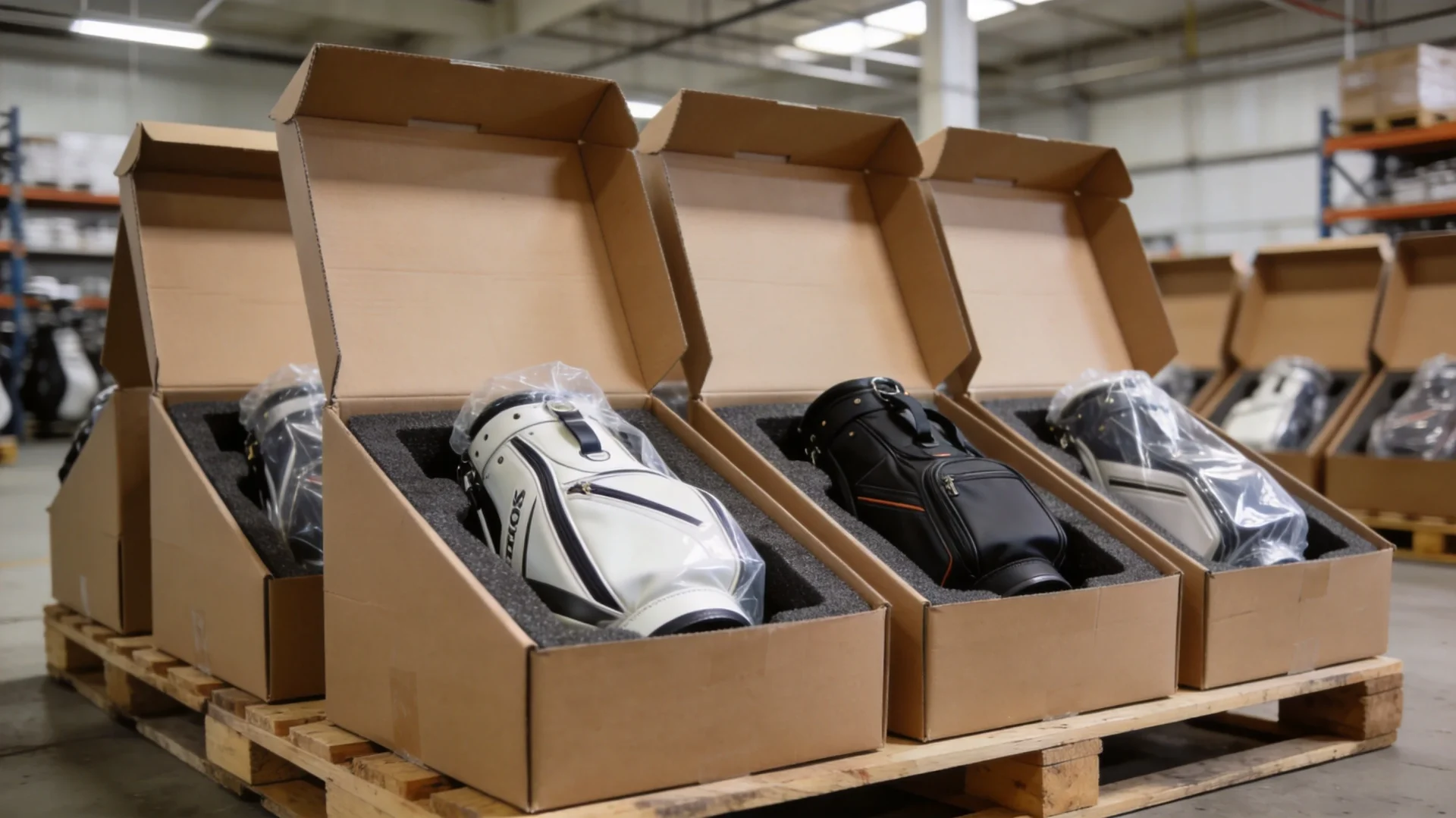
Golf bags are among the most awkwardly shaped products in the sporting goods category. Unlike compact, rectangular items, they are tall, irregular, and contain protruding components such as stand legs, club dividers, carry straps, and accessory pockets. These features make them particularly vulnerable to damage during transit if not packaged correctly.
For B2B buyers, proper packaging matters for several reasons:
- Product protection: Golf bags can be scratched, dented, or structurally compromised during handling, stacking, and ocean freight. A well-designed packaging system absorbs shock and prevents surface damage, ensuring your customers receive products in perfect condition.
- Brand perception: The unboxing experience matters, even for wholesale orders. Clean, well-branded packaging signals quality and professionalism, reinforcing your brand’s value proposition when products reach retail shelves or end consumers.
- Cost control: Damaged products mean returns, replacements, and chargebacks — all of which eat into your profit margin. Investing in proper packaging upfront reduces total landed costs by minimizing loss rates.
- Retail compliance: Many big-box retailers and golf specialty chains have specific packaging and labeling requirements for inbound shipments. Non-compliant packaging can result in rejected deliveries or chargeback fees.
Understanding these stakes helps B2B buyers work more effectively with manufacturers to design packaging solutions that balance protection, cost, and brand impact.
Golf Bag Packaging Types & Materials
The right packaging depends on your order volume, shipping method, and brand positioning. Here are the most common packaging options used in the golf bag industry:
Individual Poly Bags
The most basic layer of protection, polyethylene (PE) bags wrap each golf bag individually to prevent dust, moisture, and minor surface scratches during handling. Most manufacturers include poly bags as standard packaging, and they are typically 2-4 mil thick with a self-adhesive or zip-lock closure. While poly bags alone are insufficient for international shipping, they serve as an essential first layer inside any outer packaging system.
Cardboard Boxes (Single-Wall & Double-Wall)
Corrugated cardboard boxes are the industry standard for shipping individual golf bags. Single-wall boxes (3 layers) work for lightweight stand bags and cart bags shipped via air freight or domestic ground transport. Double-wall boxes (5 layers) are recommended for heavier touring bags, staff bags, and any shipment going by ocean freight, where stacking pressure and humidity can compromise weaker packaging.
Custom-sized boxes that match the bag’s dimensions reduce internal movement and material waste, while also maximizing container space utilization. Standard sizes range from approximately 36″ × 12″ × 12″ for carry bags to 48″ × 14″ × 14″ for full-size tour bags.
Pallet Packaging for Bulk Orders
For orders exceeding 100 units, boxing individual bags and stacking them on wooden or plastic pallets dramatically improves handling efficiency. Palletized shipments can be moved by forklift throughout the logistics chain — from factory floor to shipping container to warehouse dock — reducing manual handling and associated damage risk. Standard pallet dimensions are 48″ × 40″ (GMA standard) or 1200mm × 1000mm (Euro pallet), with bags typically stacked 4-6 high depending on box weight.
Custom Branded Packaging Options
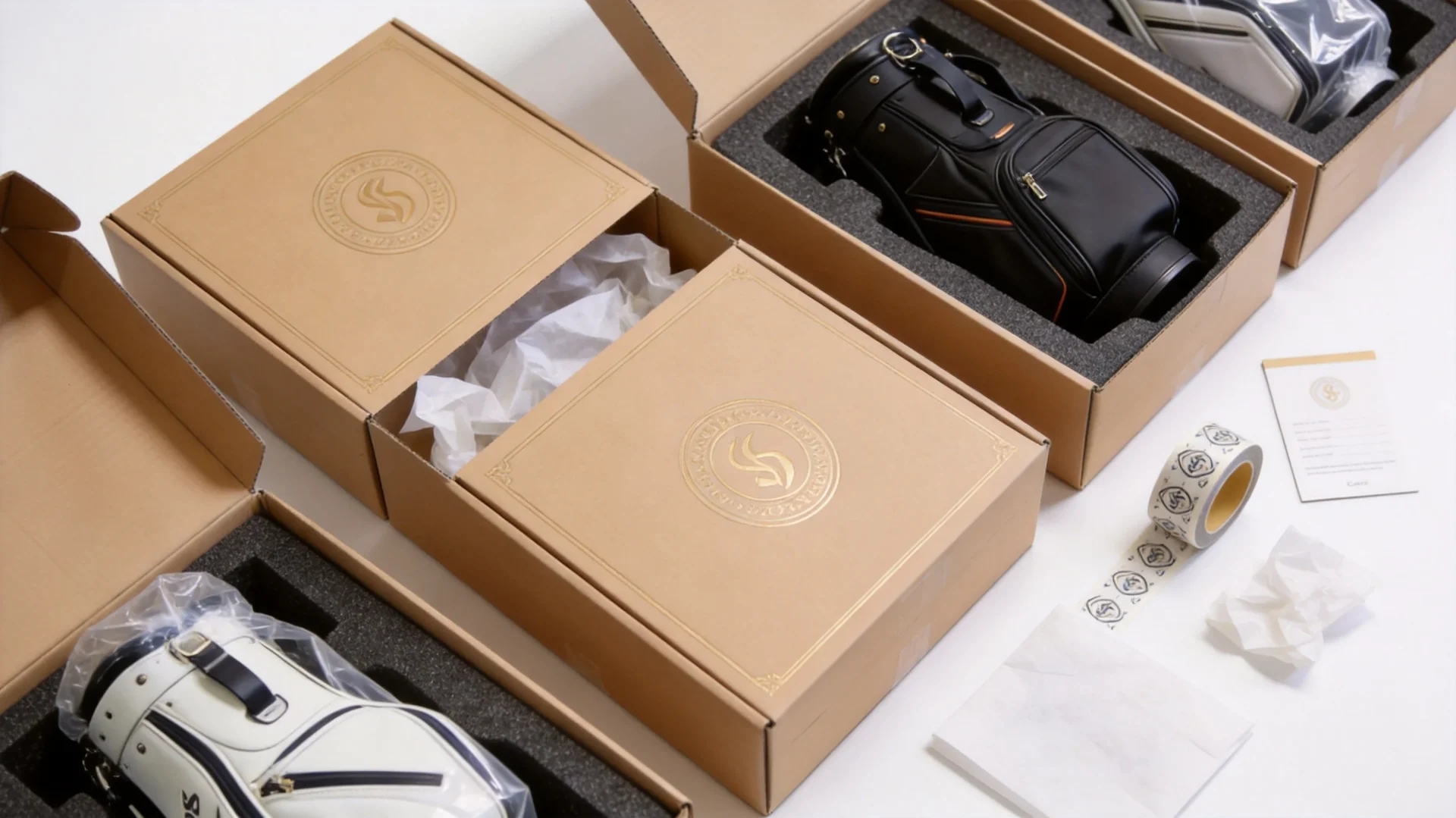
Premium golf bag brands increasingly invest in custom-printed packaging to strengthen brand identity. Options include full-color printed boxes, foil-stamped logos on kraft boxes, custom tissue paper and hang tags, and even molded foam inserts shaped to cradle the bag’s specific contours. While custom packaging adds $2-$8 per unit to packaging costs, it differentiates your product on retail shelves and creates a premium unboxing experience that supports higher price points.
Step-by-Step Packaging Process
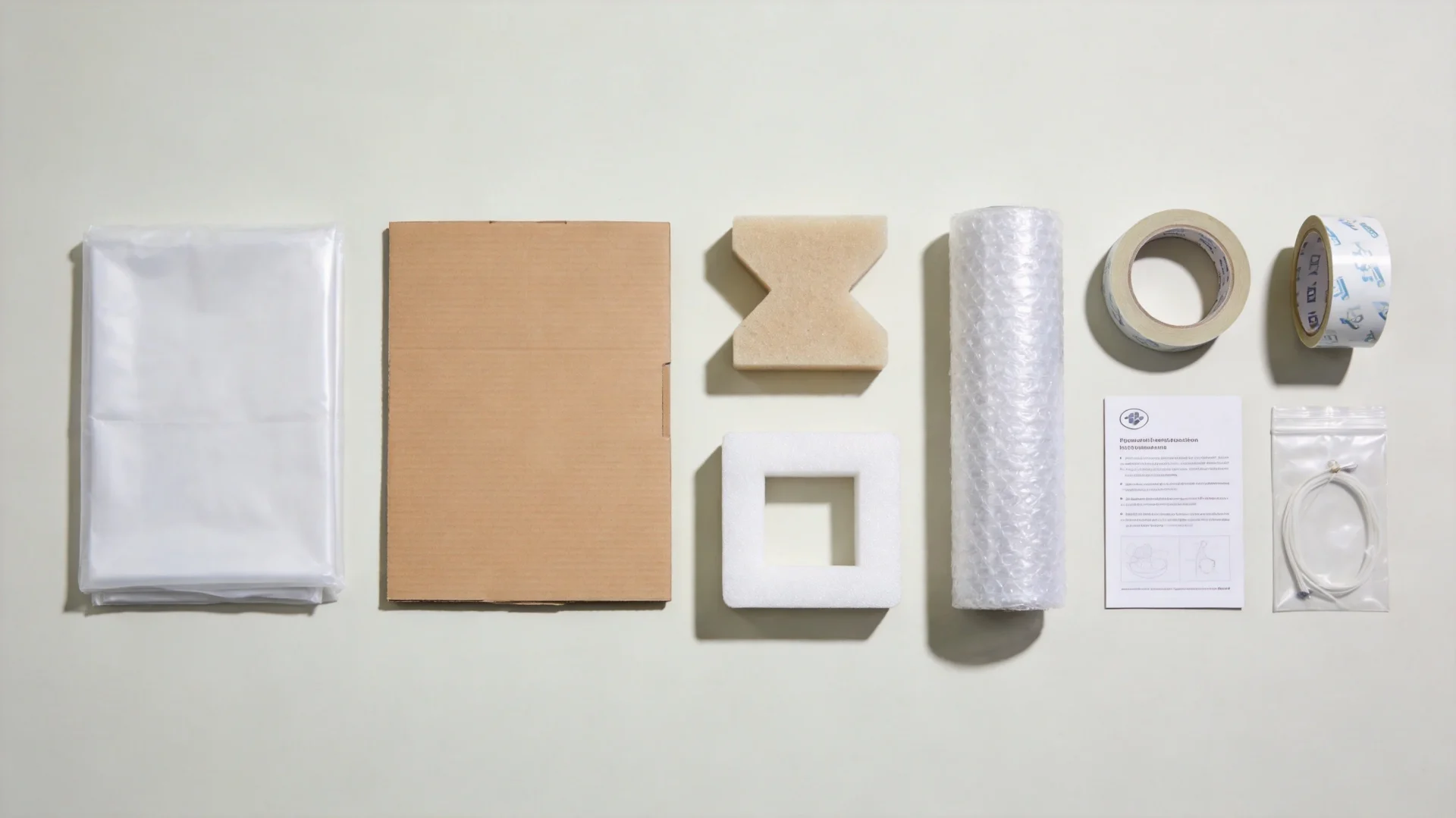
A professional packaging workflow ensures consistency and quality at scale. Here is the standard process used by experienced golf bag manufacturers:
Step 1: Pre-Packaging Inspection — Each bag undergoes a final quality check before packaging. Zippers, seams, logos, stand mechanisms, and hardware are inspected to catch any defects before the bag is sealed inside packaging.
Step 2: Protective Wrapping — Vulnerable components such as stand legs, metal frames, and plastic feet are wrapped in bubble wrap or foam sleeves. The bag body is then wrapped in a PE poly bag, with air removed to create a snug fit.
Step 3: Box Placement — The wrapped bag is placed inside a corrugated box. For premium packaging, custom foam inserts or cardboard dividers are added to prevent the bag from shifting inside the box. The box is then sealed with reinforced packing tape.
Step 4: Palletizing — Sealed boxes are arranged on pallets in a brick-lay pattern (staggered rows) to maximize stability. Each layer is separated by corrugated slip sheets or cardboard pads to distribute weight evenly. The fully loaded pallet is then wrapped tightly in stretch film to secure all boxes in place.
Step 5: Labeling & Documentation — Each pallet and individual box receives shipping labels with product SKUs, quantity, destination, and handling instructions (e.g., “This Side Up,” “Do Not Stack”). A packing list is attached to the pallet and included inside the shipping container for customs and receiving verification.
Shipping Methods: Sea vs Air vs Express
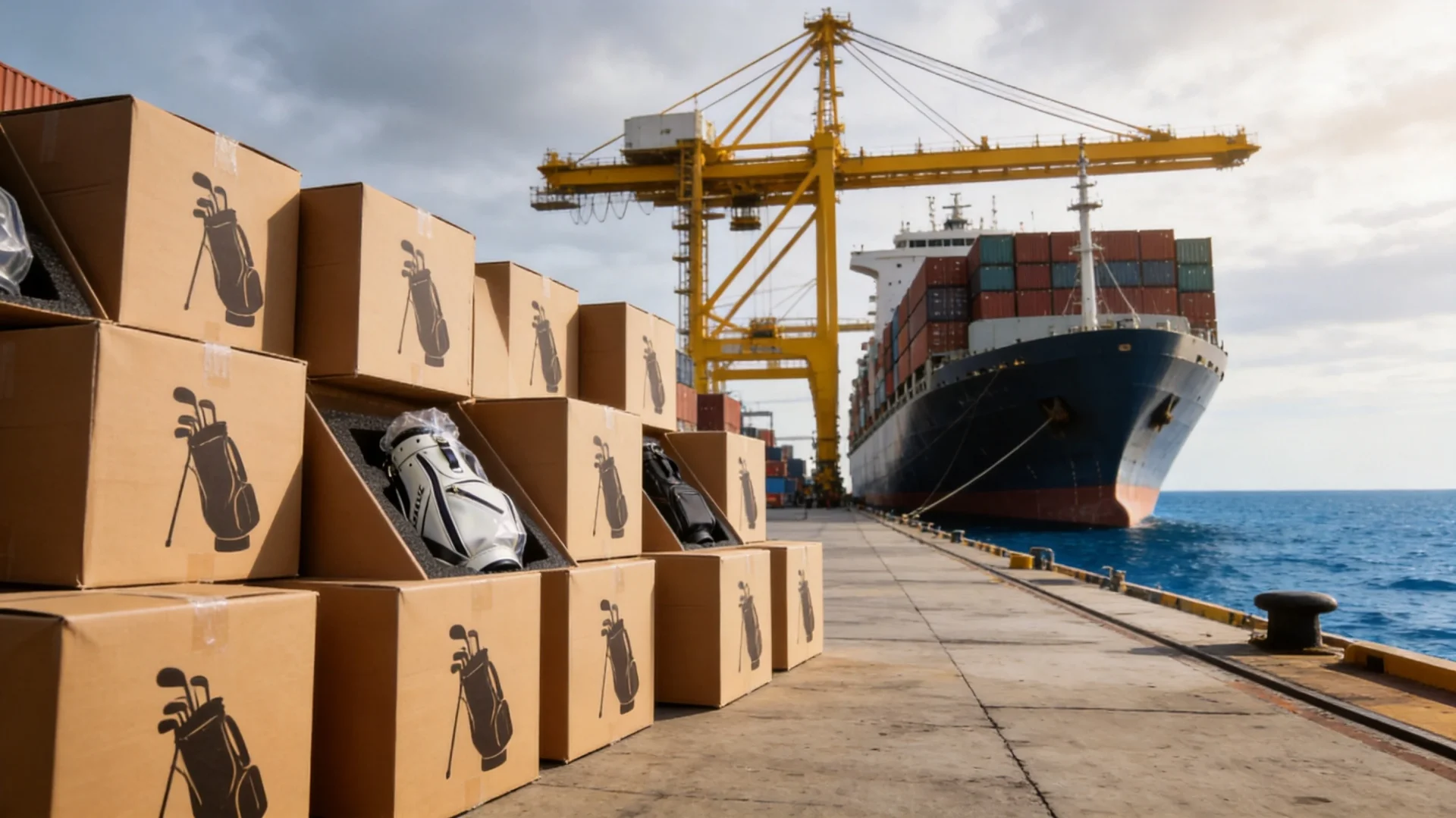
Choosing the right shipping method directly impacts your cost structure, lead times, and inventory planning. Here is a detailed comparison for golf bag shipments:
| Factor | Sea Freight (FCL) | Sea Freight (LCL) | Air Freight | Express Courier |
|---|---|---|---|---|
| Cost per CBM | $80 – $200 | $100 – $300 | $400 – $800 | $800 – $1,500+ |
| Cost per Golf Bag (est.) | $3 – $8 | $5 – $12 | $15 – $35 | $30 – $80 |
| Transit Time | 20 – 35 days | 25 – 40 days | 5 – 10 days | 3 – 7 days |
| Minimum Order | Full container (200-500 bags) | 1 – 5 CBM | 100 kg+ | No minimum |
| Best For | Large bulk orders, seasonal restocks | Medium orders, trial runs | Urgent replenishment, high-value bags | Samples, small urgent orders |
When to choose each method:
- Sea Freight (FCL): The default choice for most B2B golf bag orders. A 20ft container holds approximately 200-300 bags depending on type and packaging. Ideal for planned seasonal inventory builds with 6-8 week lead times.
- Sea Freight (LCL): Suitable for smaller orders that don’t fill a full container. Your shipment shares container space with other cargo. Cost per unit is higher than FCL but lower than air freight.
- Air Freight: Best for high-value premium bags with tight deadlines, or when you need to replenish fast-selling SKUs quickly. The cost premium is significant but can be justified for products with high margins.
- Express Courier (DHL/FedEx/UPS): Reserved for samples, prototype approvals, and very small orders under 20 bags. Per-unit shipping costs are the highest, but door-to-door service and speed make it practical for low quantities.
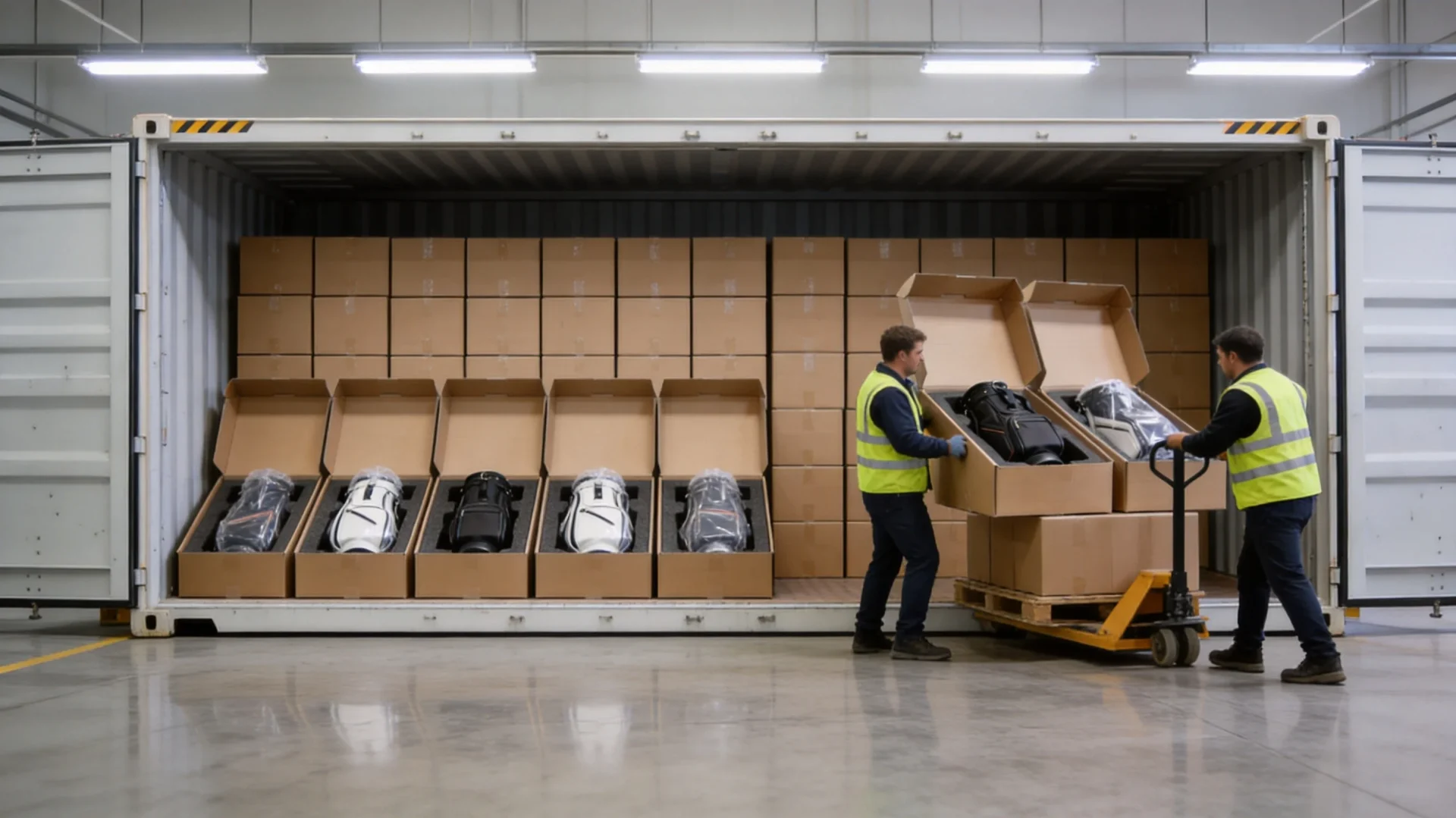
Container Loading & Optimization
Maximizing container space utilization is one of the most effective ways to reduce per-unit shipping costs. Here is what B2B buyers need to know:
How Many Golf Bags Fit Per Container?
| Container Type | Internal Dimensions | Stand Bags (boxed) | Cart Bags (boxed) | Tour/Staff Bags (boxed) |
|---|---|---|---|---|
| 20ft GP | 5.9m × 2.35m × 2.39m | 200 – 250 units | 150 – 200 units | 100 – 140 units |
| 40ft GP | 12.03m × 2.35m × 2.39m | 400 – 500 units | 300 – 400 units | 200 – 280 units |
| 40ft HQ | 12.03m × 2.35m × 2.69m | 450 – 560 units | 350 – 440 units | 240 – 320 units |
Note: Actual quantities depend on bag dimensions, packaging type, and loading configuration. Always confirm exact loading plans with your manufacturer before finalizing orders.
Loading Best Practices
- Vertical orientation: Golf bags should always be loaded standing upright to prevent crushing and to make the most efficient use of vertical space.
- Tight stacking: Boxes should be stacked tightly with no gaps to prevent shifting during transit. Use air bags or dunnage to fill any remaining void space.
- Weight distribution: Heavier boxes (staff bags, touring bags) should be placed on the bottom layers, with lighter bags (carry bags, stand bags) stacked on top.
- Mixed loading: Combining different bag types in one container can optimize space. For example, placing shorter stand bag boxes on top of taller cart bag boxes to fill vertical gaps.
International Shipping Documentation
Proper documentation is critical for smooth customs clearance. Missing or incorrect paperwork can delay shipments by weeks and incur storage fees at ports. Here are the essential documents for golf bag shipments:
- Commercial Invoice: The primary customs document detailing the transaction between buyer and seller. Must include product descriptions, HS codes (golf bags typically fall under HS 4202.92), quantities, unit prices, total value, Incoterms, and both parties’ full contact information.
- Packing List: A detailed breakdown of what is in each box and pallet, including gross weight, net weight, and dimensions for each unit. Customs authorities use this to verify cargo contents.
- Bill of Lading (B/L): The legal document issued by the carrier that serves as a receipt for the goods, a contract of carriage, and a document of title. For sea freight, the original B/L is required to claim the goods at the destination port.
- Certificate of Origin (CO): Certifies the country where the goods were manufactured. This document can affect tariff rates under free trade agreements. For golf bags manufactured in China, a China CO may qualify for preferential tariff treatment in certain destination countries.
Additional documents may be required depending on the destination country, such as import licenses, fumigation certificates for wooden pallets, or product safety certifications. Always consult with your freight forwarder or customs broker to ensure full compliance with your target market’s import regulations.
Common Shipping Mistakes to Avoid
Learning from others’ mistakes can save your business significant time and money. Here are the most common packaging and shipping errors B2B golf bag buyers should avoid:
- Underestimating box strength requirements: Using single-wall boxes for ocean freight shipments is a frequent and costly mistake. The humidity, stacking pressure, and handling rigors of sea transport demand double-wall boxes at minimum. Budget for proper packaging — it costs far less than replacing damaged goods.
- Inadequate pallet securing: Pallets wrapped loosely or without corner boards can collapse during container loading. Always use tight stretch wrap (minimum 3 layers), corner protectors, and strapping bands for palletized shipments.
- Incorrect HS code classification: Misclassifying golf bags under the wrong HS code can result in unexpected duties, customs delays, or penalties. Golf bags generally fall under HS 4202.92 (travel, sports, and similar bags with outer surface of textile materials). Work with a licensed customs broker to confirm the correct code for your specific product.
- Ignoring destination-specific regulations: Different countries have different requirements for wooden packaging materials (ISPM-15 fumigation standards), labeling languages, and product safety certifications. Research your target market’s requirements before your first shipment.
- Skipping cargo insurance: Even with proper packaging, accidents happen. Marine cargo insurance typically costs 0.3-0.5% of the declared shipment value and protects against loss, damage, and general average claims. For high-value shipments, it is an essential risk management tool.
- Poor communication with freight forwarder: Failing to provide accurate dimensions, weights, and product descriptions to your forwarder can result in incorrect freight quotes, documentation errors, and customs holds. Maintain clear, documented communication throughout the shipping process.
Frequently Asked Questions
What is the standard packaging for golf bags in bulk orders?
The industry standard for bulk golf bag orders is individual PE poly bag wrapping followed by placement in a custom-sized double-wall corrugated cardboard box. Boxes are then palletized and stretch-wrapped for container loading. This multi-layer approach provides adequate protection for ocean freight while keeping per-unit packaging costs manageable at $3-$6 per bag.
How long does it take to ship golf bags from China to the US or Europe?
By sea freight, transit time from major Chinese ports (Shenzhen, Shanghai, Ningbo) to the US West Coast is approximately 14-18 days, to the US East Coast 25-35 days, and to major European ports (Rotterdam, Hamburg) 25-30 days. These are port-to-port times; door-to-door delivery typically adds 5-10 days for customs clearance and inland transport. Air freight reduces transit to 5-10 days door-to-door but at 3-5x the cost.
Can I request custom packaging with my brand logo?
Absolutely. Most golf bag manufacturers offer custom packaging services including printed boxes, branded poly bags, custom tissue paper, logo-embossed hang tags, and custom foam inserts. Minimum order quantities for custom packaging typically start at 500 units. Be sure to provide print-ready artwork files (AI or PDF format) and allow 2-3 weeks for packaging material production before your bag manufacturing timeline.
What happens if my golf bags arrive damaged?
If damage occurs during transit, document it immediately with photos of the packaging and product condition before signing the delivery receipt. File a claim with your cargo insurance provider (if insured) or with the carrier within the specified claim window (typically 7-14 days). Reputable manufacturers will also work with you to assess whether the damage resulted from packaging deficiencies and will adjust future packaging accordingly.
How can I reduce shipping costs for my golf bag orders?
Key strategies include: ordering in full container loads (FCL) rather than LCL to benefit from volume rates; optimizing packaging dimensions to fit more units per container; choosing sea freight over air freight whenever lead times allow; consolidating multiple SKUs in a single shipment; negotiating annual shipping contracts with forwarders for better rates; and working with manufacturers located near major ports to reduce inland trucking costs.
Get Expert Packaging & Shipping Support
At JUNYUAN, we don’t just manufacture golf bags — we manage the complete packaging and shipping process so your products arrive in perfect condition, on time, and at the lowest possible landed cost. Our logistics team works with leading freight forwarders to optimize every shipment, and our packaging engineers design solutions tailored to your specific bag types and destination markets.
Whether you are ordering 200 bags for a seasonal launch or 5,000 bags for annual inventory, we provide end-to-end support from factory floor to your warehouse door.
Ready to streamline your golf bag sourcing? Contact our team today for a free packaging and shipping consultation tailored to your order volume, budget, and timeline.
? Related: For a complete overview of custom golf bag manufacturing, check out our Custom Golf Bag Manufacturing Complete Guide.