
Custom Golf Bag Sustainability: Eco Materials & Green Manufacturing Guide
The golf bag industry is undergoing a green transformation. With the global golf equipment market projected to reach $2.0–$2.32 billion by 2030, sustainability has shifted from a nice-to-have feature to a core purchasing criterion. For B2B buyers, brand owners, and OEM managers, understanding how to source and manufacture sustainable golf bags is no longer optional — it is a competitive necessity.
? Related: Looking for a comprehensive guide to custom golf bag manufacturing? Check out our Custom Golf Bag Manufacturing Complete Guide — covering materials, design, QC, and sourcing strategies.
This guide breaks down everything you need to know about sustainable golf bag manufacturing — from eco-friendly materials and green certifications to cost analysis and supplier sourcing strategies.

Why Sustainability Matters in Golf Bag Manufacturing
Sustainability in golf bag manufacturing is driven by three powerful forces that are reshaping how brands approach product development and sourcing.
Consumer Demand Trends
Golfers are increasingly environmentally conscious. Studies show that 94% of global consumers prefer brands with transparent supply chains, and golf-specific surveys reveal that buyers are willing to pay up to 17.5% more for ethically manufactured products. Brands like Sun Mountain Sports, Jones Golf Bags, and MNML GOLF have already capitalized on this trend by launching product lines made from recycled ocean plastics and post-consumer PET bottles.
The messaging resonates: MNML GOLF’s M COMP bag, crafted entirely from recycled ocean plastic, has become a bestseller by combining high performance with a compelling environmental narrative. This demonstrates that sustainability and premium positioning can work hand in hand.
Brand Reputation and Differentiation
In a crowded market, sustainability credentials serve as a powerful differentiator. Brands that can credibly claim GRS-certified recycled materials, carbon-neutral manufacturing, or OEKO-TEX certification stand out on retail shelves and in pro shops. More importantly, these claims build long-term brand equity with the growing segment of eco-conscious golfers who actively seek out responsible products.
Regulatory Compliance (EU and US)
Regulations are tightening on both sides of the Atlantic. The EU’s REACH directive restricts harmful chemicals in consumer products, while new Extended Producer Responsibility (EPR) laws require brands to account for the full lifecycle environmental impact of their products. In the US, several states have introduced extended labeling requirements for products marketed as “recycled” or “eco-friendly.” For B2B buyers sourcing from overseas manufacturers, ensuring compliance from the factory floor is essential to avoid costly recalls, fines, or reputational damage.
Sustainable Materials for Golf Bags
The material choices you make define both the environmental footprint and the performance characteristics of your golf bags. Here are the leading sustainable options available to OEM manufacturers today.
Recycled Polyester (rPET)
Recycled polyester, or rPET, is the most widely adopted sustainable material in golf bag manufacturing. Produced from post-consumer plastic bottles, rPET matches virgin polyester in tensile strength, abrasion resistance, and water repellency — while generating up to 79% fewer carbon emissions and using 50% less energy during production.
For a single golf bag, approximately 27–40 plastic bottles are repurposed into high-performance fabric. GRS-certified rPET is available in 600D and 900D densities with PU or eco-friendly TPE backings, making it suitable for everything from stand bags to premium cart bags. Leading fiber producers like Unifi (Repreve®) supply certified recycled yarns that major brands have already integrated into their product lines.
Organic Cotton
Organic cotton is grown without synthetic pesticides or fertilizers, reducing soil and water contamination. In golf bag applications, it is primarily used for linings, pocket interiors, and decorative panels. When treated with plant-based wax coatings, organic cotton can also serve as a weather-resistant shell material. However, for high-stress areas, polycotton blends are preferred to ensure durability and structural integrity.
Hemp Blends
Hemp is one of the most sustainable natural fibers available. It requires minimal water, grows rapidly without pesticides, and produces fibers that are naturally resistant to UV degradation and mold. Hemp-blend fabrics are being used in golf bag shells and accent panels, offering a distinctive textured look while reducing carbon emissions by up to 41% compared to conventional cotton. The material is also fully biodegradable at end of life.
Vegan Leather Alternatives
Premium golf bags traditionally rely on genuine leather for accents, logo patches, and trim details. Today, several high-performance vegan alternatives have emerged:
- Dow LuxSense™ Silicone Synthetic Leather: The world’s first silicone-based synthetic leather, used in the 2023 Solheim Cup bags. It is stain-resistant, UV-resistant, abrasion-resistant, hydrolysis-resistant, and can be engineered as 100% carbon neutral.
- Cactus Leather (Desserto®): Made from nopal cactus, this material offers a premium hand feel with significantly lower water usage than animal leather.
- Pineapple Leather (Piñatex®): Derived from pineapple leaf fibers, a byproduct of fruit harvests, offering a unique texture and biodegradable properties.
Recycled Nylon
Recycled nylon, particularly from discarded fishing nets and industrial fabric waste, is gaining traction for high-stress components like straps, handles, and base reinforcements. Materials like Seawastex convert ocean plastics into durable, moisture-resistant ripstop fabric. Recycled nylon retains the exceptional strength-to-weight ratio that makes nylon ideal for sports bags, while significantly reducing dependency on virgin fossil fuel feedstocks.
Bio-Based Plastics for Hardware
Beyond fabrics, hardware components — buckles, zippers pulls, base plates, and internal frames — are being reimagined with bio-based plastics. PLA (polylactic acid), derived from corn starch or sugarcane, is used for injection-molded components. Recycled TPU offers waterproof durability for bag bases. These materials reduce petroleum dependency while maintaining the mechanical performance required for golf bag hardware.
Eco-Friendly Manufacturing Processes
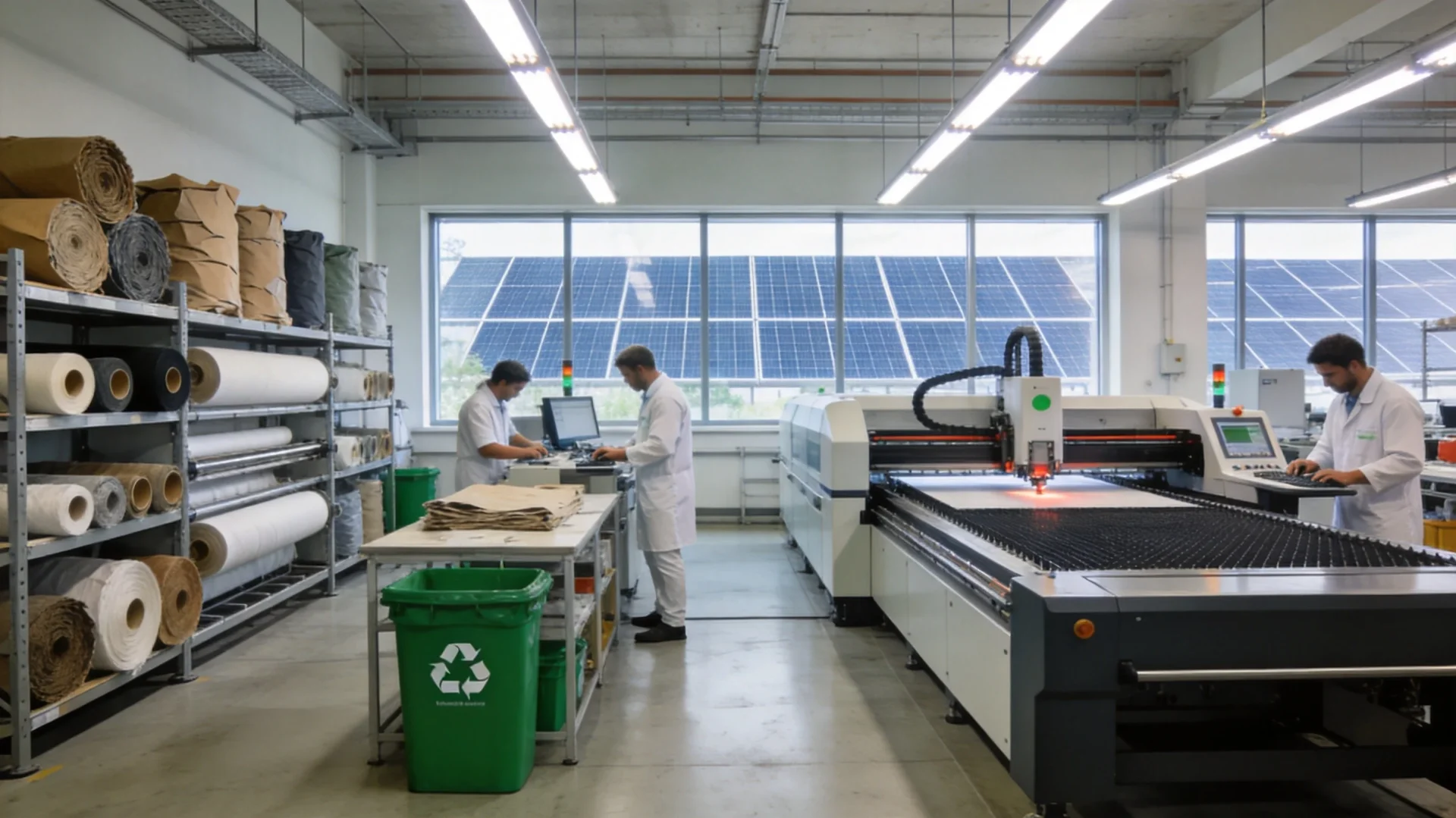
Sustainable golf bag manufacturing extends beyond material selection. The production processes themselves play a critical role in determining the overall environmental impact.
Water Reduction Techniques
Traditional textile dyeing and finishing consume enormous volumes of water. Forward-thinking manufacturers have adopted solution-dyeing technology for recycled polyester, where color pigments are added during the polymer extrusion phase rather than through post-production dye baths. This eliminates water consumption in the coloring process entirely and reduces chemical discharge. Additional measures include closed-loop water recycling systems that treat and reuse process water, achieving reductions of 60–80% in total water consumption per unit produced.
Energy-Efficient Production
Leading golf bag factories are transitioning to renewable energy sources — solar panels on factory rooftops, wind energy procurement, and high-efficiency machinery that reduces power consumption per unit. Laser cutting technology, which replaces traditional die-cutting, reduces material waste by 15–20% while consuming less energy. Some manufacturers have achieved carbon-neutral production by combining renewable energy procurement with verified carbon offset programs.
Waste Reduction Programs
Zero-waste initiatives in golf bag manufacturing focus on three areas: pre-consumer fabric waste reduction through optimized nesting and cutting patterns, reprocessing of defective units into secondary products, and implementation of take-back programs where end-of-life bags are collected and recycled into new products. Factories report material utilization rates of 92–96% with advanced nesting software, compared to 80–85% with manual cutting.
Carbon Footprint Tracking
Progressive manufacturers now provide per-product carbon footprint data, enabling brand partners to make informed sourcing decisions and substantiate environmental claims. Life Cycle Assessment (LCA) tools measure emissions from raw material extraction through manufacturing, shipping, and projected end-of-life scenarios. This data transparency is increasingly required by EU regulations and is becoming a standard expectation from major retail buyers.
Green Certifications for Golf Bags
Certifications provide third-party verification of sustainability claims and are essential for market access and consumer trust. Here are the key certifications relevant to golf bag manufacturing.
GRS (Global Recycled Standard)
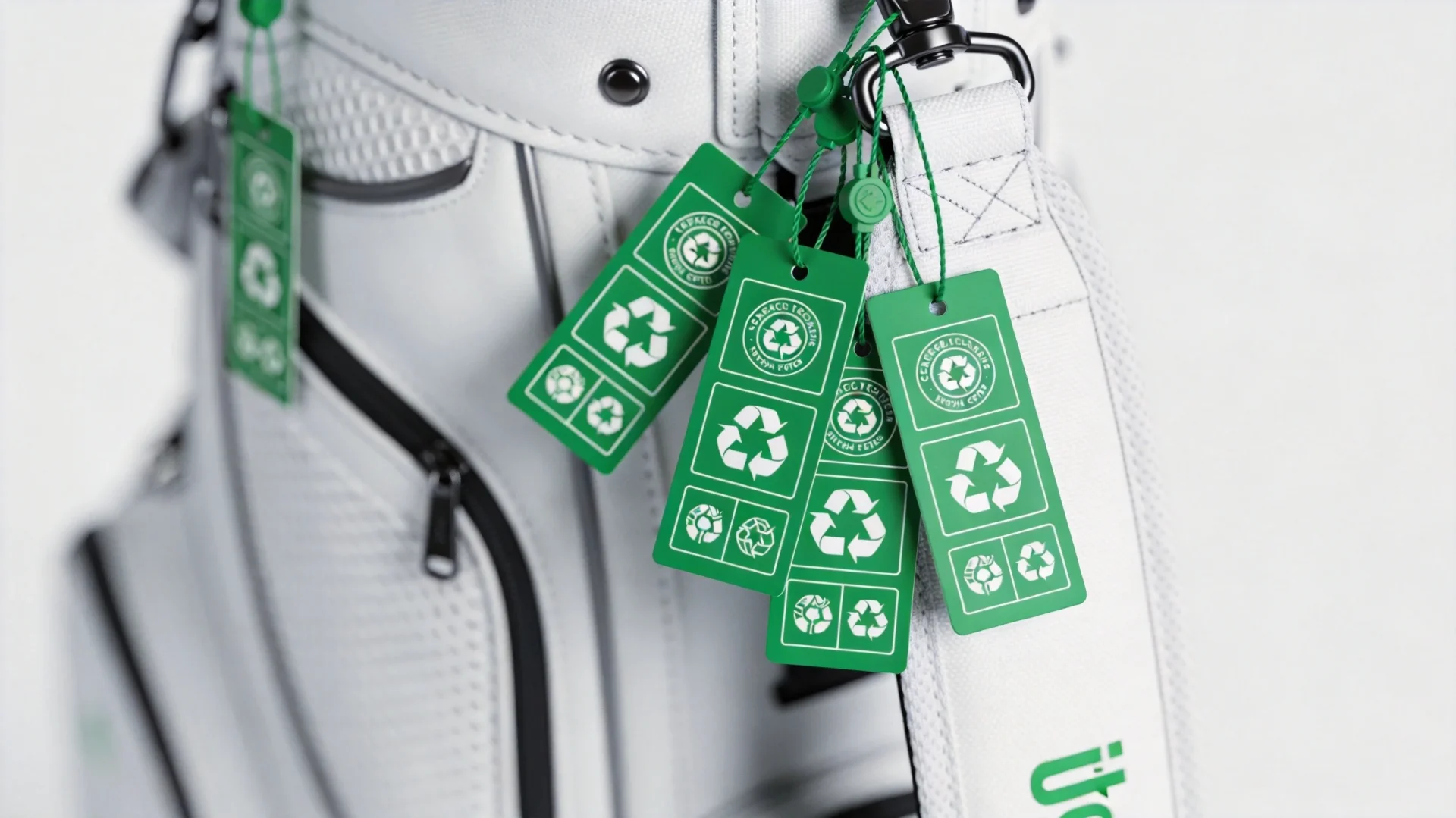
The Global Recycled Standard is the benchmark certification for products made with recycled materials. It requires a minimum of 20% recycled content for B2B certification, and 50% or more for consumer-facing labels. The GRS verifies recycled content through chain-of-custody documentation (Transaction Certificates per batch), enforces social responsibility standards, and includes chemical management requirements. For golf bag manufacturers, GRS certification is essential to legally market products as “recycled” in both the EU and US markets.
OEKO-TEX Standard 100
OEKO-TEX Standard 100 tests every component of a textile product — fabrics, threads, zippers, linings, coatings, and hardware — against a list of over 1,000 harmful substances. It ensures that the finished golf bag is safe for consumer use and compliant with EU REACH regulations. The certification also requires at least 20% of main textile content to come from recycled sources, with robust quality management systems ensuring consistency.
bluesign®
The bluesign® system takes a holistic approach, evaluating five dimensions: resource productivity, consumer safety, air emissions, water emissions, and occupational health. Manufacturers must demonstrate continuous improvement across all five areas to maintain certification. For golf bag production, bluesign® is particularly relevant for brands targeting the premium European market, where it is widely recognized by retailers and consumers alike.
ISO 14001
ISO 14001 certifies that a manufacturer has implemented an effective Environmental Management System (EMS). It focuses on systematic waste reduction, regulatory compliance, and continuous environmental performance improvement. While ISO 14001 does not certify specific materials, it demonstrates that the factory has structured processes in place to minimize its environmental impact — an important signal for B2B buyers conducting supplier due diligence.

Cost Implications of Sustainable Golf Bags
Understanding the true cost of sustainable golf bag manufacturing requires looking beyond raw material prices to consider total value, including brand positioning, regulatory compliance, and long-term market trends.
Material Cost Comparison
| Material | Cost vs. Virgin Equivalent | Key Advantage |
|---|---|---|
| Recycled Polyester (rPET) | +5–15% | 79% lower carbon emissions; widely available |
| Organic Cotton | +20–35% | No pesticides; biodegradable; premium feel |
| Hemp Blends | +15–25% | 41% lower emissions; UV and mold resistant |
| Vegan Leather (Silicone-based) | +25–40% | Carbon-neutral option; premium aesthetics |
| Recycled Nylon | +10–20% | High strength-to-weight; ocean waste sourced |
| Bio-Based Plastics (PLA/TPU) | +15–30% | Reduces petroleum dependency for hardware |
MOQ Considerations
Sustainable materials often carry higher minimum order quantities than conventional alternatives. GRS-certified rPET fabrics are commonly available in stock colors (black, navy, charcoal) with MOQs of 500–1,000 meters. Custom dye colors may require MOQs of 3,000+ meters. For finished bags, most OEM manufacturers set MOQs at 300–500 pieces per style for sustainable product lines, compared to 200–300 pieces for standard lines. Strategic planning around core color palettes can significantly reduce MOQ burdens.
Long-Term ROI
While sustainable materials carry a 5–40% premium at the material level, the return on investment manifests in multiple ways: premium retail pricing (typically 15–25% higher than conventional equivalents), reduced regulatory risk and compliance costs, enhanced brand loyalty among eco-conscious consumers, lower waste disposal costs through efficient manufacturing, and improved access to retail channels that increasingly require sustainability documentation from suppliers. Brands that invested in sustainable golf bag lines in 2023–2024 are already reporting faster sell-through rates and higher customer retention compared to conventional product lines.
How to Source Sustainable Custom Golf Bags
Sourcing sustainable golf bags requires a structured verification process to ensure that environmental claims are genuine and backed by documentation.
Questions to Ask Suppliers
When evaluating potential manufacturing partners for sustainable golf bag production, ask the following critical questions:
- Do you hold GRS certification? Request to see the Scope Certificate and ask for a Transaction Certificate (TC) for each batch of recycled fabric.
- What percentage of recycled content do your materials contain? The answer should be specific and backed by test reports.
- Can you provide OEKO-TEX or bluesign® certification? These verify chemical safety across all components, not just the main fabric.
- Do you have an ISO 14001 environmental management system? This indicates structured environmental practices at the factory level.
- What is your carbon footprint data per unit? Progressive manufacturers can provide LCA-based data for individual products.
- What waste reduction and water management systems are in place? Ask for specific metrics, not vague claims.
- Can you support custom sustainable material development? Some OEMs can co-develop proprietary sustainable fabrics for exclusive brand use.
Verification Process
A robust verification process includes four stages:
- Document Review: Collect and verify all relevant certificates (GRS Scope Certificate, Transaction Certificates, OEKO-TEX test reports, ISO 14001 registration). Cross-check certificate numbers against the official certification body databases.
- Sample Testing: Order pre-production samples made with the specified sustainable materials. Send independent lab testing to verify recycled content percentages, chemical compliance, and performance specifications (tensile strength, abrasion resistance, colorfastness).
- Factory Audit: Conduct an on-site or third-party audit to verify manufacturing claims — confirm waste management systems, energy sources, water treatment facilities, and worker safety standards.
- Ongoing Monitoring: Establish a regular review cadence (quarterly or per-order) for Transaction Certificates and compliance documentation. Build sustainability KPIs into your supplier scorecard alongside quality, delivery, and cost metrics.
Frequently Asked Questions
1. What is the minimum recycled content required to market a golf bag as “sustainable”?
There is no universal legal definition of “sustainable,” but the Global Recycled Standard (GRS) requires at least 20% recycled content for B2B certification and 50% for consumer-facing labels. To credibly market a product as sustainable, aim for a minimum of 50% recycled or sustainably sourced materials across all components.
2. How much more do sustainable golf bags cost to manufacture compared to conventional ones?
The material premium ranges from 5% to 40% depending on the specific sustainable material chosen. However, the total cost impact on the finished bag is typically 8–15% higher due to the material component representing only a portion of total manufacturing costs. This premium is generally offset by the ability to command higher retail prices and the brand equity gained from sustainability positioning.
3. Can sustainable golf bags match the performance and durability of conventional bags?
Absolutely. Recycled polyester (rPET) matches virgin polyester in tensile strength, abrasion resistance, and water repellency. Recycled nylon retains the same exceptional strength-to-weight ratio. Modern vegan leathers like Dow LuxSense™ exceed traditional leather in UV resistance and hydrolysis resistance. The performance gap between sustainable and conventional materials has effectively closed for all major golf bag applications.
4. Which certifications are most important for selling sustainable golf bags in Europe and North America?
For market access and credibility, prioritize these four: GRS (required to make recycled claims legally), OEKO-TEX Standard 100 (chemical safety compliance for EU REACH), ISO 14001 (environmental management credibility), and bluesign® (particularly valued in premium European retail channels). Additional certifications like GOTS (for organic cotton components) and FSC (for wood or paper packaging elements) strengthen your overall sustainability profile.
5. How do I verify that my supplier’s recycled material claims are genuine?
Request a Transaction Certificate (TC) for every batch of recycled fabric — this document traces the material from the recycling facility to your supplier. Verify certificate numbers against the certification body’s online database. For additional assurance, send random production samples to independent testing labs (such as SGS, Intertek, or Bureau Veritas) for recycled content verification via infrared spectroscopy or other analytical methods.
Moving Toward Sustainable Golf Bag Manufacturing
The transition to sustainable golf bag manufacturing is not a distant goal — it is happening now, led by brands that recognize the competitive, regulatory, and ethical imperatives. Whether you are launching your first eco-friendly product line or scaling an existing sustainable collection, the materials, processes, certifications, and sourcing frameworks outlined in this guide provide a practical roadmap.
The brands that act decisively today will define the market standards of tomorrow. The question is not whether to go sustainable, but how quickly you can move.
? Related: For a complete overview of custom golf bag manufacturing, check out our Custom Golf Bag Manufacturing Complete Guide.