
When a golfer opens their bag on the first tee, the divider system is the first thing they see and touch. It shapes their entire experience with the product — from club organization to ease of access during play. For brands in the golf equipment industry, the divider system is far more than a functional component; it is a critical differentiator that influences customer satisfaction, brand loyalty, and ultimately, market positioning.
Yet many emerging and mid-tier golf bag brands struggle with the complexities of divider system design — from selecting the right configuration for their target market to balancing performance with manufacturing cost. As a manufacturer with extensive experience in custom golf bag manufacturing, we have developed divider systems across every major configuration for brands worldwide. This guide distills that experience into a practical resource for product managers, brand owners, and sourcing professionals who need to make informed decisions about divider system design for their custom orders.
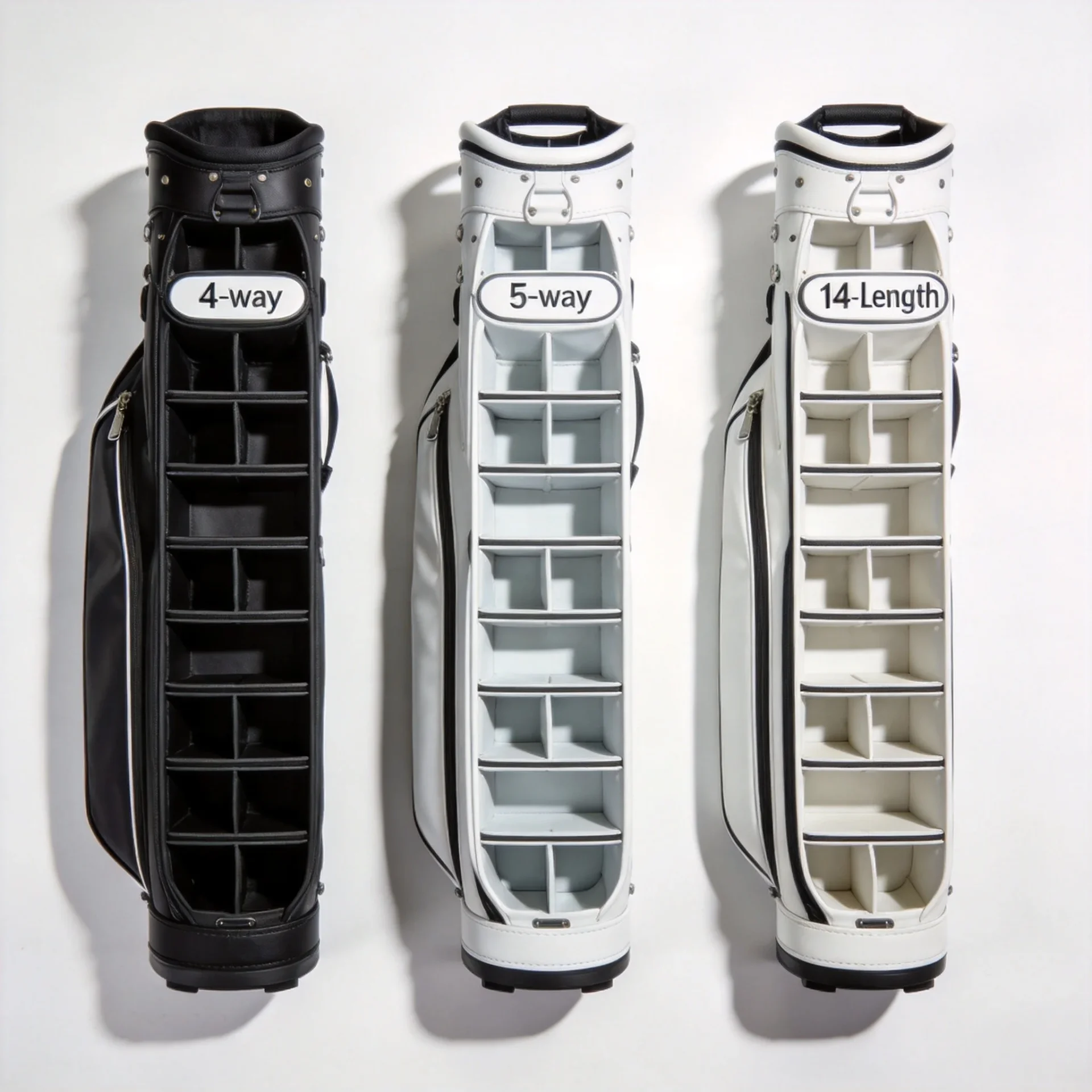
Types of Golf Bag Divider Systems
The divider system is the internal framework that separates and organizes golf clubs within the bag. Different configurations serve different player profiles, and choosing the right type is one of the most consequential decisions in the bag design process. Below are the primary divider system types available for custom manufacturing.
4-Way Divider Systems
The 4-way divider is the traditional configuration found in many stand bags and mid-range cart bags. It divides the bag’s top cuff into four compartments, each large enough to hold several clubs. This system offers a balance between organization and weight reduction, making it ideal for players who prioritize portability over meticulous club separation. The 4-way design is particularly popular in stand bags where every ounce matters, and it allows for quick visual identification of club groups during play.
For manufacturers, the 4-way system is the most cost-effective to produce. Fewer divider walls mean less material, simpler assembly, and lower tooling costs. It remains a strong option for brands targeting recreational golfers who carry fewer than 14 clubs or who prefer a lightweight setup.
5-Way Divider Systems
The 5-way divider adds an additional compartment, typically creating a dedicated space for the driver or a specific wedge grouping. This configuration has gained traction in the mid-range cart bag segment, where golfers expect a step up in organization without the premium associated with full 14-way systems. The 5-way layout offers a practical middle ground — enough separation to prevent club tangling and shaft damage, while keeping the overall weight and cost manageable.
From a manufacturing perspective, the 5-way system requires slightly more material and assembly time than the 4-way, but the incremental cost increase is modest. It is a popular choice for brands that want to offer a perceived upgrade over basic 4-way bags without committing to the complexity of full individual tube systems.
14-Way Full-Length Divider Systems
The 14-way full-length divider system represents the premium tier of club organization. Each club has its own dedicated tube that runs the full length of the bag, from the top cuff to the base. This design delivers maximum club protection by preventing shaft-on-shaft contact throughout the entire bag — a critical feature for golfers carrying expensive graphite shafts or custom-fitted clubs.
Full-length dividers also offer superior organization. Golfers can arrange their clubs in a consistent, predictable order, which translates to faster club selection and a more confident pre-shot routine. For brands targeting serious amateurs, club professionals, and luxury market segments, the 14-way full-length divider is often a non-negotiable feature.
However, this system comes with significant manufacturing implications — increased material usage, more complex assembly, and tighter tolerances all contribute to higher production costs. Brands need to evaluate whether their target market will bear the price premium.
Individual Tube Divider Systems
Individual tube systems take full-length dividers a step further. Instead of divider walls within a shared shell, each club sits in a completely separate, self-contained tube — providing the ultimate in club protection and organization. These systems are typically found in ultra-premium bags. Manufacturing requires specialized tooling and rigorous quality control; the assembly is labor-intensive, and any defect in a single tube can compromise the entire system. For OEM/ODM partners, this means longer lead times and higher per-unit costs — but also a product that commands premium pricing.
Design Considerations for Divider Systems
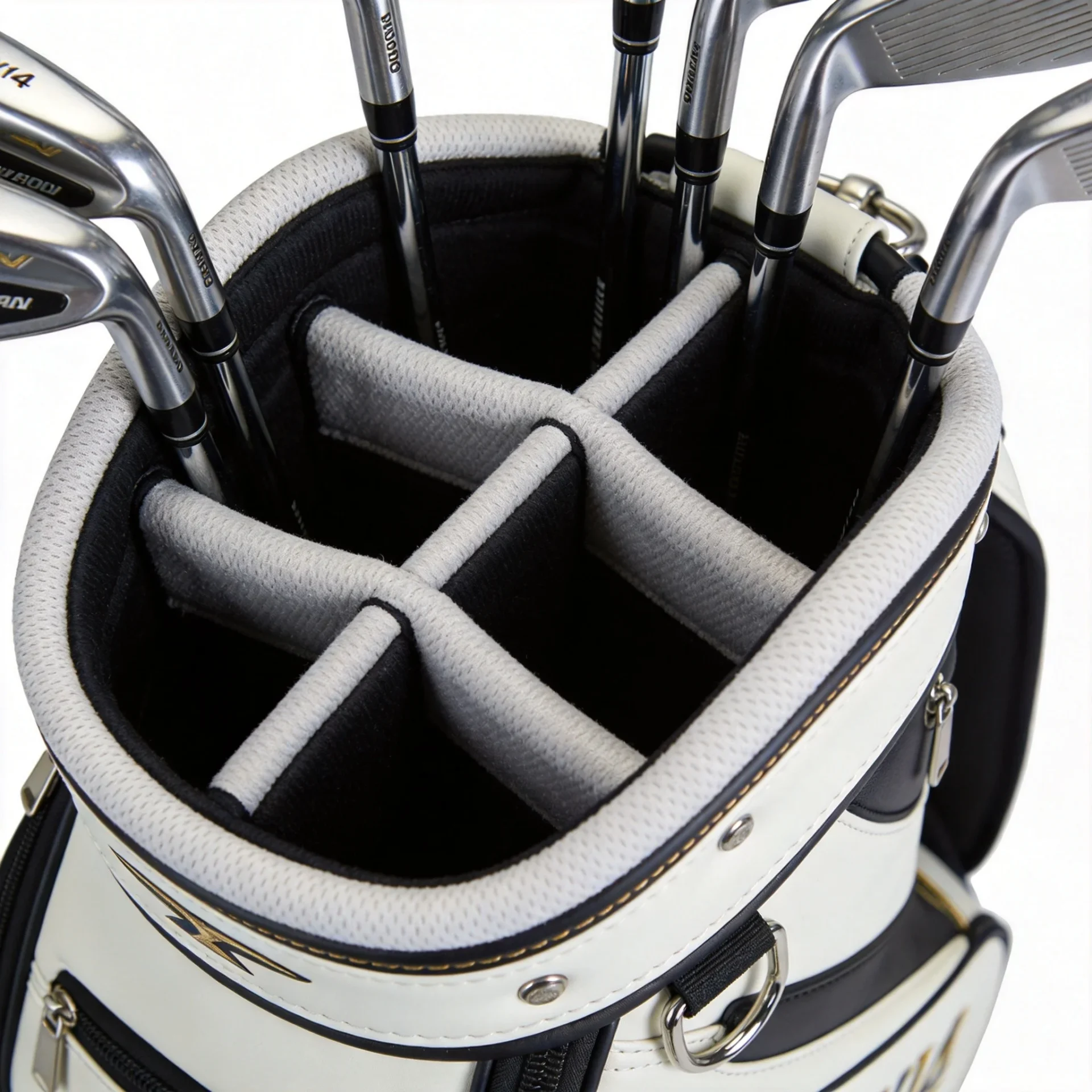
Selecting a divider configuration is only the first step. The real engineering challenge lies in optimizing the design for four key performance factors: club protection, weight, accessibility, and cost. These factors often compete with one another, and the optimal balance depends on the bag’s intended use case and target customer.
Club Protection
The primary function of any divider system is to protect clubs from damage during transport. Graphite shafts, in particular, are susceptible to scratches, dings, and structural fatigue from repeated contact with other clubs. Full-length divider systems minimize this risk by isolating each club in its own channel. For brands marketing to golfers who invest in premium club sets, divider-induced damage protection should be a central selling point.
Manufacturers must also consider the divider material’s interaction with club finishes. Soft-touch fabrics, padded divider walls, and non-abrasive interior linings all contribute to a protection-first design philosophy.
Weight Management
Every gram of divider system weight is a gram subtracted from the golfer’s carrying capacity or the bag’s overall performance envelope. Stand bags, in particular, face strict weight budgets because golfers carry them over long distances. A 14-way full-length divider system can add 200–400 grams compared to a 4-way system, which can be a deal-breaker for lightweight stand bag designs.
Manufacturers address this through material selection — high-strength, low-weight plastics, carbon fiber-reinforced polymers, and engineered fabrics can reduce divider weight without sacrificing rigidity. However, these advanced materials come at a cost, reinforcing the need for careful design-to-market alignment.
Accessibility and Ease of Use
A divider system that protects clubs but makes them difficult to access will frustrate golfers. The top cuff geometry, divider wall height, and tube diameter all influence how easily a golfer can see, reach, and extract clubs. Overly deep dividers protect clubs but can make mid-bag retrieval difficult — a common complaint with some 14-way systems.
Smart design solutions include graduated divider heights (taller at the back for longer clubs, shorter at the front for wedges), tapered tube openings that guide clubs while allowing easy extraction, and anti-slash technology that prevents club rotation. These features add manufacturing complexity but deliver tangible user experience benefits.
Cost Optimization
The divider system’s cost extends beyond raw materials. Tooling investment, assembly labor, quality inspection time, and defect rates all factor into total cost of ownership. For brands managing tight margins, understanding these cost drivers is essential for pricing strategy.
We recommend requesting detailed cost breakdowns from manufacturing partners, separating material, labor, tooling amortization, and overhead. This transparency enables data-driven decisions about which features justify their cost.
Materials and Construction Methods
The performance, durability, and cost of a divider system are fundamentally determined by the materials used and the construction methods employed. Understanding these variables helps brands make informed specifications for their custom orders.
Divider Materials
Injection-Molded Plastics: The most common material for rigid divider walls and individual tubes. ABS, polypropylene, and nylon-based composites offer a balance of rigidity, durability, and cost-effectiveness. High-end systems may use glass-fiber-reinforced nylon for additional strength-to-weight ratio. The mold tooling for injection-molded dividers represents a significant upfront investment, but per-unit costs decrease substantially at volume.
Fabric-Based Dividers: Many stand bags and lightweight cart bags use fabric panels — typically polyester or nylon with foam backing — as divider walls. These systems are lighter and less expensive than rigid plastic dividers but offer less structural protection. They are well-suited for bags where weight savings are the top priority.
Hybrid Systems: Some manufacturers combine rigid structural elements (such as a plastic top cuff frame) with fabric divider panels in the lower section. This hybrid approach reduces weight and cost while maintaining adequate club separation in the most critical zone near the cuff where clubs are most likely to cross and tangle.
Padded and Lined Interiors: Premium divider systems feature soft-touch lining materials such as fleece, microfiber, or EVA foam inserts. These protect club finishes and reduce noise during transport — expected by consumers in the premium segment.
Construction Methods
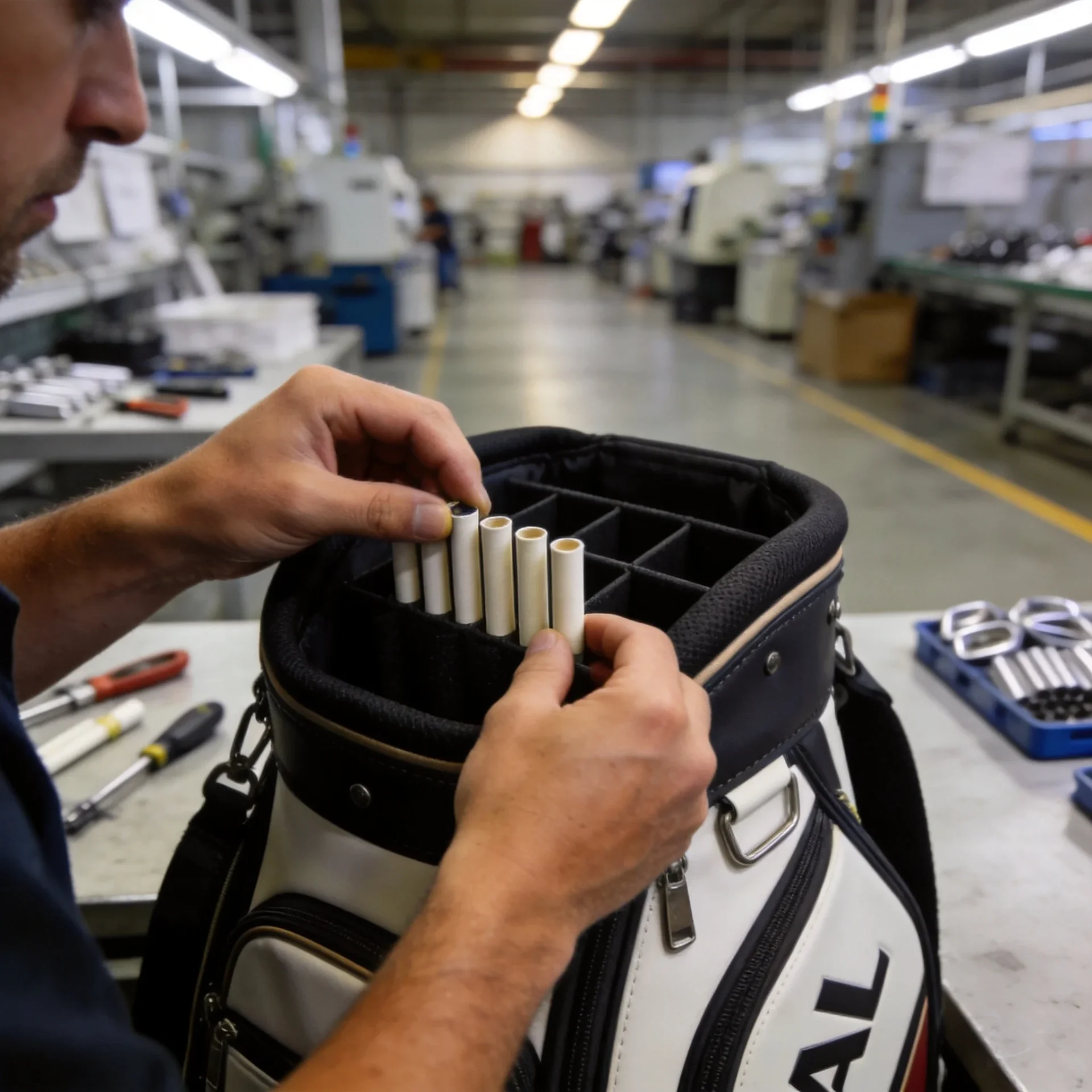
The assembly process varies significantly by divider type. Simple 4-way systems may involve sewing fabric panels into the bag body. In contrast, 14-way full-length systems require precise alignment of individual tubes, secure attachment to both the top cuff and the bag base, and rigorous inspection to ensure no tubes are misaligned or prone to rotation.
Advanced manufacturing facilities use jigs and fixtures for precise alignment during bonding and sewing. Automated cutting systems ensure consistent dimensions, while ultrasonic welding or heat-bonding techniques can create cleaner joints than traditional sewing. The level of manufacturing sophistication directly impacts product consistency and defect rates.
Customization Options for OEM/ODM Orders
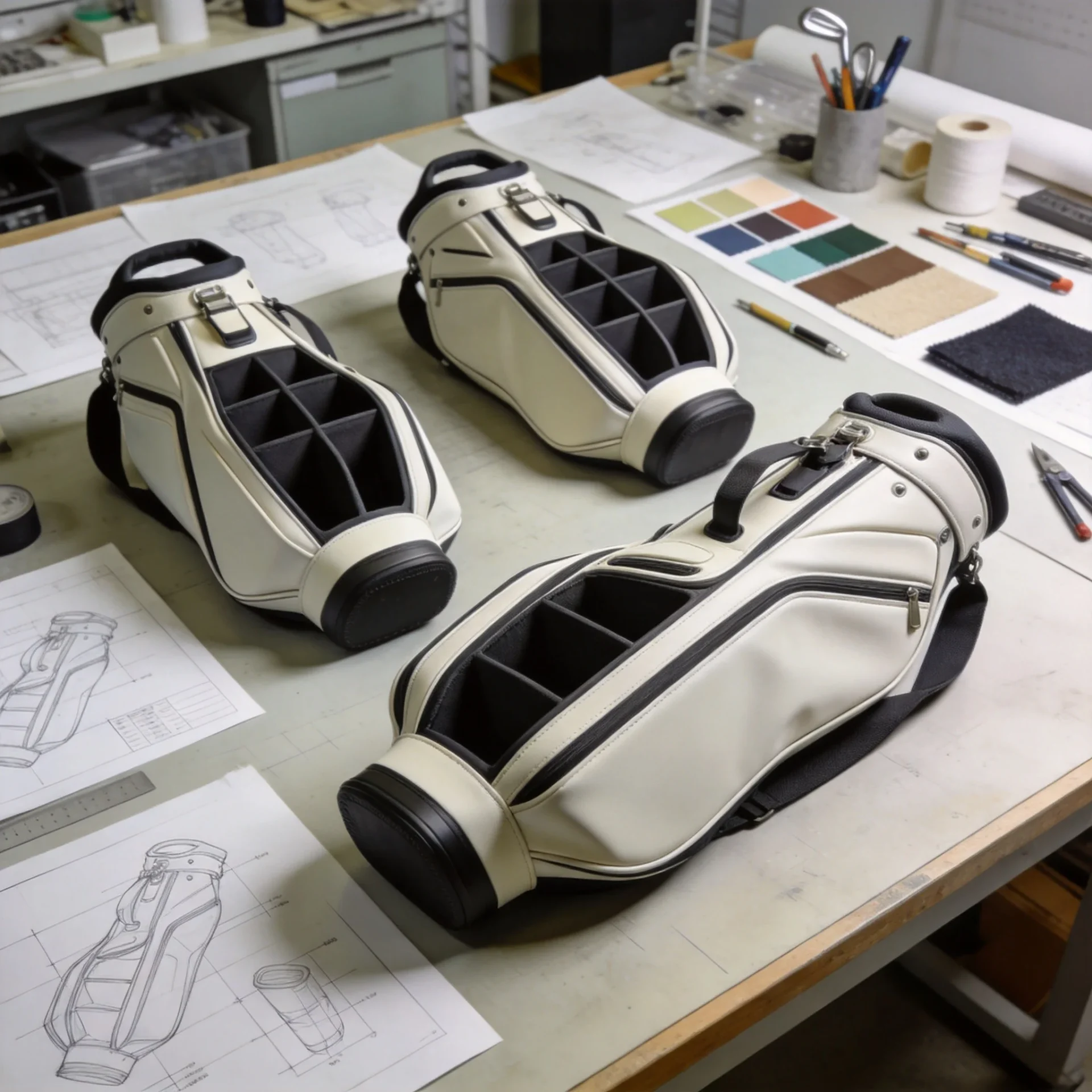
One of the most powerful advantages of custom manufacturing is the ability to tailor the divider system to your brand’s specific requirements. Beyond choosing the number of dividers, OEM and ODM partners can customize multiple aspects of the system to create a differentiated product.
Configuration Customization
Brands can specify exact divider layouts — not just the number of divisions, but the shape and relative size of each compartment. For example, a 14-way system might include an oversized tube for a large-headed driver, or a dedicated putter well with external access. Some brands request asymmetric layouts that prioritize the clubs their target players use most frequently.
Top Cuff Design
The top cuff is the interface between the golfer and the divider system. Custom top cuff designs — including shape (round, oval, rectangular), material (molded plastic, leather-wrapped, carbon fiber), and features (integrated rangefinder pockets, glove holders, magnetic closures) — can elevate perceived quality. The top cuff must be engineered in conjunction with the divider system to ensure proper alignment and smooth club insertion and removal.
Branding and Aesthetics
Divider systems offer subtle but impactful branding opportunities. Custom divider wall colors, embroidered logos on divider pads, branded tube liners, and custom-molded end caps with brand markings contribute to a cohesive brand experience inside the bag — qualities that discerning golfers notice and appreciate.
Functional Add-Ons
Modern divider systems can incorporate functional elements such as individual tube labels, integrated accessory tubes for tees, ventilated compartments for wet gear, and reinforced putter wells for oversized grips. Each add-on increases the product’s value proposition but also adds to manufacturing complexity.
Manufacturing Process and Quality Control
A well-designed divider system means nothing if manufacturing execution is inconsistent. The production process for divider systems involves several critical stages, each requiring specific quality control measures.
Material Inspection
All incoming materials — plastics, fabrics, adhesives, and lining materials — must be inspected for consistency in thickness, color, flexibility, and structural integrity. Material certificates should be verified against specifications, and sample testing should be conducted for each production batch to ensure compliance with requirements for durability, UV resistance, and chemical safety.
Component Fabrication
For injection-molded components, mold maintenance and process parameter control are paramount. Wall thickness variations, sink marks, and warping can all affect fit and function. Fabricated components — cut fabrics, sewn assemblies, foam inserts — require dimensional accuracy checks and visual inspection for defects.
Assembly and Fit Verification
During assembly, the divider system must be fitted into the bag body with precise alignment. Tube-to-cuff alignment, divider wall straightness, and secure attachment to the bag base are critical checkpoints. Functional testing — inserting and removing a full set of clubs — should be conducted on every unit or a statistical sample to verify smooth operation.
Final Inspection and Testing
Completed bags should undergo final inspection including visual assessment, dimensional verification, functional testing, and load testing where applicable. Drop tests, vibration tests, and simulated transport tests can identify failure points not apparent during static inspection. Establishing clear AQL (Acceptable Quality Level) standards with your manufacturing partner ensures quality expectations are defined and enforceable.
Cost Impact and MOQ by Divider Type
Understanding the cost implications of different divider configurations is essential for pricing strategy and order planning. While exact pricing varies by manufacturer, material selection, and order volume, the following general framework illustrates the relative cost relationships.
| Divider Type | Relative Cost | Tooling Investment | Typical MOQ | Best For |
|---|---|---|---|---|
| 4-Way Divider | $ | Low | 200–300 pcs | Stand bags, entry-level cart bags |
| 5-Way Divider | $$ | Low–Medium | 200–300 pcs | Mid-range cart bags, value stand bags |
| 14-Way Full-Length | $$$$ | High | 300–500 pcs | Premium cart bags, tour bags |
| Individual Tube System | $$$$$ | Very High | 500+ pcs | Ultra-premium, luxury segment |
Tooling costs for injection-molded divider components typically range from $2,000–$5,000 for simple 4-way configurations to $8,000–$15,000+ for complex 14-way molds. These costs are amortized over the order quantity, making larger orders more cost-effective per unit. Brands should factor tooling costs into initial investment calculations and negotiate tooling ownership terms clearly.
Minimum order quantities (MOQs) generally start at 200–300 pieces for simpler configurations and increase to 500+ for complex individual tube systems. Experienced manufacturers often offer flexible MOQ structures for established partners, including lower initial orders for samples and prototypes.
Frequently Asked Questions
What is the most popular divider configuration for custom golf bags?
The 14-way full-length divider system is currently the most requested configuration for premium and mid-range custom golf bags. It offers the best combination of club protection, organization, and perceived value. However, for stand bags and entry-level products, the 4-way divider remains the most popular choice due to its lightweight characteristics and cost efficiency.
Can I customize the divider layout beyond standard configurations?
Absolutely. OEM and ODM partners can request custom divider layouts that deviate from standard 4-way, 5-way, or 14-way configurations. This includes asymmetric layouts, oversized tubes for specific clubs, external-access putter wells, and hybrid configurations that combine full-length tubes with open compartments. Custom layouts may require additional tooling investment and longer development timelines.
How does the divider system affect the overall bag weight?
The divider system typically accounts for 8–15% of a golf bag’s total weight, depending on the configuration and materials. A basic 4-way fabric divider might add 150–250 grams, while a 14-way full-length plastic system with padded linings can add 500–800 grams. Brands targeting lightweight products should prioritize advanced materials and hybrid construction methods to minimize weight impact.
What is the typical lead time for a custom divider system?
For new mold development, expect 30–45 days for tooling plus 15–20 days for sample production and validation. Repeat orders using existing tooling typically require 25–35 days. Plan for a total development timeline of 60–90 days from design finalization to first shipment for new divider designs.
How do I ensure quality consistency across production batches?
Establish clear quality standards in your manufacturing agreement, including dimensional tolerances, material specifications, and functional testing protocols. Request first-article inspection reports for each production run, and maintain reference samples from approved batches for comparison.
Ready to Design Your Custom Divider System?
From concept to mass production, JUNYUAN delivers precision-engineered divider systems tailored to your brand’s specifications. Contact our engineering team today for a detailed consultation and quote.
? Related: This article is part of our comprehensive guide to Custom Golf Bag Manufacturing — covering everything from materials to branding.