Short answer: the five Australian backpack manufacturers and suppliers most used by brands and procurement teams in 2026 are Harcor (New South Wales, custom tactical and industrial bags), JUNYUAN BAGS (Quanzhou, OEM/ODM from 500 pcs), Leather Craft Australia (private-label leather and canvas), Textile Link (Melbourne, small-batch corporate custom) and Bags Australia (national stock and printed cooler bags). Choose a local supplier for low-volume branded runs and an offshore OEM when you need 500+ units at FOB pricing with full design control.
This guide is written for Australian brand owners, importers and procurement managers who are specifying backpacks for retail, corporate, school or trade programs. It keeps the same five suppliers that Australian buyers have relied on for years, but upgrades each entry with the four dimensions that actually decide an order: customisation depth, minimum order quantity, lead time and compliance documentation. If you are still deciding whether to manufacture locally or offshore at all, read the decision framework further down before you contact anyone.
Quick Comparison: Australian Backpack Suppliers at a Glance
The table below is the fastest way to shortlist. Only JUNYUAN BAGS publishes fixed commercial terms; the four Australian suppliers quote per project, because local manufacturing cost in Australia depends heavily on labour hours and fabric origin.
| Supplier | Base | Best fit | Custom MOQ | Lead time |
|---|---|---|---|---|
| Harcor | New South Wales, Australia | Tactical, industrial and professional-use custom bags | Quoted per project | Quoted per project |
| JUNYUAN BAGS | Quanzhou, Fujian, China (ships FOB Xiamen to AU ports) | Private-label OEM/ODM backpack programs at volume | 500 pcs | Sample 6–10 days; bulk 35–50 days |
| Leather Craft Australia | Australia | Leather and canvas private label for premium retail | Quoted per project | Quoted per project |
| Textile Link | Victoria, Australia | Small-batch corporate and promotional custom backpacks | Quoted per project | Quoted per project |
| Bags Australia | Australia (national distribution) | Stock and printed cooler, picnic and eco bag ranges | Stock-led, print minimums apply | Quoted per project |
How We Assessed These Suppliers
Four criteria decide whether a backpack supplier is usable for a commercial program, and all four are checkable before you place a deposit.
Customisation depth. A supplier that only prints a logo onto a stock bag is a decorator, not a manufacturer. A real custom program starts from a technical drawing and covers pattern, fabric, lining, hardware, zip specification, internal organisation, labelling and packaging. Ask for the last three custom patterns they developed and request the tech pack for one of them.
Minimum order quantity and sampling. MOQ determines how much capital sits in inventory before you have proven the product. Sampling speed determines how many design iterations you can afford inside a launch window. A supplier that needs eight weeks for a first sample will give you one iteration per season; a supplier at 6–10 days gives you four.
Compliance documentation. Australian retail buyers increasingly ask for restricted-substance test reports, fibre-content labelling and country-of-origin statements before listing a product. A supplier who cannot produce these documents on request will stall your listing, not your production.
Logistics to Australia. FOB terms, port of loading, carton dimensions and carton weights determine your landed cost as much as the unit price does. A 5% cheaper quote with 20% worse carton cube can lose money on a 500-piece sea shipment.
1. Harcor
Established: 1996
Location: New South Wales, Australia
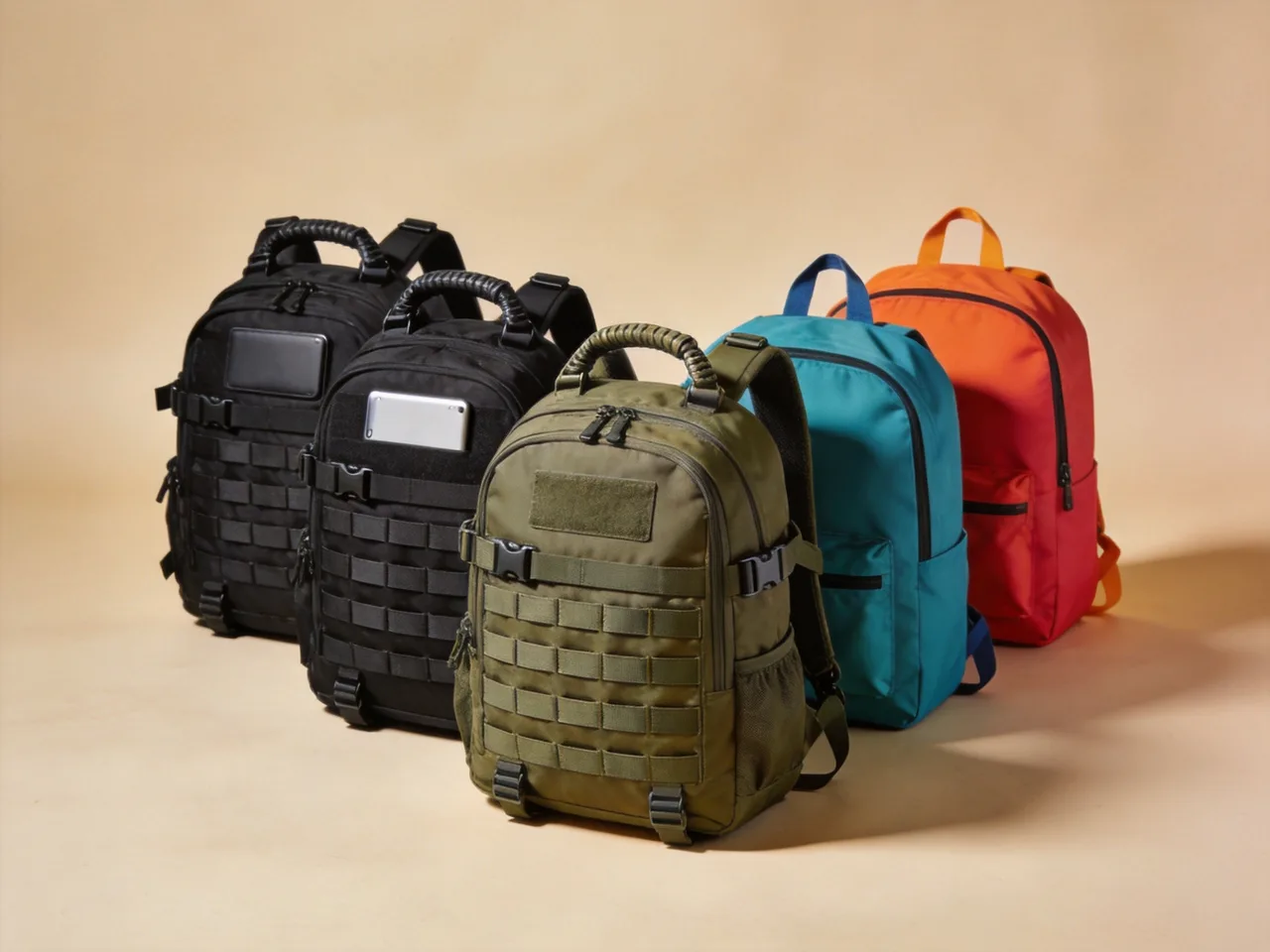
Harcor has supplied tailor-made bags and innovative carry products to leading Australian companies for close to three decades, and it has built its reputation on custom development rather than catalogue selling. The company works with corporate, industrial, emergency-services and promotional buyers, and its strength is the ability to take a brief and return a purpose-built bag — reinforced tool panels, high-visibility trim, radio and hydration compatibility, heavy-duty webbing — rather than restyling an existing model.
For an Australian buyer, Harcor’s advantage is proximity: local prototyping, local meetings, and no import documentation. The trade-off is that Australian labour cost is embedded in every unit, so the per-piece price at 500 units is materially higher than an offshore FOB quote. Harcor makes commercial sense when the program is under a few hundred units, when the design needs frequent face-to-face review, or when the end client requires Australian-made supply.
Email: [email protected]
Website: harcor.com.au
Address: New South Wales, Australia
2. JUNYUAN BAGS
Established: 22 August 2014 (founding team in bag manufacturing since 2004)
Location: Quanzhou, Fujian, China — FOB Xiamen
JUNYUAN BAGS is the offshore OEM/ODM option on this list, and for most Australian brands specifying 500 units or more it is the lowest landed-cost route to a genuinely custom backpack. We work from your tech pack or reference sample and return a quote, a pattern review and a pre-production sample; nothing goes into bulk until that sample is signed off in writing.
The commercial terms are fixed and published, which is unusual in this category: MOQ 500 pcs for custom backpack programs, sampling in 6–10 days, bulk production 35–50 days after deposit and sample approval, and inspection to AQL 2.5 before shipment. Goods ship FOB Xiamen, which gives Australian importers control over freight forwarder, consolidation and marine insurance — a meaningful advantage when you are comparing quotes, because you can hold the freight variable constant and compare factory cost alone.
Customisation covers the full bag: 600D/900D polyester, recycled RPET, nylon, canvas and coated fabrics; YKK-grade or equivalent zip specifications; padded or suspended laptop sleeves; EVA back panels; custom webbing, buckles, pulls and logo hardware; sublimation, screen print, embroidery, heat transfer and silicone badges; and retail-ready polybag or hangtag packaging. Barcodes, carton marks and mixed-carton assortments are handled at packing, which matters for Australian retailers that receive direct to store.
Compliance documentation is supplied with every order: restricted-substance and AZO test reports from accredited third-party laboratories, fibre-content and care-labelling artwork, and country-of-origin statements for Australian labelling. For buyers new to offshore sourcing, our complete guide to custom backpack manufacturing walks through the sequence from drawing to shipment, and OEM vs ODM vs private label explains which model suits which stage of brand growth.
Email: [email protected]
Website: https://junyuanbags.com
Address: Quanzhou, Fujian, China
3. Leather Craft Australia
Location: Australia
Leather Craft Australia has spent more than a decade producing private-label leather goods for some of Australia’s largest and best-known brands and retailers. Its value to a backpack program is material expertise: leather and heavy canvas construction, edge finishing, lining selection and hardware pairing are decided in-house, and the design team can take a brand concept through to a finished sample without the buyer having to source components separately.
This supplier is the right call when the product is a premium leather or leather-trim backpack where the material itself carries the price point — a $300–$600 retail bag where a 1 mm difference in leather thickness or a different edge paint changes the perceived quality. It is the wrong call for a high-volume polyester school or commuter program, where leather cost and local labour both work against you. Ethical sourcing is a stated priority, which is worth raising early if your retail partners audit animal-material supply chains.
Website: leathercraftaustralia.com.au
Address: Australia
4. Textile Link
Location: Victoria, Australia
Textile Link is a textile service business that also manufactures custom backpacks for local businesses and retail stores. Its differentiator is fabric range: a broad stock of textile options combined with in-house decoration means a buyer can specify a corporate backpack in a fabric that matches an existing uniform, event or brand palette without commissioning custom-woven material.
In practice Textile Link suits Melbourne-based corporate, school and event programs in the low hundreds of units, where the buyer values a local contact, short delivery distance and the ability to see and feel fabric swatches before committing. For a national retail rollout at 500+ units per colourway, the unit economics move decisively toward an offshore OEM, and the fabric range advantage is offset by import-scale pricing.
Phone: 03 5995 5747
Website: www.textilelink.com.au
Address: Victoria, Australia
5. Bags Australia
Location: Australia (national delivery, including remote areas)
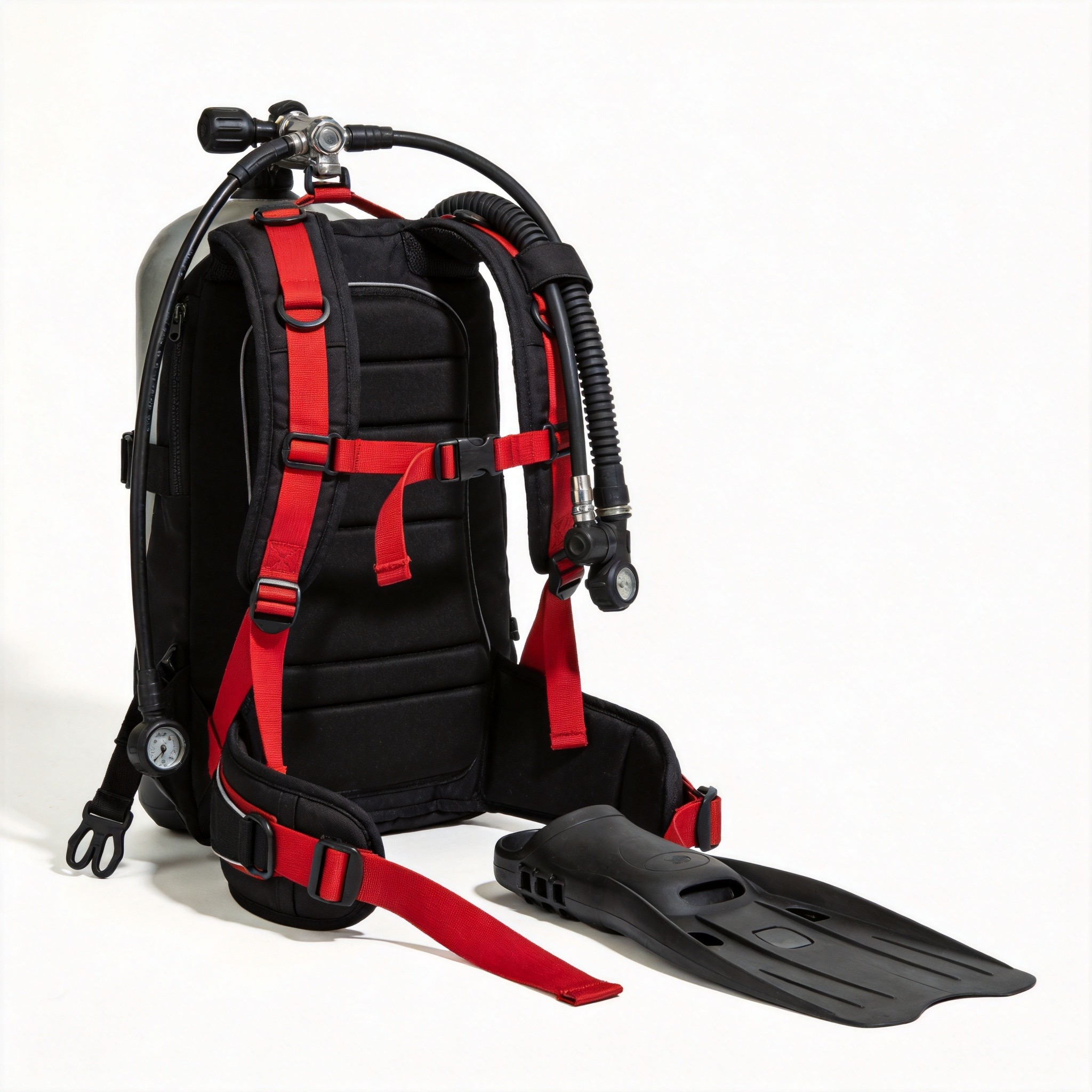
Bags Australia is a wholly Australian-owned supplier specialising in plain and printed cold-storage bags, picnic bags, eco bags, accessories, shoulder bags, sports bags, travel bags, backpacks and laptop bags at economical price points. It delivers to all major cities and to remote areas, which is genuinely useful for agribusiness, mining-services, healthcare and government buyers who need stock in places where freight is the hard part.
The model here is supply rather than development: a wide catalogue, fast availability, print decoration on established shapes. If your requirement is 200 printed cooler backpacks for a field team next month, this is a better fit than any custom manufacturing route. If you need a proprietary backpack shape with your own pattern, hardware and internal layout, the catalogue model cannot deliver it — that is the point at which buyers move to a custom OEM program.
Email: [email protected]
Website: www.bagsaustralia.com.au
Australian Backpack Sourcing Costs: What FOB Xiamen Actually Means
Australian buyers comparing a local quote against an offshore quote usually compare the wrong two numbers. The local figure is a delivered, duty-paid, GST-inclusive price. The offshore figure is FOB — the cost of the goods loaded on a vessel at Xiamen, with freight, insurance, duty and GST still to be added.
To compare fairly, build a landed-cost sheet with five lines: FOB unit cost, freight per unit (total freight divided by units, using actual carton cube), marine insurance (typically a small percentage of CIF value), Australian customs duty at the applicable tariff rate for the bag’s construction, and GST. Only then does the offshore quote become comparable to a local delivered price. In our experience the offshore route remains substantially cheaper at 500+ units even after all five lines, but the gap narrows fast on small orders, where freight per unit can exceed the manufacturing cost.
Carton engineering is where money is quietly lost. A backpack program that packs 20 units per carton at 0.09 cbm per carton costs less to ship per unit than one that packs 15 units at 0.10 cbm, even at identical FOB prices. Ask for carton dimensions and gross weight in the quote, not after production.
Local Manufacturer or Offshore OEM? A Decision Framework
| Your situation | Better route | Why |
|---|---|---|
| Under 200 units, one design, launch in 8 weeks | Australian supplier | No import cycle, no duty, no minimum container logic |
| 500+ units, custom pattern, 3+ month horizon | Offshore OEM (JUNYUAN BAGS) | Unit cost and design control both improve with volume |
| Premium leather or leather-trim hero product | Leather Craft Australia | Material sourcing and finishing expertise are local |
| Corporate or event program, 100–300 units | Textile Link or Harcor | Fabric range, local decoration, short lead time |
| Stock or printed catalogue bags needed this month | Bags Australia | Catalogue supply, national delivery, no development cycle |
| Program needs Australian-made supply for tender reasons | Harcor or Leather Craft Australia | Country-of-origin claim can be substantiated |
The mistake buyers make is treating this as a binary. A workable pattern for Australian brands is to develop and validate the design locally with a small run, then move the proven pattern offshore for volume — keeping the local supplier for fast replenishment of short-run colourways.
Compliance, Labelling and Duty for the Australian Market
Three regulatory layers apply to backpacks sold in Australia, and each one needs a document, not a promise.
Product safety. Backpacks are generally not a declared hazardous article, but children’s backpacks and any bag with attached cords, toggles or small parts fall under Australian Consumer Law general safety expectations and, for products marketed to children under three, mandatory small-parts requirements. Button batteries in any attached light or tracker are subject to a mandatory standard and must be secured so a child cannot access them.
Fibre content and care labelling. Textile products must carry accurate fibre content, and care instructions must be truthful for the material used. A supplier should give you the fibre composition per component — shell, lining, webbing, mesh — not a single blended figure, because the label has to reflect what is actually in the bag.
Country of origin. Country-of-origin claims must be accurate and defensible. “Made in China” is straightforward; “Made in Australia” on an imported bag is not permitted, and a claim like “Australian owned” must be distinguished from where the goods were made. If your marketing leans on Australian identity, get the wording reviewed before the packaging is printed, not after.
On restricted substances, Australian retailers increasingly align with European and US lists rather than a single domestic standard. Specify up front that you need restricted-substance test reports covering AZO dyes, phthalates, formaldehyde, lead and cadmium, issued by an accredited third-party laboratory, and confirm who pays for the test and in whose name the report is issued.
Most Popular Backpack Manufacturer in Australia
For Australian brands buying at volume, the most requested manufacturing profile in 2026 is not a local factory — it is an offshore OEM that behaves like a local supplier. That means English-language project management, a named account contact, sample rounds that fit an Australian retail calendar, documentation ready for a retail compliance team, and a factory that will accept mixed-carton assortments so a retailer can receive direct to store.
JUNYUAN BAGS was incorporated on 22 August 2014, with a founding team that has worked in bag manufacturing since 2004, and supplies OEM and ODM backpack programs to brands in Australia, North America and Europe from Quanzhou, Fujian. We hold the pattern, the tooling and the specification for your program, we quote against your tech pack rather than a catalogue page, and we ship FOB Xiamen so your forwarder relationship stays yours.
If you are comparing Australian suppliers and offshore manufacturers, the practical next step is to send the same tech pack to two or three of them and compare three things: sample lead time, carton cube, and what documentation arrives with the quote. That comparison tells you more than the unit price alone.
Frequently Asked Questions
What is the minimum order quantity for custom backpacks shipped to Australia?
For custom backpack programs at JUNYUAN BAGS the MOQ is 500 pcs per style. That figure covers a custom pattern, your own fabric and colour selection, custom labelling and retail packaging. Mixed colourways within the 500 pcs are accepted, which lets a brand test two or three colour options in one production run instead of committing to a single colour.
How long does sampling take for an Australian order?
Pre-production sampling runs 6–10 days after we receive your tech pack, artwork and any reference sample. That window covers pattern making, material sourcing and one physical sample. If the design uses a fabric or hardware item we do not hold, add sourcing time, which we confirm in the quotation rather than discovering mid-project.
What is the production lead time after sample approval?
Bulk production is 35–50 days after deposit receipt and written sample approval. The low end applies to single-colour programs on materials already in stock; the high end applies to multi-colour, multi-style orders with custom hardware or sublimation printing. Add sea freight of roughly 2–4 weeks to Australian east-coast ports, plus customs clearance.
Is it cheaper to manufacture backpacks in Australia or import them?
Importing is cheaper at volume, and the crossover point is usually around a few hundred units. Australian manufacturing embeds local labour cost in every unit, so at 500 pcs the FOB price from an offshore OEM is typically a fraction of the local quote. Below roughly 200 units, freight and clearance costs per unit erode that advantage and local supply often wins on total cost and speed.
Do I pay GST and duty on imported backpacks?
Yes. Backpacks are a dutiable import into Australia and GST applies to the customs value plus duty, freight and insurance. The applicable tariff rate depends on the bag’s construction and outer material, so confirm the classification with your customs broker before you commit to a retail price. Your broker should also confirm whether the low-value threshold applies to your shipment.
Which fabrics work best for the Australian climate?
For most of Australia, UV stability matters as much as water resistance. Solution-dyed or UV-stabilised 600D polyester holds colour far better than surface-dyed fabric under Queensland and Northern Territory sun. For school and commuter bags, a PU-coated 600D shell with a 210D lining balances cost and durability. For coastal and outdoor programs, specify a recycled RPET shell with a water-repellent finish and taped critical seams.
How is quality inspected before shipment?
Every order is inspected to AQL 2.5, covering critical, major and minor defects on a defined sample size drawn from the finished cartons. Inspection checks stitching density, seam strength, zip function, hardware attachment, measurement against spec, label placement and packaging. You receive the inspection report with photographs before the goods leave, so any claim is settled against documented evidence.
What payment terms are normal for a first Australian order?
A standard first order runs on a deposit and balance structure: a percentage with the order to fund materials, and the balance against the bill of lading or before shipment. Terms are negotiable as the relationship matures. Our article on supplier payment terms explains the structures and the risk each one places on the buyer and the factory.
How do you ship 500 backpacks from Xiamen to Sydney or Melbourne?
At 500 units, sea LCL is usually the cheapest option and air freight the fastest. A typical commuter backpack packs 15–25 units per carton; 500 units therefore occupies roughly 1.5–3 cbm, which consolidates well. We ship FOB Xiamen, so you nominate the forwarder, and we deliver to the nominated warehouse within the agreed window with carton marks and packing list ready.
Can you match Pantone colours and brand logos?
Yes. Fabric and webbing are matched to Pantone TCX references, and logo application covers embroidery, screen print, heat transfer, silicone badge, rubber patch, woven label and metal plate. We produce a physical proof for logo and colour approval before bulk. Expect small colour variation between fabric dye lots; we document the approved standard and hold it as the reference for repeat orders.
What compliance documents can you supply for Australian retail?
We supply restricted-substance test reports from accredited third-party laboratories covering AZO dyes, phthalates, formaldehyde, lead and cadmium; fibre composition per component for care labelling; care-instruction artwork; and a country-of-origin statement. The test report is issued against the specific materials and colourways ordered, so it is valid for that program rather than as a generic certificate.
What is AQL 2.5 and why does it matter to an Australian buyer?
AQL 2.5 is the acceptance quality limit used in the final inspection: it defines how many defects are tolerated in a sample before the whole lot is rejected. It matters because it converts “we check quality” into a measurable contract term. Without a stated AQL, a buyer has no objective basis to reject a shipment, and a factory has no objective target.
How do you protect a design from being copied?
We manufacture to your pattern and do not resell your design, and we will sign a non-disclosure and non-reproduction agreement before receiving a tech pack. Practical protection also comes from your side: register the design where it is registrable, keep the technical drawings off shared drives, and avoid publishing unlaunched product photography before the first shipment clears.
Can a small Australian brand order below 500 pcs?
Below 500 pcs the economics change: pattern and material minimums have to be absorbed across fewer units, so per-unit cost rises sharply. The usual solution is to launch with a single style at 500 pcs across two or three colourways rather than three styles at low volume. Our guide to MOQ strategies for small brands covers the alternatives in detail.
Which suppliers on this list should an Australian startup contact first?
If the target is a proprietary design at retail-ready quality, contact JUNYUAN BAGS first and request a quote against your tech pack, because you will learn the real cost and lead time of your design in one step. If the target is a small branded run for a local client, contact Textile Link or Harcor. Both answers are legitimate; they serve different business models.
Next Steps for Your Australian Program
The fastest way to settle this decision is to test it with real numbers rather than opinions. Send the same specification to one Australian supplier and one offshore OEM, and compare sample lead time, carton cube, documentation package and landed cost per unit. That four-line comparison resolves the local-versus-offshore question for your specific program in about two weeks.
JUNYUAN BAGS manufactures custom backpacks and bags for Australian brands from Quanzhou, Fujian — incorporated 22 August 2014, with a founding team in the trade since 2004. Custom backpack programs start at 500 pcs, sampling takes 6–10 days, bulk production 35–50 days, inspection is to AQL 2.5, and goods ship FOB Xiamen. To start, send your tech pack or reference sample and we will return a quotation, a pattern review and a sampling schedule. You can also compare regional options in our guides to top custom backpack manufacturers in China and Vietnam backpack manufacturers.