
Laptop Backpack OEM: Padding Standards, Compartments & Custom Design (2026)
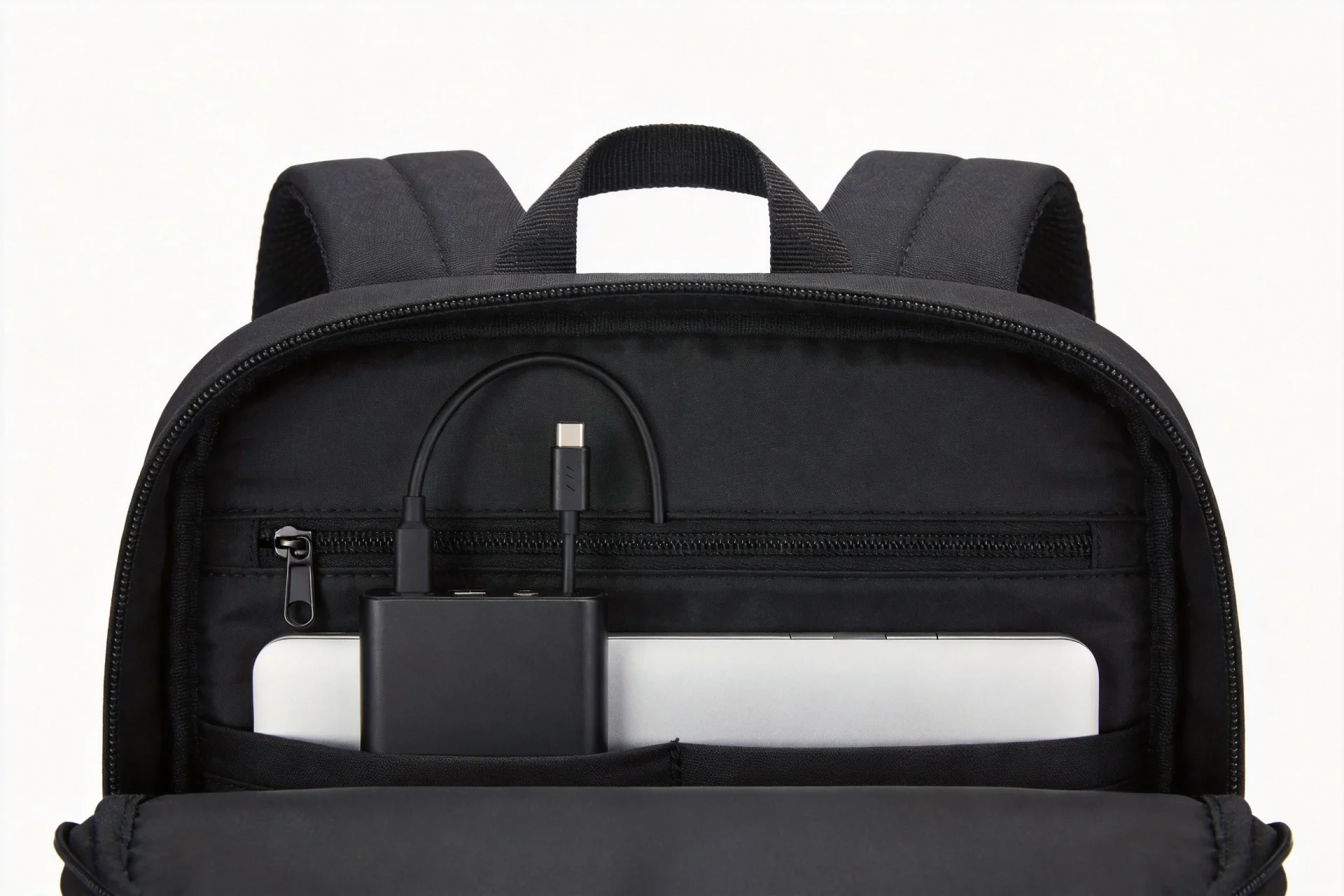
The global laptop backpack market continues to expand at a robust pace, driven by hybrid work models, rising tech adoption, and an ever-growing demand for custom laptop backpacks engineered for professional use. As a leading OEM/ODM backpack manufacturer based in Quanzhou, Fujian, China, JUNYUAN BAGS drawn on over a decade of expertise perfecting the art of laptop bag production — serving 200+ brands across 100+ countries with manufacturing capacity exceeding 200,000 pieces per month.
This comprehensive pillar page covers everything B2B buyers need to know about laptop backpack OEM manufacturing in 2026: from padding material standards and compartment engineering to waterproof fabric selection, USB integration, and complete brand customization solutions. Whether you are launching a new product line or upgrading your current supplier, this guide provides the technical depth and manufacturing insights to make informed decisions.
Why Laptop Backpack OEM Manufacturing Demands Technical Precision
Laptop backpacks are not ordinary bags — they are protective carriers for devices worth $500 to $3,000+. Every manufacturing decision directly impacts product safety, user comfort, and brand reputation. The difference between a well-engineered backpack and a poorly made one often comes down to three factors: padding material quality, compartment design accuracy, and assembly precision.
At our custom backpack manufacturing facility, we follow a rigorous engineering process that begins with CAD-based pattern design and ends with multi-point quality inspection. Each laptop backpack undergoes drop testing, abrasion testing, zipper endurance testing, and water resistance verification before shipping.
The Evolution of Laptop Backpack Design Standards
Over the past decade, laptop backpack design has evolved from simple padded sleeves to complex multi-zone protection systems. Modern OEM laptop backpacks must accommodate an expanding range of devices — from 10-inch tablets to 17-inch gaming laptops — while maintaining slim profiles and professional aesthetics. This evolution has driven significant innovation in padding materials, compartment architecture, and fabric technology.
As a custom laptop backpack manufacturer, we have tracked and contributed to these design shifts, investing in new material research, tooling capabilities, and production techniques to stay ahead of market demands. Our factory in Quanzhou, Fujian is equipped with automated cutting machines, computer-controlled sewing stations, and laser alignment tools that ensure every backpack meets exacting specifications.
Padding Material Standards: EPE, EVA & Memory Foam Explained
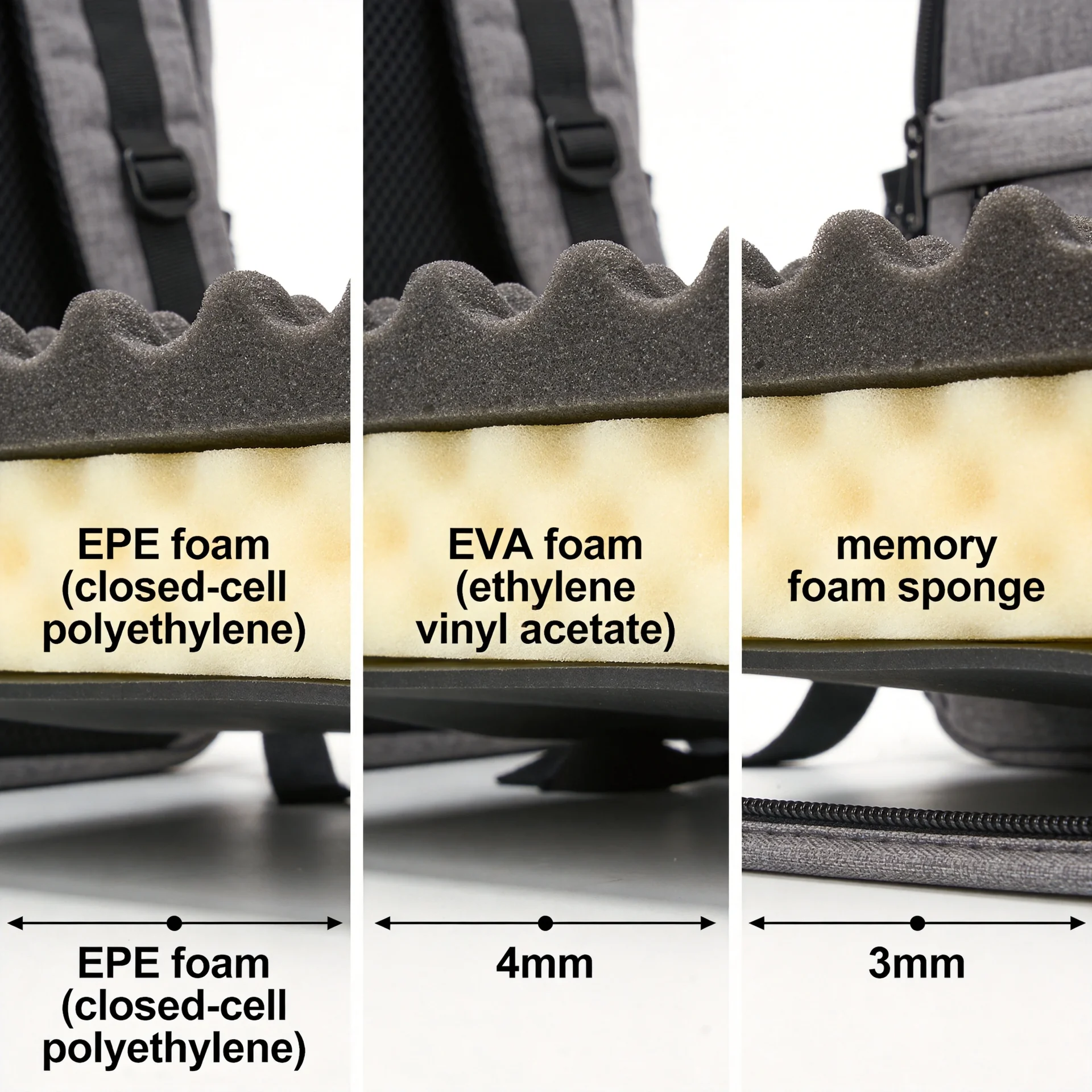
The padding layer is the single most critical component in any laptop backpack. It determines how well the bag absorbs shock, distributes pressure, and protects devices from impact damage. At JUNYUAN BAGS, we work with three primary padding materials, each offering distinct advantages for different product tiers and price points.
EPE Foam (Expanded Polyethylene)
EPE foam is a closed-cell polyethylene material widely used in mid-range laptop backpacks. It offers consistent thickness, lightweight properties, and excellent moisture resistance. EPE foam is available in densities ranging from 15 kg/m³ to 45 kg/m³, with higher densities providing better impact absorption.
EPE Foam Specifications for Laptop Backpacks
- Thickness Range: 3mm – 15mm (standard laptop sleeve: 8mm–10mm)
- Density: 15–45 kg/m³ (recommended: 25–33 kg/m³ for laptop protection)
- Shock Absorption: Moderate — suitable for everyday commuter scenarios
- Moisture Resistance: Excellent — closed-cell structure prevents water absorption
- Cost: Lowest among the three options — ideal for high-volume production runs
- Application: Standard laptop sleeves, side panel reinforcement, bottom base padding
EVA Foam (Ethylene Vinyl Acetate)
EVA foam represents the premium tier of laptop backpack padding. This thermoformable material can be molded into precise, custom shapes that perfectly contour to specific laptop models. EVA foam offers superior impact absorption and structural rigidity compared to EPE, making it the preferred choice for high-end business backpacks and rugged tech carriers.
EVA Foam Specifications for Laptop Backpacks
- Thickness Range: 2mm – 20mm (premium laptop compartment: 10mm–15mm)
- Density: 25–80 kg/m³ (recommended: 38–55 kg/m³ for maximum protection)
- Shock Absorption: Superior — absorbs high-impact forces without permanent deformation
- Thermoformability: Can be heat-molded into custom 3D shapes
- Cost: Moderate to high — justified by premium positioning
- Application: Premium laptop compartments, hard-shell cases, structured front panels
Memory Foam (Polyurethane Sponge)
Memory foam, originally developed for aerospace applications, has become a differentiating feature in luxury laptop backpacks. Its slow-recovery, body-conforming properties provide exceptional cushioning and comfort, particularly in shoulder straps and back panels. When used in laptop compartments, memory foam creates a custom-fitting cradle that minimizes device movement during transit.
Memory Foam Specifications for Laptop Backpacks
- Thickness Range: 5mm – 20mm (comfort padding: 8mm–12mm)
- Density: 40–100 kg/m³ (recommended: 50–70 kg/m³ for laptop sleeves)
- Shock Absorption: Excellent — slow-recovery absorbs and dissipates energy gradually
- Comfort Rating: Highest among all padding options
- Cost: Highest — reserved for premium and executive product lines
- Application: Executive laptop sleeves, premium shoulder straps, ergonomic back panels
Multi-Layer Padding Systems
For the highest-tier laptop backpacks, we recommend a multi-layer padding system that combines different materials to maximize both protection and comfort. A typical premium configuration might include an outer EVA shell for structural integrity, a middle EPE layer for shock distribution, and an inner memory foam layer for device cradling. This approach increases unit cost by approximately 15–25% but delivers protection levels that justify premium retail pricing.
Laptop Compartment Design Standards: 13″, 15″ & 17″ Configurations
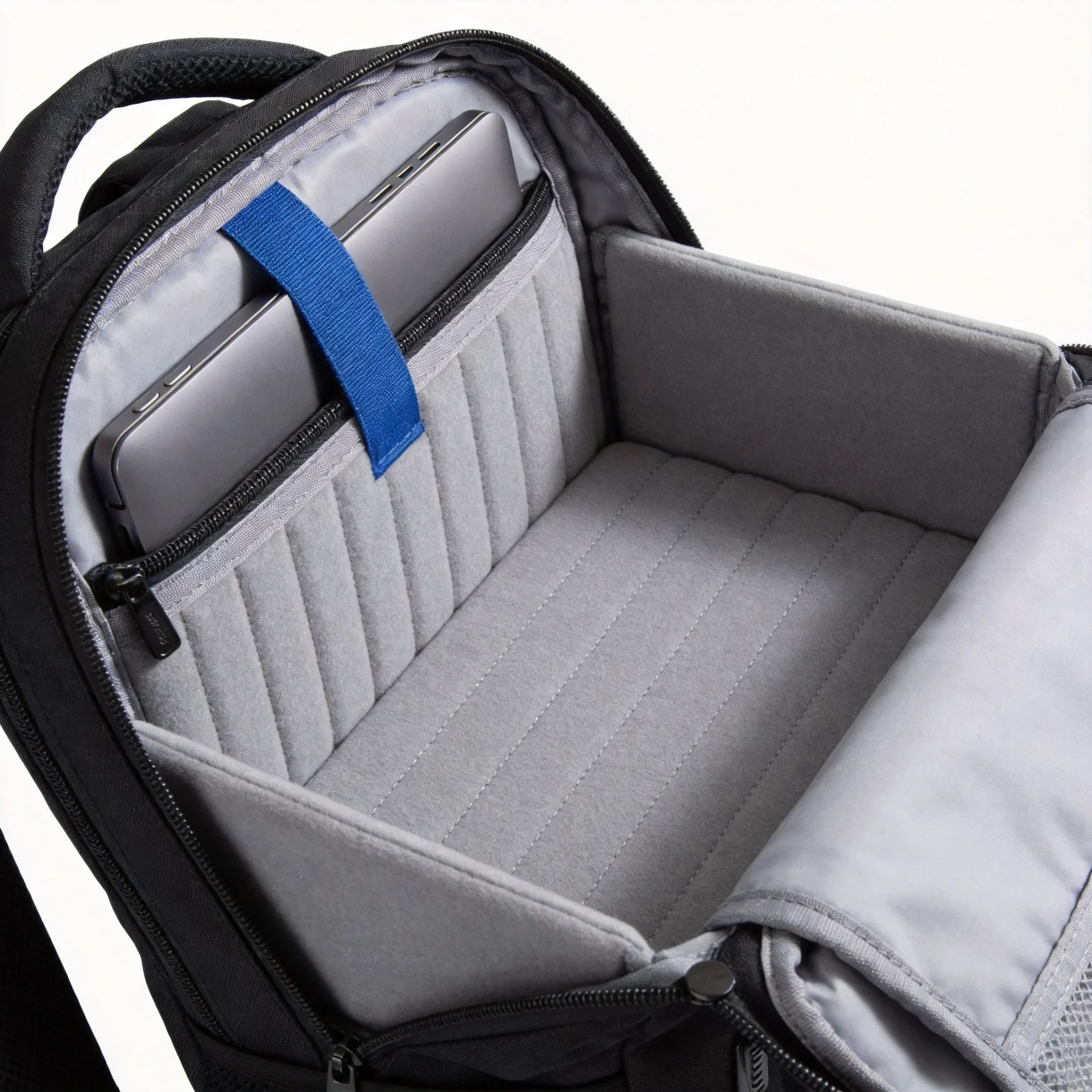
Compartment design is where engineering meets user experience. The laptop compartment must balance three competing priorities: protection, accessibility, and weight distribution. At JUNYUAN BAGS, our design team develops compartment layouts using a systematic approach based on device dimensions, user behavior patterns, and ergonomic research.
Standard Laptop Compartment Sizes
| Laptop Size | Device Dimensions (W×D) | Recommended Sleeve Size | Target Market | Backpack Volume |
|---|---|---|---|---|
| 13″ (MacBook Air, Dell XPS 13) | 304 × 212 mm | 320 × 225 mm | Students, light travelers | 15–20L |
| 15″ (MacBook Pro 15, ThinkPad T15) | 358 × 249 mm | 370 × 260 mm | Business professionals | 20–30L |
| 15.6″ (Standard business laptops) | 381 × 264 mm | 395 × 275 mm | Corporate, enterprise | 25–35L |
| 17″ (Gaming laptops, workstations) | 419 × 292 mm | 435 × 305 mm | Gamers, creative professionals | 30–45L |
Suspended Laptop Sleeve Design
Our premium laptop backpack collection features a suspended sleeve design where the laptop compartment is positioned above the bag’s base. This means when you set the backpack down, the laptop does not contact the ground — the bag’s reinforced bottom panel absorbs the impact instead. This design reduces bottom-corner damage by over 80% compared to base-level sleeve designs.
Suspended Sleeve Construction Details
- Sleeve is stitched 25mm above the bag’s internal base
- EVA foam bottom panel (minimum 5mm thickness) provides drop protection
- Elastic retention strap at the top prevents device sliding during movement
- Fleece-lined interior prevents screen scratches
- Velcro closure at the top for secure device retention
Multi-Device Compartment Architecture
Modern professionals often carry multiple devices simultaneously. Our compartment designs accommodate laptops, tablets, e-readers, and smartphones in dedicated, individually padded zones. The same organizational expertise applies to our custom athletic backpack lines and tactical gear bags. Each zone is dimensioned with 3–5mm clearance on all sides for easy device insertion and removal.
A typical multi-device layout for a 15-inch business backpack includes:
- Primary laptop sleeve: Suspended, padded, fleece-lined
- Tablet pocket: Separate fleece-lined compartment adjacent to the laptop sleeve
- Organization panel: Front section with dedicated slots for pens, business cards, cables, power adapters, and USB drives
- Quick-access top pocket: Fleece-lined for phone or sunglasses
- Hidden back pocket: RFID-blocking, against the back panel for valuables
- Side mesh pockets: For water bottles or umbrellas
Waterproof Fabric Selection for Laptop Backpacks
Water resistance is a non-negotiable requirement for laptop backpacks. Electronic devices are extremely vulnerable to water damage, and even minor moisture exposure can destroy expensive components. As an experienced OEM backpack factory, we offer multiple levels of water protection based on your target market and price positioning.
Fabric Options for Water Protection
| Fabric Type | Denier | Coating | Water Rating | Best Application |
|---|---|---|---|---|
| 600D Polyester | 600 | PU coating | IPX3 (spray resistant) | Standard business backpacks |
| 900D Nylon | 900 | DWR + PU | IPX4 (splash resistant) | Premium commuter backpacks |
| 1680D Ballistic Nylon | 1680 | DWR + PVC | IPX5 (jet resistant) | Executive and tactical backpacks |
| Recycled Polyester (rPET) | 600D equiv. | DWR eco-coating | IPX3 | Sustainable product lines |
| TPU Laminate Fabric | 420D–900D | TPU membrane | IPX6 (heavy spray) | All-weather expedition packs |
DWR Coating vs. Waterproof Membrane
Understanding the difference between DWR (Durable Water Repellent) coatings and waterproof membranes is essential for specifying the right material. DWR coatings cause water to bead and roll off the fabric surface but do not prevent water penetration under sustained pressure. Waterproof membranes (such as TPU laminates) create an impenetrable barrier but can reduce breathability.
For most OEM laptop backpack applications, we recommend a combination approach: DWR-treated exterior fabric with a waterproof TPU liner in critical zones (laptop compartment and bottom panel). This provides effective protection without excessive cost or weight. Our waterproof construction expertise also extends to our tactical backpack range and sports backpack collections. Our factory also offers recycled polyester (rPET) backpacks with eco-friendly DWR coatings for brands targeting the sustainability market.
Waterproof Zipper Integration
Even the most water-resistant fabric is ineffective if water can enter through zippers. We offer three levels of zipper water protection:
- AquaGuard water-resistant zippers: Standard upgrade — polyurethane-coated zipper tape reduces water ingress by 70%
- Waterproof YKK zippers: Fully sealed construction with rubber-coated teeth — reduces water ingress by 95%
- Roll-top closure: For fully waterproof designs — eliminates zippers entirely in the main compartment
Business vs. Casual Laptop Backpack Styles
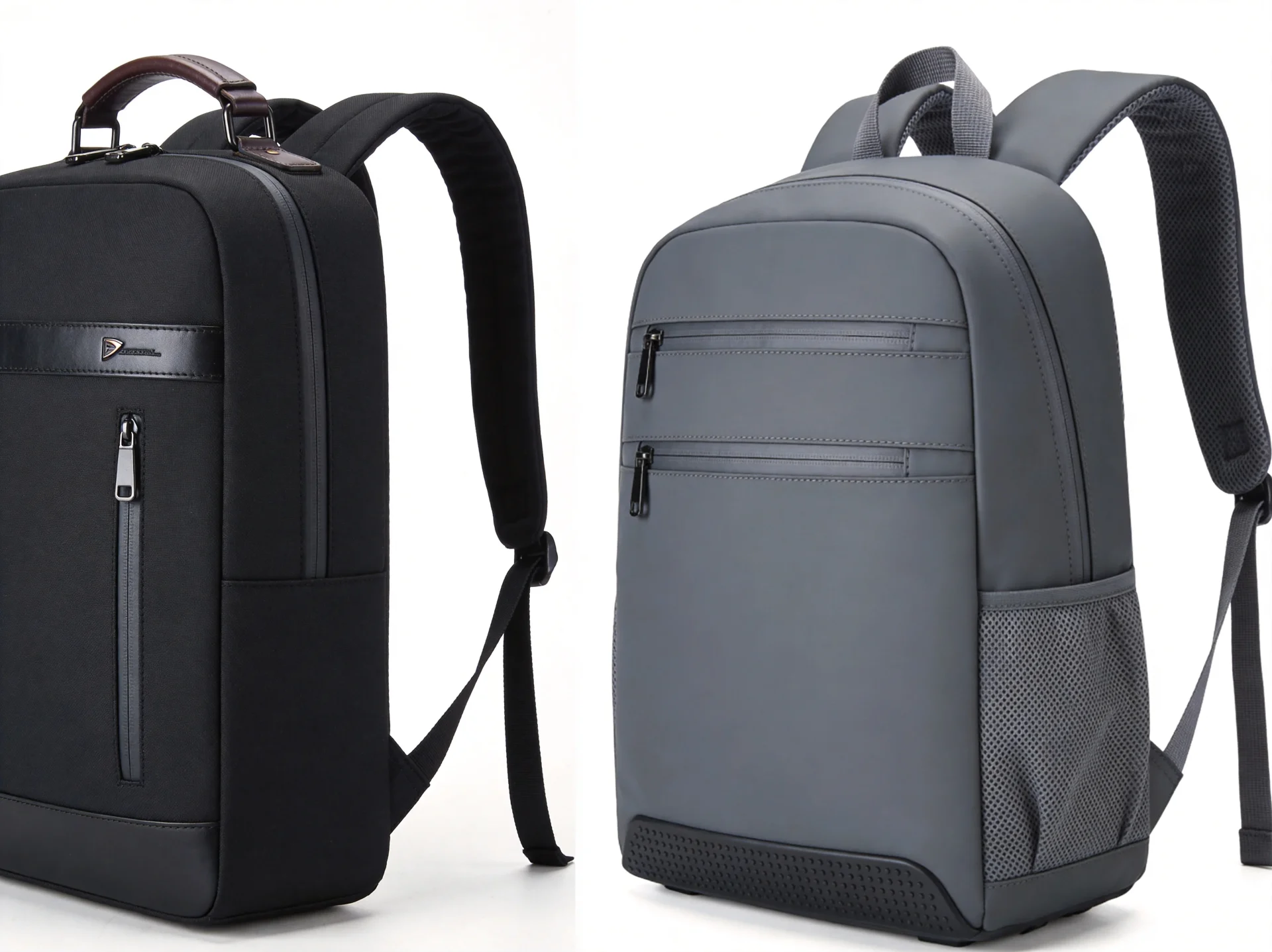
The laptop backpack market spans two distinct design philosophies: business-oriented and casual/lifestyle. Each style serves different user needs, brand positioning, and price points. As a full-service ODM backpack factory, we develop both categories with equal expertise and offer design guidance to help brands choose the right approach.
Business/Executive Style Characteristics
- Materials: Premium nylon (900D+), genuine leather accents, metal hardware
- Color Palette: Black, charcoal, navy, dark brown — conservative and professional
- Structure: Semi-rigid frame, maintains shape when empty, structured compartments
- Hardware: Brushed metal zippers, magnetic clasps, custom metal badges
- Branding: Embroidered logos, metal nameplates, debossed leather patches
- Target Price (Retail): $80–$250+
- MOQ for Custom Design: 300 pieces per color/design
Casual/Lifestyle Style Characteristics
- Materials: Recycled polyester, lightweight nylon, canvas blends
- Color Palette: Wide range including pastels, earth tones, and vibrant colors
- Structure: Flexible, unstructured or semi-structured, lightweight construction
- Hardware: Color-matched zippers, plastic buckles, elastic closures
- Branding: Printed labels, woven patches, rubber logos
- Target Price (Retail): $35–$120
- MOQ for Custom Design: 300 pieces per color/design
Business Series — Executive Line
Sleek minimalist design with hidden compartments. Built for C-suite executives and corporate professionals. Premium nylon with leather accents, metal hardware, and structured compartments. Fits laptops up to 15.6″. Weight: 850g. Visit our laptop backpack product page for specifications.
Urban Series — Daypack Line
Lightweight and versatile. Designed for the commute-from-office-to-gym lifestyle. Recycled polyester construction, flexible compartments, and casual aesthetics. Fits laptops up to 15″. Weight: 650g. Explore our laptop backpack category for more options.
USB Charging Port Integration in OEM Laptop Backpacks
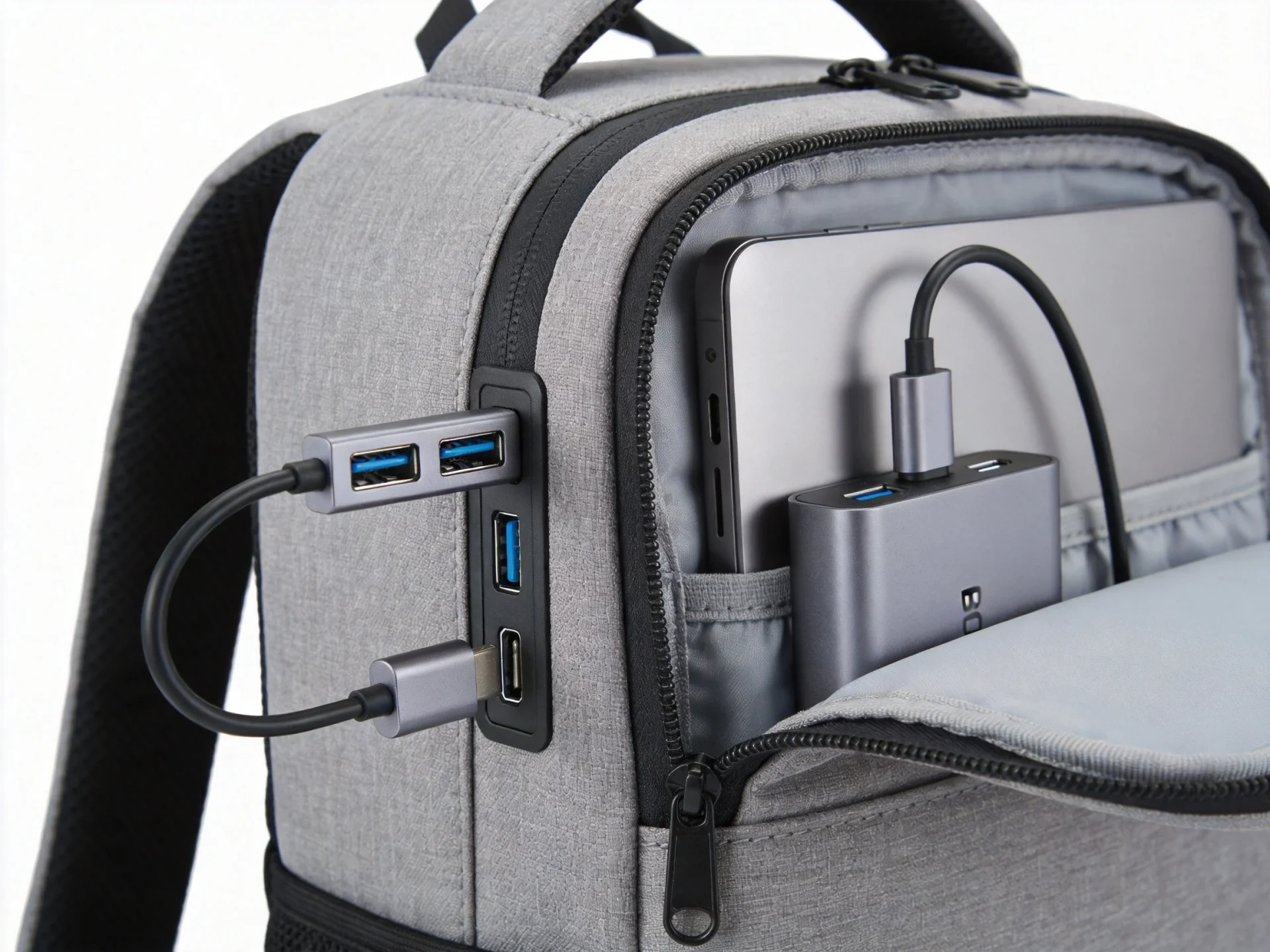
Built-in USB charging ports have become one of the most requested features in modern laptop backpacks. This integration transforms the backpack from a simple carrying solution into a mobile charging station — a significant value-add for end users and a strong selling point for brands.
USB Port Integration Architecture
The USB charging system in a laptop backpack consists of four components:
- External port panel: USB-A and/or USB-C port(s) mounted on the exterior, typically on the front panel or side pocket area
- Internal cable routing: Shielded cables running from the external port through the bag’s structure to the power bank location
- Power bank pocket: Dedicated padded pocket (usually in the main compartment or front organizer section) to hold the portable charger
- Connection cable: Internal cable with connectors matching the power bank output and the external port input
Port Configuration Options
| Configuration | Ports | Target Market | Additional Cost (FOB) |
|---|---|---|---|
| Basic | 1× USB-A | Budget/Student segment | $0.30–$0.50/piece |
| Standard | 1× USB-A + 1× USB-C | Business commuter | $0.60–$1.00/piece |
| Premium | 2× USB-C (PD 20W+) | Tech professionals | $1.20–$2.00/piece |
| Deluxe | 2× USB-C + 1× USB-A + LED indicator | Executive segment | $2.00–$3.50/piece |
Quality Standards for USB Integration
Every USB-equipped backpack from our OEM manufacturing facility undergoes rigorous testing: 5,000+ plug/unplug cycles, 48-hour salt spray testing on metal contacts, cable flex testing (10,000 bends), and pull-strength testing on solder joints. We source USB port modules from certified suppliers and can provide CE, FCC, and RoHS compliance documentation.
Additional Tech Integration Options
Beyond USB charging, our factory supports integration of several other tech features for custom laptop backpacks:
- RFID-blocking pockets: Specialized lining that prevents unauthorized scanning of credit cards and passports
- Anti-theft zippers: Lockable YKK zippers with hidden pull tabs
- LED lighting: Battery-powered interior LED strips for low-light visibility
- Cable management systems: Elastic loops and routing channels for organized cable storage
- AirTag/GPS tracker pocket: Dedicated concealed pocket for location tracking devices
Brand Customization Solutions for OEM Partners
As a full-service OEM/ODM factory in Quanzhou, Fujian, China, we provide comprehensive branding solutions that transform generic backpacks into powerful brand assets. Our customization capabilities span every aspect of the product — from visual identity to packaging design.
Logo Application Methods
- Embroidery: Premium, durable, and professional — ideal for business backpacks
- Silkscreen printing: Cost-effective for large runs — supports multi-color designs
- Heat transfer: Full-color, photorealistic images — ideal for complex graphics
- Metal badge: Luxury option — custom-cast metal logos attached with rivets or adhesive
- Debossed leather patch: Premium tactile branding — perfect for executive lines
- Woven labels: Interior branding — neck labels, care labels, and size tags
- Rubber/PVC patches: Durable, weather-resistant — popular for outdoor and sport lines
Full Brand Customization Package
Our comprehensive branding service includes: custom Pantone color matching for fabric, lining, zippers, and hardware; custom zipper pulls with brand engraving; branded shoulder strap padding with logo embossing; custom woven or printed interior labels; branded hang tags and packaging; and custom shipping carton design with your brand identity. Every detail is executed to ensure your custom laptop backpack reflects your brand’s quality standards. We also provide full branding services for athletic backpack lines, sustainable rPET collections, and tactical bag series.
Manufacturing Process & Quality Control at JUNYUAN BAGS
Our state-of-the-art factory in Quanzhou, Fujian, China combines advanced manufacturing technology with rigorous quality control protocols. Here is an overview of our laptop backpack production process:
Production Workflow
- Design & Prototyping: CAD pattern design → 3D digital mockup → Physical prototype (7–12 days)
- Material Procurement: Fabric sourcing → Padding material cutting → Hardware inspection → Incoming quality check
- Cutting: Computer-controlled die cutting for precision → Laser alignment for pattern accuracy → Bundling and labeling
- Sewing & Assembly: Multi-station assembly line → Reinforced stitching at all stress points → Padding installation and shaping
- Hardware & Features: Zipper installation → USB port integration → Buckle and strap attachment → Logo application
- Quality Inspection: Dimensional accuracy check → Stitching quality verification → Padding compression test → Zipper endurance test → Water resistance verification → Visual inspection
- Packing & Shipping: Individual poly bag packing → Custom branded carton → Container loading → FOB Xiamen delivery
Certifications & Compliance
Our factory maintains the following certifications: BSCI (Business Social Compliance Initiative), ISO 9001 (Quality Management), SEDEX (Supplier Ethical Data Exchange), and OEKO-TEX (for recycled material products). All materials comply with REACH, CPSIA, and California Proposition 65 requirements. We also support sustainable rPET backpack manufacturing for eco-conscious brands.
Why Choose JUNYUAN BAGS as Your Laptop Backpack OEM Partner
With over two decades of bag industry experience dating from 2004 as a laptop backpack manufacturer in Quanzhou, Fujian, China, JUNYUAN BAGS offers unmatched expertise in OEM and ODM production. Here is why 200+ global brands trust us:
- expertise dating from 2004 in Manufacturing Excellence: Established in 2014, we have refined every aspect of backpack production
- 200,000+ Pieces Monthly Capacity: Scalable production from 300-piece trial orders to 50,000+ bulk runs
- Full OEM/ODM Capability: From concept sketches to finished products — we handle design, sampling, production, and shipping
- Free Design & Sampling: 3D tech pack generation within 48 hours, physical samples in 7–12 days
- FOB Xiamen Shipping: Strategic location in Fujian, China with efficient port access for global delivery
- Multi-Certification Compliance: BSCI, ISO 9001, SEDEX, OEKO-TEX — ready for any market requirement
- Dedicated Project Management: One point of contact from inquiry to delivery
Frequently Asked Questions
What is the MOQ for custom laptop backpacks?
Our standard MOQ is 300 pieces per color/design. For trial orders, we can accommodate 100–200 pieces with a modest pricing adjustment. Volume discounts apply for orders exceeding 2,000 pieces.
What laptop sizes can your factory accommodate?
We design compartments for laptops ranging from 10 inches to 17 inches, including dedicated padded sleeves with protective padding and device-specific fit. Custom sizes beyond 17 inches are available for specialized applications.
What padding materials do you recommend for laptop backpacks?
We offer three primary options: EPE foam for cost-effective protection, EVA foam for premium thermoformed compartments, and memory foam for luxury lines. For the best value-to-protection ratio, we recommend a multi-layer system combining EVA and EPE.
Can you integrate USB charging ports and other tech features?
Yes. We regularly integrate USB-A and USB-C charging ports, RFID-blocking pockets, anti-theft zippers, LED lighting, cable management systems, and AirTag tracker pockets. All tech components undergo 5,000+ cycle testing before production approval.
What is the typical production lead time?
Sample production takes 7–12 days. Mass production takes 25–35 days depending on order quantity and complexity. We provide a detailed timeline with milestones before order confirmation.
Do you provide corporate branding and customization services?
Absolutely. We offer full corporate branding including custom logos (embroidery, silkscreen, metal badge, debossed leather), Pantone color matching, custom hardware, branded packaging, and exclusive design development for your brand.
What certifications does your factory hold?
Our factory holds BSCI, ISO 9001, SEDEX, and OEKO-TEX certifications. All materials comply with REACH, CPSIA, and California Proposition 65 requirements. We also support sustainable rPET material sourcing.
What are your shipping terms and locations?
We offer FOB Xiamen, CIF, and DDP shipping terms. Our factory is located in Quanzhou, Fujian, China, with efficient access to Xiamen Port for global sea freight and air cargo options.
Can I visit your factory in Quanzhou?
Yes, we welcome factory visits. Our facility in Quanzhou, Fujian is open for scheduled tours. Contact us at [email protected] to arrange a visit.
Start Your Custom Laptop Backpack Project Today
Get a detailed quote within 24 hours. MOQ from 300 pieces. FOB Xiamen, China. Explore our full range: OEM/ODM services | Laptop backpack collection | Athletic backpacks | Contact us | Request quote