
Yes — the best baby carrier for breastfeeding in 2026 is any well-fitted soft wrap or buckle carrier that you can loosen, bring your baby to the breast and re-tighten safely, because almost every baby wrap and most buckle carriers support nursing once breastfeeding is established; only rigid internal-harness carriers are genuinely hard to feed in. For B2B buyers and private-label brands, that same brief — an adjustable ergonomic carrier with a wide seat, a breathable panel and a discreet feeding drop-down — is what makes a custom baby carrier line sell to nursing, babywearing and back-to-work customers. As a custom bag and baby carrier manufacturer, our standard MOQ is 500 pieces per style, with sampling in 6–10 days and bulk production in 35–50 days under AQL 2.5 inspection, protected by a 12-month warranty.
What Is the Best Baby Carrier for Breastfeeding?
The honest short answer is that there is no single “best” sling for breastfeeding. You can breastfeed in any baby wrap and in almost all baby carriers, so the deciding factor is fit and adjustability rather than the words printed on the box. Many brands put “perfect for breastfeeding” on the packaging, but that is a marketing claim, not a guarantee — the carrier that works best is the one that fits your body and your baby and that you can loosen and re-tighten with one hand.
What separates an easy feeding carrier from an awkward one comes down to a handful of design details: a wide, ergonomic seat that supports the baby in the natural M-position; adjustable shoulder straps and a waist belt so the carrier can be slackened to lower the baby to the breast; a soft, breathable panel; and buckles that release smoothly. Rigid carriers with a fixed internal harness are the exception — they hold the baby too high and too tight to bring to the breast easily, which is why soft wraps and adjustable buckle carriers dominate this category.
For brands sourcing this category, the baby carrier is a strong addition to a nursing or maternity line. It overlaps with baby wraps, slings and mom-and-baby bags, it photographs beautifully, and the buyer is highly motivated — a nursing parent will pay for comfort, safety and discretion. This guide explains what actually makes a baby carrier good for breastfeeding in 2026, and how our OEM/ODM team builds custom baby carrier lines for retailers, importers and private-label brands.

— An adjustable buckle carrier with a wide ergonomic seat, the format most nursing parents find easiest to feed in.
Best Baby Carrier Types for Breastfeeding: What to Look For
When you are choosing or sourcing a baby carrier for a breastfeeding parent, the deciding specs are seat width, adjustability, breathability, safety and feeding access. A wide seat that supports the knees above the hips keeps the baby in the ergonomic M-position, which is the same posture that makes it easy to lower the baby to the breast. Adjustable straps and a padded waist belt let the parent slacken the carrier, feed, and then re-tighten without waking a sleeping baby.
Breathability matters more than most buyers expect, because breastfeeding and carrying both raise body temperature. A cotton, linen or mesh panel with a breathable back and shoulder construction keeps both parent and baby cool. On safety, every carrier should allow the parent to follow the TICKS guidelines — Tight, In view at all times, Close enough to kiss, Keep chin off the chest, and Supported back — so the same carrier that is comfortable for feeding is also correct for carrying.
Feeding access is the last spec to lock down. A carrier that can be loosened at the shoulder and lowered at the waist lets the parent bring the baby to the breast while keeping one hand free to support the head. This is why the best feeding carriers are adjustable rather than rigid, and why the format matters so much for the customer experience.

— A soft stretchy wrap slackened at the shoulder so a newborn can be brought to the breast without removing the carrier.
Comparison: Baby Carrier Types for Nursing Parents
Here is the practical comparison we give every brand before they spec a baby carrier line. It maps the five core formats to the buyer they serve, the stage they suit and the one feature that defines them for breastfeeding.
| Format | Best for | Stage | Key feature for feeding |
|---|---|---|---|
| Ring sling | Quick up-and-downs and discreet nursing | Newborn to toddler | One-shoulder adjustment for fast lowering |
| Stretchy wrap | Newborn closeness and easy slackening | Newborn to 6 months | Soft fabric that loosens and re-tightens by hand |
| Woven wrap | Toddler support and hands-free feeding | 6 months and up | Firm, supportive fabric with adjustable tension |
| Buckle carrier | Everyday structured carrying | Newborn to toddler | Buckles that slacken for an upright feed |
| Meh dai / hybrid | Wrap comfort with buckle convenience | Newborn to toddler | Tie straps that adjust around the breast |
The most common smart first order for a nursing brand is a coordinated trio: a buckle carrier for everyday use, a ring sling for quick feeds and a stretchy wrap for the newborn months. Because all three share fabric and colour, they ship as one coordinated nursing set and let the retailer upsell without extra development work.

— A buckle carrier slackened for an upright feed on the move — the format that keeps both hands free on a commute.
How We Build Custom Baby Carriers for Brands (OEM/ODM)
Our OEM/ODM team manufactures baby carriers, ring slings, stretchy and woven wraps and matching mom-and-baby bags with affiliated and partner production facilities running since 2014 for global maternity, babywearing and lifestyle brands. That experience is what our 500-piece MOQ is based on: at a dedicated production batch, cutting, sewing and inspection become efficient, so unit cost stabilises and we can hold consistent, inspection-ready output at scale.
Why a 500-Piece MOQ?
A dedicated line, proper cutting and stitching fixtures, and full QC inspection only become cost-efficient at a minimum batch. Our standard MOQ is 500 pieces per style across buckle carriers, ring slings, wraps and matching mom-and-baby bags.
What it is based on
It is based on affiliated and partner production lines running since 2014 for global maternity, babywearing and lifestyle brands, during which cutting efficiency, labour and inspection costs stabilise at this order size.
What it means for you
Predictable cost per piece, real sampling before you commit, and consistent, inspection-ready output at scale — with 6–10 day sampling and 35–50 day bulk lead times under AQL 2.5.
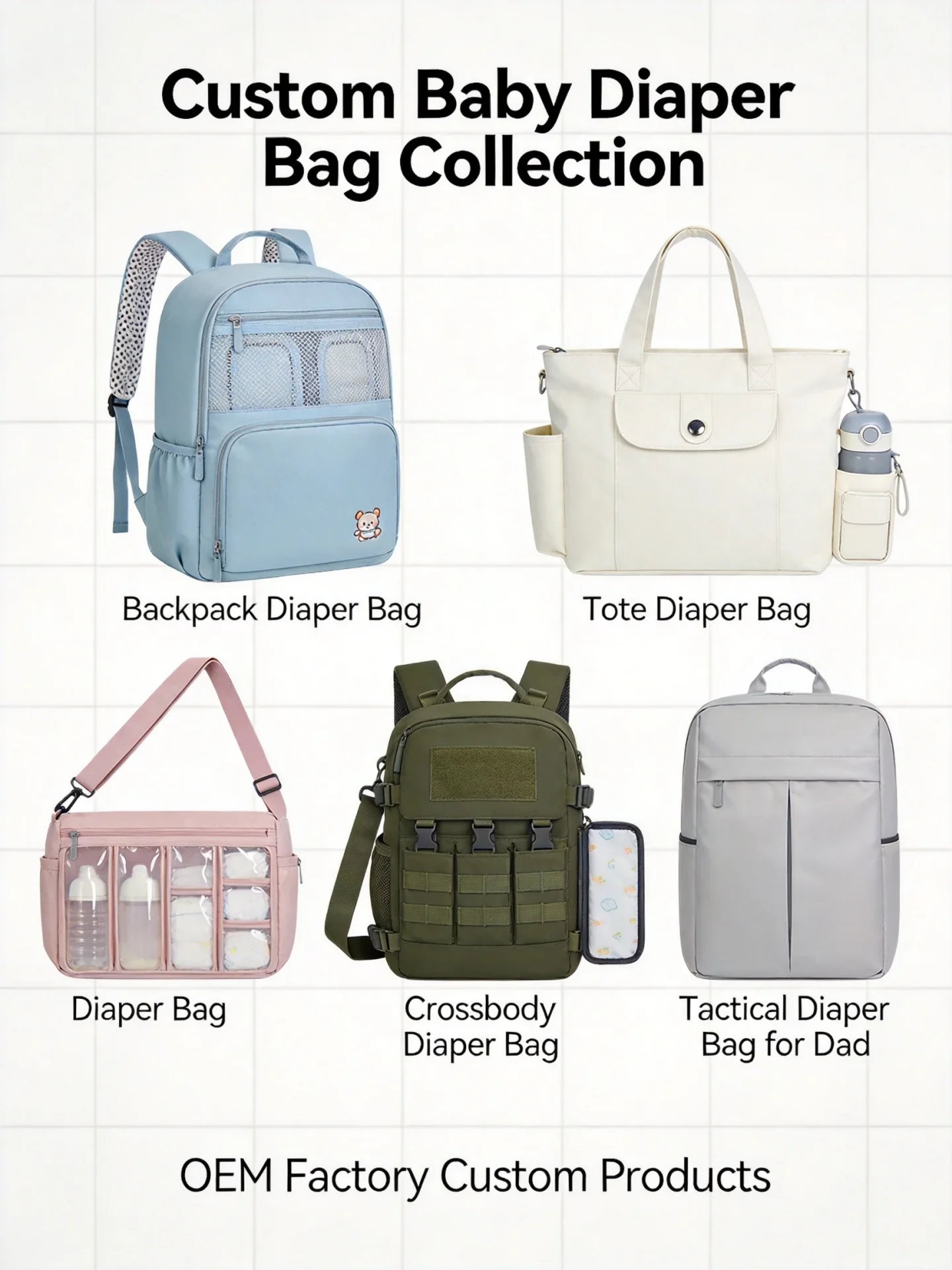
— A coordinated OEM collection: the same factory platform that builds custom baby carriers also builds the matching mom-and-baby bag line.
Coordinated Nursing Sets: Carriers and Mom & Baby Bags
Baby carriers and mom-and-baby bags sell best as a system. A nursing parent who buys a buckle carrier usually also needs a bag that carries bottles, a changing kit and pumped milk, so brands that develop both on one platform gain a natural bundle and a higher average order value. The two products share fabric, colour and hardware, so they can be cut and shipped on a single sampling and production plan.
For the bag side of the set, insulation and organisation are the features that sell. An insulated bottle pocket, a removable cooler pouch and an aluminium-lined compartment keep pumped milk at a safe temperature, while a wipe-clean lining and a structured base keep the bag upright and easy to clean. For brands that want to go deeper on the build, our guide to custom diaper bag OEM/ODM manufacturing covers insulation materials, waterproof fabrics and market trends in detail.
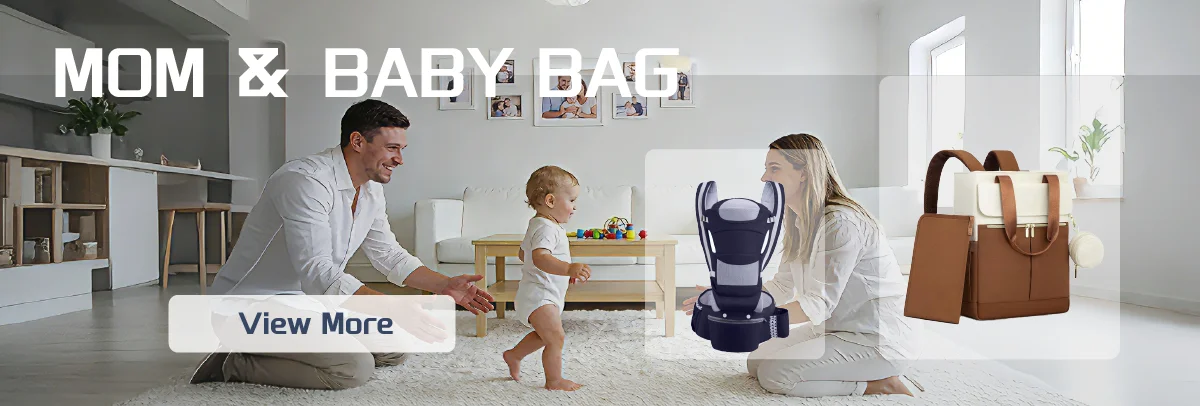
— A mom-and-baby bag range developed alongside a carrier line, so a nursing set ships as one coordinated system.
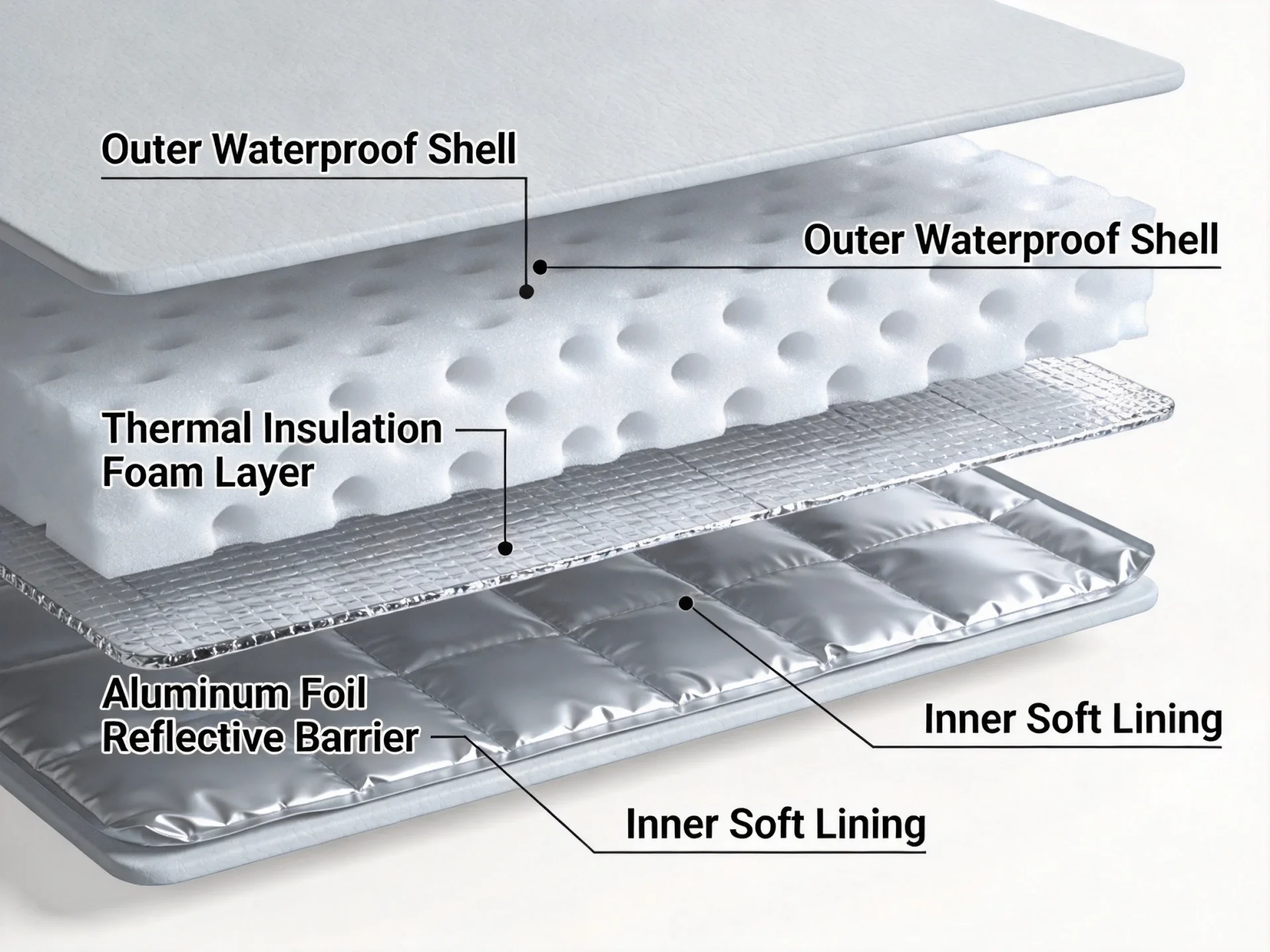
— The insulated build of a matching baby bag: waterproof shell, thermal foam layer and an aluminium reflective barrier that keeps pumped milk cold.
How to Customise a Baby Carrier for Your Brand
Baby carriers customise well because the build is structured: choose the format, seat width, strap system, fabric, colour and logo placement, and we handle pattern-making, sampling and QC. Custom options include buckle carriers, ring slings, stretchy wraps and meh dais; wide ergonomic seats with adjustable leg openings; padded waist belts and shoulder straps; breathable mesh or cotton panels; removable feeding covers and hoods; stroller straps; printed, embroidered or woven logos; and custom hang tags and polybag packaging.
As a professional bag and carrier OEM/ODM manufacturer for many years and working with long-time affiliated and partner factories, our team supports custom baby carrier lines with a 500-piece-per-style MOQ, 6–10 day sampling and 35–50 day bulk lead times under AQL 2.5 inspection. Every order is protected by a 12-month warranty. Looking for the right carrier, sling or wrap for your brand? Tell our team your user profile and target age range, and we will spec the pattern and cost it for you. Reach us at [email protected] or on WhatsApp at +86 177 5002 0688.

— A woven wrap in a custom fabric and colour — firm, supportive and adjustable for hands-free feeding.
Baby Carrier Materials and Construction: What Makes One Last
Fabric choice drives both how a carrier performs and how it is priced. Three material families dominate the category in 2026. Cotton and cotton-blend woven fabric is the workhorse for buckle carriers and wraps: breathable, printable and soft enough for a newborn. Bamboo and linen blends are the premium comfort option, ideal for warm climates and summer lines. For stretchy wraps, a cotton-and-elastane jersey gives the give-and-hold that makes slackening and re-tightening easy, while mesh panels add airflow across the back and shoulders.
Construction details separate a one-year carrier from a five-year carrier. Look for double-stitched and bar-tacked seams at every load-bearing point, reinforced shoulder and waist anchors, wide padded straps, a supportive waist belt and quality buckles tested to a known load. On safety, every carrier should let the parent follow the TICKS guidelines, and the seat should hold the baby in the ergonomic M-position with the knees above the hips. These are the exact specs our OEM team locks down at sampling, so a buyer knows what they are getting before a 500-piece run is committed.
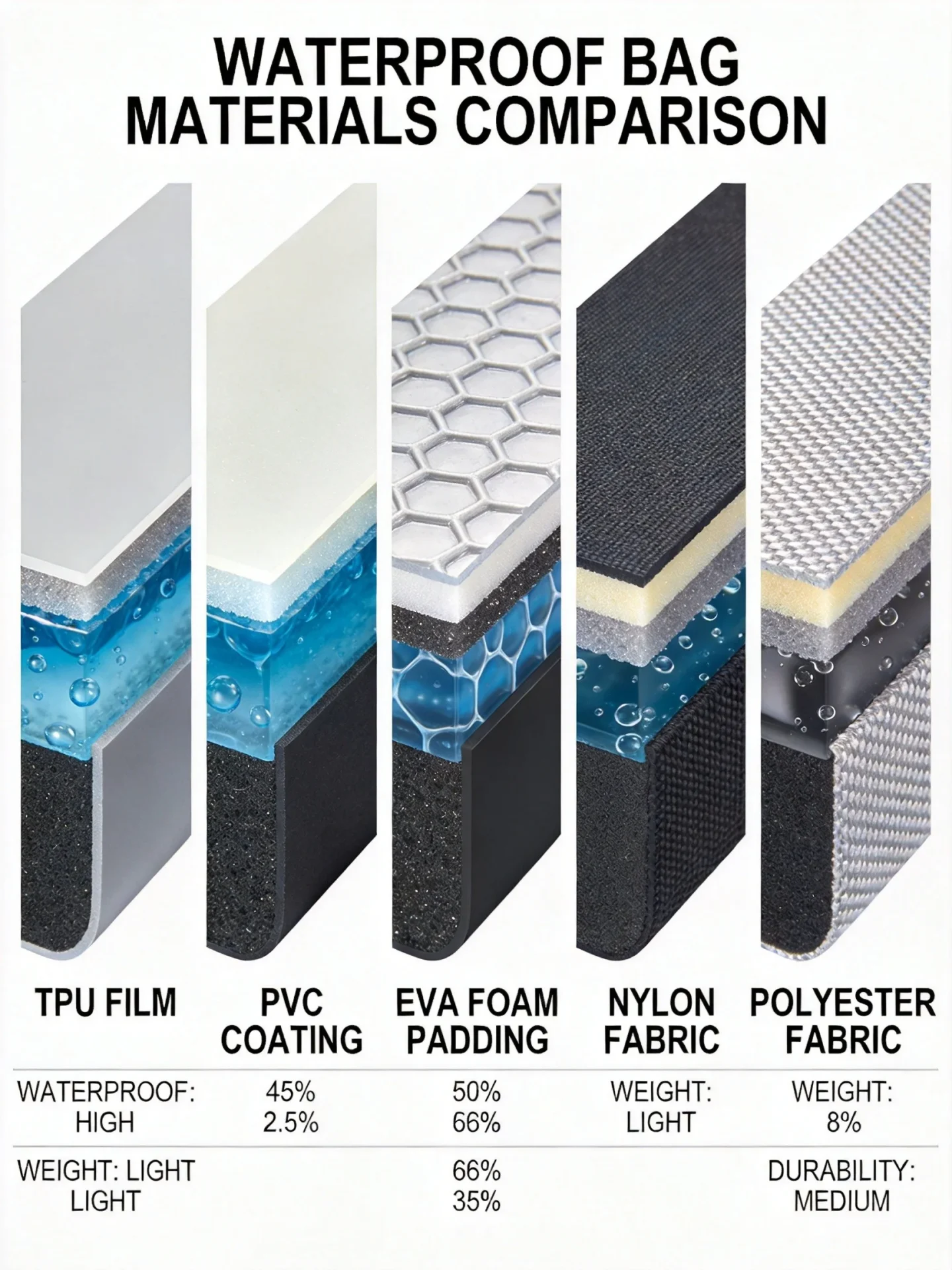
— Material comparison used at sampling: the same fabric and coating logic applies to carriers and the matching baby bag.
Breastfeeding on the Go: Buyer Trends and Selling Points for 2026
Three buyer signals are shaping the baby carrier category this year. First, the hands-free commute: nursing parents returning to work want one carrier they can feed in on a train, a bus or a plane, so adjustable straps and a discreet feeding drop-down are now the baseline rather than a bonus. Second, discretion and style: buyers increasingly want a carrier that looks like a fashion accessory, not a piece of baby equipment, so printed wraps, neutral colourways and clean buckle silhouettes outsell obvious nursing designs. Third, the coordinated set: parents want the carrier and the mom-and-baby bag to match, which turns a single sale into a system.
For brands, these signals translate into a clear retail story. A coordinated nursing set — a buckle carrier, a ring sling and a matching mom-and-baby bag in the same fabric and colour — lets a retailer upsell and lets the customer build a kit for the office, the car and the airport. Because all three share fabric and construction, they can be developed on a single sampling and shipping plan, which keeps the first order efficient and the reorder predictable. That is the practical reason a baby carrier line is one of the easiest categories to launch and repeat.

— Feeding on the go: an adjustable carrier lets a parent nurse a toddler hands-free, one of the fastest-growing retail stories of 2026.

— Colour and print are a selling point in 2026: a vivid custom wrap reads as fashion, not equipment.
FAQ: Custom Baby Carriers for Breastfeeding
What is the best baby carrier for breastfeeding in 2026?
The best baby carrier for breastfeeding is any well-fitted soft wrap or buckle carrier that you can loosen, bring the baby to the breast and re-tighten safely. Almost every baby wrap and most buckle carriers work once breastfeeding is established; only rigid internal-harness carriers are hard to feed in.
Can you breastfeed in any baby carrier?
You can breastfeed in any baby wrap and in almost all baby carriers. The exception is a carrier with a fixed internal harness, which holds the baby too high and tight to bring to the breast easily.
Which baby carrier type is easiest to breastfeed in?
A ring sling is often easiest for quick, discreet feeds because it adjusts on one shoulder, while a buckle carrier is easiest for everyday structured carrying. A stretchy wrap is the best choice for the newborn months.
How do you breastfeed in a buckle carrier?
Loosen the shoulder straps and waist belt, lower the baby to the breast in an upright position, support the head with one hand, and re-tighten once the feed is finished. A top that pulls down or unbuttons makes access easier.
How do you breastfeed in a ring sling?
Loosen the rings, lower the fabric and the baby to the breast, and tighten the rings again after the feed. Ring slings are popular for nursing because they adjust quickly with one hand.
What is the best baby carrier for breastfeeding a newborn?
A soft stretchy wrap is usually best for a newborn because the fabric loosens and re-tightens easily and keeps the baby close. As the baby grows, a buckle carrier or a woven wrap takes over.
How do you breastfeed in a carrier while walking?
Once breastfeeding is well established, loosen the carrier, bring the baby to the breast and continue walking with one hand free to support the head. Wait until you are confident with both the carrier and breastfeeding before combining them.
What safety guidelines should you follow when breastfeeding in a carrier?
Follow the TICKS guidelines at all times: Tight, In view at all times, Close enough to kiss, Keep chin off the chest, and Supported back. The baby should stay visible, upright and close, whether feeding or being carried.
What should a custom baby carrier brand look for in a manufacturer?
Look for a manufacturer that offers real sampling, a wide ergonomic seat, adjustable strap and buckle systems, breathable fabric options, TICKS-compliant construction and full QC inspection — and that can build a matching mom-and-baby bag on the same platform.
What is the MOQ for custom baby carriers?
Our standard MOQ is 500 pieces per style, with sampling in 6–10 days and bulk production in 35–50 days under AQL 2.5 inspection.
How long does sampling and bulk production take?
Sampling takes 6–10 days and bulk production takes 35–50 days after sample approval, under AQL 2.5 inspection.
Can I get custom baby carriers in my brand colours and fabrics?
Yes. As a custom OEM/ODM manufacturer we cut patterns to your format and seat width and match Pantone colours, fabrics, logos and hardware at sampling before bulk runs.
What is the warranty on custom baby carriers?
Our production partners cover manufacturing defects for 12 months from shipment, subject to the terms agreed on your OEM order.
Do you make matching mom and baby bags for a nursing set?
Yes — we build matching mom-and-baby bags with insulated bottle pockets, removable cooler pouches and wipe-clean linings in the same fabric and colour as the carrier, so a nursing set ships as one coordinated system.
Related guides: Why Using a Baby Carrier Makes Breastfeeding Easier · Trends and Design Inspirations of Custom Baby Carriers · Custom Diaper Bags · Baby Diaper Bag OEM/ODM Guide