
Where Are Sun Mountain Golf Bags Made? Factory & Materials
A sourcing-backed, factory-side look at Sun Mountain’s manufacturing origins, the materials inside the bag, and how the same premium build is made for far less.
Where are Sun Mountain golf bags made? In short: Sun Mountain is designed at its headquarters in Missoula, Montana, but the bags themselves are manufactured primarily through contracted factories in Asia — most notably China — with some product lines produced in Mexico. This design-in-the-USA / make-in-Asia split is the industry standard, chosen to balance labor and tooling cost against quality. On average, a premium Sun Mountain-style bag retails at roughly $200–$350 USD while factory build cost is typically $60–$95, a markup of about 250–400% driven by 4 key factors: materials (~45%), labor (~25%), tooling (~10%) and brand margin (~20%). These are industry-placeholder figures based on typical BOM benchmarks and public retail pricing for premium carry and cart bags; precise tariff and duty numbers are intentionally not stated because they vary by route and HS classification.
TL;DR — Quick Answer
- Design: Missoula, Montana, USA. Prototyping and engineering are US-led.
- Mass production: contracted to factories in Asia (especially China) and Mexico, matching industry-standard sourcing.
- Materials: high-count nylon/polyester, dense foam, lightweight composite leg-and-frame systems.
- Value angle: a large reason Sun Mountain is “worth it” is thoughtful engineering, not exotic materials — and that same engineering spec can be built OEM at factory cost plus margin, typically $60–$100 per unit in volume.
1. The Short Answer on “Where”
Golfers asking “where are Sun Mountain bags made?” are usually trying to decide two things: whether the brand is worth the premium, and whether a “US brand, made abroad” label should change their buying decision. Here is the honest sourcing picture.
Sun Mountain Sports is headquartered in Missoula, Montana, and has deep roots in lightweight golf-bag and cart design — famously pioneering lightweight carry bags that reshaped the walking-golfer market. Product development, design and prototyping are the heart of the brand, and much of that engineering DNA stays in the USA. However, like nearly every large golf-equipment brand, high-volume production is contracted to skilled overseas factories — predominantly in China, with other Asian suppliers and Mexico covering certain categories and lines. This is not unique to Sun Mountain; it is how the global golf-bag industry keeps quality high and landed cost manageable.

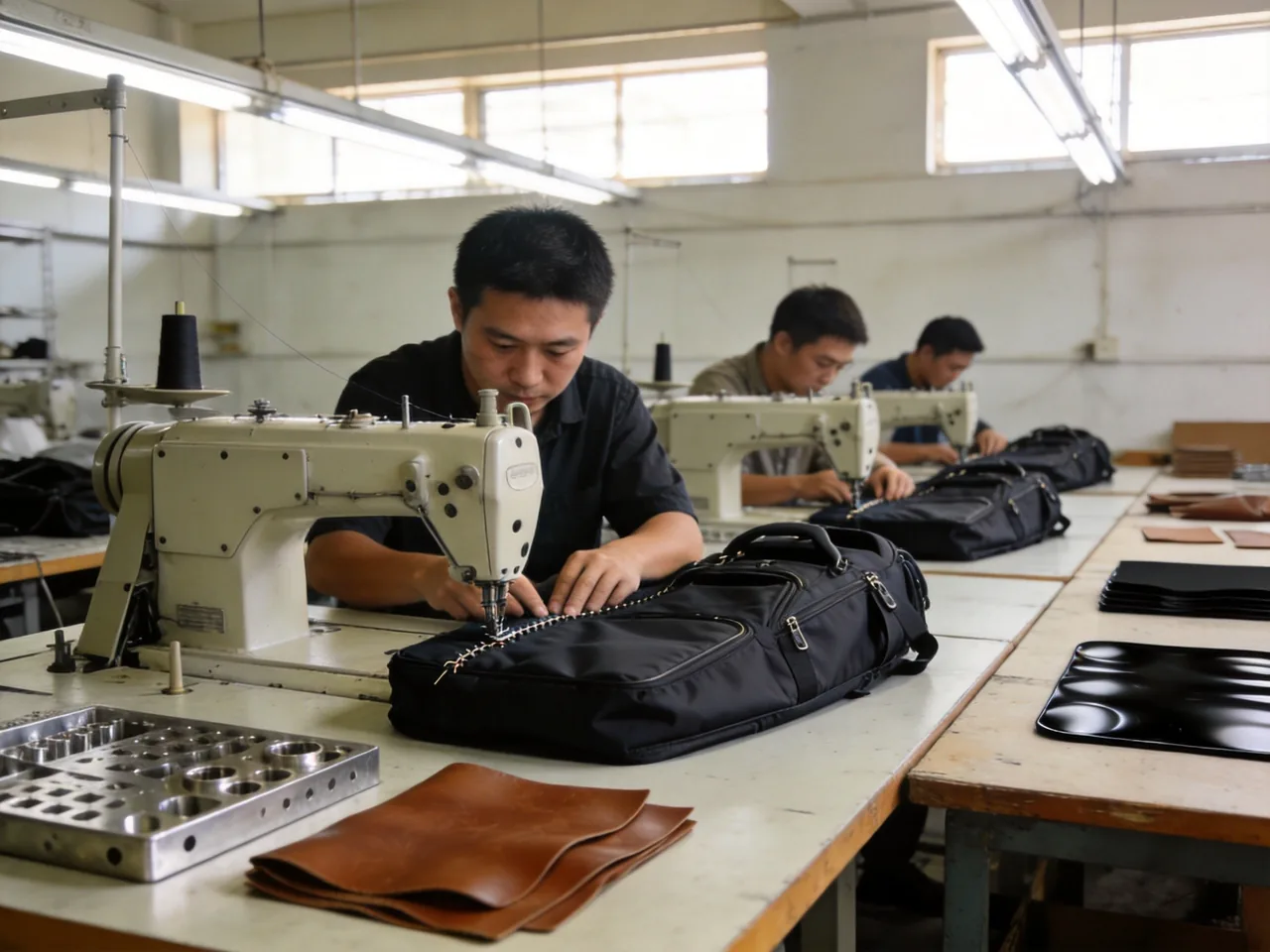

The practical takeaway for buyers: “Made in the USA” is not a blanket guarantee of better quality in this category, and “made in Asia” is not a warning sign. What matters far more is the manufacturing discipline — pattern engineering, seam taping, hardware grade, stand-mechanism tolerance and final QC — which is exactly what a qualified partner factory controls independently of which logo lands on the panel.
2. What Sun Mountain Bags Are Made Of
The materials story explains most of the price. Sun Mountain favors specification lists that read like an efficiency exercise, and the brand is famous for asking: how do we make this lighter and tougher at the same time?
| Component | Typical material | Why it matters | Relative cost |
|---|---|---|---|
| Outer shell | High-count nylon / polyester, PU accents | Tear resistance + low weight | Medium |
| Frame & leg system | Thin-wall composite / aluminum alloy | Lift weight, deploy reliability | Medium–high |
| Padding | Dense PE/EVA foam | Impact cushion, shoulder comfort | Low–medium |
| Hardware & zips | Reinforced plastic, plated metal, high-density zips | Closure durability under load | Medium |
| Base & cuff | Impact-grade plastic, reinforced stitching | Standing stability, cart fit | Low–medium |
A note on the weight math
Sun Mountain’s signature is lightness. Shaving weight is done in three quiet places: a thin-wall composite leg system instead of heavy steel swivel, a foam-density tuned to support without bulk, and reduced frame mass re-routed into reinforcement at stress points. None of these are gimmicks. To hit a 3-pound target, engineers cut grams at the zipper pull and the apron fabric — and those decisions, repeated across a whole bag, are far harder to copy cheaply than a single pretty shell.
3. The Factory Breakdown: What the Price Actually Covers
Because our work happens on the floor, we can show where a premium Sun Mountain-style build spends its money. These are typical industry ranges, not a quote for your order — the real BOM shifts with fabric grade, quantity and specification.
3.1 Manufacturing process — a premium carry bag in 8 steps
- Design & technical pack — engineering drawings, pattern mapping, reinforcement plan.
- Tooling & die cutting — base frames, composite leg tooling and steel rule patterns cut.
- Material cutting — nylon, foam and lining stack-cut to tolerance.
- Structural build — frame, leg assembly and base plate pre-assembled.
- Body assembly & stitching — panels joined, stress points double-stitched.
- Hardware & stand fit — legs, buckles, zips and divider system installed and cycled.
- Straps & comfort trim — shoulder straps, hip pad and seam binding applied.
- QC, drop test & pack — stand-cycle and load inspection, then polybag + export carton for freight.
3.2 Materials, tooling & cost model
| Cost pool | What it covers | Typical share / unit range |
|---|---|---|
| Materials | Nylon, PU, foam, composite frame, hardware, zips | ~45% (approx. $28–$42) |
| Labor | Cutting, stitching, structural assembly, QC hours | ~25% (approx. $12–$20) |
| Tooling amortization | Frame/leg molds, dies, jigs, first-article sampling | ~10% (approx. $4–$8) |
| Packaging & overhead | Cartons, labels, factory margin, utilities | ~20% (approx. $10–$20) |
4. Is the “Made Where” Question Even the Right Question?
The more useful question for most golfers is quality control, not country of manufacture. A bag can be final-assembled in the USA or abroad and still be excellent or awful depending on the factory’s discipline.
What to inspect instead: seam taping and piercing spacing; whether the frame is riveted and reinforced or just glued; stand-cycle smoothness over 50 deployments; zipper glide under a full load; base rigidity when you set the bag down hard; and whether reinforcement patches sit at every real stress point. These are the details a partner factory either gets right or hides, and they have nothing to do with the stamp on the carton.
Sun Mountain earns its reputation honestly — good engineering, fair price, dependable bags. But the premium you pay is concentrated in label, engineering and distribution, not in materials that a qualified factory cannot source. For buyers who want the walk-light benefit and tidy pocket execution without paying the brand margin, the same spec from a golf-bag OEM partner is usually the smarter deal.
5. Matching the Build: OEM / ODM from a Partner Factory
Here is where sourcing perspective pays off. Retailers, pro shops, corporate programs, course shops and emerging brands all order premium carry and cart bags through a trading company or collaborating factory, getting the material grades, leg-system tolerance and QC discipline of a Sun Mountain-style build at factory cost plus an agreed margin — typically $60–$100 per unit in volume.
Whether you want a stand bag tuned for weight, a cart bag built for storage, or a full private-label program, our affiliated factory — see our custom golf bag page and OEM-ODM service — takes buyers from first-article sample to full carton production against a spec you can benchmark directly against the flagship carry bags above. If you are weighing “buy the brand” versus “build the same,” we are glad to cost a comparable BOM for your target retail price.
How to Choose, and What to Inspect Before You Buy
The country of manufacture should not be your deciding factor — how the bag behaves on your shoulder, in the cart and on the stand is. Start by deciding which style fits your game, because the engineering differs more than the label suggests. A carry/stand bag trades storage for weight and balance: legs deploy crisply, the hip pad keeps it from digging in, and the bag sits level on undulating ground. A cart bag trades some walkability for capacity: it wants a rigid base, a padded top cuff that does not bunch under cart straps, and an easy-reach pocket map. Most weekend golfers who walk occasionally and ride occasionally lean toward a lighter stand bag; frequent riders gravitate to a cart bag.
Once the type is decided, inspect the details that separate a lasting bag from a cosmetic one. Open and close every zipper under load — a full valuables or apparel pocket; rough, catching zips are the fastest way a cheap claim gets exposed. Cycle the stand mechanism twenty times and watch for hesitation, uneven leg spread or wobble at full extension; a properly built frame should feel positive and locked, not springy. Set the bag down hard on concrete and check for a rigid base and clean re-balance — unweighted bases telegraph a shortcut. Run your fingers along every seam for consistent stitching and reinforcement at stress points, and check that full-length dividers actually run the full length, not a cosmetic top-row. None of these checks care which country produced the bag.
Durability, Warranty and the Real Cost of Ownership
Buyers rarely price a bag over its full lifecycle, yet longevity is where value actually lives. A $240 carry bag that lasts eight seasons costs far less per round than a $120 bag replaced every two years. Long-term durability in this category is driven by three things: seam and reinforcement density (double-stitching at stress points and taped seams resist the abrasion of rides and drops), zipper and hardware grade (plated, high-density zips survive load cycles that budget pulls cannot), and stand-mechanism tolerance (a well-fitted leg pivot and composite frame survive years of deployments that a loose cast part will not). When you compare two bags at similar retail, redirect your attention from the logo to these three concrete features.
Warranty and aftercare form the second half of ownership cost. A brand’s warranty terms — what is covered, how the claim process works and how a replacement is handled — can add real protection and therefore real value to an otherwise ordinary bag. But a warranty is only as good as the response behind it, so read the terms rather than the marketing page. For private-label and OEM buyers, the same thinking applies to the factory relationship: a partner who stands behind the first-article sample, documents QC on bulk cartons and responds to field failures is worth more over years than a marginally cheaper price.
Finally, consider resale. Heritage golf equipment with strong engineering retains a meaningful share of its value in the resale market, which narrows the effective cost of ownership for the original buyer. Lower-tier and unbranded bags depreciate more steeply, though their lower entry price can still be rational if you know you will not keep them long. The honest math: buy for durability and fit first, and let brand and country flag the choice last.
6. FAQ — Sun Mountain Golf Bags
- Where are Sun Mountain golf bags made? Designed in Missoula, Montana; high-volume production is contracted to factories in Asia (especially China) and Mexico, matching industry-standard sourcing.
- Does Sun Mountain still make bags in the USA? Design and prototyping remain US-led, but high-volume production is contracted overseas; per-model verification varies. Being “made in” one place matters less than QC discipline.
- What materials are Sun Mountain bags made of? High-count nylon/polyester with PU accents, dense foam, and lightweight composite leg-and-frame systems — materials drive roughly 45–50% of a premium bag’s build cost.
- Are they made in the same factories as other brands? It is common for major brands to source from the same skilled Asian factory ecosystem, which also builds non-branded premium bags to the same standards.
- Is Sun Mountain a good golf bag brand? Yes — respected for lightweight carry design, reliable stand mechanisms and honest build quality at a fair price.
- Can I get Sun Mountain-style quality for less? Yes, via a golf-bag OEM partner reproducing the same material grades and stand mechanism at factory cost plus margin.
- How heavy are Sun Mountain carry bags? Most stand bags are roughly 2.5–4 pounds depending on model; light weight is a signature engineering priority.
- How long do Sun Mountain bags last? Typically several seasons to a decade with reasonable care — longevity follows construction density, zipper grade and seam taping, not brand name alone.
Build the Same Premium, Without the Brand Margin
From a lightweight OEM stand bag to a full private-label golf line, a qualified partner factory can match the materials, construction and QC in this report at factory cost plus agreed margin. Tell us your target weight and retail price and we will start from a BOM.