
Shinki Hikaku Shell Cordovan Handmade Leather Goods – Custom-Made by JUNYUAN BAGS
Welcome to the JUNYUAN BAGS Shell Cordovan resource. This is the only page on our site dedicated to Shinki Hikaku shell cordovan — the legendary Japanese horsehide that is often called “the diamond of leathers”. Whether you are a brand planning a limited-edition cordovan wallet, a cordovan watch strap, or a complete handmade cordovan leather goods line, you will find everything here: what shell cordovan is, how Shinki Hikaku and Horween compare objectively, which cordovan colors are available, how to care for the leather, and how our custom shell cordovan goods OEM/ODM service works.
What Is Shell Cordovan?
Shell cordovan is a luxury leather made from a dense, fibrous membrane taken from the rump of a horse. It is not pavement-hard cowhide, and it is not a finish applied to other leather — it is a unique anatomical material. Beneath the skin and above the muscle of a horse’s hindquarters lies a tightly packed fiber layer called the shell (or cordovan membrane). Because these fibers run in a dense, uniform web, shell cordovan does not crease, crack, or fold the way cowhide does. Instead, it ripples and rolls, keeping a smooth, unbroken surface and a mirror-like glare that no other leather can easily match.
Three numbers anchor the definition, and they are worth memorizing for any shell cordovan education:
- 2 — only two oval-shaped shell pieces are obtained from each horse, which is why shell cordovan is so rare.
- 6–10 months — the slow, labor-intensive vegetable tanning, stuffing, shaving and polishing cycle that brings a shell to finished leather.
- 100% vegetable-tanned — shell cordovan is tanned in pits with natural tannin liquor (Shinki Hikaku famously uses mimosa / wattle tannin), not chrome.
Because of these qualities — scarcity, slow craftsmanship, density, and a luminous patina that deepens over a decade of use — shell cordovan is frequently described by tanners as “the diamond of leathers” and “the king of leathers.” Shinki Hikaku itself refers to cordovan in these exact terms on its official site.
The two tanneries that serious collectors and craftspeople think of first are Shinki Hikaku in Japan and Horween in Chicago. Below we cover both in depth — and we do so without declaring a winner, because there is no universal winner. There are only two different characters of shell, and the right choice depends on which leather suits your product.
Shinki Hikaku: Japan’s Master of Horsehide
Shinki Hikaku (新喜皮革) Co., Ltd. was founded in 1951 and is rooted in the Kobe / Himeji region of Japan. It is one of only a very small number of tanneries in the world that specializes almost exclusively in horse leather, producing both cordovan and horsehide through an integrated process that runs from imported European raw hides all the way to finished leather. The company’s English site describes itself as “one of the world’s leading tanners of cordovan and horse leather.”
What distinguishes Shinki Hikaku’s process:
- Slow pit tanning: raw hides are steeped for months in pits of natural tannin solution, with mimosa (wattle) extract as the principal tanning agent.
- ≈10-month cycle: from the start of tanning to the finished dyed-and-polished shell takes roughly ten months, followed by additional aging for the tannin to penetrate deep into the fibers.
- Two signature types: Original Cordovan (pigment-based, multi-layer surface color, excellent for light shades and uniform color) and Oiled Cordovan (glazed with oils, deeper transparency and luster, a softer pull-up character that “lights up” as it flexes).
- Through-dyed color: Shinki shells are dyed all the way through, so the edges and reverse carry the same rich color as the polished face.
The result is a clean, even, finely shined shell with a dense, firm hand — qualities that make Shinki Hikaku the preferred source for precise small goods such as wallets, card holders and watch straps. Over time it settles into a quieter, matte, finer finish rather than growing brighter.
External reference: Shinki Hikaku official English site and its dedicated Cordovan introduction page.
Shinki Hikaku vs. Horween: Two Characters of the Same Shell
Horween Leather Company, founded in Chicago in 1905, is the other great name in shell cordovan and is widely seen as the gold standard for footwear. Its Genuine Shell Cordovan® takes the irregular oval shells, tans them in vegetable liquors, hot-stuffs them with oils, hand-shaves them, and hand-glazes them — a process of at least six months. Horween is famous for classic colors such as Color 8 (burgundy), Whiskey, and Black, and is prized for superb resistance to water spotting.
Important note: neither tannery is “better” in absolute terms. Different applications call for different characters of shell — choose the leather source by intended use, not by brand loyalty. The table below is an objective, side-by-side comparison.
| Attribute | Shinki Hikaku (Japan) | Horween (USA) |
|---|---|---|
| Founded | 1951 — Kobe / Himeji region, Japan | 1905 — Chicago, USA |
| Specialty | Horse leather almost exclusively (cordovan + horsehide) | Broad range including the iconic Genuine Shell Cordovan® and Chromexcel |
| Tanning | Slow pit tanning, mimosa (wattle) vegetable tannage | Vegetable tanned, hot-stuffed with oils; Genuine Shell Cordovan® in vegetable liquors |
| Production cycle | ≈10 months to a finished shell | At least 6 months per shell |
| Surface & luster | Cleaner, very even, highly polished, less waxy; refined “sparkle” | Slightly waxy, warm, rich; deep gloss that can grow brighter with wear |
| Color | Dye penetrates through the shell; very wide range incl. light and unique shades (Natural, Emerald, Navy…) | Classic deep range — Color 8, Whiskey, Black, Burgundy; dye patterns on the backside used for “reverse” designs |
| Thickness / temper | ~1.5–1.8mm, firm and dense | ~4–5oz, firm with generous oil content |
| Water resistance | Good | Excellent — notably resistant to water spotting (footwear favorite) |
| Best suited for | Small precise goods — wallets, card holders, watch straps | Footwear, larger goods, rugged daily carry |
| Typical hide price | Premium — roughly from ~$79–$110+ per shell | Premium — roughly from ~$90–$130+ per shell |
In practice, many enthusiasts collect both. Horween “grows outward” — the longer you carry it the brighter and smoother it gets. Shinki “turns inward” — it lets go of its initial shine and settles into a matte, dense, even finish that feels finer in the hand every year. Neither is superior; they are simply two characters of the same rare shell. If you know the character you want your product to develop over a decade, the choice becomes easy.
External references: Horween Leather Co. official site (founded 1905; “at least six months” per shell), and independent comparison pieces at Leather Note — Shinki Hikaku vs Horween and Mildy Hands — Two Characters of Shell.
Shell Cordovan Color Guide: A Palette for Your Brand
One of the biggest creative advantages of shell cordovan is the range of cordovan colors available. Whether you prefer classic depth or a bold contemporary tone, the palette below gives your product (and your brand story) a distinct voice.
- Natural — the warm, un-dyed tone that showcases the shell’s pure vegetable tannage and takes the richest patina over time.
- Black — the timeless, formal favorite; dense and serious, with an unparalleled mirror shine.
- Color 8 / Burgundy — Horween’s legendary deep oxblood-burgundy, and a benchmark for classic cordovan elegance.
- Whiskey — a rich caramel-brown that glows and deepens handsomely.
- Olive — a muted, sophisticated green-brown popular in small leather goods.
- Emerald — a deep green for distinctive, collectors’ pieces.
- Navy — a deep blue considered one of the most beautiful shell cordovan colors.
- Cedar / Mahogany — warm reddish-brown woodsy tones with a soft, natural pull-up.
- Matte — a deliberately understated, low-gloss finish for minimalist, modern pieces.
Because Shinki Hikaku drones are dyed through the whole shell, edges and stitch seams stay clean and color-matched — ideal when your design relies on precise, unlined edges. Tell us your target finish (Original or Oiled) and your desired cordovan color, and we will build your product around it.
Handmade Cordovan Leather Goods We Can Make for You
Whatever finished product you have in mind, our in-house (affiliated) workshop is equipped to make it beautifully, in small-batch make-to-order runs, from client-specified premium hides. Popular finished goods in Shinki Hikaku and Horween shell cordovan include:
- Cordovan wallets — bifolds, cardholders, money clips and travel wallets where the shell’s clean, non-creasing face shines.
- Cordovan watch straps — the classic premium strap; Shinki’s firm, even shell is a favorite here.
- Leather card cases & money clips — small, precise pieces that reward the refined finish.
- Handbags & leather bags — structured cordovan leather bags for brands that want a true luxury statement.
- Boots & shoes — where Horween’s water resistance is prized; we work with cordovan footwear builds.
- Belts & straps — durable, elegant daily-carry pieces.
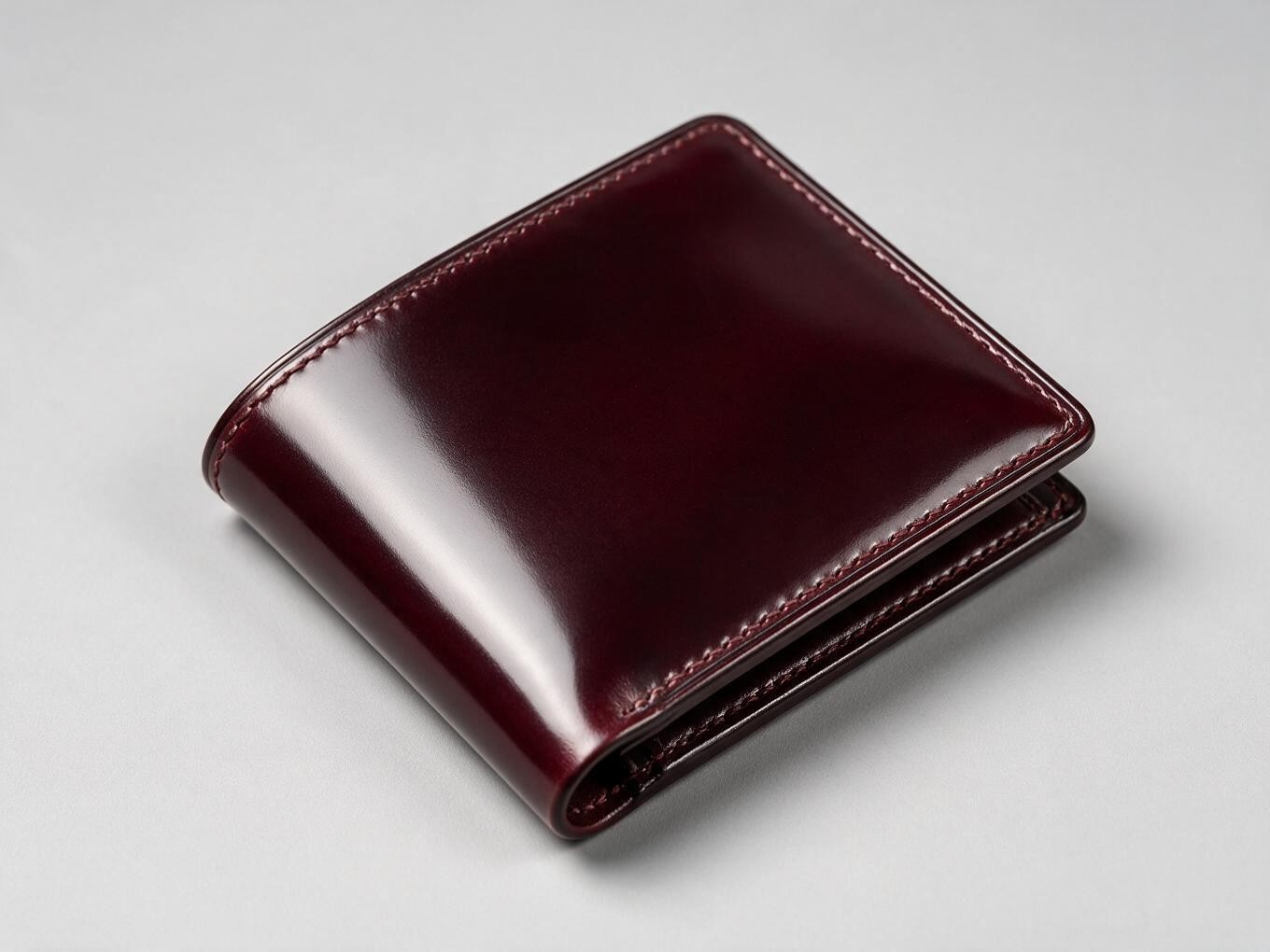
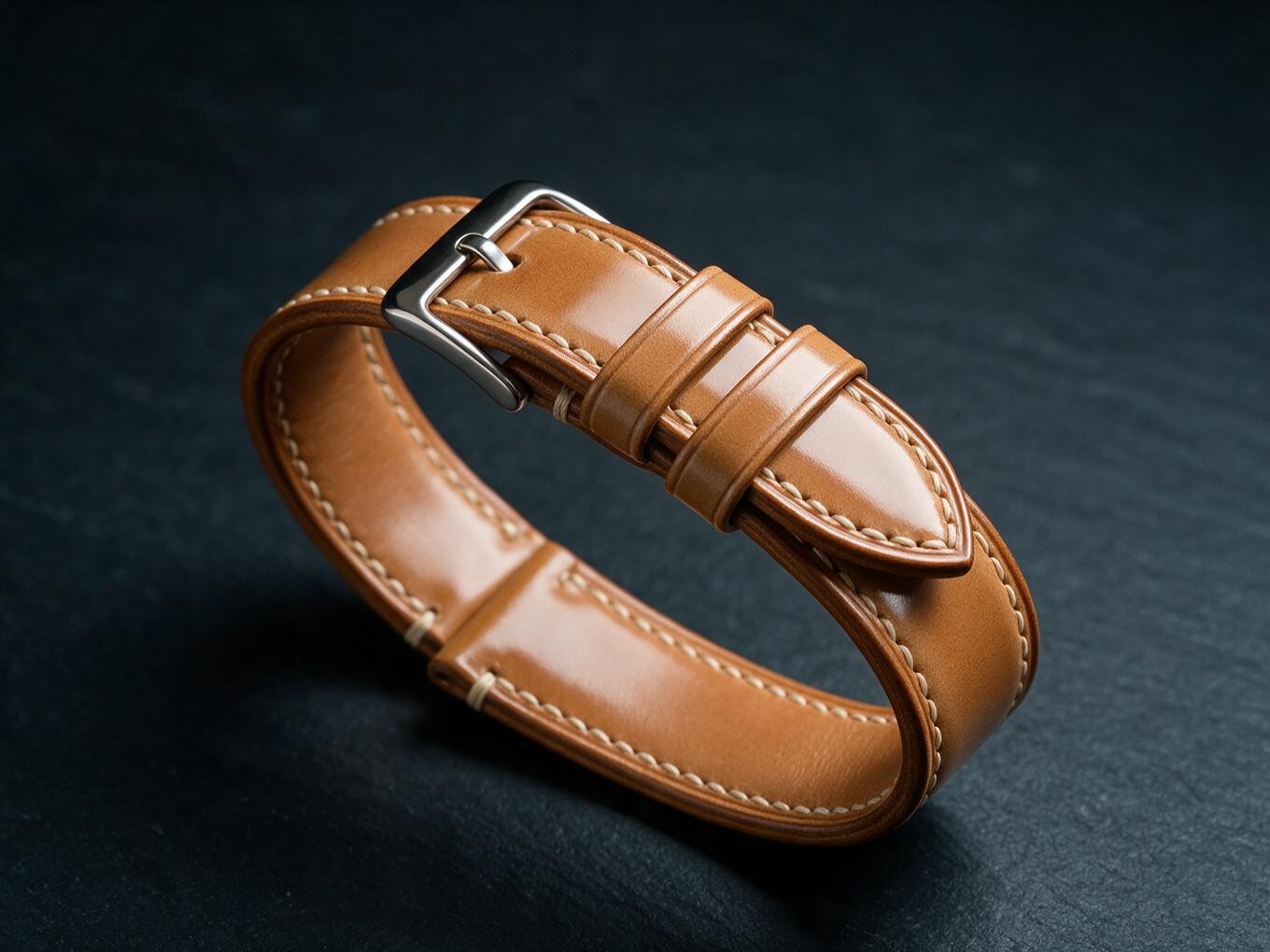
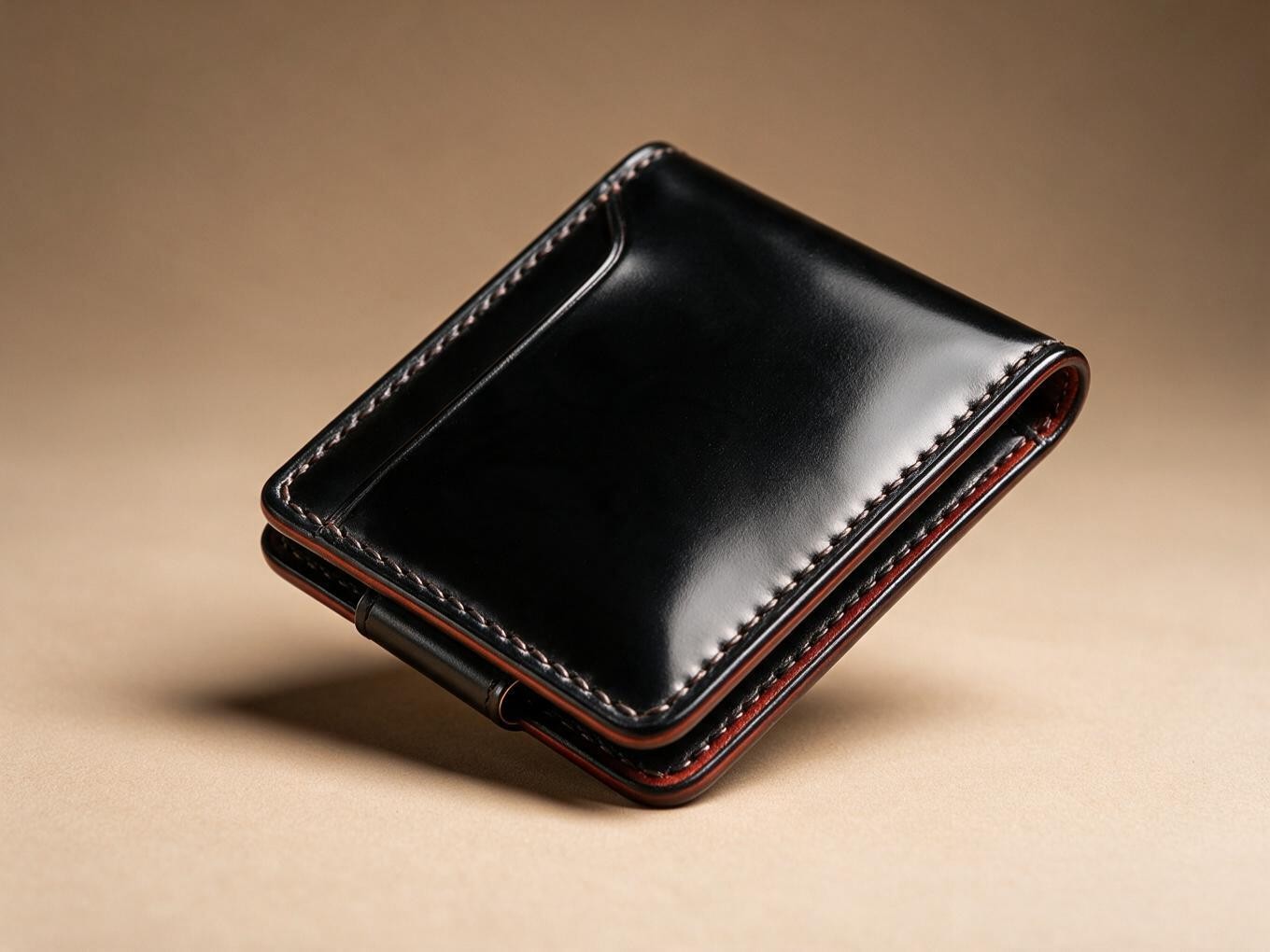
Because shell cordovan shells are small, complex products benefit from experienced pattern-making and hand-finishing. Our team has over a decade of precision bag and leather manufacturing, so we are able to translate a luxury shell into a clean, sellable finished good that meets AQL 2.5 quality standards at scale.
How to Care for Shell Cordovan (& the Patina Question)
Shell cordovan is remarkably durable and famously does not need frequent conditioning — in fact, over-conditioning is one of the few ways to harm it. The leather has very tight, dense pores, so it does not respond well to heavy solvents or conventional calfskin creams. Follow these steps to protect the patina and keep the mirror shine.
- Brush, don’t wash. Remove dust with a quality horsehair brush before anything touches the leather. Avoid washing with water unless truly necessary; if you must, use a lukewarm, damp cotton cloth.
- Use a dedicated cordovan cream. Products such as Saphir Cordovan Cream are specially formulated to clean, nourish, and protect shell cordovan without over-softening it or opening the pores. Massage a light layer in with a soft cloth using small circular motions.
- Let it dry to a matte state, then brush out gently until a light shine returns — this is the sign the cordovan cream has done its job.
- No heavy conditioners. Avoid calfskin Renovateur-type solvent-based products except occasionally and in small amounts; shell cordovan simply does not need them.
- Store properly. Keep pieces in a breathable dust bag (ideally for 24–48 hours after polishing), away from direct sunlight and heat.
The result of light but regular care is a patina that deepens naturally over years — the surface grows smoother, more even, and more characterful, which is exactly why collectors call shell cordovan “the diamond of leathers.”
External reference: Saphir — Cordovan leather care guide.
Original vs. Oiled Cordovan: Choosing Your Finish
Shinki Hikaku produces two distinct types of shell cordovan, and choosing between them is an important design decision for your handmade cordovan leather goods.
- Original Cordovan — finished with layered pigments for a beautiful, clear surface. It expresses delicate tones well and suits lighter cordovan colors, has a protective finish that resists superficial scratches, and ages beautifully while keeping a transparent, glossy look.
- Oiled Cordovan — dyed and then glazed with special oils, producing deeper transparency, richer luster, and softer depth of color. It has a natural pull-up that “lights up” as the leather flexes, with a slightly matte, supple texture that is delightful in the hand and ages into a profound, quiet finish.
Both are vegetable-tanned from the same rare equine shell; the difference is surface treatment and character. If your design calls for precise, uniform light colors and edge-clean details, Original is an excellent choice. If you want depth, pull-up, and a tactile, matte-rich character that rewards daily handling, Oiled is worth exploring.
Why Brands Build on Premium, Client-Specified Hides
For a growing number of fashion and lifestyle brands, “everyday luxury” is no longer about the logo — it is about the material story. Shell cordovan gives a brand a genuine, verifiable differentiator: a rare, vegetable-tanned equine leather with a fluorescent mirror shine, a non-creasing surface, and a patina that grows more valuable with time. That story, told honestly, earns premium retail prices and devoted repeat customers.
But there is a practical problem: very few workshops know how to handle a small, expensive, through-dyed shell without wasting it. That is where JUNYUAN BAGS adds value. As a finished-goods OEM/ODM manufacturer working under AQL 2.5 pre-shipment inspection with a 12-month warranty, we pattern, cut, stitch and finish client-specified hides with the care a luxury shell demands. Whether you bring your own Shinki Hikaku or Horween shells or ask us to source them on request, your client-specified leather source is honored end to end.
For production planning, our numbers are transparent and fixed. Bulk runs begin at a 500 pcs MOQ, sampling takes 6–10 days, and bulk production takes 35–50 days. The affiliated factory that makes your goods is SGS-verified (March 2026) at 4,950 ㎡ with 137 workers, 149 machines across 7 production lines, and a monthly capacity around 200,000 pcs. That same factory handles everything from a small luxury wallet run to larger leather goods and bag programs — always to AQL 2.5 and always backed by a 12-month warranty.
External reference: Left/Foot Leather — Our Leathers offers an independent view of Shinki Hikaku, Horween and Shell Toscana sourcing for finished goods.
Frequently Asked Questions
What is shell cordovan leather?
Shell cordovan is a luxury leather made from the dense fibrous membrane (the “shell”) in a horse’s rump. It is dense, fibrous, does not crease like cowhide, and is vegetable-tanned slowly over 6–10 months, earning the name “diamond of leathers.”
Why is shell cordovan so expensive?
Scarcity is the main driver: each horse yields only two small oval shell pieces. That, plus 6–10 months of labor-intensive vegetable tanning, a low yield of hides that pass inspection, imported raw material, and global demand outpacing supply, pushes a single shell to roughly $79–$130+ — and finished goods far higher.
How can you tell real shell cordovan from fake?
Look for a dense, non-creasing shell that ripples rather than folds; a tight, uniform surface with very small pores; edges that stay clean and color-matched (through-dyed shells); and a mirror-like, even luster. Real shell cordovan does not flake or crack and resists water spotting. Buy from a tanner or verified source.
What is the difference between shell cordovan and cowhide?
Cowhide is a fibrous surface leather that creases, stretches, and becomes porous with wear. Shell cordovan is a dense equine membrane that rolls and ripples instead of folding, holds a mirror shine, resists water spotting, and nearly never develops cracks. It is rarer and considerably more expensive.
What is the difference between shell cordovan and calfskin?
Calfskin is sleek and supple but creases and needs regular conditioning. Shell cordovan is denser, firmer, and dramatically more resistant to creasing, which is why it holds its untouched surface for years. Saphir’s care line exists precisely because cordovan’s very tight pores need a different, gentler product than calfskin.
How does Shinki Hikaku compare to Horween shell cordovan?
They are two characters of the same shell. Shinki (Japan, since 1951) is cleaner, more even and highly polished, dyed through, ideal for precise small goods like wallets and watch straps. Horween (Chicago, since 1905) is waxy, warm, and superb in footwear with excellent water-spot resistance. Neither is better — choose by intended use.
Is Japanese shell cordovan better than American shell cordovan?
“Better” depends on your product. Japanese Shinki Hikaku shell is preferred for refined small goods; American Horween shell is celebrated in footwear. The honest answer is that both are outstanding, and many collectors buy both. We can source either, per your spec.
How should I care for a shell cordovan wallet?
Brush with a horsehair brush to remove dust, apply a light layer of dedicated cordovan cream (e.g. Saphir Cordovan Cream), let it dry matte, then buff to a shine. Avoid heavy solvents and over-conditioning — shell cordovan needs little, so care should be light and regular.
Does shell cordovan develop a patina?
Yes. Horween shell tends to grow brighter and smoother with handling; Shinki shell settles into a matte, even, fine finish. Either way the surface becomes richer, denser and more characterful over years of use — which is deeply prized by collectors.
Is shell cordovan waterproof?
No leather is truly waterproof, but shell cordovan’s very tight pores make it remarkably resistant to water spotting, and Horween shell is especially noted for this. For protection, dry it gently and use a dedicated cordovan cream rather than silicone.
How long does shell cordovan last?
Properly cared for, shell cordovan is one of the longest-lasting leathers on earth — decades of daily use are realistic. Goods like wallets, belts and watch straps routinely outlive cowhide and calfskin equivalents and then develop a prized patina.
What makes Shinki Hikaku shell cordovan unique?
Founded in 1951 and one of very few tanneries specializing almost entirely in horsehide, Shinki uses slow mimosa pit tanning over roughly 10 months, dyes the shell all the way through, and offers both Original and Oiled finishes. The result is an extremely clean, even, refined surface ideal for small goods.
What is the best shell cordovan for a watch strap?
If you want a firm, clean, fluting strap with a refined luster, Japanese Shinki Hikaku shell is a favorite. If you prefer a warmer, waxy, water-resistant shell, Horween is excellent. Both make exceptional, long-lived watch straps.
Can you make custom shell cordovan goods for my brand?
Yes. JUNYUAN BAGS is a finished-goods OEM/ODM manufacturer. We craft made-to-order leather goods from client-specified premium hides — including Horween shell cordovan (Chicago) and Shinki Hikaku shell cordovan (Japan), which we can source on request. We do not tan leather ourselves; we build the finished goods to your spec.
What is the MOQ and lead time for custom cordovan goods?
Our bulk MOQ is 500 pcs per style/color. Sampling runs 6–10 days and bulk production 35–50 days. Quality is controlled to AQL 2.5 with pre-shipment inspection, and every order carries a 12-month warranty against manufacturing defects.
Do you make cordovan leather wallets, watch straps, boots, belts and bags?
Yes. We make made-to-order finished goods in all of these categories. Our affiliated factory (4,950 ㎡, 137 workers, 149 machines) is equipped for wallets, watch straps, card cases, handbags, belts and more, from your client-specified premium hides.
What is the difference between full-grain and shell cordovan leather?
Full-grain is the intact top layer of a hide (usually cowhide), prized for natural markings. Shell cordovan is a different, denser equine membrane that does not crease, holds a mirror shine, and resists water spotting. Shell cordovan is rarer, firmer and typically far more expensive — it is not just a “higher grade” of the same leather.
How long does it take to receive a sample of a custom cordovan product?
A pre-production sample typically takes 6–10 days and is made for logo, leather, color and construction approval before you commit to the bulk order. Bulk production then runs 35–50 days under AQL 2.5, covered by our 12-month warranty.
Custom Shell Cordovan Goods: OEM/ODM with JUNYUAN BAGS
JUNYUAN BAGS (trade body Quanzhou JunYuan Commercial and Trading Co., Ltd., established 2014) is a finished-goods OEM/ODM manufacturer in China. We are not a tannery — and we say so plainly. Our strength is taking premium, client-specified hides — including Japanese Shinki Hikaku shell cordovan and Chicago Horween shell cordovan, which we can source on request — and turning them into beautiful, sellable finished leather goods. We do not tan leather ourselves; we are a finished-goods OEM/ODM manufacturer.
Our SGS-verified (2026/03) affiliated factory gives you a reliable partner for both small-batch luxury and larger projects:
- Production area: 4,950 ㎡
- Team: 137 skilled workers
- Capacity: 7 production lines / 149 machines / ~200,000 pcs monthly output
| MOQ (bulk) | 500 pcs per style/color |
| Sampling time | 6–10 days |
| Bulk production | 35–50 days |
| Quality | AQL 2.5 pre-shipment inspection |
| Warranty | 12-month warranty |
| Sample fee | Refundable on first bulk order |
How to start: send us your design (drawing, tech pack, or even a reference product) with your preferred leather source and cordovan color. Our SGS-verified affiliated factory — 4,950 ㎡, 137 workers, 149 machines across 7 lines, ~200,000 pcs monthly — will quote at the 500-pc MOQ, produce a 6–10 day sample for approval, and run 35–50 day bulk production under AQL 2.5, backed by a 12-month warranty. For custom cordovan goods and custom leather goods, we keep the whole pipeline transparent from hide to finished product.
Since we do not tan leather, your client-specified leather source is fully honored — we build around the hide you choose (Shinki Hikaku, Horween, Shell Toscana, or another premium source), so your product keeps its intended character and your brand story stays authentic.
Email [email protected] or WhatsApp +86 17750020688, or start with a free quote on our quote request page.
Related pages: