
Table of Contents
1. The Global Tote Bag Market: Trends & B2B Opportunities
The tote bag industry has evolved far beyond its humble origins as a simple carrying accessory. Today, tote bags represent one of the fastest-growing segments in the global reusable bag market, driven by an unprecedented convergence of environmental legislation, brand sustainability commitments, and shifting consumer preferences. For B2B buyers—whether they are retail brands, promotional product distributors, or corporate procurement managers—understanding the tote bag manufacturing landscape is no longer optional; it is a strategic imperative.
Market Size and Growth Trajectory
The global reusable bag market, which is dominated by tote-style bags across cotton, canvas, and non-woven materials, was valued at approximately USD 4.2 billion in 2024 and is projected to grow at a CAGR of 5.8% through 2030. Several macro-level forces are fueling this growth:
- Single-use plastic bans: Over 60 countries and 200+ regional jurisdictions have enacted legislation restricting or banning single-use plastic bags. The European Union’s Single-Use Plastics Directive, which took full effect in 2021, has been particularly influential in accelerating the shift toward reusable cotton and canvas totes across member states.
- Corporate sustainability targets: Fortune 500 companies have set ambitious ESG goals, many of which include reducing virgin plastic use in packaging and promotional materials. Tote bags, especially those made from organic cotton, recycled PET (RPET), or other certified sustainable materials, have become the default replacement for plastic bags in corporate gift programs.
- E-commerce packaging evolution: Direct-to-consumer brands are increasingly using branded tote bags as part of their shipping packaging strategy—turning the unboxing experience into a brand touchpoint while eliminating disposable packaging waste.
- Retail and lifestyle positioning: Tote bags have become fashion statements and lifestyle accessories. The “I’m Not a Plastic Bag” phenomenon demonstrated that a well-designed canvas tote can carry both groceries and cultural cachet. Brands across luxury, streetwear, and mass-market segments now treat tote bags as core product categories rather than afterthoughts.
Key B2B Procurement Scenarios
Understanding why businesses order custom tote bags helps manufacturers tailor their offerings and helps buyers articulate their specifications more clearly. The primary B2B use cases fall into four categories:
- Brand retail products: Fashion labels, museum gift shops, bookstore chains, and lifestyle brands that sell branded tote bags as standalone SKUs. These buyers prioritize material quality, print fidelity, and design uniqueness. Typical order quantities range from 500 to 5,000 pieces per design.
- Promotional and corporate gifting: Companies that distribute branded tote bags at trade shows, conferences, employee onboarding, and client appreciation events. The emphasis here is on cost-efficiency at scale, with typical orders of 1,000 to 10,000+ pieces. Working with a dedicated tote bag manufacturer ensures consistent branding across large production runs.
- Retail carry bags (shopping bags): Grocery chains, apparel retailers, and specialty stores that need branded reusable bags to replace single-use plastic shopping bags. These tend to be the highest-volume orders, often exceeding 50,000 pieces annually, with emphasis on durability and repeat usability.
- Subscription boxes and e-commerce packaging: Brands operating subscription services or premium e-commerce experiences that use custom tote bags as part of the delivery experience. These orders prioritize custom sizing, branded interior prints, and eco-friendly material certifications.
Across all these scenarios, the shift is unmistakable: tote bags are no longer a “nice-to-have” accessory—they are an essential component of modern brand strategy. This is why partnering with an experienced OEM/ODM bag manufacturer that understands both production capabilities and brand requirements has become a critical sourcing decision.
Why China Remains the Manufacturing Hub
China continues to dominate global tote bag manufacturing, accounting for an estimated 60-70% of worldwide production. The concentration of textile supply chains in provinces like Fujian, Guangdong, and Zhejiang creates an ecosystem where raw materials, component suppliers, printing facilities, and finished-goods logistics are all within a tight geographic radius. For international buyers, this means shorter lead times, more competitive pricing, and access to a manufacturing base that has decades of experience serving global brands.
JUNYUAN, based in Quanzhou City, Fujian Province, exemplifies this advantage. With 22 years of industry experience, a 30,000 sqm factory, and an annual production capacity exceeding 1,500,000 pieces, JUNYUAN serves over 200 brands across 100+ countries—making it one of China’s most established tote bag manufacturing partners for B2B clients.
2. Types of Tote Bags: A Complete Category Guide
Not all tote bags are created equal. The material, construction method, and intended use case determine everything from the bag’s price point to its environmental impact. Below is a comprehensive breakdown of the major tote bag categories that B2B buyers should understand when specifying their orders.

Canvas & Natural Cotton Tote Bags
Canvas tote bags are the gold standard of the tote bag world. Made from plain-weave cotton fabric, canvas totes are prized for their durability, natural appearance, and exceptional printability. They come in various weights—typically measured in ounces per square yard (oz/yd²)—with 6oz canvas being lightweight and economical, 8oz offering a mid-range balance, and 10-12oz providing a premium, heavy-duty feel.
Best for: Retail brands, museum shops, bookstores, premium promotional gifts, and fashion-forward merchandise lines.
Key advantages: Excellent surface for screen printing and heat transfer; naturally biodegradable; strong fabric that can carry heavy items without tearing; available in organic and conventionally grown cotton.
Recycled Cotton Tote Bags
Recycled cotton totes are manufactured from post-industrial or post-consumer cotton waste that has been mechanically or chemically recycled into new yarn. These bags appeal to brands with strong sustainability messaging, as they divert textile waste from landfills while reducing the water and pesticide footprint associated with virgin cotton cultivation.
Best for: Eco-conscious brands, government and NGO sustainability programs, green certification-focused retailers.
Key advantages: Lower water usage than virgin cotton (up to 80% reduction); supports circular economy initiatives; can carry GRS (Global Recycled Standard) certification. The trade-off is that recycled cotton fibers are shorter, which can result in slightly lower tensile strength compared to virgin cotton of the same weight.
Non-Woven PP (Polypropylene) Tote Bags
Non-woven polypropylene tote bags are the workhorse of the promotional bag industry. Produced by bonding polypropylene fibers through heat and pressure rather than weaving, these bags are extremely cost-effective, lightweight, and available in virtually any color. They are sometimes called “reusable shopping bags” and are the most common giveaway at trade shows and political campaigns.
Best for: High-volume promotional giveaways, trade show swag, grocery bag replacements, political campaigns, event organizers.
Key advantages: Lowest cost per unit among all tote bag types (often $0.20-$0.80 per piece at volume); excellent for simple logo printing; can be produced in very large quantities with short lead times. Limitation: they are not as durable as woven fabrics and have a shorter usable lifespan, making them less suitable as premium brand products.

RPET (Recycled PET) Tote Bags
RPET tote bags are made from polyester fabric woven using yarn derived from recycled plastic bottles. The RPET manufacturing process diverts PET waste from oceans and landfills while producing a fabric that is virtually indistinguishable from virgin polyester in terms of durability and print quality. For brands seeking a compelling sustainability story backed by measurable impact, RPET totes are an outstanding choice.
Best for: Outdoor brands, athletic wear companies, eco-tech brands, sustainability-focused corporate programs. For a deeper dive into RPET manufacturing processes, see our comprehensive guide to RPET recycled material manufacturing.
Key advantages: Each RPET tote can divert approximately 5-8 plastic bottles from waste streams; fabric is water-resistant and tear-resistant; supports GRS certification; excellent for sublimation printing due to polyester’s dye affinity.
Leather & Faux Leather Tote Bags
Leather tote bags occupy the premium tier of the market. Genuine leather totes—crafted from full-grain, top-grain, or split leather—command higher price points but deliver exceptional brand perception and product longevity. Faux leather (PU leather) totes offer a similar aesthetic at a fraction of the cost, making them popular for mid-range fashion brands and vegan product lines.

Best for: Luxury fashion brands, executive corporate gifts, high-end retail, professional women’s accessories lines.
Key advantages: Superior brand perception and tactile experience; extremely durable with proper care; branding options include embossing, debossing, foil stamping, and metal hardware accents. For brands exploring the handbag category more broadly, our handbag manufacturing guide covers adjacent categories.
Jute & Burlap Tote Bags
Jute and burlap totes have a distinctive rustic, natural aesthetic that appeals to brands in the organic food, artisan craft, and earth-friendly lifestyle sectors. Jute is one of the most affordable natural fibers, and its cultivation requires minimal pesticides and fertilizers. However, jute fabric is coarser than cotton, which limits the detail achievable in printed designs.
Best for: Organic food brands, farmer’s market bags, rustic-themed events, earth-friendly product lines.
Key advantages: One of the most eco-friendly natural fibers; very low cost; biodegradable and compostable; unique visual texture that communicates “natural” and “authentic.” Limitations: limited print resolution, less structural flexibility than cotton, and can be rough on delicate items.
Nylon & Polyester Tote Bags
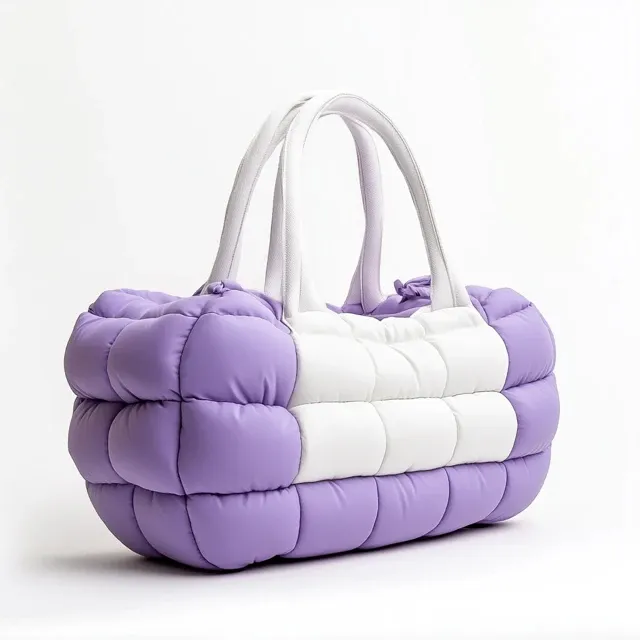
Nylon and polyester tote bags are engineered for performance. These synthetic fabrics offer superior water resistance, lightweight construction, and excellent color retention. They are commonly used for athletic bags, travel totes, and everyday carry bags where weather resistance matters. Quilted nylon totes, in particular, have become a popular fashion-forward option.
Best for: Athletic brands, travel accessories, commuter bags, rainy-climate markets.
Key advantages: Water-resistant to waterproof; lightweight and packable; excellent durability-to-weight ratio; supports sublimation printing for full-color designs. For readers interested in other performance bag categories, our duffel bag manufacturing guide covers similar performance-oriented construction.
Organic Cotton Tote Bags
Organic cotton totes are grown without synthetic pesticides, herbicides, or genetically modified seeds, and are certified under standards like GOTS (Global Organic Textile Standard). They command a price premium over conventional cotton but deliver powerful sustainability credentials that resonate with environmentally conscious consumers and B2B buyers alike.
Best for: Premium eco-brands, certified organic product lines, sustainability-driven corporate programs, fair-trade retailers.
Key advantages: GOTS certification available; 91% less water usage than conventional cotton (per Textile Exchange data); no toxic chemical runoff; softer hand feel over time. These are the bags of choice when the brand story demands unimpeachable environmental credentials.
3. Material Deep Dive: Choosing the Right Fabric
Material selection is the single most consequential decision in tote bag manufacturing. It determines cost, printability, durability, environmental impact, and ultimately, the brand experience your product delivers. This section provides a systematic comparison framework to help B2B buyers make informed fabric choices.

Comparative Material Analysis
| Material | Cost Range ($/unit) | Durability | Print Quality | Eco Score | Best For |
|---|---|---|---|---|---|
| Canvas (Conventional Cotton) | $1.50 – $4.00 | ★★★★☆ | ★★★★★ | ★★★☆☆ | Retail merchandise |
| Organic Cotton | $2.50 – $6.00 | ★★★★☆ | ★★★★★ | ★★★★★ | Premium eco brands |
| RPET Polyester | $1.80 – $3.50 | ★★★★★ | ★★★★★ | ★★★★☆ | Outdoor & athletic |
| Non-Woven PP | $0.20 – $0.80 | ★★☆☆☆ | ★★★☆☆ | ★★☆☆☆ | Promotional giveaways |
| Jute/Burlap | $0.80 – $2.00 | ★★★☆☆ | ★★☆☆☆ | ★★★★☆ | Organic & rustic brands |
| Recycled Cotton | $2.00 – $4.50 | ★★★☆☆ | ★★★★☆ | ★★★★☆ | Circular economy brands |
| Leather (Genuine) | $8.00 – $25.00 | ★★★★★ | ★★★★☆ | ★★☆☆☆ | Luxury & corporate gifts |
Understanding Canvas Weight: GSM and Ounce Guide
For cotton and canvas tote bags, fabric weight is the primary determinant of quality perception, durability, and cost. Here’s how the common weight categories break down:
- 4-5 oz (115-140 GSM): Ultra-lightweight. Suitable for single-use events, lightweight promotional totes, or as a low-cost alternative. The fabric is thin enough to be slightly see-through and may not hold heavy items well. Cost: $0.80-$1.50 per unit.
- 6 oz (170 GSM): Standard lightweight. The most common weight for mass-market promotional and retail tote bags. Offers a good balance of durability and cost. Suitable for screen printing and heat transfer. Cost: $1.50-$2.50 per unit.
- 8 oz (230 GSM): Mid-weight. A noticeable step up in quality and hand-feel. Preferred by brands that want their tote to communicate substance and longevity. Holds shape well and handles complex multi-color prints beautifully. Cost: $2.00-$3.50 per unit.
- 10-12 oz (285-340 GSM): Heavy-duty premium. This is the weight used by premium retail brands, museum shops, and fashion labels. The fabric is thick, structured, and has an unmistakable quality feel. Cost: $3.00-$5.00+ per unit.
Material Recommendations by Use Case
To simplify the decision process, here’s a quick-reference recommendation matrix:
| Use Case | Recommended Material | Recommended Weight | Suggested Print Method |
|---|---|---|---|
| Mass promotional giveaway | Non-woven PP | 60-80 GSM | Screen print (1-2 colors) |
| Retail merchandise tote | Canvas cotton | 8-10 oz | Screen print or DTG |
| Eco-conscious brand | Organic cotton or RPET | 8 oz / 230 GSM | Screen print (water-based inks) |
| Premium corporate gift | Leather or heavyweight canvas | 10-12 oz / leather | Embossing/debossing |
| Outdoor/athletic brand | RPET or nylon | 150-200 GSM | Sublimation |
When evaluating tote bag manufacturing options, always request physical fabric swatches before committing to a production run. The difference between a 6oz and an 8oz canvas can feel marginal on paper but is immediately apparent in hand-feel and perceived value.
For B2B buyers sourcing multiple bag categories for a sports brand portfolio, many manufacturers offer cross-category production capabilities. A single golf bag manufacturing partner that also produces totes, duffels, and backpacks can streamline your supply chain and ensure design consistency across your product range.
4. Printing & Branding Methods Guide
The printing and branding method you choose directly affects the visual impact, durability, and cost of your custom tote bags. Each technique has distinct advantages and limitations, and the optimal choice depends on your material, design complexity, order quantity, and budget. As a seasoned custom tote bag manufacturer, JUNYUAN offers the full spectrum of branding methods in-house.
Screen Printing
Screen printing (also called silk screening) is the most widely used method for canvas and cotton tote bags. It involves creating a stencil (screen) for each color in the design, then pushing ink through the screen mesh onto the fabric using a squeegee.
- Pros: Extremely durable prints that withstand repeated washing; cost-effective at scale (per-unit cost drops significantly with quantity); vibrant, opaque colors on dark fabrics; works on virtually all cotton and canvas materials.
- Cons: High setup cost for screens ($30-$80 per color); not economical for small runs or highly detailed artwork with gradients; each additional color adds cost and production time.
- Best for: Orders of 200+ pieces with designs of 1-4 solid colors. Logos, text, and bold graphic designs.
Heat Transfer Printing
Heat transfer involves printing a design onto a special transfer paper or film using plastisol or water-based inks, then applying it to the fabric using heat and pressure. This method is ideal for designs with multiple colors, gradients, or photographic detail.
- Pros: Supports full-color designs, gradients, and photographic detail without per-color cost increases; lower setup cost than screen printing for complex designs; consistent results across production runs.
- Cons: Print area may feel stiffer than screen-printed ink; less breathable over the printed area; may crack over time with heavy washing; higher per-unit cost for large quantities.
- Best for: Designs with 5+ colors, photographic images, or gradient effects. Order quantities of 100-2,000 pieces.
DTG (Direct-to-Garment) Printing
DTG printing uses specialized inkjet technology to print designs directly onto the fabric surface. It works similarly to a paper printer but is optimized for textile substrates. DTG is the digital-age solution for tote bag customization, particularly when each bag needs a unique design.

- Pros: Unlimited colors and detail with no setup screens; ideal for one-off customization and small batches; soft hand-feel with water-based inks; supports variable data printing for personalized designs.
- Cons: Slower than screen printing for large runs; higher per-unit cost; works best on light-colored fabrics (dark fabrics require a white underbase); print durability is slightly lower than screen printing.
- Best for: Small batches (1-500 pieces), personalized/customized totes, design prototyping, and complex multi-color artwork on light fabrics.
Sublimation Printing
Sublimation printing uses heat to transfer dye into polyester or polymer-coated fabrics. The dye becomes part of the fiber itself, resulting in prints that are virtually indestructible and have zero hand-feel. This method is exclusive to synthetic fabrics (polyester, RPET, nylon with polyester coating).
- Pros: Edge-to-edge, all-over printing capability; photorealistic quality with unlimited colors; no hand-feel—print is indistinguishable from the fabric; extremely durable and wash-resistant; zero minimum order for design changes.
- Cons: Only works on polyester or poly-coated fabrics; cannot print on natural fibers (cotton, canvas, jute); requires white or light-colored base fabric for accurate colors.
- Best for: RPET and polyester tote bags, all-over-print designs, photographic or highly detailed artwork, athletic and outdoor brand products.
Embroidery
Embroidery stitches the brand logo or design directly into the fabric using thread. It delivers a premium, three-dimensional brand presentation that conveys quality and permanence. Embroidery is most commonly used on heavier canvas totes (10oz+) and leather bags.
- Pros: Premium appearance and tactile quality; extremely durable—will outlast the fabric itself; excellent for brand logos and text; conveys craftsmanship and luxury positioning.
- Cons: Limited to relatively simple designs (no gradients or fine detail); higher cost per unit; slower production speed; small text may not render clearly; added weight from thread.
- Best for: Premium retail totes, corporate executive gifts, leather bags, and brands that want to communicate quality and permanence.
Debossing (Leather)
Debossing is the leather equivalent of embossing—it uses a heated metal die to press a design into the leather surface, creating a permanent, tonal impression. This is the signature branding method for luxury leather goods, producing a subtle, sophisticated mark that integrates seamlessly with the leather’s natural texture.
- Pros: Elegant and understated; permanent and will never fade or peel; no additional color or materials needed; enhances the leather’s natural beauty.
- Cons: Only suitable for leather and some thick faux leathers; requires a custom metal die ($50-$200); limited to relatively simple logos and text; detail is constrained by the material’s grain.
- Best for: Genuine leather and high-quality PU leather tote bags in the luxury and corporate gifting segments.
Printing Method Comparison Summary
| Method | Compatible Fabrics | Max Colors | Min Order | Durability | Cost at Scale |
|---|---|---|---|---|---|
| Screen Printing | Cotton, Canvas, Jute | 1-6 spot colors | 500 pcs | ★★★★★ | Low |
| Heat Transfer | All fabrics | Unlimited | 500 pcs | ★★★☆☆ | Medium |
| DTG | Cotton, Canvas (light colors) | Unlimited | 1 pc | ★★★☆☆ | High |
| Sublimation | Polyester, RPET, Nylon | Unlimited | 50 pcs | ★★★★★ | Medium |
| Embroidery | Canvas (heavy), Leather | 1-6 thread colors | 500 pcs | ★★★★★ | High |
| Debossing | Leather, PU Leather | Tonal only | 500 pcs | ★★★★★ | Medium |
5. Tote Bag Structure & Design Elements
Beyond materials and printing, the structural design of a tote bag determines its functionality, comfort, and perceived quality. When developing a custom tote bag with your manufacturing partner, these are the key design elements to specify.
Opening & Closure Systems
The closure system is one of the most important functional differentiators between tote bag styles:
- Open top: The simplest and most common tote bag style. No closure hardware, which keeps costs low. The bag opens fully for easy access. Best for retail shopping bags and lightweight promotional totes.
- Zipper closure: A full zipper across the top provides security for contents and a more finished appearance. Adds approximately $0.30-$0.80 per unit in material and labor costs. Preferred for commuter totes, travel totes, and any bag carrying valuables.
- Magnetic snap closure: A magnetic snap button provides a middle ground—more secure than open top, easier access than a zipper. Popular on mid-range fashion totes. Adds $0.15-$0.40 per unit.
- Flap with snap/button: A fabric flap that folds over the opening and secures with a snap or button. Offers a distinctive design element plus moderate security. Common on canvas totes and jute bags.
- Drawstring closure: A cord or rope threaded through a channel at the top, allowing the opening to be cinched closed. Adds a casual, sporty aesthetic. Used on nylon and RPET totes.
Handle & Strap Design
Handle design directly impacts user comfort and the bag’s load-bearing capability:
- Short handles (drop length 8-10 inches): Classic tote bag handles designed for hand carry or crook-of-arm carry. Most common on retail and shopping totes. Can be made from self-fabric, webbing, or leather.
- Long shoulder straps (drop length 18-24 inches): Allow the bag to be carried comfortably on the shoulder. Essential for commuter totes and larger bags. Often reinforced with bar-tack stitching at attachment points.
- Adjustable straps: Feature a sliding buckle or D-ring system that allows the user to customize strap length. Adds versatility but increases production cost by $0.50-$1.20 per unit.
- Reinforced handle attachment: Regardless of handle style, the attachment points are critical stress points. Premium totes use bar-tack stitching, rivets, or cross-stitched X-box patterns to prevent handle pull-out under load.
Interior Structure & Features

Interior features are where tote bags evolve from simple carriers to organized carry solutions:
- Open interior: No internal divisions—the entire bag is a single compartment. Most cost-effective option. Suitable for shopping bags and simple promotional totes.
- Interior slip pocket: A simple open-top pocket sewn inside the bag, ideal for holding a phone, keys, or small items. Adds approximately $0.20-$0.40 per unit.
- Zippered interior pocket: A secure pocket with zipper closure, perfect for valuables. Common on premium totes and commuter bags. Adds $0.40-$0.80 per unit.
- Multiple compartments: Divided interior with multiple pockets, pen holders, key clips, and organizational features. Used on work totes and tech-focused commuter bags. Significantly increases production complexity and cost.
- Reinforced base: A flat, structured bottom panel—often with a cardboard or plastic insert—that allows the bag to stand upright when set down. Essential for retail shopping totes and premium bags. Adds $0.30-$0.60 per unit.
Common Tote Bag Size Specifications
| Size Category | Dimensions (W×H×D) | Typical Use |
|---|---|---|
| Small | 10″ × 10″ × 3″ (25×25×8 cm) | Gift bags, accessory totes |
| Medium (standard) | 14″ × 14″ × 4″ (36×36×10 cm) | Retail shopping, everyday carry |
| Large | 17″ × 15″ × 5″ (43×38×13 cm) | Grocery, beach, work tote |
| Extra-large | 20″ × 16″ × 6″ (51×41×15 cm) | Travel, oversized shopping |
Custom dimensions are, of course, possible. When specifying custom sizes, consider the relationship between bag dimensions and handle placement—improperly positioned handles can make even a well-designed bag uncomfortable to carry.
The interior organizational principles used in pet carrier bags—with ventilated panels, secure closures, and reinforced bases—share many construction techniques with premium tote bags. For brands exploring adjacent categories, our pet carrier bag manufacturing guide provides insights into these specialized construction methods.
6. Manufacturing Process: From Design to Delivery
Understanding the tote bag manufacturing process helps B2B buyers set realistic timelines, identify where quality checkpoints should occur, and communicate more effectively with their production partner. Here’s the end-to-end workflow at JUNYUAN’s facility in Quanzhou City, Fujian Province.
Step 1: Design & Technical Specification
The process begins with the buyer providing a design brief or reference sample. JUNYUAN’s design team translates this into a technical specification document (tech pack) that includes dimensions, material specifications, color codes (Pantone references), printing artwork files, hardware specifications, and packaging requirements. This step typically takes 2-3 business days.
Step 2: Pre-Production Sampling
A pre-production sample is created to validate the design, materials, and construction before committing to full production. The sample undergoes review by both the factory’s QC team and the buyer. Revisions are made as needed. Sample turnaround is typically 5-7 business days for standard designs and 10-14 days for complex constructions.
Step 3: Material Sourcing & Preparation
Once the sample is approved, raw materials are sourced or pulled from inventory. At JUNYUAN, the factory maintains relationships with multiple certified fabric suppliers, enabling quick procurement of conventional cotton, organic cotton, RPET, jute, and specialty materials. Fabric inspection is performed upon receipt to check for defects, color consistency, and weight accuracy.
Step 4: Cutting
Fabric is laid in multiple layers on cutting tables and cut using precision patterns (templates) developed from the approved tech pack. JUNYUAN uses computer-assisted cutting for high-volume orders to maximize fabric utilization and minimize waste. Cut pieces are sorted, bundled, and labeled for the sewing line.
Step 5: Sewing & Assembly
Cut pieces move to the sewing line, where skilled operators assemble the tote bag using industrial sewing machines. Operations include stitching side seams, attaching handles, sewing closures (zippers, snaps), adding interior pockets, and reinforcing stress points. JUNYUAN’s 30,000 sqm factory operates multiple sewing lines simultaneously, enabling parallel production of different SKUs.
Step 6: Printing & Branding
Assembled bags move to the printing department, where the selected branding method (screen printing, heat transfer, embroidery, etc.) is applied. Quality of print is checked against the approved sample for color accuracy, registration, and placement.
Step 7: Quality Control
JUNYUAN implements a multi-point QC system:
- In-line inspection: Supervisors check bags at critical production stages (post-cutting, mid-sewing, post-printing).
- Final inspection: AQL 2.5 sampling inspection is performed on finished goods, checking for stitching defects, print quality, dimensional accuracy, hardware function, and overall appearance.
- Pre-shipment audit: For larger orders, a comprehensive inspection report with photos is shared with the buyer before shipment authorization.
Step 8: Packaging & Shipping
Finished bags are packed per the buyer’s specifications—individual poly bags, branded hang tags, barcode labels, and master carton packaging. JUNYUAN’s logistics team arranges ocean freight, air freight, or express shipping based on the buyer’s timeline and budget. The factory’s location in Quanzhou provides convenient access to Xiamen Port (one of China’s major container ports) for efficient export logistics.

This integrated approach—housing design, sampling, cutting, sewing, printing, QC, and packaging under one roof—is what separates established manufacturers from trading companies. It eliminates communication gaps between suppliers, reduces transit damage between production stages, and enables real-time quality monitoring. For B2B buyers, it also means a single point of accountability for the entire order.
Why JUNYUAN’s Manufacturing Scale Matters
With over 22 years of bag manufacturing experience, JUNYUAN has optimized every step of the production workflow. The 30,000 sqm production facility enables simultaneous handling of multiple large orders, while the annual capacity of 1,500,000+ pieces means even the most demanding volume requirements can be met without compromising quality. Having served 200+ brands across 100+ countries, JUNYUAN understands the diverse regulatory, quality, and branding requirements of international markets.
7. Cost Factors, MOQ & Lead Time
Pricing in tote bag manufacturing is influenced by multiple variables. Understanding these factors helps B2B buyers optimize their specifications for the best balance of quality and cost.
Cost Breakdown: What Drives the Price
- Material (30-50% of total cost): The fabric type and weight are the single largest cost components. A 6oz non-woven PP tote may cost $0.30 in materials, while a 12oz organic cotton tote can cost $3.00-$4.00. Leather materials push even higher.
- Construction complexity (20-30%): A simple open-top tote with two handles requires minimal sewing labor. Adding a zipper closure, interior pockets, reinforced base, and multiple compartments can double the labor cost.
- Printing/branding (10-25%): Screen printing with a single color adds $0.10-$0.30 per unit. Full-color sublimation printing or multi-color embroidery can add $1.00-$3.00+ per unit depending on design coverage.
- Hardware & accessories (5-10%): Zippers, snaps, D-rings, buckles, leather tags, metal feet, and custom woven labels all add incremental cost.
- Packaging (5-10%): Standard poly bag packing is minimal. Custom boxes, branded tissue paper, hang tags, and retail-ready packaging increase costs.
- Order quantity: The single most impactful factor on per-unit pricing. Producing 100 canvas totes might cost $5.00 each, while 5,000 of the same bag drops to $2.20-$2.80 each due to amortized setup costs and material bulk discounts.
A key cost optimization strategy is to standardize specifications across multiple SKUs. For example, if your brand needs three different tote bag designs for a seasonal collection, using the same base material and dimensions with different prints can reduce total production costs by 15-25% compared to three completely different bag constructions. This is because fabric can be bulk-ordered at a single specification, and cutting patterns can be nested more efficiently.
MOQ (Minimum Order Quantity) Guidelines
| Bag Type | Standard MOQ | Notes |
|---|---|---|
| Canvas/Cotton Tote | 500 pieces | Per color/style combination |
| Non-Woven PP Tote | 500 pieces | Low margin item requires higher volume |
| RPET/Polyester Tote | 500 pieces | Subject to material availability |
| Leather/PU Leather Tote | 500 pieces | Higher per-unit value offsets lower volume |
| Jute/Burlap Tote | 500 pieces | Material sourcing dependent |
Lead Time Reference
- Pre-production sample: 5-7 business days (standard designs), 10-14 days (complex designs with custom hardware).
- Production: 25-35 days for orders up to 5,000 pieces; 35-45 days for orders of 5,000-20,000 pieces; 45-60 days for orders exceeding 20,000 pieces.
- Shipping: Express (DHL/FedEx/UPS): 5-7 days. Air freight: 7-10 days. Ocean freight: 20-35 days depending on destination.
Total lead time from order confirmation to delivery typically ranges from 35-50 days for standard orders, including production and sea freight to major markets. Rush production is available for time-sensitive projects at a surcharge. For brands planning seasonal launches or event-driven campaigns, we recommend initiating the production process at least 8-10 weeks before the required delivery date.
8. Certifications & Compliance for Tote Bags
As environmental regulations tighten globally and consumers become more discerning about sustainability claims, certifications have become essential for B2B tote bag sourcing. They provide independent verification of material claims, production practices, and product safety—protecting both the brand’s reputation and the end consumer.
Key Certifications for Tote Bag Manufacturing
- OEKO-TEX Standard 100: Certifies that the finished textile product has been tested for harmful substances and meets strict human ecological safety limits. This is essentially a product safety certification—it ensures the bag is free from harmful levels of formaldehyde, heavy metals, pesticides, and other regulated chemicals. Required by many European and North American retailers.
- GOTS (Global Organic Textile Standard): The worldwide leading certification for organic fibers. GOTS covers the entire supply chain—from ginning of organic cotton through manufacturing to labeling—and verifies both environmental criteria (no toxic chemicals, responsible water management) and social criteria (fair labor practices). Essential for any brand making “organic” claims.
- GRS (Global Recycled Standard): Verifies the recycled content of products (including RPET, recycled cotton, and recycled nylon) and tracks the material from source to final product. Also includes environmental and social requirements. Required for credible recycled material claims.
- BSCI (Business Social Compliance Initiative): A social compliance system that monitors and improves working conditions in supply chains. BSCI certification demonstrates that the manufacturing facility meets international labor standards including fair wages, safe working conditions, no child labor, and reasonable working hours. Increasingly required by European brand buyers.
- ISO 9001: Quality management system certification that demonstrates consistent manufacturing processes and quality control procedures. While not textile-specific, ISO 9001 gives buyers confidence in the factory’s operational discipline.
Environmental Regulation Trends
The regulatory landscape is creating powerful tailwinds for the tote bag industry:
- EU Single-Use Plastics Directive: Since July 2021, EU member states have been implementing measures to significantly reduce single-use plastic bags. Many countries have introduced charges or outright bans, driving massive demand for reusable cotton and canvas alternatives. This regulation alone has been responsible for an estimated 30-40% increase in European demand for cotton tote bags.
- Extended Producer Responsibility (EPR): A growing number of jurisdictions are implementing EPR schemes that require brands to take responsibility for the end-of-life impact of their products, including packaging. This incentivizes brands to switch to durable, reusable tote bags over disposable alternatives.
- Green claims legislation: The EU’s proposed Green Claims Directive would require companies to substantiate environmental claims (like “eco-friendly” or “sustainable”) with certified evidence. This makes third-party certifications like GOTS and GRS not just nice-to-have, but legally necessary for brands making sustainability claims in the European market.
- US state-level regulations: California, New York, Washington, and several other states have enacted plastic bag reduction laws, creating a patchwork of regulations that effectively mandate reusable bag alternatives across most major US consumer markets.
For B2B buyers, the takeaway is clear: certifications are transitioning from competitive advantages to baseline requirements. Working with a manufacturer that already holds these certifications—like JUNYUAN—eliminates the need for buyers to navigate the complex and costly certification process independently.
When evaluating potential manufacturing partners, always request copies of current certification certificates and verify them through the issuing body’s online database. Counterfeit certificates do exist, and major retailers like Walmart, Target, and IKEA routinely verify supplier certifications during their own audit processes.
Frequently Asked Questions (FAQ)
How much does it cost to manufacture custom tote bags?
The cost of manufacturing custom tote bags varies widely based on material, construction complexity, printing method, and order quantity. As a general reference: non-woven PP totes start from $0.30-$0.80 per unit (MOQ 500+), standard canvas cotton totes range from $1.50-$4.00 per unit (MOQ 200+), and premium leather totes start from $8.00-$25.00+ per unit. The single biggest cost lever is order quantity—producing 5,000 units can reduce per-unit cost by 40-60% compared to a 100-unit run.
What is the minimum order quantity (MOQ) for custom tote bags?
MOQ varies by bag type: canvas/cotton totes typically require a minimum of 500 pieces per style and color; non-woven PP totes start at 500 pieces due to their low per-unit cost structure; leather totes can be ordered in quantities as low as 500 pieces due to their higher per-unit value. Some manufacturers may accommodate smaller trial orders for new clients, though at a premium price.
What is the best material for eco-friendly tote bags?
The best eco-friendly material depends on the brand’s sustainability priorities. Organic cotton (GOTS certified) uses 91% less water than conventional cotton and eliminates toxic pesticides. RPET (recycled polyester from plastic bottles) diverts waste from oceans and landfills while offering exceptional durability. Recycled cotton supports the circular economy by repurposing textile waste. Jute is one of the most environmentally efficient natural fibers, requiring minimal inputs. For credibility, ensure materials carry recognized certifications like GOTS, GRS, or OEKO-TEX.
What printing method is best for tote bags?
The best printing method depends on the fabric and design: screen printing is the most durable and cost-effective for cotton/canvas bags with 1-6 spot colors; sublimation printing delivers stunning full-color, edge-to-edge results on polyester and RPET fabrics; DTG (direct-to-garment) is ideal for small batches with complex, multi-color designs on light-colored cotton; embroidery provides the premium, three-dimensional look for luxury totes; and debossing creates an elegant, tonal impression on leather bags.
How long does tote bag manufacturing take?
A typical tote bag manufacturing timeline includes: 5-7 days for pre-production sampling, 25-35 days for production of orders up to 5,000 pieces, and 5-35 days for shipping depending on the method (express: 5-7 days, air freight: 7-10 days, sea freight: 20-35 days). Total lead time from order confirmation to delivery is typically 35-50 days. We recommend starting the process 8-10 weeks before your required delivery date for time-sensitive campaigns.
How do I choose a reliable tote bag manufacturer in China?
Key factors when selecting a tote bag manufacturer in China include: years of industry experience (look for 10+ years); factory size and production capacity (a 30,000+ sqm facility indicates serious manufacturing capability); certifications (OEKO-TEX, GOTS, GRS, BSCI demonstrate compliance commitment); brand portfolio (serving 200+ brands across 100+ countries proves international experience); and quality control systems (multi-point inspection processes with AQL standards). Always request samples before committing to production and verify factory credentials through independent audits or third-party inspection services.
What is the difference between canvas and cotton tote bags?
Canvas is a specific type of cotton fabric woven using a plain weave technique that creates a strong, durable, and slightly textured material. All canvas is cotton (or a cotton blend), but not all cotton fabric is canvas. Canvas tote bags are heavier and more structured than bags made from lighter cotton weaves like jersey or muslin. Canvas weight is typically 6-12 oz per square yard, with heavier weights (10-12 oz) producing more premium, structured bags. When buyers refer to “cotton totes,” they usually mean lighter-weight cotton bags (4-6 oz) that are softer and more flexible than canvas.
Can tote bags be customized with my own design and brand logo?
Absolutely—customization is the core of tote bag manufacturing. B2B buyers can customize virtually every aspect of the bag: fabric material and color, bag dimensions and shape, handle style and length, closure type (zipper, snap, open top), interior features (pockets, compartments, reinforced base), branding method (screen printing, heat transfer, embroidery, sublimation, debossing), and packaging (custom labels, hang tags, poly bags, retail boxes). Most manufacturers provide design support and technical guidance to help translate your brand vision into a production-ready specification.
Whether you’re developing a new line of branded tote bags, expanding into backpacks with a trusted custom backpack manufacturing partner, or exploring performance bags for outdoor brands, JUNYUAN’s integrated manufacturing capabilities make us a one-stop solution for your bag production needs.
Ready to Start Your Custom Tote Bag Project?
JUNYUAN is a leading OEM/ODM tote bag manufacturer with 22 years of experience, 30,000 sqm factory, and an annual capacity of 1.5M+ pieces. We’ve served 200+ brands across 100+ countries with full customization—from material selection to printing to packaging.
- ✅ 22 years of bag manufacturing expertise
- ✅ 30,000 sqm modern production facility
- ✅ 1,500,000+ pieces annual capacity
- ✅ 200+ global brand partners in 100+ countries
- ✅ OEKO-TEX / GOTS / GRS / BSCI certified
- ✅ Full OEM/ODM service from design to delivery
📧 Email: [email protected]
💬 WhatsApp: +86 17750020688
📍 Quanzhou City, Fujian Province, China