
Junyuan Bags is a custom gig bag manufacturer producing OEM and ODM padded gig bags for brands, distributors and music retailers in 30+ countries. 20mm EPE padding as standard, YKK zippers, velvet interior lining, and your logo on every unit. Sampling in 6–10 days from our affiliated and partner factories in Fujian, China.
What Is a Custom Gig Bag and Who Needs One?
A gig bag is a padded soft carry case designed to protect a musical instrument during transport. Unlike a generic bag, a proper gig bag is built around the specific shape of the instrument it carries — with padding calibrated for impact protection, a neck support system, and a zipper opening that allows the instrument to be loaded without contacting bare hardware. The term covers padded bags for electric guitar, acoustic guitar, bass, ukulele, violin, keyboard and other instruments, but the construction logic is the same: a soft shell with engineered internal protection.
Buyers who source custom gig bags typically fall into five groups. Music instrument brands that want their logo on an accessory currently sourced from a wholesaler. Distributors who need a single OEM gig bag factory across multiple instrument lines. Retail chains that want an exclusive colourway and their own barcode on the hangtag. E-commerce sellers who need retail-ready packaging with consistent sizing for marketplace photography. And educational institutions sourcing gig bags in volume for student instrument programs.
Looking for a dedicated guitar bag program? See our guitar bag manufacturing page for instrument-specific sizing data and construction details.
- ✓ Gig bags sit in a mid-price accessory bracket where the bag is often 8–15% of the instrument’s retail price — enough margin to justify a custom build, small enough that buyers do not need a hard-case mould.
- ✓ Padding, lining and hardware are the three visible quality signals at retail. They are also the cheapest components to upgrade at production, which is where a custom program pays for itself.
- ✓ Soft gig bags ship flat-packed and compressed, so freight per unit is a fraction of a hard case — a decisive factor for buyers shipping to the US and EU.
- ✓ Sizing is the single biggest source of returns in this category. A gig bag built to your instrument’s actual measurements eliminates that risk before the first container ships.
Our Custom Gig Bag Manufacturing Capabilities
Junyuan Bags was established in 2014 in Quanzhou, Fujian — one of China’s two largest bag-making clusters. We work with affiliated and partner factories that we have qualified over more than a decade, which means we can place a gig bag program in the facility that already runs that construction rather than forcing every order through one line. Our founder entered the bag trade in 2004, so the technical side of the conversation is handled by people who have quoted bags for two decades.
What that means for a gig bag buyer: we quote against your drawing or your instrument’s measurements, we build a pre-production sample before the bulk run, we inspect to AQL 2.5 major / 4.0 minor, and we ship with the documentation your compliance team will ask for. We do not sell ready-made stock, and we do not resell another factory’s catalogue. Every wholesale gig bag order is built to a specification.
| Capability | What We Deliver | Typical Range |
|---|---|---|
| Construction types | Electric, acoustic, classical, bass, ukulele, violin, keyboard, hybrid | 10+ body styles |
| Outer shell | 600D / 900D / 1680D polyester, ballistic nylon, ripstop, waxed canvas | 300D–1680D |
| Padding | EPE foam, EVA foam, PE board, air-mesh composite | 10mm–30mm |
| Interior lining | Velvet, short-pile plush, 210D polyester, brushed tricot | Soft-touch standard |
| Zippers | YKK #8 / #10, reverse-coil waterproof, two-way sliders | YKK or equivalent |
| Branding | Embroidery, woven label, silicone patch, heat transfer, rubberised badge | 5 methods |
| Order quantity | 500 pcs per style and colour; mixed sizes negotiable within a style | From 500 pcs |
| Sampling | Pre-production sample with your logo before bulk | 6–10 business days |
| Production | Bulk run after sample sign-off | 35–50 days |
| Inspection | In-line and pre-shipment, photo report issued | AQL 2.5 / 4.0 |
Electric vs Acoustic vs Bass vs Ukulele vs Violin vs Keyboard Gig Bag
The six main gig bag types are not interchangeable. A bag that fits a Stratocaster will not fit a dreadnought — not because of length alone, but because of body depth and lower-bout width. Below is the sizing we work to as a starting point; every order is then adjusted to the buyer’s actual instrument measurements.
| Gig Bag Type | Internal Length | Internal Width | Internal Depth | Key Feature |
|---|---|---|---|---|
| Electric gig bag | 100–105 cm | 33–38 cm | 7–10 cm | Reinforced bridge pocket |
| Acoustic gig bag | 104–108 cm | 40–42 cm | 12–14 cm | Separate headstock pocket |
| Bass gig bag | 118–122 cm | 34–36 cm | 8–11 cm | Rigid headstock end cap |
| Ukulele gig bag | 55–72 cm | 22–28 cm | 7–10 cm | Compact, front pocket |
| Violin gig bag | 62–65 cm | 24–26 cm | 10–14 cm | Bow tube, bridge pocket |
| Keyboard gig bag | 80–150 cm | 35–50 cm | 10–18 cm | Flat, wide profile |
The critical difference is not length — it is depth. A Stratocaster body is roughly 4 cm deep; a dreadnought is 10–12 cm. A gig bag designed for an electric instrument has a narrow internal cavity; an acoustic gig bag needs a wide belly and a separate headstock pocket so the tuners are not pressed against the end of the case. Bass gig bags need extra length and a rigid headstock end. Ukulele, violin and keyboard bags are different products entirely, not the same pattern scaled up or down.
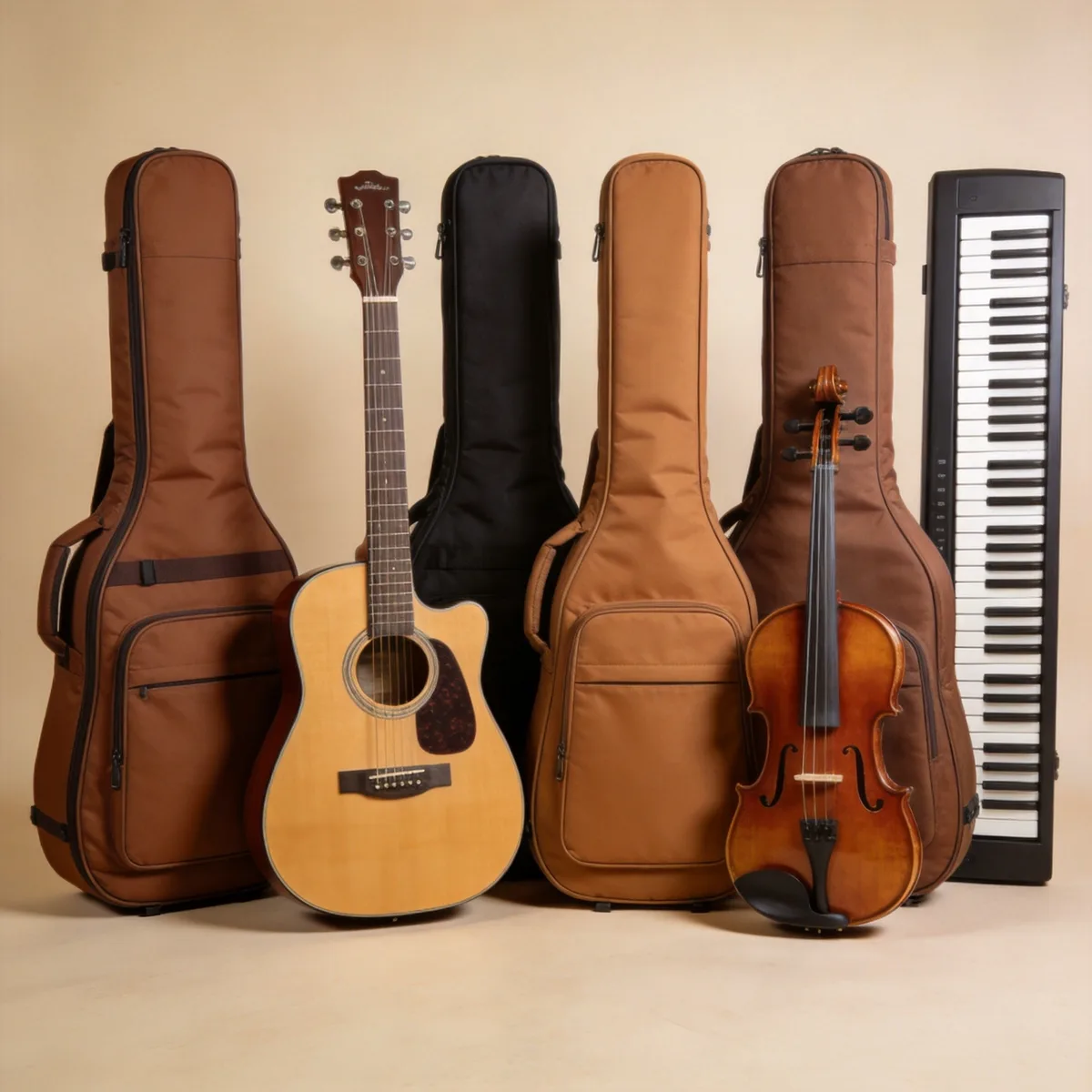
Gig Bag Products We Manufacture
We build gig bags across ten constructions. Most buyers start with one and expand once the first container lands. Each style can be built in any of the three material specs detailed in the materials section below.
1. Standard electric gig bag
The volume product. 600D shell, 20mm EPE, brushed tricot lining, two shoulder straps, front accessory pocket. This is the gig bag most distributors private-label first because it covers the widest range of instruments at the lowest unit cost.
2. Premium padded electric gig bag
900D shell, 25mm EPE with EVA composite, velvet lining, YKK #10 reverse-coil zipper, padded backpack straps. This is the upgrade buyers specify when their retail price point moves above the entry level. The padding jump from 20mm to 25mm is visible to the customer when they squeeze the bag, and the velvet lining changes the hand-feel from “good” to “premium.”
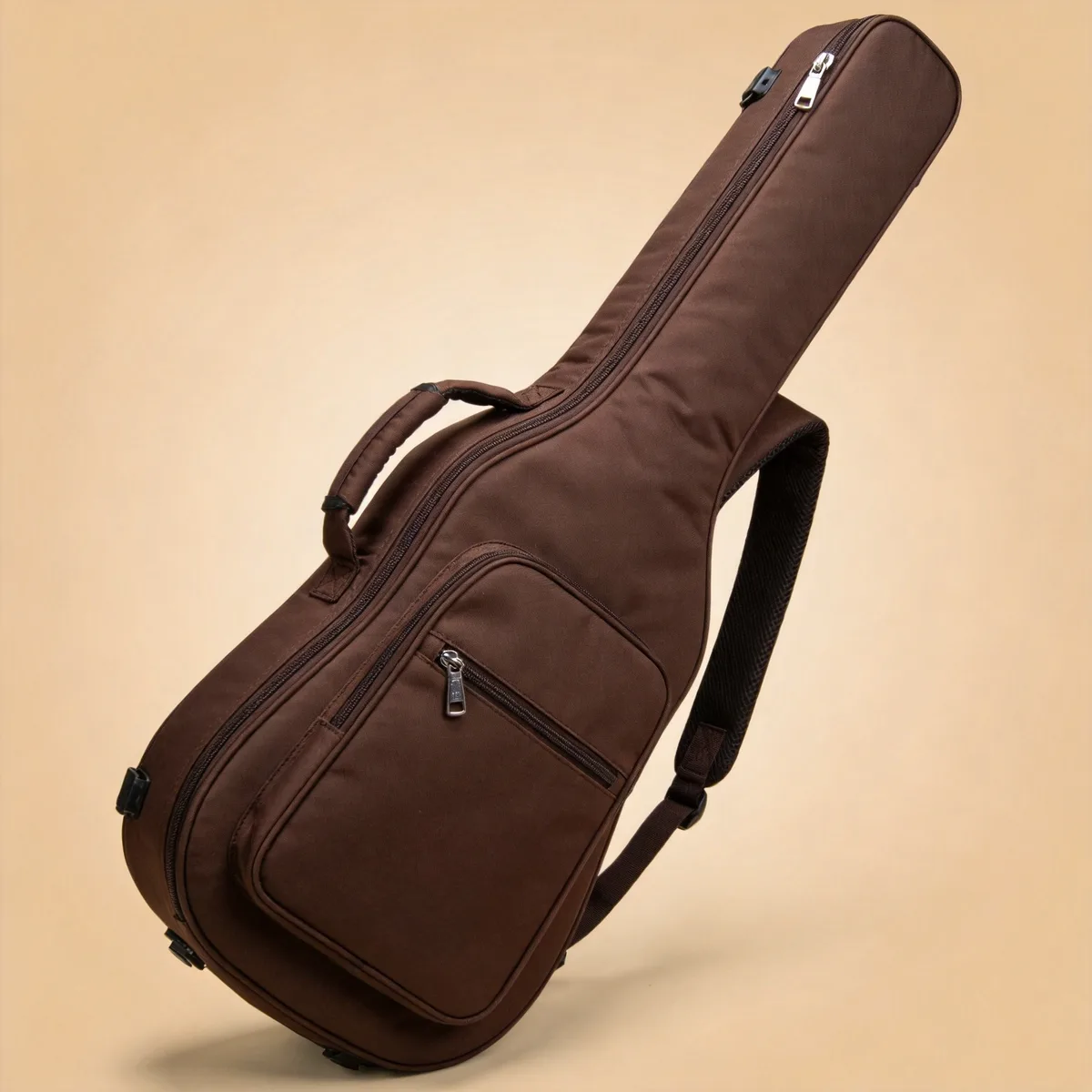
3. Acoustic gig bag
Widened dreadnought cavity with a separate headstock pocket and an abrasion patch at the base. Usually specified at 20–25mm padding. Buyers selling to acoustic players tend to upgrade the lining to velvet because the instrument is visible whenever the bag is open.
4. Bass gig bag
Extended body with a rigid or double-layer headstock end. Sized for 4-string as standard; 5- and 6-string need a wider headstock pocket quoted separately. The rigid headstock end cap is the feature that separates a bass gig bag from a long electric bag — without it, the heavy tuners pull the bag down at the headstock end.
5. Ukulele gig bag
Same construction logic in a smaller format, from soprano through baritone. Frequently ordered alongside guitar gig bags by the same buyer, which is why we keep it on the same production line.
6. Violin gig bag
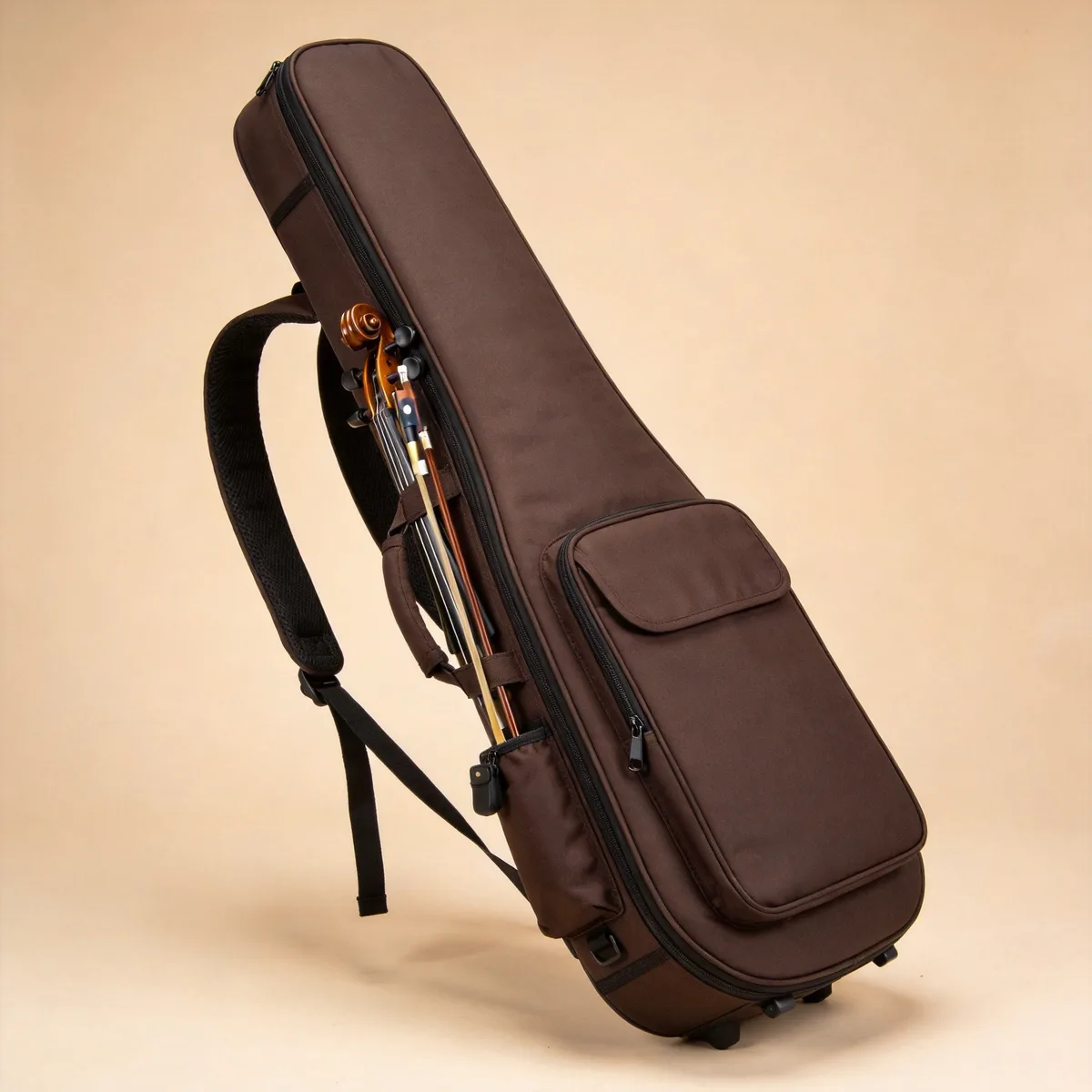
A different construction category entirely. Narrow, tapered shape with a separate bow tube, bridge protection pocket and accessory storage. Built with a softer interior because violin finishes — particularly French polish — mark easily. Education distributors buy these in volume with name-tag windows.
7. Keyboard and synth gig bag
Flat, wide profile with minimal depth. Sized for 61-key, 76-key and 88-key instruments. Often specified with a rigid PE board base panel because keyboards are heavy relative to their surface area.
8. Hybrid gig bag with rigid panels
A soft bag with PE board panels at the top, back and base — closer to a case in protection while staying flat-packable. Buyers go here when they want hard-case protection without the freight cost of a hard case.
9. Eco gig bag in recycled polyester
rPET shell from post-consumer bottles, with GRS documentation available. Same pattern and padding options as the standard build. Demand is concentrated in the EU and among brands with a stated sustainability position.
10. Gig bag with backpack conversion
Concealable shoulder straps that zip away into a rear panel, plus a side carry handle. Aimed at players who commute with their instrument. The strap-hiding mechanism is the failure point on cheap versions — we build it with a stitched-in panel rather than a zip-on cover.
Materials & Construction Quality
Gig bag quality comes down to five material decisions. Every one of them is a cost lever, and every one of them is visible to your customer within the first month of use.
| Component | Entry Spec | Standard Spec | Premium Spec |
|---|---|---|---|
| Outer shell | 600D polyester, PU coated | 900D polyester, PU 3000mm | 1680D ballistic nylon or waxed canvas |
| Padding | 10mm EPE | 20mm EPE | 25–30mm EPE + EVA composite |
| Interior lining | 210D polyester | Brushed tricot | Short-pile velvet |
| Zipper | #8 nylon coil | YKK #8 two-way | YKK #10 reverse-coil waterproof |
| Stitching | Single-row 210D/3 nylon | Double-row lock stitch at load points | Double-row throughout + bartack at stress points |
Padding: the number that sells the gig bag
Padding thickness is the first thing a retail customer squeezes. 10mm EPE protects against scuffs, not drops. 20mm EPE is our standard for custom programs and is the point at which a soft bag starts to behave like a case. Above 20mm the limiting factor becomes the shell stiffness — which is why our premium spec pairs 25–30mm EPE with an EVA or PE board rather than simply adding more foam.
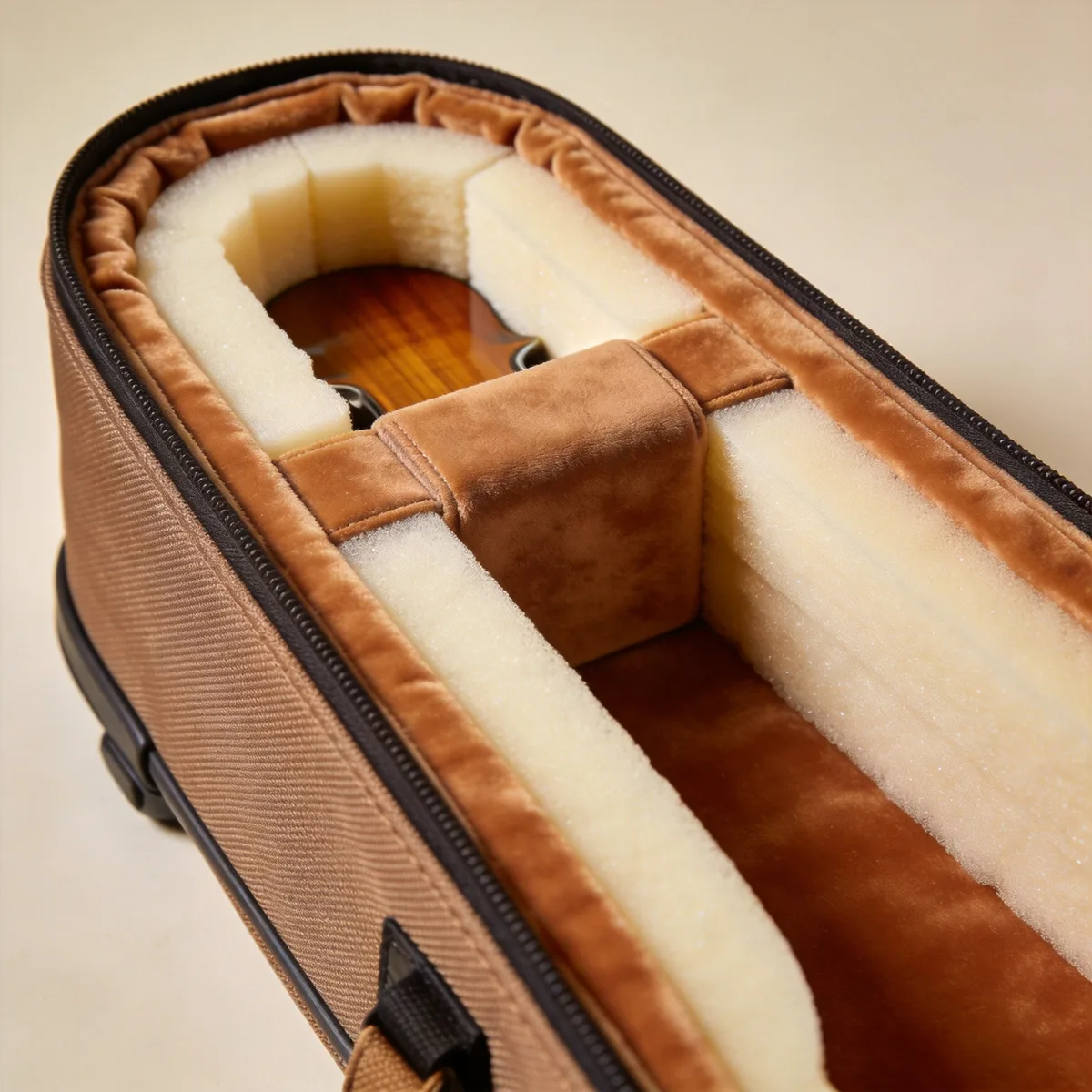
Lining: where returns come from
The lining is the cheapest upgrade with the largest perceived effect. A 210D polyester lining feels like a bag; brushed tricot feels like a case. Velvet is what premium brands specify, and it also holds the instrument in place so it does not slide when the bag is carried at an angle. We do not use adhesive-backed lining because the adhesive softens in a hot container and the lining lifts at the seams. Ours is stitched.
Zippers and hardware
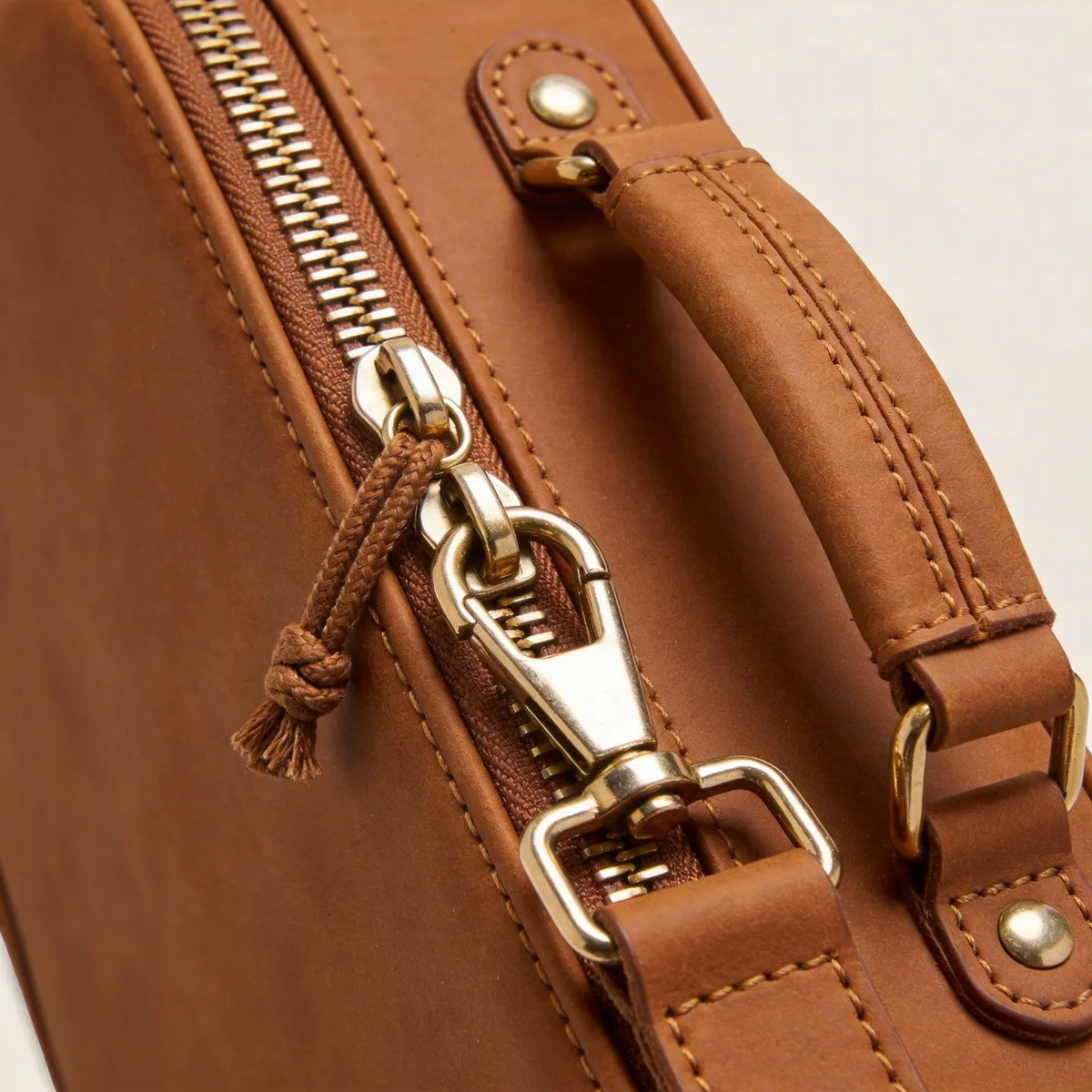
A gig bag zipper runs the full perimeter of the instrument and takes load every time the bag is opened. We use YKK #8 as standard and #10 reverse-coil where water resistance matters. Reverse-coil matters because the coil sits on the inside of the tape, so the zipper cannot scratch the instrument’s finish. Pullers are cord or rubberised — never bare metal against the instrument.
Water resistance
We quote three levels. PU coating at 3000mm handles rain and spillage. A reverse-coil zipper plus seam sealing handles sustained exposure. A welded or taped seam construction handles outdoor use. We do not claim a gig bag is waterproof — a soft bag with a zipper opening cannot be — and any supplier who says otherwise is worth a second look.
Quality Standard: AQL 2.5 Major / 4.0 Minor
Every gig bag order is inspected to AQL 2.5 for major defects and AQL 4.0 for minor defects, using the ISO 2859-1 sampling tables. In plain terms: we sample a statistically valid number of units from the finished lot, and the lot is accepted or rejected against that standard rather than on the inspector’s impression.
| Defect Class | Examples on a Gig Bag | AQL Level | Outcome |
|---|---|---|---|
| Critical | Sharp hardware exposed to the instrument cavity, zipper that separates under load, strap anchor pulling out | Zero tolerance | Lot rejected |
| Major | Padding below spec, broken stitch run over 25mm, logo misaligned over 3mm, lining detached at seam, wrong dimensions over tolerance | 2.5 | Lot rejected or 100% sorted |
| Minor | Loose thread, surface scuff on shell, colour variance within lot, label skew under 3mm | 4.0 | Accepted with record |
What we check on every lot
- ✓ Dimensional check — internal length, width and depth measured against the approved sample.
- ✓ Padding thickness — measured at body, neck and headstock positions, not just at the centre.
- ✓ Zipper function — full open/close cycles on a sample, plus a load test on the slider.
- ✓ Stitch density — stitch count per inch at shell seams, strap anchors and handle attachments.
- ✓ Hardware and strap load — static load on shoulder strap anchors and the main handle.
- ✓ Logo and label placement — measured against the approved artwork position.
- ✓ Fit test — where the buyer supplies the instrument model, we test-fit a physical unit before releasing the lot.
Inspection is documented with a photo report covering sampled units, measurements and defects found. That report is issued before shipment, so a problem is a conversation about sorting a lot, not a dispute after the container arrives.
How to Order Custom Gig Bags
The process from first enquiry to container is typically 8–11 weeks, and most of that is your decision time rather than our production time. Here is the sequence.
| Step | What Happens | What We Need From You | Timing |
|---|---|---|---|
| 1. Brief | We review your instrument specs, target price and market | Instrument model or dimensions, target quantity, target FOB | 1–2 days |
| 2. Quote & spec sheet | Written quotation with material spec, packing and lead time | Confirmation of shell, padding and lining grade | 2–3 days |
| 3. Sample | Pre-production sample built to agreed spec, with your logo | Logo artwork (AI or vector), Pantone references | 6–10 business days |
| 4. Sample approval | You test-fit the instrument and sign off, or request revisions | Written approval or marked-up changes | Your timeline |
| 5. Bulk production | Materials procured, cutting, stitching, assembly, in-line inspection | Deposit per agreed terms | 35–50 days |
| 6. Inspection & shipment | Pre-shipment AQL inspection, photo report, booking | Shipping instructions and consignee details | 3–5 days |
What to send us in the first message
You do not need a full tech pack to start. The four things that let us quote accurately are: the instrument the bag must fit (a model name is enough), the quantity per style and colour, your target FOB price band, and your market — because EU and US buyers often need different labelling and compliance documentation.
Sizing: the one thing worth getting right first
Send us the actual instrument measurements: overall length, lower-bout width, upper-bout width, body depth and headstock width. If the bag is being bundled with an instrument you manufacture, send one physical unit and we will pattern from it. Getting this right at sampling removes the single largest source of retail returns in this category.
Payment and shipping terms
We quote FOB Fujian ports as standard, and can quote CIF or DDP where the buyer needs a landed cost. Payment terms are agreed per order; the first order with a new buyer is normally deposit plus balance against documents. Compliance documentation for the destination market is quoted as part of the order.
Private Label & Branding Options
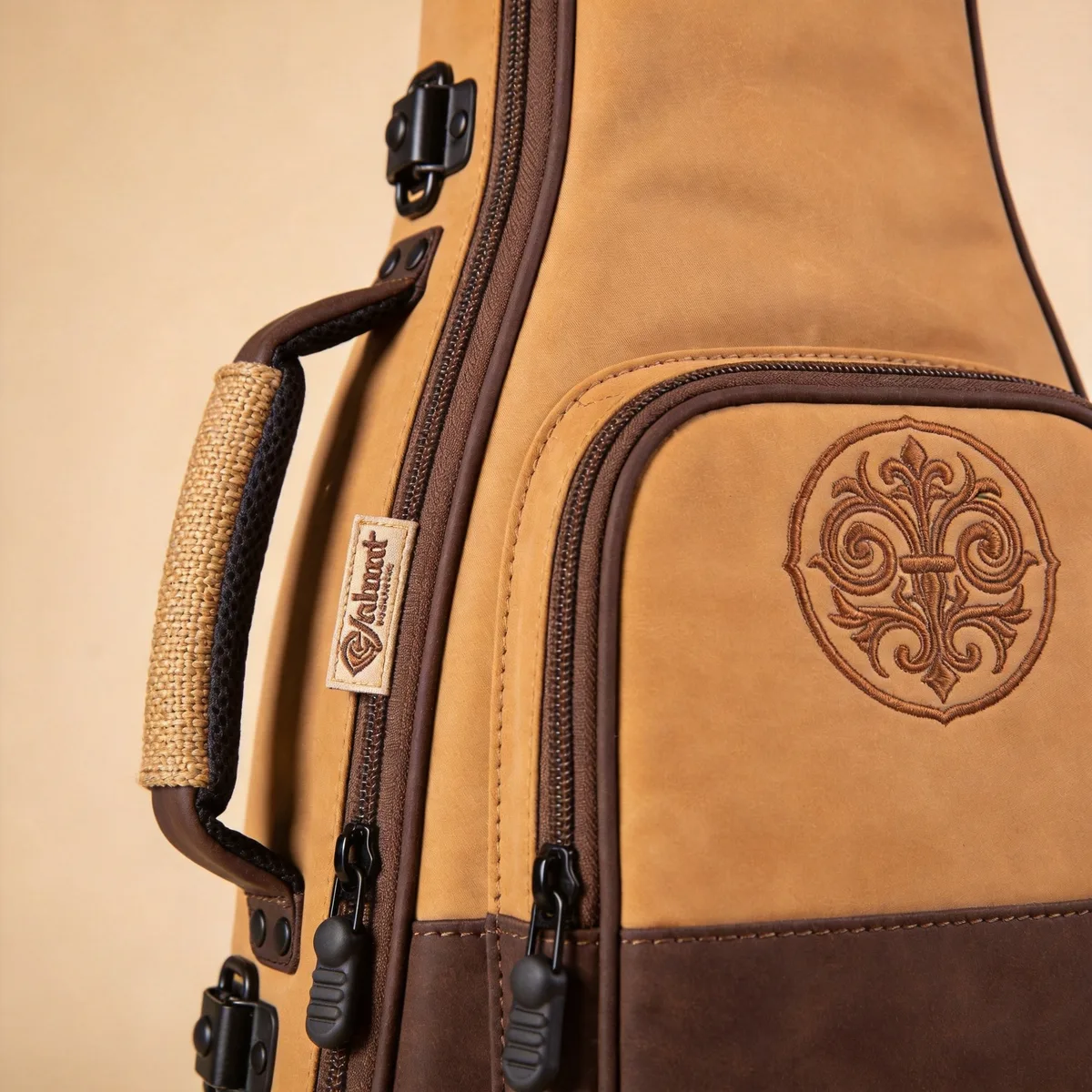
Every gig bag we produce carries the buyer’s branding. There is no Junyuan label on a custom order unless you ask for one. We offer five branding methods and will advise on which suits your volume and price point.
| Method | Best For | Durability | Setup |
|---|---|---|---|
| Woven label | Volume programs, classic brand look | High — survives washing and abrasion | Low, no tooling |
| Embroidery | Premium feel, textured logo on shell or pocket | High | Digitising file required |
| Silicone / PVC patch | Modern 3D branding effect | Very high | Mould required |
| Heat transfer print | Multi-colour graphics, small runs | Medium | Low |
| Rubberised badge | Metal-look without metal weight | High | Mould required |
Beyond the logo
- ✓ Custom lining colour — a signature interior colour is the cheapest way to make a bag look proprietary.
- ✓ Custom zipper puller — your brand name moulded into the puller, at mould cost.
- ✓ Custom hardware finish — matte black, antique brass, gunmetal, or a Pantone-matched powder coat.
- ✓ Retail packaging — polybag, non-woven dust bag, printed hangtag, barcode label, or a full colour box.
- ✓ Exclusive colourway — we do not sell your colourway and pattern combination to another buyer in your market.
Artwork should arrive as AI, EPS or PDF vector files with Pantone references. If you only have a raster logo, we will trace it and send the vector back for approval before sampling.
Cost Drivers: What Determines the Unit Price of a Custom Gig Bag?
Five factors determine the unit price of a custom gig bag. Understanding them helps you choose where to spend and where to save without guessing.
1. Shell fabric
600D polyester is the entry point. 900D adds roughly 10–15% to unit cost. 1680D ballistic nylon or waxed canvas adds 25–35%. The jump from 600D to 900D is the most cost-effective upgrade — the durability improvement is visible and the price increase is modest.
2. Padding thickness
10mm EPE is the baseline. 20mm adds 8–12% to unit cost. 25–30mm with EVA composite adds 20–28%. The jump from 10mm to 20mm is where most of the perceived quality improvement happens.
3. Interior lining
210D polyester is standard. Brushed tricot adds 5–8%. Velvet adds 12–18%. The lining is the cheapest upgrade with the largest perceived effect — the difference between a 210D lining and velvet is immediately obvious to a retail customer, and the unit cost difference is under a dollar.
4. Zipper specification
A standard #8 nylon coil zipper is the baseline. YKK #8 adds 8–12%. YKK #10 reverse-coil adds 18–25%. The zipper is the component that fails first on a gig bag in daily use, and the upgrade cost per unit is small relative to the retail price of the bag.
5. Order quantity
500 pieces per style and colour is the MOQ where pricing is firm. At 1,000 pieces the unit cost drops 8–12%. At 2,000 pieces it drops another 5–8%. The reason is simple: material procurement and line setup are fixed costs spread across the order.
Shipping & Logistics for Wholesale Gig Bags
Gig bags ship flat-packed and compressed. A standard 40ft container holds approximately 3,000–4,000 electric gig bags compressed, compared to 800–1,200 hard cases in the same volume. Freight per unit for a gig bag is a fraction of a hard case — this is a decisive commercial advantage for US and EU buyers.
| Gig Bag Type | Units per CBM (Compressed) | Units per 40ft Container |
|---|---|---|
| Electric gig bag | 70–90 | 3,000–3,800 |
| Acoustic gig bag | 50–65 | 2,200–2,800 |
| Bass gig bag | 40–55 | 1,800–2,400 |
| Ukulele gig bag | 150–200 | 6,500–8,500 |
| Violin gig bag | 100–130 | 4,500–5,500 |
Typical transit times: sea freight to the US West Coast is 15–20 days, to Northern Europe is 30–35 days. Air freight is 5–8 days but costs 4–6x more per kilogram. We quote FOB, CIF and DDP depending on the buyer’s preference. For buyers new to importing from China, we recommend CIF to your nearest port — we handle the freight booking and you handle customs clearance on arrival.
Why Junyuan Bags as Your Gig Bag Manufacturer?
There are cheaper gig bag factories and there are larger ones. The reason buyers stay with us is that the program does not need managing after the sample is approved.
- ✓ Company established 2014, founder entered the bag trade in 2004. We have quoted bags through enough material cycles to know which specification will still be buildable at the same price in six months.
- ✓ Affiliated and partner factories, matched to the construction. We place each program where that construction already runs, which is why our sampling is 6–10 days rather than a month.
- ✓ Specification discipline. The approved sample becomes the inspection standard. Padding thickness, dimensions and stitch density are measured against it, not judged by eye.
- ✓ AQL 2.5 documented before shipment. You receive the inspection photo report before the container leaves, not after.
- ✓ One supplier across the instrument family. Electric, acoustic, bass, ukulele, violin and keyboard bags on one purchase order, one set of labels, one shipment.
- ✓ Direct communication. You talk to the people who quote and schedule the order — [email protected] and +86 17750020688.
Frequently Asked Questions About Custom Gig Bags
Q1: What is the MOQ for a custom gig bag?
Q2: What does “MOQ 500 per style and colour” actually mean?
Q3: How long do sampling and bulk production take?
Q4: Can you match the exact dimensions of my instrument?
Q5: What padding thickness should I specify?
Q6: Do you use YKK zippers?
Q7: Can you put my logo on the gig bag?
Q8: What quality standard do you inspect to?
Q9: Are your gig bags waterproof?
Q10: Do you offer eco or recycled options?
Q11: What compliance documentation can you provide?
Q12: Can I order a sample before committing to bulk?
Related Bag Programs From Junyuan Bags
- Custom Guitar Bag Manufacturer — dedicated guitar bag program with instrument-specific sizing
- Custom Equipment Bag Manufacturer — protective bags for gear and instruments
- Sports Bags Manufacturer — gym, duffel and training bags
- Custom Backpack Manufacturer — daypacks, commuter and laptop bags
- Custom Travel Bag Manufacturer — carry-on, weekender and luggage
- Custom Dry Bag Manufacturer — waterproof dry sacks and roll-top bags
- Custom Pet Bag Manufacturer — carriers, totes and outdoor pet gear
- Custom Pickleball Bag Manufacturer — paddle bags and court totes
- Custom Waterproof Bag Manufacturer — waterproof bags and packs
- Bag Manufacturer vs Supplier — what changes when you buy direct
- REACH Compliance for Custom Bags — EU documentation explained
Send us the instrument your bag must fit, the quantity per style and colour, and your target price. You will have a written quotation with a full material specification within 2–3 working days, and a physical sample with your logo in 6–10 days.
Email: [email protected] | WhatsApp / Tel: +86 17750020688