
Custom Equipment Bag Manufacturer — OEM/ODM Sports & Team Gear Bag Factory from China
Direct answer: JUNYUAN BAGS is a custom equipment bag manufacturer that designs and builds OEM equipment bags, team equipment bags, sports gear bags, and protective carry solutions for brand owners in many export markets as of 2026. We operate as a dedicated export trader backed by an affiliated production partner running 7 production lines, and a monthly capacity of 200,000 units, with a standard MOQ of 500 pieces, sampling in 6–10 days, mass production in 35–50 days, AQL 2.5 inspection, and a 12-month warranty. From football, basketball and soccer gear bags to team duffels, skate bags, and scuba equipment bags, we handle fabric selection, structural padding, compartment layout, logo placement, and packaging for B2B buyers, teams, leagues, and event organizers.
TL;DR — Why Buyers Choose JUNYUAN for Equipment Bags
- Factory-grade capability: 7 production lines, 200,000 units/month; an affiliated production partner with SGS-audited facilities.
- Serious MOQ & lead time: 500-piece MOQ, sampling 6–10 days, mass production 35–50 days, AQL 2.5.
- Protection expertise: multi-layer EPE/foam zoning, reinforced base panels, ventilated compartments, and abrasion-resistant fabric grades for bulky, heavy, or fragile gear.
- Full customization: sizing, interior dividers, logo (embroidery/print/heat-transfer), hardware, colors, and retail-ready packaging under one roof.
- Compliance & warranty: BSCI/ISO-aligned processes, 12-month warranty, SGS traceability — clear for US/EU/AU buyers.

1. The Equipment Bag Product Lines We Build
An equipment bag is a high-volume, heavy-duty carry system designed for bulky, awkward, or protective gear — from team balls and bats to helmets, skates, and diving equipment. Unlike a standard duffel, it carries stiff padding, segmented compartments, reinforced bases, and weather-sealed zippers by default. Below are the core lines we engineer for B2B clients.
1.1 Team & League Equipment Bags (Football / Soccer / Basketball / Baseball)
For teams, schools, clubs, and leagues, we manufacture team equipment bags that hold multiple balls, helmets, pads, and personal kit in a single organized carrier. Key engineering: ventilated mesh end panels for odor control, reinforced bottom to support heavy bat/basket loads, internal dividers that separate dirty gear from clean kit, and numbered team bays for multi-player organization. We customize team colors, logos, and player numbering to match league identity. These bags ship flat-packed in bulk and assemble in seconds, ideal for program-wide rollout.
1.2 Protective & Structural Gear Bags (Hockey / Skates / Helmets)
Stiff-gear bags require dedicated structural zones rather than a single open cavity. We build skate bags with reinforced boot compartments, helmet domes with crush-resistant sides, and hockey gear bags with layered moisture management. Our approach uses a dual-panel construction — a firm outer shell that holds shape plus a soft inner layer that protects equipment — combined with foam-backed dividers and YKK-style heavy zippers. This structural focus is what separates a true equipment bag from an ordinary duffel.
1.3 Outdoor & Adventure Gear Bags (Tactical / Sling / Dry-adjacent)
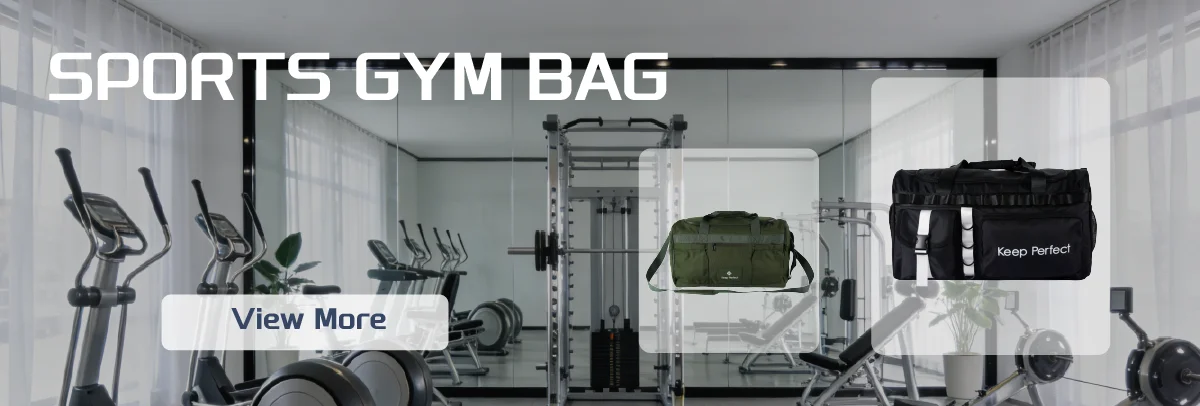
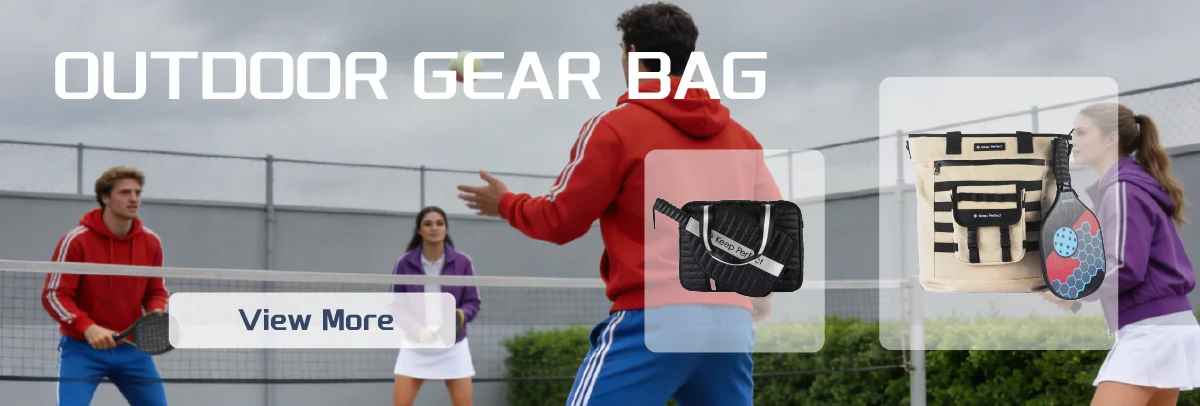
For outdoor, tactical, and adventure brands, we produce gear bags with weather-tolerant fabrics (including TPU-coated and waterproof grades), MOLLE-style webbing, and modular attachment points. We balance abrasion resistance against weight, using 1680D to 1800D polyester/nylon blended bases, reinforced stress points, and adjustable straps for volume flexibility. These bags are favored by outdoor equipment distributors and e-commerce brands launching bulk SKUs.
1.4 Specialty Equipment Bags (Scuba / Cycling / Multi-Sport)
From scuba gear bags with mesh drainage and padded tank sleeves to cycling equipment bags and multi-sport organizers, we adapt each line to its unique protection and drying needs. For wet-gear segments we use open-mesh structures and quick-dry linings; for fragile electronics we add EPE/foam sleeves. Every specialty line follows the same MOQ, sampling, and inspection discipline as our mainstream products.
| Equipment Bag Type | Key Feature | Typical Fabric | Best For |
|---|---|---|---|
| Team equipment bag | Ventilated end panels + internal dividers | 600D–1200D polyester | Schools, clubs, leagues |
| Hockey / skate bag | Reinforced boot & helmet zones | 1200D nylon + foam | Hockey teams, skate dealers |
| Tactical / outdoor gear bag | MOLLE webbing, weather-tolerant shell | 1680D–1800D nylon | Outdoor & tactical brands |
| Scuba / wet-gear bag | Mesh drainage + padded sleeves | Open-mesh / TPU-coated | Dive shops, rental operators |
| Multi-sport organizer | Modular compartments | RPET / recycled nylon | E-commerce, retail line |
2. Materials, Padding & Durability Engineering
Equipment bags fail when materials can’t handle weight, abrasion, moisture, or impact. We engineer around these four drivers rather than defaulting to a single fabric.
2.1 Fabric Grades & Weight Selection
| Fabric / Grade | Typical Denier | Application | Notes |
|---|---|---|---|
| Lightweight polyester | 300D–400D | Kids’ gear, gym organizers | Lighter, lower cost |
| Standard polyester | 600D–900D | Team balls, school gear | Best cost/durability balance |
| Heavy-duty polyester/nylon | 1200D–1680D | Hockey, skates, bats | High abrasion resistance |
| Reinforced outdoor nylon | 1680D–1800D | Tactical & adventure | Weather-tolerant, tear-resistant |
2.2 Padding & Structural Protection
For heavy or fragile gear, we use a layered approach: EPE foam shells for impact absorption, rigid PE boards as reinforced base panels that keep the bag upright and protect bottom-loading equipment, and foam-backed dividers that isolate fragile items. For helmets, we add crush-resistant side walls; for skates, a hard boot compartment with a separate base plate. Each configuration is documented and sampled before bulk production.
2.3 Ventilation & Moisture Management
Sports gear accumulates heat and odor. Our ventilated designs use open-mesh end panels, breathable back panels, and quick-dry linings to accelerate drying and reduce bacterial buildup. For wet-gear segments (swim, scuba, gym), we route drainage through mesh channels so moisture evacuates instead of pooling at the base.
3. Full Customization: Logo, Layout, Hardware & Packaging
Custom equipment bags are defined by how well the internal layout and branding match the buyer’s use case. Our customization scope is end-to-end.
3.1 Logo & Branding Options
- Embroidery — premium, durable, ideal for team crests and brand logos.
- Screen / sublimation printing — full-color, best for complex artwork.
- Heat-transfer & patches — for multi-color or layered branding.
- Label, tag & hangtag — retail-ready branding and care info.
3.2 Structural Customization
We adjust overall dimensions, side and base panel rigidity, compartment count, divider placement, strap and handle positions, and zipper/heavy-hardware choices around your gear dimensions. For team programs we can engineer numbered bays, roster pockets, and lockable security compartments. Every structural change is validated in the sampling stage against real gear dimensions provided by the buyer.
3.3 Packaging & Delivery Formats
Equipment bags ship most efficiently flat-packed in polybags with bulk cartons, or pre-set with internal supports where requested. We support retail-ready polybag presentation, hang-tab displays, FOB/EXW terms, and optional 3PL routing. Sampling (6–10 days) precedes mass production (35–50 days), with AQL 2.5 final inspection and a 12-month warranty covering workmanship.

4. Quality Assurance, Compliance & Red-Line Transparency
Quality is non-negotiable for equipment bags that protect expensive gear. Our process is transparent and auditable.
4.1 Production Partner & Capability
JUNYUAN (QUANZHOU JUNYUAN COMMERCIAL AND TRADING CO., LTD., for many years) is a dedicated export trading operation serving international B2B buyers. Our export manufacturing is fulfilled by an affiliated SGS-audited production partner, operating 7 production lines with (including 126 sewing machines) across 4,950 m² of production space, with a monthly capacity of 200,000 units and a team of ~the production team. The facility is SGS-audited, supporting BSCI- and ISO-aligned process expectations for US/EU/AU retailers.
4.2 Inspection, Warranty & Traceability
- AQL 2.5 final inspection on critical and major defects.
- 12-month warranty covering defects in workmanship and materials.
- SGS traceability on material and construction standards.
- Documented sample sign-off before mass production begins.

5. Your Custom Equipment Bag Buying Process
- Inquiry & brief: share gear types, dimensions, target market, and budget; we recommend fabric, padding, and structure.
- Design & mockup: our team drafts layout, compartments, branding, and packaging; we refine cost and structure.
- Sample (6–10 days): a physical sample validates size, protection, and branding.
- Bulk order & production (35–50 days): mass production with in-process checks.
- AQL 2.5 inspection & shipping: final QC, then FOB/EXW dispatch with tracking.
Time investment, in practice: most first-time buyers reach an approved physical sample within roughly three weeks, then run bulk production over the following 35–50 days. Plan a full 8–12 week cycle from first brief to in-hand stock: about 1.5–2 weeks for mockup and sampling, 5–7 weeks for production, and shipping depending on route. Season launches, team orders, and event deadlines all fit this frame if you reserve line capacity early. Familiar buyers ordering standard specs on repeat can compress the front end because no new mockup or sample is needed.
Request a Custom Equipment Bag Quote
Send us your gear dimensions and quantities. Get a free sample consultation, pricing, and lead-time estimate.
6. Frequently Asked Questions About Custom Equipment Bags
Q1. What is the minimum order quantity (MOQ) for custom equipment bags?
Our standard MOQ is 500 pieces per design. For team or program rollouts that combine multiple designs under one order, we can discuss consolidated quantities. Larger or repeat orders also improve per-unit cost.
Q2. How long does sampling and mass production take?
Sampling takes 6–10 days and mass production takes 35–50 days, depending on design complexity, fabric availability, and order size. We confirm a locked lead-time at sample sign-off.
Q3. Can you customize the internal padding and compartments?
Yes. We engineer compartment count, divider placement, base panel rigidity, and foam padding density around your specific gear. Provide dimensions or sample gear and we will build the internal configuration to match.
Q4. Which materials do you recommend for heavy team gear like hockey or skates?
For heavy stiff gear we recommend 1200D to 1680D nylon/polyester with reinforced base panels and foam-backed dividers. For skates, a hard boot compartment with a separate base plate gives the best protection.
Q5. Do you offer ventilation or moisture management for sweaty sports gear?
Yes. We use open-mesh end panels, breathable back panels, and quick-dry linings to accelerate drying and reduce odor. Wet-gear segments can include mesh drainage channels.
Q6. How do you handle logos and team branding?
We support embroidery, screen/sublimation printing, heat-transfer, patches, and retail-ready labels/tags. Team colors, crests, and player numbering can all be customized and validated in the sample stage.
Q7. Can I get a physical sample before placing a bulk order?
Yes. A physical sample is produced in 6–10 days and validated before mass production begins. Sample fees apply and are credited back or offset on qualifying first bulk orders.
Q8. What quality inspection and warranty do you provide?
We perform AQL 2.5 final inspection on critical and major defects and support a 12-month warranty covering workmanship and materials. The affiliated production partner is SGS-audited for traceability.
Q9. Do you ship to the US, EU, or Australia?
Yes. We export globally to many export markets under FOB/EXW terms, with 3PL routing available. We are comfortable with the compliance and traceability expectations of US, EU, and AU retailers.
Q10. What is the difference between OEM and ODM for equipment bags?
OEM means you provide the specification and we manufacture to it; ODM means we design and build the bag from a brief. We support both, plus a hybrid where we refine our standard lines around your branding.
Q11. Can I consolidate multiple styles or colors into one order to hit the MOQ?
Yes. Where practical we allow multiple designs to combine under one production run, which helps teams, leagues, and multi-style retailers reach volume pricing. We confirm consolidation feasibility during quoting so you know the exact quantities required per style.
Q12. What is the sample fee and is it refunded?
A physical sample is charged at cost, and on qualifying first bulk orders the sample fee is credited back or offset. We confirm this in the quotation so there are no surprises. The sample also acts as the signature reference for your production run.
Q13. Can I use recycled materials and still get a durable equipment bag?
Yes. We offer RPET and recycled nylon engineered to retain the abrasion resistance equipment bags need. We document material provenance, so you can make credible sustainability claims while keeping real structural protection.
Q14. What documentation do I get for importing to the US or EU?
We provide commercial invoice, packing list, bill of lading / airway bill, AQL 2.5 inspection report, and material/test documentation on request. The affiliated production partner is SGS-audited, and we supply what your importer or retailer needs for compliance and onboarding.
Q15. How do you keep reorder quality consistent?
Every approved sample and spec is stored on file. Reorders reproduce the exact same fabric, dimensions, compartments, and branding, so season-over-season quality and warranty handling stay consistent.
7. Detailed Product Specifications & Sizing Choices
Getting the spec sheet right is the fastest way to avoid sampling rework and closing the cost gap at bulk. Below are the sizing, pocket, and hardware decisions that matter most for equipment bags — and how we help you lock them before production.
7.1 Standard Size Configurations
Although every equipment bag is custom, most buyers start from a proven size window and refine from there. For team balls and bulkier kit, we commonly build bags between 60L and 110L; for skate-and-helmet combos we often split the volume into dedicated zones; for personal gym or multi-sport kits we work from 25L to 45L organizers. Because dimensions drive fabric usage, foam volume, and carton weight, we confirm length, width, and height at the brief stage and produce a line-drawing mockup before any fabric is cut.
| Application | Typical Volume | Dimensions (approx) | Key Constraint |
|---|---|---|---|
| Personal gym / multi-sport kit | 25–45L | 45 × 25 × 25 cm | Ventilation, grab handle |
| Team balls (backpack carry) | 50–70L | 55 × 32 × 28 cm | Internal dividers |
| Team athletic kit / duffel | 70–90L | 62 × 35 × 30 cm | Reinforced base |
| Hockey / skate / helmet combos | 90–115L | 75 × 38 × 34 cm | Hard boot & helmet zones |
7.2 Pockets, Compartments & Hardware
We treat pocket architecture as a protective system, not an afterthought. End panels frequently house vented shoe or wet-wipe pockets; lids carry mesh valuables pockets; side panels support water-bottle sleeves. For hardware we prefer heavy-duty zippers and reinforced D-rings or webbing handles at stress points, and we validate every zipper pull, buckle, and strap keeper against the bag weight it will carry. If a club or league needs numbered bays, we add hanged labels or contrast stitching that survives washing and daily use.
7.3 Handle, Strap & Carry Options
Equipment bags see rough handling, so we offer multiple carry systems: padded top grab handles, reinforced shoulder straps with adjustable buckles, and backpack-style harnesses for the heaviest loads. For skate bags we often add a trolley sleeve or detachable wheels for airport and arena travel. Every carry point is bar-tacked and stress-tested to match the bag’s loaded weight.
8. Cost Structure, Pricing & Budget Optimization for Equipment Bags
Unit price for a custom equipment bag is driven by four levers: fabric grade, structural complexity, trim and hardware, and order volume. Understanding these levers lets you hit a target retail margin without over-specifying.
8.1 Where the Cost Sits
- Fabric: jump from 600D to 1200D–1680D raises base material cost; blended and coated grades cost more but add durability and weather resistance.
- Padding & structure: EPE/foam shells, rigid base boards, and hard boot compartments add material and sewing time.
- Hardware: heavy zippers, reinforced buckles, webbing, and metal D-rings raise unit and assembly cost.
- Branding: embroidery and multi-color sublimation carry higher setup than a single screen print.
- Volume: greater quantities amortize setup, tooling, and fabric yield, lowering per-unit price.
8.2 Sample & Bulk Pricing
We quote transparently: a physical sample (6–10 days) is charged at cost and validated before bulk. Mass production (35–50 days) follows at an agreed unit price based on your final spec and volume, with AQL 2.5 inspection included. Because the standard equipment-bag MOQ is 500 pieces, we help buyers consolidate multiple configurations into a single production run to reach volume discounts.
8.3 How to Optimize Cost Without Cutting Quality
The most effective cost controls are standardizing sizes, limiting the number of pad zones, choosing a single high-performance fabric across the line, and consolidating branding to one placement. We model these trade-offs in your quote so you see exactly what each change costs before committing — no hidden line items.
8.4 A Simple Way to Estimate Unit Cost Direction
A rough mental model helps you sense-check quotes before details arrive. Fabric weight, structural complexity, and hardware are the three biggest cost levers, in that order. Moving from a light organizer (600D, single layer) to a reinforced team bag (1200D, foam dividers, base board, heavy zippers) roughly raises both material and labor content, so the unit moves up accordingly. Because our standard equipment-bag MOQ is 500 pieces, larger consolidated orders amortize setup and fabric yield and push the unit back down. When comparing suppliers, ask for the same breakdown — fabric, structure, hardware, branding, packing, inspection — so you compare like for like rather than a single bottom line.
9. Market Applications & Buyer Segments for Custom Equipment Bags
Custom equipment bags serve a broad set of B2B buyers, each with a different volume, spec, and branding profile. Recognizing your segment helps us recommend the right construction and packaging.
9.1 Teams, Clubs & Leagues
Regional teams, academies, and school programs order uniform numbers of matching equipment bags for multi-season rollout. Their priorities are durability, team branding, and per-player organization. We support roster numbering, season-specific colorways, and bulk flat-packed shipping that keeps freight efficient.
9.2 Sports Brands & Retailers
Consumer sports brands and multi-brand retailers need retail-ready equipment bags with strong shelf and e-commerce appeal. We deliver polybag/PP retail presentation, color-accurate branding, and spec sheets that support online product pages. For e-commerce sellers, flat-pack construction and lightweight but protective fabrics improve margin and reduce shipping damage.
9.3 Equipment Distributors & Rental Operators
Distributors and rental operators (skate shops, dive operators, gym chains) order durable, easily inspectable bags that hold up to repeated use. Here we favor reinforced seams, fast-drying linings, and simple, washable constructions that cut replacement cost over time.
9.4 Event Organizers, Promotions & Corporate Merch
Events, tournaments, and corporate programs use equipment bags as giveaways, prizes, and staff/team kits. These orders lean on strong branding, one-off color combos, and reliable lead times that align with an event calendar. We support short-design-iteration sampling to meet tight launch windows.
10. Supply Chain, Production Management & Logistics
Reliable equipment-bag sourcing is about more than the sewing line — it’s about traceable materials, lived-up lead times, and predictable shipping. Here is how we manage the full chain.
10.1 Material Sourcing & Compliance
We maintain a qualified fabric and hardware supplier base so we can lock inventory before bulk production and avoid wait-time surprises. For brands that require it, we support RPET/recycled nylon options and importer-compliance documentation. Test reports, material cards, and SGS traceability are available on request so importers can clear customs confidently in the US, EU, and AU.
10.2 Production Planning & Scheduling
Once a sample is signed off, we schedule production against the agreed 35–50 day window. In-process quality checks run at fabric, cutting, sewing, and assembly stages. Our affiliated production partner operates 7 lines and with a monthly capacity of 200,000 units, which lets us hold larger orders and handle mid-course corrections without stalling the line.
10.3 QC, Packing & Export
Every shipment passes AQL 2.5 final inspection before dispatch. We pack equipment bags to survive transit — flat-packed in polybags, cartonized with moisture protection where requested, and labeled to your importer requirements. Shipping is available under FOB and EXW terms, with 3PL routing to consolidate with other SKUs.
11. Design Trends & Practical Sourcing Tips for Equipment Bags
Staying current on design and sourcing keeps your line competitive and your supply chain resilient. Below are the trends we see most often and the practical decisions that follow.
11.1 Sustainability Is Moving from Optional to Expected
Teams, leagues, and retailers increasingly ask for recycled polyester (RPET), recycled nylon, and lower-footprint linings. We offer these without sacrificing the abrasion resistance equipment bags need, and we document material choices for marketing claims. Sourcing recycled grades early also protects you against tightening material-compliance expectations.
11.2 Ventilated and Odor-Managed Construction Is a Differentiator
Because sports gear is used hard and stored hot, ventilation and anti-odor linings are now a selling point rather than a nicety. Designers who build mesh airflow panels and quick-dry zones into their spec gain an edge on product pages and in retail displays. We engineer these in from the sample stage.
11.3 Consolidate Your Line to Sharpen Costs
Buyers who standardize on one fabric family and a small set of base sizes consistently unlock better pricing than those who over-diversify. A focused line also simplifies rebranding, restocking, and warranty handling. We recommend reviewing your catalog each season and consolidating underperforming variants.
11.4 Validate Protection Against Real Gear
The single most useful thing a buyer can do is send real gear samples (or precise dimensions) for prototype validation. A bag that looks right on paper can fail when a helmet, skate, or bat doesn’t fit its zone. Our sampling stage exists precisely to catch this before you commit to volume.
11.5 Plan Lead Time Around Your Calendar
Teams launch seasons, retailers set planograms, and events have hard dates. Because bulk production takes 35–50 days plus shipping, we advise starting the sample-to-bulk cycle 8–12 weeks before your target in-store or in-hand date. Booking season launches early also secures line capacity on the factory floor.
12. Common Sourcing Mistakes & How We Prevent Them
Most equipment-bag sourcing issues are predictable. Naming them up front saves you time and money.
12.1 Over- or Under-Specifying Fabric
Choosing a fabric purely for price tends to fail on durability; choosing the heaviest option across every panel tends to waste margin. We match fabric grade to the specific load and use case of each panel so you pay for performance where it matters — and save where it doesn’t.
12.2 Ignoring Internal Layout Until Too Late
A bag’s compartments decide whether a team can actually use it. Confirming divider placement, pocket counts, and base rigidity in the mockup — before fabric cutting — prevents a perfectly branded but functionally awkward product.
12.3 Treating Sampling as a Formality
A sample is your chance to check size, protection, branding accuracy, and zipper quality. Skipping or rushing it invites expensive corrections at bulk. We keep sampling integrated (6–10 days) and document every revision so the production run matches the approved sample exactly.
12.4 Choosing Lead Times That Can’t Hold
When a buyer commits to a launch date without reserving line capacity, delays cascade. Our discipline of locking a production schedule at sample sign-off de-risks this: both sides agree on dates before volume begins.
12.5 Ignoring Inspection & Warranty Terms
Protection, AQL 2.5 inspection, and a 12-month warranty are not free-floating promises — they’re negotiated terms that should appear in your order confirmation. We state them clearly so there is no ambiguity at delivery.
13. From Inquiry to Delivery: The Full Production Journey, Step by Step
Buyers work best with a map. Here is the complete equipment-bag journey we follow, so you know exactly what happens — and when — between your first inquiry and the shipment landing at your door.
13.1 Step 1 — Inquiry & Technical Brief
You send us your gear types, target market, quantities, and any reference images. We respond with an initial feasibility view: recommended fabric family, internal layout, obvious cost drivers, and a rough lead-time frame. This step is free and carries no obligation; it exists to align both sides before any design work.
13.2 Step 2 — Design, Mockup & Quotation
Our team translates your brief into a line-drawing mockup and a structured quotation. We break the quote into fabric, structure, hardware, branding, packing, and inspection so you see exactly where your money goes. You can iterate on dimensions, pockets, and branding here without affecting the rest of the process.
13.3 Step 3 — Physical Sample (6–10 days)
Once the mockup is approved, we produce a physical sample in 6–10 days. This is the point where you validate real fit: do the helmet, skate, balls, or electronics fit their designated zones? Is the padding sufficient? Does the branding read correctly up close? We document every revision and keep the approved sample as the production reference.
13.4 Step 4 — Order Confirmation & Production Scheduling
When you confirm the order, we lock the spec, the unit price, and a 35–50 day production window. Materials are reserved and the line is scheduled so your dates actually hold. Payment terms and documentation (PL, invoice, packing list, test reports) are confirmed here.
13.5 Step 5 — In-Process Quality Control
Fabric inspection, cutting accuracy, seam strength, and hardware attachment are checked as production rolls. Because we run 7 lines with and a monthly capacity of 200,000 units, mid-run corrections are absorbed without stalling your batch.
13.6 Step 6 — Final Inspection, Packing & Dispatch
Before shipping, every batch passes AQL 2.5 final inspection. Bags are flat-packed into polybags and cartons, moisture-protected if required, and dispatched under FOB or EXW terms with shipment tracking. We stay available through arrival for any documentation or reconciliation needs.
14. Protection Grades, Testing & Durability Validation
Because an equipment bag’s core job is protection, we define protection in measurable grades rather than vague promises. Matching a grade to your gear prevents both over- and under-engineering.
14.1 Protection Grades We Engineer To
| Grade | Description | Typical Use |
|---|---|---|
| Standard | Single-layer, light EPE; soft-shell | Gym kits, organizer bags |
| Reinforced | Foam-backed dividers; base board | Team balls, bats |
| Heavy-duty | EPE shells + hard boot/helmet zones | Hockey, skates, helmets |
| Crush-resistant | Rigid side walls; impact zones | Fragile equipment, transport |
14.2 How We Validate Durability
Beyond visual inspection, we validate stress points through seam pull testing, zipper-cycle checks, and loaded-weight handling on representative samples. Reinforced handles, bar-tacked straps, and heavy zippers are tested against the bag’s rated load. We also document abrasion resistance of the chosen fabric so you can match it to how the bag will actually be used.
14.3 Matching Protection to Real Use
The right grade depends on what goes inside and how hard it’s used. A team ball bag used weekly by dozens of players needs different reinforcement than a personal multi-sport organizer. We recommend a grade in the brief so you aren’t paying for crush-resistant construction you don’t need — or under-building protection you do.
15. Custom Equipment Bags vs. Standard Bags: When to Upgrade
Not every carry product needs to be a full structural equipment bag. Knowing the difference keeps your catalog honest and your costs in line.
15.1 The Core Difference
A standard duffel or gym tote has a single open cavity and minimal structure — ideal for clothes and light kit. A custom equipment bag adds segmented compartments, padding, reinforced bases, and hardware designed for heavy, awkward, or fragile gear. If your product must protect helmets, skates, bats, or electronics daily, the equipment-bag architecture is the right call; if it mostly carries soft goods, a standard bag is more economical.
15.2 When Standard Bags Win
For gym clothes, yoga kits, and simple travel, a standard carry product delivers the value at a lower price point and faster lead time. Offering both tiers lets a retailer capture price-sensitive buyers while upselling the structural tier to those who need protection.
15.3 When Upgrading Pays Off
Teams, leagues, and outdoor/rental operators recoup the higher cost of a structural bag through fewer replacements and better gear protection. If a buyer is replacing bags every season due to failed seams or crushed hardware, upgrading to reinforced construction reduces total cost over time — a strong selling point in your catalog copy.
| Factor | Standard Bag | Custom Equipment Bag |
|---|---|---|
| Internal structure | Open cavity | Segmented, padded zones |
| Base support | Minimal | Reinforced base board |
| Hardware grade | Standard | Heavy-duty zippers/buckles |
| Best for | Soft goods, light kit | Helmets, skates, bats, electronics |
| Cost | Lower | Higher, justified by protection |
16. Sustainable Materials, Certifications & Import Compliance
Equipment bags are imported into regulated markets, so materials and documentation matter as much as construction. Here’s how we help you clear customs and back your marketing claims.
16.1 Recycled & Eco-Friendly Options
We offer recycled polyester (RPET) and recycled nylon for buyers building sustainability narratives. Recycled grades are engineered to retain the abrasion resistance equipment bags require, so choosing green doesn’t mean choosing fragile. We document material provenance to support credible claims.
16.2 Certifications, Test Reports & SGS Traceability
Our affiliated production partner is SGS-audited and supports BSCI- and ISO-aligned process expectations. On request we provide material test reports and quality documentation for importer compliance in the US, EU, and Australia. This reduces friction at customs and in retailer onboarding.
16.3 Documentation We Provide With Every Order
- Commercial invoice & packing list
- Bill of lading / airway bill
- Material & test documentation (on request)
- Inspection report (AQL 2.5)
- Warranty terms (12-month)
Clear documentation also helps you respond to retail partners who ask for supply-chain transparency before onboarding a new SKU.
17. Final Sourcing Checklist for Your Custom Equipment Bag
Use this checklist to brief suppliers — including us — and to compare quotes fairly. A structured brief gets you accurate pricing and a sample that matches.
- Define the gear: list what each bag must carry (ball types, helmets, skates, bats, electronics) with dimensions or photos.
- Set the use case: team rollout, retail line, rental fleet, or event merch — this drives grade and branding.
- Choose protection grade: standard, reinforced, heavy-duty, or crush-resistant.
- Lock dimensions & compartments: agree size, pocket count, dividers, and base support in the mockup.
- Plan branding: embroidery, print, sublimation, or patches, and brand placement.
- Confirm fabric & eco options: choose grade and whether recycled materials are required.
- Set quantities & budget: align order volume with MOQ (500) and target unit price.
- Agree lead time & terms: sampling 6–10 days, bulk 35–50 days, FOB/EXW, payment terms.
- Confirm quality & warranty: AQL 2.5 inspection and 12-month warranty.
- Validate with a physical sample before approving mass production.
Running a clean brief that covers these points will produce accurate pricing and a sample that matches your intent on the first pass. When every item is confirmed before production, the design phase shortens, sample revisions drop, and the bulk run reflects the product you actually validated — which is exactly how reliable lead times and consistent reorders are built.
Talk to an Equipment Bag Sourcing Specialist
Share your gear list and quantities. We’ll reply with a technical brief, pricing, and a lead-time estimate — no obligation.
18. In-Depth: Popular Equipment Bag Types We Engineer
Beyond the line overview in Section 1, a closer look at each popular type helps you brief your spec precisely. Below are the configurations, loads, and constraints that define the most-ordered equipment bag categories.
18.1 Soccer Equipment Bags
Soccer bags carry balls, cleats, shin guards, and training kit with heavy daily rotation. Our soccer equipment bags combine ventilated end pockets for cleats, a ball-specific main bay, and soft touchpoints for shin guards. Team versions add numbered side bays and jersey compartments. We tune the fabric to resist grass-stain abrasion and frequent washing.
18.2 Football / Gridiron Team Bags
Gridiron gear is heavy and bulky — helmets, pads, cleats, and gloves. We build football team bags with dedicated helmet domes, pad compartments, and reinforced rails that hold the weight without sagging. Players’ personal gear is separated into zippered zones, and a reinforced base keeps the bag upright in the locker room.
18.3 Baseball & Softball Equipment Bags
Baseball bags must protect bats, balls, helmets, and gloves in a compact, carry-friendly form. Our baseball equipment bags feature bat sleeves with hard shells, a glove compartment with mild padding, and helmet storage that avoids crushing. Field style (backpack, wheeled, or duffel) is selected by the player age group and field rules.
18.4 Basketball & Tournament Gear Bags
Tournament organizers and teams need bags that hold multiple balls plus personal kit for a day of play. Our basketball attachment bags use ball-securing straps, ventilated main volumes, and grab handles that survive bus-to-court transport. Team numbers and event branding are common customizations.
18.5 Hockey & Skate Bags
Hockey and skate bags face the toughest abuse: hard boots, wet gear, and heavy loads. We engineer reinforced boot compartments with rigid bases, crush-resistant helmet zones, and moisture-managed interiors. This is our most structurally intensive line and a strong example of what separates true equipment bags from general duffels.
18.6 Scuba & Wet-Gear Bags
Scuba and wet-gear bags prioritize drainage, breathability, and weight management. We use open-mesh structures so water drains while the bag dries, plus padded compartments for regulators and fragile accessories. Rental operators favor these for how quickly they turn around between uses.
18.7 Multi-Sport & Personal Organizers
For gyms, boutique fitness, and personal trainers, we build compact multi-sport organizers that separate clean and dirty kit, shoes, toiletries, and electronics. These are lighter and lower-cost than team bags but retain the ventilated, organized architecture that makes an equipment bag useful.
| Type | Primary Load | Structural Priority | Branding Opportunity |
|---|---|---|---|
| Soccer | Balls, cleats, shin guards | Ventilation, ball bay | Crest, number, event |
| Football (gridiron) | Helmets, pads | Helmet dome, reinforced rails | Team colors, roster |
| Baseball / softball | Bats, gloves, helmets | Bat sleeve, glove padding | Academy logo |
| Basketball | Balls, personal kit | Ball strap, ventilation | Tournament branding |
| Hockey / skate | Boots, helmets | Hard boot zone, crush-resistant | Club crest |
| Scuba / wet-gear | Gear, wet items | Drainage, breathability | Dive shop logo |
Choosing among types comes down to the primary gear and how a team or consumer uses it. A club that rotates heavy football helmets and pads needs the crush-resistant football build; a retail brand moving into youth baseball benefits from a lighter bat-and-glove configuration; a dive operator values drainage above all. Once you tell us the primary load and the environment — locker-room daily use, retail shelf, or rental fleet — we shortlist the right architecture and quote the appropriate structure and fabric grade before any sampling.
19. Sizing & Capacity: A Practical Selection Guide
Choosing the right size avoids both an undersized bag (gear doesn’t fit) and an oversized one (wasted fabric, freight, and margin). Here’s the logic we walk clients through.
19.1 Start from Gear Volume, Not Guesswork
Measure the actual items the bag must hold — a helmet, a skate pair, three balls, or a racket set — and add roughly 20–25% for padding, dividers, and packing ease. That target volume maps directly to length, width, and depth, and we translate it into a line-drawing mockup before sampling.
19.2 Consider Warehouse & Freight Implications
An extra 5 cm on one dimension raises carton size and can push a shipment into a higher freight class or reduce units per carton. Our sizing guidance factors in flat-pack efficiency and carton optimization so a well-fitting bag is also a cost-efficient one to ship.
19.3 Plan for Future Line Extensions
If you expect to extend the line seasonally, choose a sizing system that scales — a few standardized base sizes with modular branding rather than one-off dimensions. This keeps references, fabric stocks, and reorder pricing consistent across your catalog.
19.4 Validate with a Fixture-Drawn Sample
The most reliable sizing check is a physical sample loaded with real gear. We encourage buyers to send representative items for the sample stage, because a bag that fits on paper can still be tight on a bulky skate boot or a broad-shouldered helmet. Catching this in sampling is far cheaper than at bulk.
20. Brand Building & Product Line Strategy With Custom Equipment Bags
For brands and retailers, equipment bags are more than a SKU — they’re a way to deepen loyalty with teams and athletes. Here’s how to position them.
20.1 Use Equipment Bags to Extend Your Brand Story
A well-built equipment bag that protects gear reinforces your brand’s promise of performance and durability. Marketing copy should lead with protection, organization, and lifecycle value rather than just dimensions. We provide spec sheets and brand-accurate samples so your product pages have consistent, defensible claims.
20.2 Build a Tiered Line
A value tier (standard gym organizer), a mid tier (reinforced team bag), and a premium tier (heavy-duty/crush-resistant) let you capture different budgets and upsell as needs grow. Consistency in sizing and branding across tiers makes your catalog easier to stock and cross-sell.
20.3 Align Customization With Retail Needs
Retail buyers value color-accurate branding, retail-ready packaging, and consistent quality at scale. E-commerce sellers value flat-packing and lightweight-but-protective materials to reduce returns and shipping damage. Designing the line with both in mind — rather than treating production and retail as separate — is where the margin lives.
20.4 Reorder & Restock Discipline
Bags with standardized specs and maintained fabric stocks reorder faster and more predictably. We keep your approved sample and spec on file so restocks reproduce the exact same product — critical for season-over-season consistency and warranty handling.
21. After-Sales Support, Warranty & Long-Term Partnership
A reliable equipment-bag partner supports you beyond the invoice. Here’s what working with us looks like after your order ships.
21.1 Warranty & Defect Handling
Every equipment bag ships with a 12-month warranty covering defects in workmanship and materials. If a defective item is confirmed, we work with you on replacement or credit per our terms — documented so expectations are clear. Because we standardize specs and keep samples on file, qualifying claims are processed against a known reference.
21.2 Documentation & Reorder Support
We retain your approved sample, spec sheet, and production record. Reorders reuse the same spec for consistent quality and faster lead times, and you can request material or inspection documentation for compliance audits and retail onboarding at any time.
21.3 Partnership, Not Transactions
Buyers who run seasonal programs or expand their catalog across bag categories (equipment bags, duffels, backpacks, golf bags, medical bags) find it easier to work with a single manufacturer that knows their brand. We support cross-category consolidation for volume pricing and supply-chain predictability.
22. Manufacturing Craftsmanship: From Fabric Cutting to Final Stitching
The gap between a cheap bag and a durable equipment bag is decided on the factory floor. Here’s what happens to your design as it moves from pattern to finished product.
25.1 Pattern Engineering & Panelization
Before cutting, our technical team translates your approved sample into production patterns with optimized panelization. Smart panel layout maximizes fabric yield, reduces waste, and keeps seam placement away from high-stress zones. This early step influences both unit cost and durability — a poorly panelized bag wastes fabric and fails sooner.
25.2 Cutting & Preparation
Fabric is inspected for defects, then cut to spec. Consistent cutting across layers is what keeps every bag in your batch identical in size and shape. Cutting accuracy directly affects whether the reinforced base fits, whether dividers align, and whether branding lands where it should.
25.3 Sewing Construction
Equipment bags rely on reinforced and bar-tacked seams at stress points — handles, straps, zippers, and base attachment. Our affiliated production partner runs 7 lines with 126 sewing machines, so multiple complex bags can be sewn in parallel without bottlenecking your order. Standard and lock-stitch techniques are matched to the material and load each seam will carry.
25.4 Padding, Hardware & Trim Attachment
Foam panels, rigid base boards, zippers, buckles, D-rings, and webbing are attached in dedicated sub-stations. Heavy zippers and metal hardware are torqued and tested during this stage, and foam is positioned so protected zones align with the gear they shield. Trim placement follows the approved branding layout.
25.5 In-Line Quality Checkpoints
Rather than a single end-of-line inspection, we run checkpoints at fabric, cutting, sewing, and assembly. This catches a faulty zipper or a misaligned divider early, when it’s cheap to fix, instead of after thousands of bags are finished. Sampling provides the reference against which every checkpoint is judged.
25.6 Final Assembly, Packing & Ready-to-Ship
The last stage assembles all components, attaches labels and hang tags, and packs each bag. Equipment bags ship flat-packed in polybags and cartons to maximize container utilization and minimize freight. Moisture protection and importer labeling are added where required before the batch passes AQL 2.5 and is loaded.
23. How to Evaluate an Equipment Bag Manufacturer: A Buyer’s Benchmark
Whether you source from us or anyone else, use these benchmarks to compare suppliers fairly and avoid the common disappointment cycle.
| Criteria | What to Ask / Look For | Why It Matters |
|---|---|---|
| Production capacity | Lines, machines, monthly units | Ensures they can hold your volume and lead time |
| MOQ & lead time | Exact MOQ, sampling & bulk windows | Avoids overcommit and calendar risk |
| Structural expertise | Padding, bases, compartments in sample | Protects heavy or fragile gear properly |
| QC & warranty | AQL level, warranty terms, inspection | Reduces defect and replacement risk |
| Compliance & docs | SGS, BSCI/ISO, test reports, export docs | Clears customs and satisfies retailers |
| Communication | Mockups, sample revisions, updates | Prevents silent drift from your spec |
| Cross-category ability | Other bag lines they manufacture | Enables catalog growth under one partner |
26.1 Ask for a Physical Sample, Not Just Photos
A photo can’t show seam strength, zipper feel, foam density, or whether a helmet fits its zone. A physical sample loaded with real gear is the only reliable way to judge structural quality. We build this into our process (6–10 days) so you evaluate substance, not renders.
26.2 Pressure-Test Their Terms in Writing
Confirm MOQ, lead times, QC level, warranty, and documentation in a quotation or order confirmation, not just in conversation. Written terms are what protect you if a shipment arrives off-spec. Our quotation states these explicitly so both sides are aligned before volume.
26.3 Watch for Communication Depth
A supplier who gives you a line-drawing mockup, answers technical questions about fabric and padding, and revises samples thoughtfully is more likely to deliver a correct product than one who only quotes a price. Technical dialogue early signals capability later.
24. Why B2B Buyers Choose JUNYUAN for Custom Equipment Bags
Choosing a manufacturer is about more than price per unit. It’s about whether a partner can hold your spec, hit your dates, and protect your brand through the full cycle. JUNYUAN is built around that reality.
- Production depth: 7 production lines (126 sewing), and a monthly capacity of 200,000 units via our affiliated SGS-audited production partner.
- Transparent terms: 500-piece MOQ, sampling 6–10 days, bulk 35–50 days, AQL 2.5, and a 12-month warranty.
- Global reach: serving brand owners in many export markets as of 2026, comfortable with US/EU/AU compliance.
- Structural expertise: fabric, padding, compartments, and hardware engineered around real gear — not off-the-shelf boxes.
- End-to-end service: from line-drawing mockup to physical sample, production, QC, and import documentation under one account.
Whether you are a team manager, a retail buyer, or a brand manager launching a sports line, the decision ultimately rests on whether a supplier will protect your gear, hit your dates, and stand behind the product. Those are not abstract promises for us — they are the terms we put in writing at quotation and the standards we hold through inspection and the 12-month warranty. If your current conversation with a manufacturer leaves any of these unclear, it is worth having a second, transparent conversation. We are structured to be that partner, from a first free feasibility note to repeat season programs.
25. Equipment Bag Glossary — Terms Every Buyer Should Know
A shared vocabulary prevents miscommunication at quote and sample stage. Here are the terms we use most often, so your order confirmation, fabric choices, and inspection terms read the same on both sides of the negotiation.
| Term | Meaning |
|---|---|
| MOQ | Minimum order quantity — our standard is 500 pieces per design. |
| OEM | You provide the spec; we manufacture to it. |
| ODM | We design and build the bag from your brief. |
| AQL 2.5 | Acceptable quality level — acceptance sampling on critical and major defects. |
| Denier (D) | Fabric thickness measure; higher D (600D–1800D) means heavier, tougher fabric. |
| EPE foam | Expanded polyethylene foam used for impact padding. |
| RPET | Recycled polyethylene terephthalate (recycled polyester). |
| FOB | Free on board — seller loads goods onto the ship; buyer bears freight from there. |
| EXW | Ex works — buyer collects goods at the factory and handles all transport. |
| 3PL | Third-party logistics — routing and consolidation of your shipment. |
| Ventilated | Mesh/airflow panels that accelerate drying and reduce odor. |
| Reinforced base | A rigid board or layered base that keeps the bag upright and protects bottom loads. |
26. Production Timeline, Capacity & Volume Reference
Planning buyers ask two questions more than any others: how long will my order take, and can you hold my volume. Here is our reference so you can plan with confidence.
26.1 Standard Timeline at a Glance
| Stage | Duration | What Happens |
|---|---|---|
| Technical brief & mockup | 2–5 days | Feasibility, line-drawing, quotation |
| Physical sample | 6–10 days | Prototype validated to spec |
| Mass production | 35–50 days | Fabric, sewing, assembly, in-line QC |
| Final inspection & shipping | Per route | AQL 2.5, cartonizing, FOB/EXW dispatch |
Because bulk production takes 35–50 days plus transit, we recommend starting the sample-to-bulk cycle 8–12 weeks before your target in-hand date. Booking season launches early also secures line capacity.
26.2 Capacity & Volume Reference
Our affiliated production partner runs 7 production lines with (126 sewing) and a monthly capacity of 200,000 units. In practical terms this supports orders ranging from a single 500-piece MOQ to high-volume season programs, and lets us hold both established lines and new-product rollouts without stalling.
26.3 Planning Seasonal Reorders
Teams and retailers reorder by season. Standardized specs, maintained fabric stocks, and stored samples make reorders faster and more predictable — you can re-run the exact same bag without re-engineering it. If new colors or branding are planned, starting the sample cycle early protects your calendar.
26.4 What Can Shorten or Extend Lead Time
Ready stock of your chosen fabric and hardware shortens production; new materials, complex multi-zone padding, or custom tooling add days. We confirm a locked production schedule at sample sign-off so both sides hold the same dates, and we flag any factor early that could move the window.
27. Accessories & Simplified Customization Options
Not every customization needs to be complex. For speed and cost control, we offer a set of simplified customization options and proven accessories that still deliver a distinctive, functional product.
27.1 Standard Accessories We Supply Or Fit
- Reinforced webbing handles and shoulder straps with bar-tacked stress points.
- Detachable straps and clips for convertible carry.
- Label, tag, and hangtag branding for retail presentation.
- Internal compression or gear-hold straps to keep items in place.
- Zipper pulls, toggles, and branded hardware for a premium finish.
27.2 Simplified Customization for Faster Lead Times
When a buyer needs speed, we recommend constraints that cut weeks from the schedule without hurting the result: choose from a standard color library, adopt a preset brand-placement zone, and use a small set of proven base sizes. These options reduce sampling iterations and let production start sooner, which is ideal for events and seasonal launches.
27.3 When to Invest in Full Customization
Full structural customization — unique compartments, multi-zone padding, hard shells, and bespoke hardware — pays off when protection or brand distinction is central to the product’s value. Our guidance is to invest in structure where gear protection matters and streamline everywhere else, so you spend budget where the buyer feels it.
28. More Custom Bag Manufacturing Solutions
- Custom Golf Bags — OEM/ODM Golf Bag Factory
- Custom Duffel Bag Manufacturer
- Custom Backpack Manufacturer
- Custom Travel Bag Manufacturer
- Custom Medical Bags — OEM & ODM Manufacturing
- Custom Scuba Gear Bag Manufacturer
Ready to Launch Your Custom Equipment Bag?
We help brands, teams, leagues, and retailers source high-quality equipment bags with real structural protection — at factory-direct pricing.