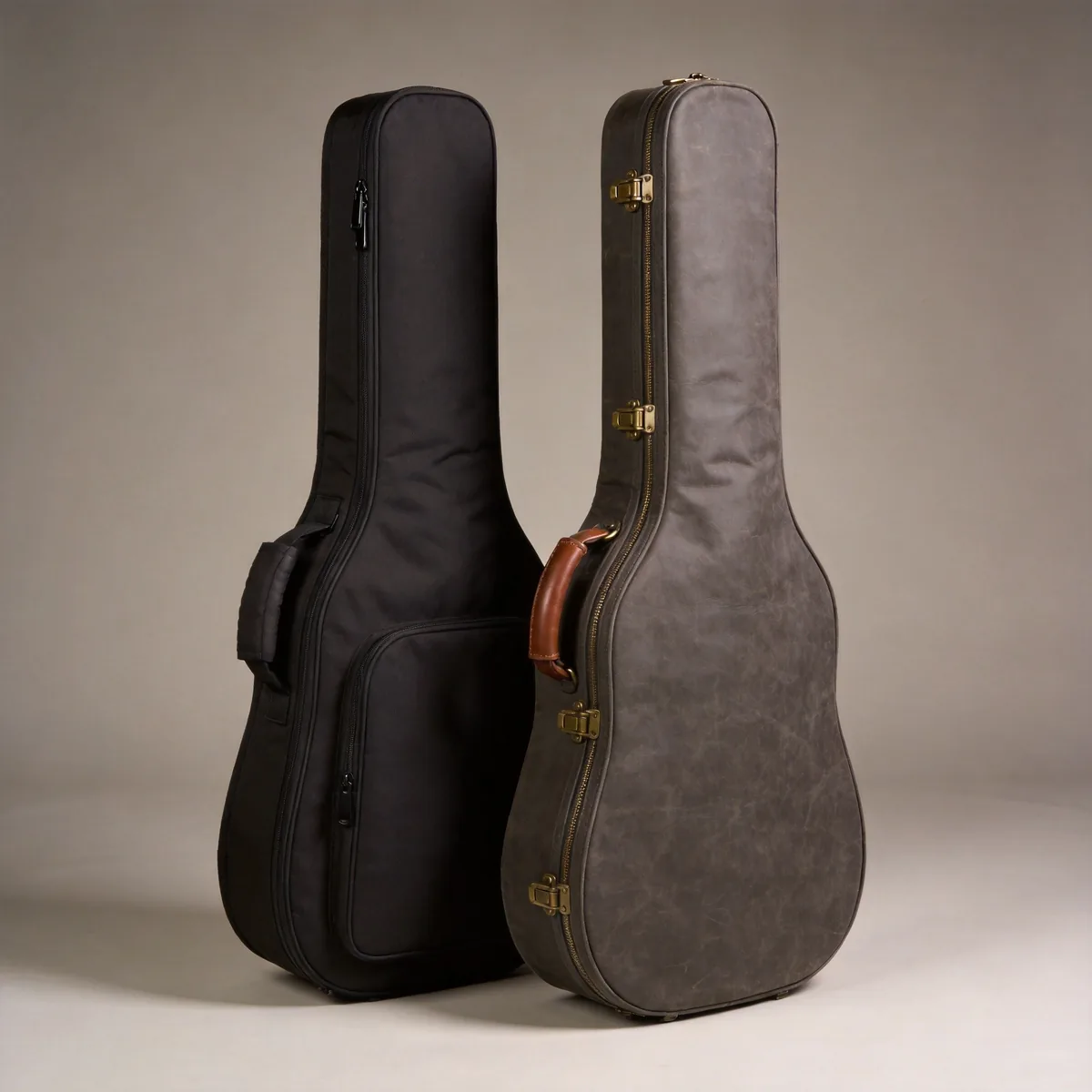
Private label is not a logo added at the end of production. It is a set of decisions taken before the fabric is cut: which branding method goes on which panel, what the interior lining colour is, whether the zipper puller is a stock mould or yours, how the hardware is finished, and what the unit looks like when it comes out of the carton. Get those five right and the bag reads as your product. Get them wrong and it reads as a stock bag with a label sewn on. This page sets out the five branding methods with their real MOQ and mould costs, the lining, puller and hardware options behind them, the retail packaging that finishes the unit, what exclusivity actually covers, and the artwork we need to start. Your brand, our production — no Junyuan label on the bag unless you ask for one.
What Private Label Means on a Guitar Bag — and What It Does Not
In the bag trade the words are used loosely, and the looseness costs buyers money. Private label means the product is made for you and carries only your brand: the pattern may be one of ours or one you specify, but the label, the hangtag, the barcode and the carton mark are yours, and nothing on the unit identifies the producer. White label means a design already in production is supplied to you with your label applied — the shell, the padding and the pocket layout are fixed, and what you choose is the colourway and the branding. ODM sits between them: a design we develop, refined for one buyer and held exclusive to that buyer. Stock plus a logo is the cheapest of the four and the one that most often disappoints, because a woven label on a stock bag does not change the bag.
For a guitar bag the distinction matters more than it does for a tote, because the product is judged in the hand. A buyer opening a gig bag sees three things before they read anything: the shell texture, the interior lining colour, and the zipper. Those three carry more brand signal than the logo does. That is why the branding conversation on this page does not start with the label — it starts with the decisions that make the bag look proprietary, and then places the label where it belongs.
| Model | What You Choose | What Is Fixed | MOQ | Best For |
|---|---|---|---|---|
| Private label, your pattern | Dimensions, padding, pocket layout, lining, trim, hardware, branding, packaging | Nothing — built to your specification | 500 pcs per style and colour | Brands with an existing product or a clear design brief |
| Private label, our pattern | Colourway, lining, trim, hardware, branding, packaging | Shell construction and pocket geometry | 500 pcs per style and colour | Brands launching a first range without a technical pack |
| White label | Colourway and branding only | Everything else, including trim and hardware | 500 pcs per style and colour | Fast entry, test a category, limited design resource |
| ODM, held exclusive | Design refinements, branding, packaging | Base design, shared with no other buyer in your market | 500 pcs per style and colour, volume commitment for exclusivity | Retailers and distributors building a signature line |
One clarification that saves a round of emails: on a custom order we do not attach a Junyuan label, a Junyuan hangtag or a Junyuan barcode, and we do not print our name on the carton unless you ask us to. The legal manufacturer name appears where your market requires it — on a compliance label or in the documentation — not as retail branding. If your market needs an EU responsible person on the label, that block is printed from copy you approve, and our page on GPSR compliance for custom bags sets out what has to appear.
The Five Branding Methods, Compared by MOQ, Tooling and Durability
There are five methods we run on guitar bags, and the choice is driven by three things rather than by taste: the shell fabric, the volume per design, and whether the logo has to survive abrasion at the point where it sits. A silicone patch on a 1680D shell at the shoulder contact point will outlast a heat transfer by years. A heat transfer on the same shell will reproduce a six-colour graphic that no woven label can. Neither is better; they answer different questions.
| Method | How It Is Applied | MOQ per Design | Mould / Setup | Durability | Best For |
|---|---|---|---|---|---|
| Woven label | Jacquard-woven damask label, folded or end-fold, sewn into a seam or onto a panel | 500 pcs of bag; label loom run normally 1,000–2,000 pcs, so expect label overrun | Weaving programme charge, one-off, quoted per design; no metal mould | High — survives washing, abrasion and flexing | Volume programmes, classic brand look, side seam or interior placement |
| Embroidery | Stitched directly into the shell or pocket panel, flat or 3D puff, up to 12 thread colours | No separate MOQ beyond the 500 pcs bag order | Digitising fee, one-off, per design; no mould | High — the thread wears with the fabric rather than peeling off it | Premium tonal branding, tonal-on-tonal logos, pocket or headstock panel |
| Silicone / PVC patch | Moulded patch, 2–3mm, sewn or high-frequency welded onto a flat panel | 500–1,000 pcs per design depending on size | Mould charge, one-off, quoted per design and size; buyer-owned | Very high — 3D relief keeps its edge | Modern streetwear-style branding, hard-wearing zones, high perceived value |
| Heat transfer print | Screen-printed transfer film applied by heat press, up to 6 spot colours plus CMYK | No separate MOQ beyond the 500 pcs bag order | Screen charge per colour, one-off | Medium — fine on flat panels, degrades on high-flex or coarse-weave areas | Multi-colour graphics, fine detail, small runs, interior prints |
| Rubberised badge | Moulded rubber or soft PVC badge with raised or debossed relief, riveted or sewn | 500–1,000 pcs per design | Mould charge, one-off, quoted per design; buyer-owned | High — metal look without the weight or the scratch risk | Heritage and premium lines, metal-look branding on a soft bag |
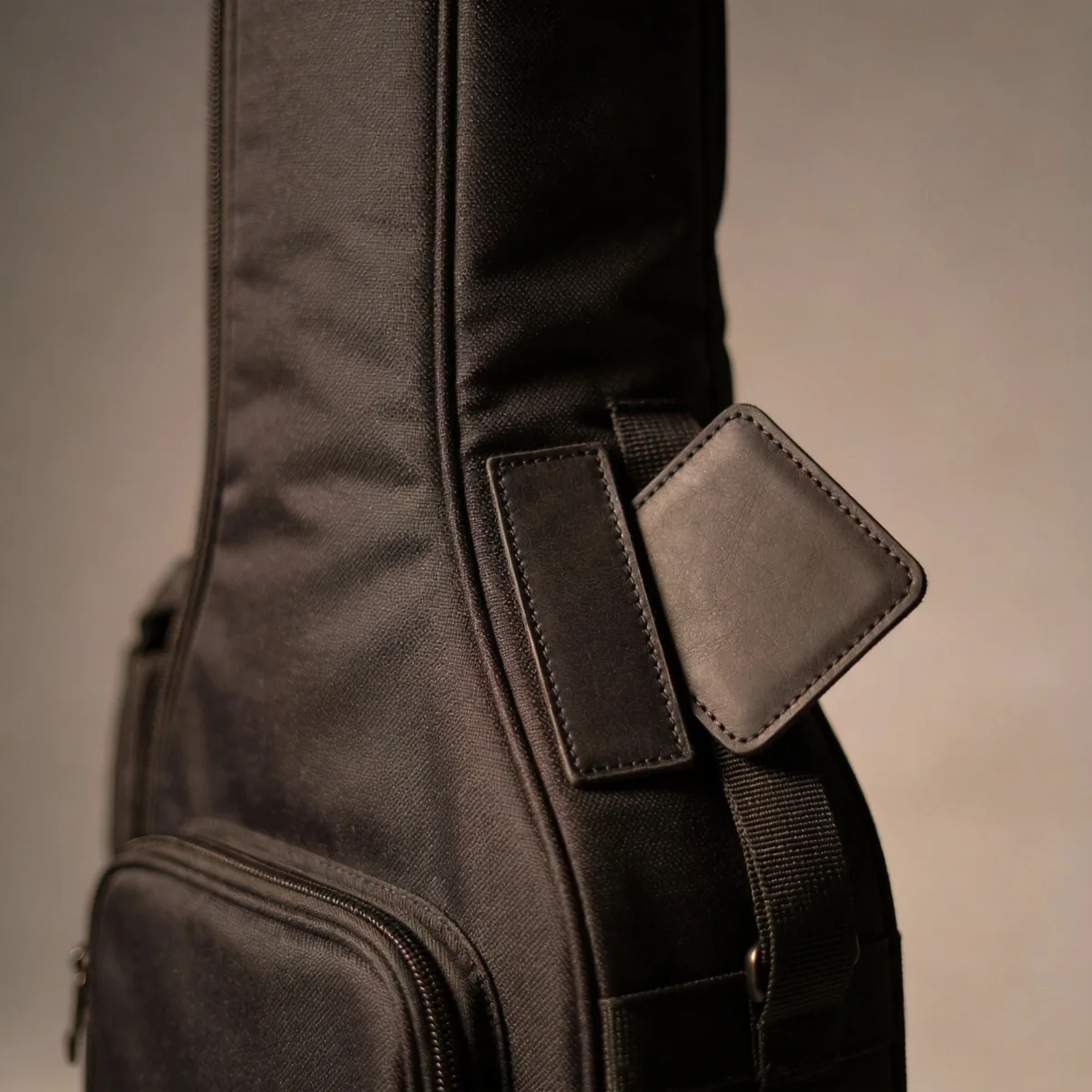
Two practical rules follow from the table. The first is that tooling is a one-off cost, and it is charged once per design, not per order — so a mould paid on the first 500 pieces is amortised across every reorder. The second is that the fabric decides the method more than the artwork does. A coarse 1680D weave swallows fine heat transfer detail, so a line-art logo that looks sharp in a PDF comes back soft on the bag; the same artwork digitised for embroidery holds its edge because the stitch follows the outline. We will tell you which method your artwork will survive before you commit to tooling, and we would rather say it at quotation than at inspection.
Branding Beyond the Logo: Lining Colour, Zipper Pullers and Hardware Finish
This is the part buyers underestimate. A logo tells a customer what the brand is called; the interior tells them what the brand is like. A bag with a burgundy brushed-tricot lining, matte black hardware and a moulded puller reads as a designed product before the label is visible. The same bag with a black lining, nickel hardware and a stock cord puller reads as a catalogue item.
Custom lining colour is the cheapest proprietary signal available. It is a dye-lot decision rather than a tooling decision: we lab-dip to your Pantone TCX reference, you approve the dip, and the lining is dyed to it. Because lining is bought by the roll and cut per order, a lining colour change does not carry a mould fee — it carries a minimum fabric quantity, which is why it is usually paired with the 500-piece order rather than bought separately. The same logic applies to shell colour, webbing colour and stitch thread colour: each is a dye or a thread match, not a tool.
Zipper pullers are the exception. A cord puller with a branded rubber end needs no mould. A puller with your name moulded into it does, and the mould is charged once. On YKK sliders the puller is a separate component, so the practical route is a custom puller body on a standard YKK #8 or #10 slider — you get the branded puller without paying for a custom slider, and you keep YKK’s coil and slider reliability. For programs where the zipper is the visual signature, we can quote a full custom puller in zinc alloy with a plated or powder-coated finish.
| Element | Options | Tooling | Volume Note |
|---|---|---|---|
| Lining colour | 210D polyester, 190T taffeta, brushed tricot; matched to Pantone TCX by lab dip | None — dye lot only | Minimum fabric quantity per colour; normally paired with the 500 pcs order |
| Zipper | YKK #8 standard, YKK #10 reverse-coil for water resistance, nylon coil | None | Reverse-coil costs more per metre and is quoted per size |
| Zipper puller | Cord pull, rubber-ended cord pull, moulded logo puller, metal puller body | Mould charge for a moulded or metal puller body; none for cord | Moulded puller normally 1,000 pcs per design; buyer-owned |
| Hardware finish | Matte black oxide, antique brass, gunmetal, satin nickel, chrome, electrostatic powder coat matched to Pantone | None for plated stock finishes; colour match charge for a Pantone powder coat | Powder coat is quoted with a salt-spray result; plating is quoted by finish |
| Webbing and trim | Polyester or nylon webbing, PP webbing, leather-look trim, reflective piping | None — dye or stock colour | Colour availability varies by width; we send the swatch card |
| Stitch thread | Polyester core-spun, matched to shell, lining or Pantone; contrast stitching on request | None | Contrast stitching is a design decision, not a cost item |
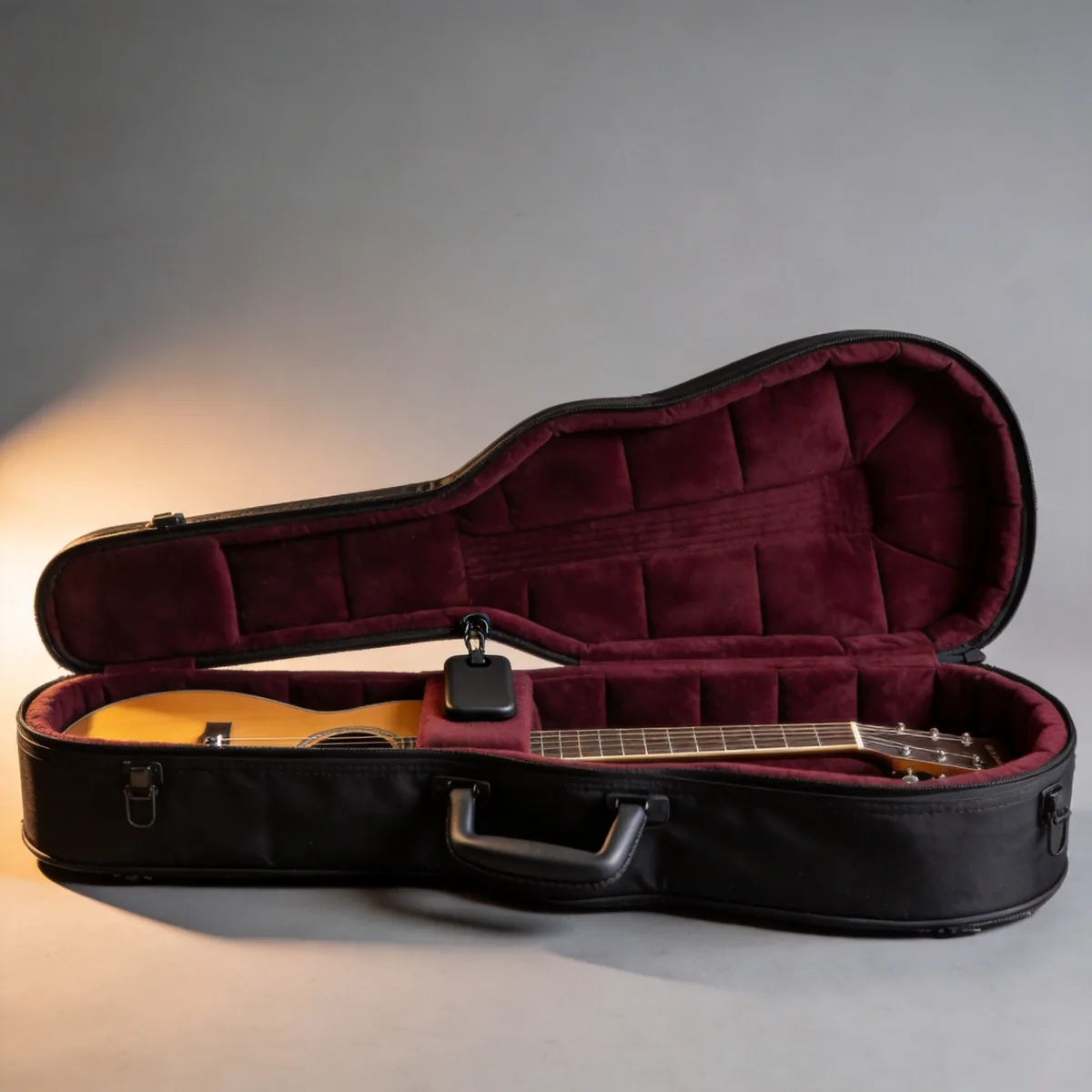
Hardware finish is where a private label programme is most often let down by the factory it did not choose carefully. A matte black oxide finish on zinc alloy will show wear at the strap anchor after a season; a powder coat will chip at the edge if the part was not deburred before coating. We quote finishes with a salt-spray result rather than a colour chip, because on a bag that travels, corrosion is the failure mode that reaches the customer, and it is invisible in a sample photo.
Retail Packaging: Polybag, Dust Bag, Hangtag, Barcode and Printed Colour Box
Packaging is the last 10% of the unit cost and the first thing the customer touches. It is also where private label orders most often arrive incomplete, because each component is a separate purchase from a separate supplier and nobody owns the set. We quote the set as one line item so the bag, the dust bag, the hangtag, the barcode and the carton all arrive matched.
| Component | Standard Specification | MOQ / Setup | Notes |
|---|---|---|---|
| Polybag | LDPE 0.05mm, with or without euro hole, suffocation warning and recycling mark printed as required | No separate MOQ; print plate charge if the warning is printed | Amazon requires a suffocation warning on bags above the stated opening size |
| Non-woven dust bag | 80–100gsm PP non-woven, drawstring, one or two spot colours screen printed | 500–1,000 pcs per print design | The cheapest way to make an unboxing feel considered; also reusable as a gig-bag liner |
| Printed hangtag | 350gsm C1S board, matte or gloss lamination, four-colour both sides, die-cut shape, cotton or jute string | 1,000 pcs per design typical for a print run | Carries your barcode, size, material and care copy; die shape is a one-off cutting die |
| Barcode label | Thermal transfer, UPC-A, EAN-13 or GTIN-14, applied to hangtag or polybag | No MOQ; number supplied by you | The GS1 prefix is yours, not ours; we print the number you issue and never generate one |
| FNSKU label | Amazon-assigned FNSKU, 1×3 inch, applied over the original barcode | No MOQ | Applied at packing; requires the ASIN to be live before the carton is sealed |
| Printed colour box | 350gsm greyboard wrapped in 157gsm art paper, lamination, four-colour plus spot, die-cut and glued | 500–1,000 pcs; plate and cutting die charges | Best value on the second order, once the dieline is proven |
| Carton mark and packing | Five-ply export carton, shipping mark, size and colour breakdown, silica gel desiccant | No MOQ | Carton mark should match the packing list line for line; this is what customs reads |
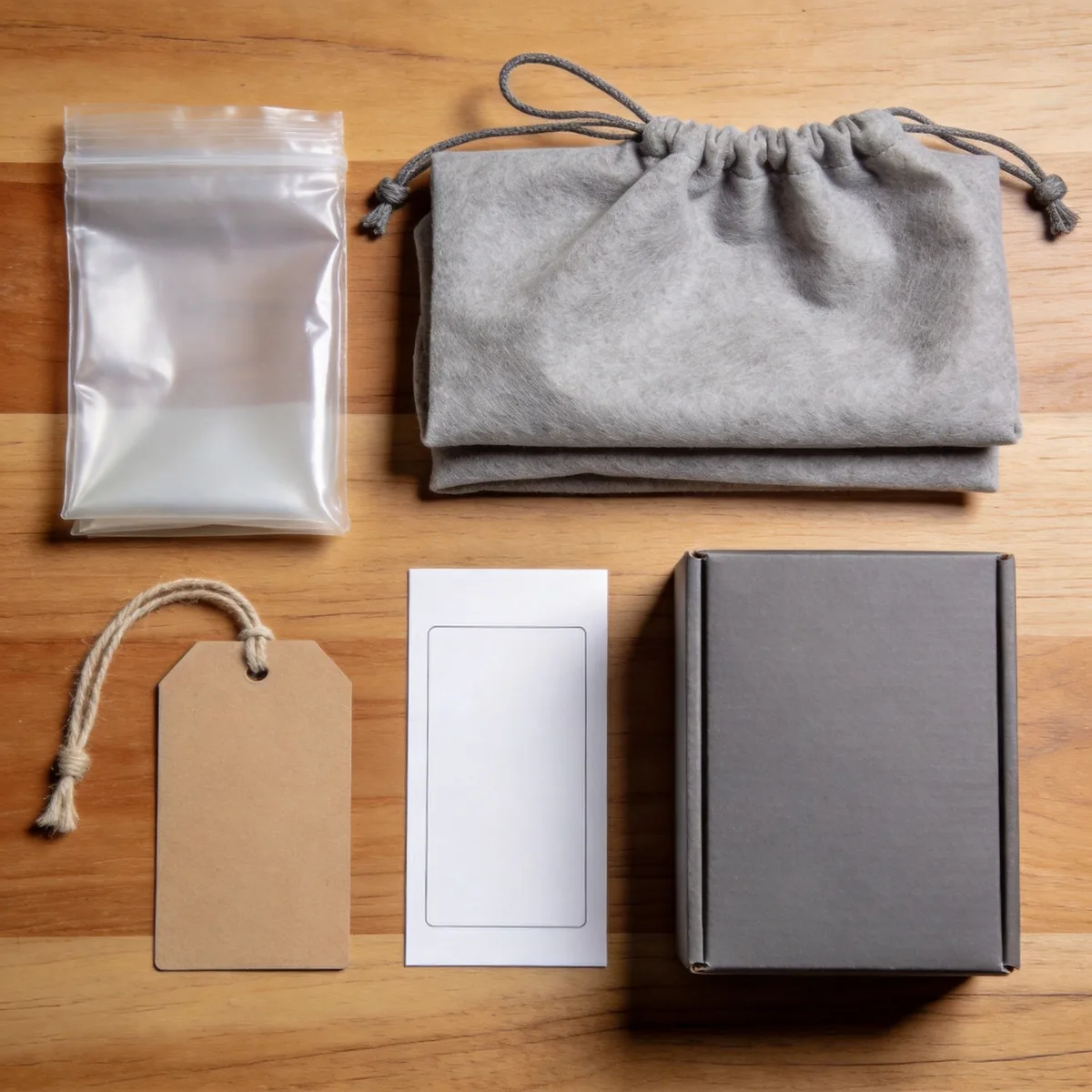
Two packaging details cause most of the after-sales friction on private label orders, and both are avoidable at the brief. The first is the barcode: a brand that has not yet obtained a GS1 prefix will ask the factory to supply a number, and a factory-generated barcode will be rejected by every serious retailer. The prefix has to be bought by you before the hangtag is printed. The second is the polybag warning. Marketplaces require a suffocation warning on bags above a stated opening size, in the local language, and a bag that arrives without it is either rejected at the fulfilment centre or relabelled at your cost.
Exclusive Colourway, Mould Ownership and Artwork Rights
Private label is only worth paying for if the result stays private. Three things have to be settled in writing before the first order, and all three are simple to state.
Exclusive colourway. We do not sell your colourway and pattern combination to another buyer in your market. Where a programme needs a stronger commitment, we put it in writing: a specific shell colour, lining colour, trim combination and branding placement is held to you for an agreed term, typically twelve months, against an agreed annual volume. The scope is the combination, not the individual elements — we will still sell a black bag to somebody else, because a black bag is not a design.
Mould and tooling ownership. Every mould, plate, screen and weaving programme paid for by a buyer belongs to that buyer. It is stored at our cost, it is not used for any other customer’s order, and it is either returned or held for your future orders on request. This matters more than it sounds: a silicone patch mould or a puller mould is a physical asset, and a supplier that reuses it for a competing brand has given away the only part of your design that was hard to copy.
Artwork rights. Your logo, your dielines, your copy and your photography stay yours. We do not display your branding in our marketing, our catalogue or our social channels without written permission, and we sign an NDA where a programme requires it. Where we digitise, trace or redraw artwork for you — an embroidered logo from a raster file, a box dieline from a sketch — the resulting files are delivered to you and belong to you.
- ✓ Written exclusivity on the colourway and trim combination, per market, for an agreed term.
- ✓ Buyer-owned tooling: moulds, plates, screens and weaving programmes paid for by you are never used on another order.
- ✓ No marketing use of your logo, product photos or brand name without written permission.
- ✓ NDA on request, signed before the technical pack is shared.
- ✓ Files returned: digitised embroidery, dielines and proofs are delivered to you, not held back.
What exclusivity does not cover is worth saying as plainly. We will not refuse to make a black guitar bag for another buyer, we will not withhold a standard construction, and we cannot police what a third factory does with a design that circulates publicly. What we can do is keep your specific combination out of our own order book, and that is the commitment we put in writing.
From Artwork to Approved Sample: The Private Label Sequence
A private label order is not slower than a stock order, but it has a different critical path, and most of the delay buyers experience comes from the front of it rather than the back. The sequence below is the one we run; the timings are the ones we hold.
- Brief and technical pack (day 0). The instrument the bag must fit, the style and quantity per colourway, and the branding method you want to explore. If you have a technical pack, send it; if you do not, we will draft the specification from your brief and send it back for confirmation.
- Branding and packaging quotation (2–3 working days). Unit price, tooling charges broken out separately, packaging components quoted as a set, and the lead time per line. Tooling is quoted one-off so you can see what a reorder will cost.
- Digital proof (1–2 days after artwork). A PDF mockup of the bag with your branding positioned on the actual panel, at the actual size, plus the hangtag and box dieline. This is where placement problems are caught — a logo that collides with a seam or a pocket curve is a proof problem, not a production problem.
- Lab dip and material approval (3–5 days, runs in parallel). Lining, shell and trim dips against your Pantone references, plus the hardware finish swatches. Nothing is cut until the dips are approved in writing.
- Tooling (5–12 days, runs in parallel). Weaving programme for a woven label, digitising for embroidery, mould for a silicone patch, rubber badge or puller. This is the step that surprises buyers: a new mould is not part of the 6–10 day sampling window, it runs before it.
- Branded sample (6–10 business days). Counted from written approval of the specification and the artwork, with tooling already in hand. The sample carries your label, your lining, your puller and your hardware, so what you approve is the product rather than a proxy for it.
- Sample approval and sealing (your side). The approved sample is sealed and becomes the inspection standard. Padding thickness, dimensions, stitch density and branding position are measured against it at inspection rather than judged by eye.
- Bulk production (35–50 days). After written sample approval, depending on material availability and order size. Pre-shipment inspection at AQL 2.5 major and 4.0 minor, with a photo report before the carton is sealed.
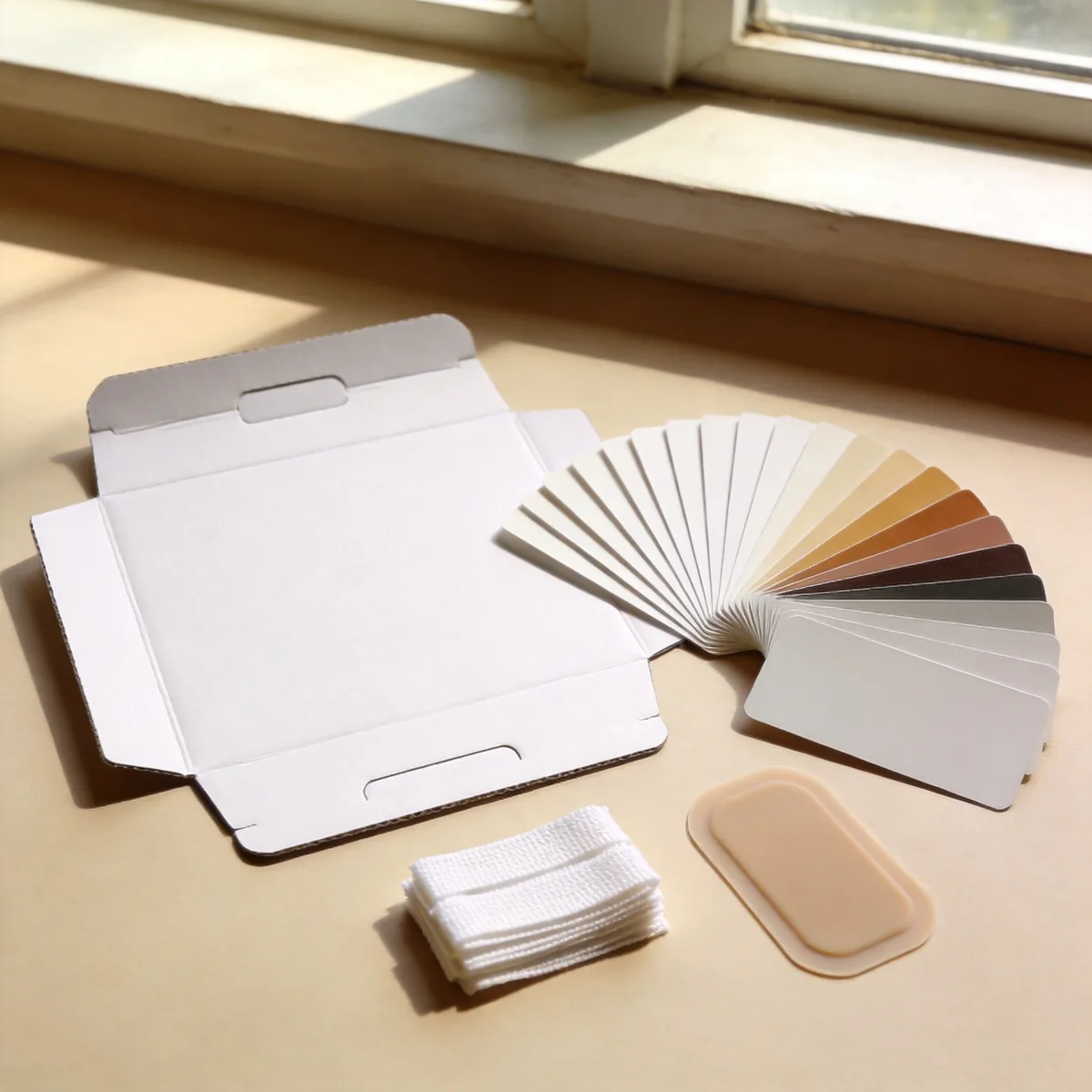
Two commercial notes belong here because they come up on every private label programme. Sampling is charged, and the sample charge is credited against the first bulk order once that order reaches the agreed value — a buyer who pays for three rounds of samples and orders nothing has cost us tooling time, and a buyer who orders is not asked to fund the sample twice. And tooling paid on the first order does not repeat: the second order is a bag, a label and a carton, not a mould.
- ✓ Company established 2014, founder entered the bag trade in 2004. Long enough to know which branding method will still be reproducible at the same price on a reorder.
- ✓ Affiliated and partner factories, matched to the construction. A guitar bag and a cooler bag do not run on the same line; we place each programme where that construction already runs.
- ✓ One supplier for the bag and the packaging. Label, hangtag, dust bag, box and carton quoted together, so the set arrives matched instead of assembled from three vendors.
- ✓ Tooling quoted separately and owned by you. No hidden amortisation in the unit price, and no mould reused on another buyer’s order.
- ✓ AQL 2.5 documented before shipment. The inspection photo report reaches you before the container leaves, not after it lands.
- ✓ Direct communication. [email protected] and +86 17750020688, answered by the people who quote and schedule the order.
Junyuan Bags is the trading name of QUANZHOU JUNYUAN COMMERCIAL AND TRADING CO., LTD., established in 2014, and its founder entered the bag trade in 2004. Production runs through affiliated and partner factories that specialise in the construction each programme needs, which is why sampling holds at 6–10 business days rather than the month a single-line factory needs to clear capacity for a new pattern. Your purchase order, invoice and shipping documents are issued in the legal entity name above.
Send the instrument the bag must fit, the quantity per style and colour, the branding method you have in mind and any artwork you already hold. You will have a written quotation with tooling broken out separately within 2–3 working days, and a branded sample in 6–10 days once artwork is approved.
Email: [email protected] | WhatsApp / Tel: +86 17750020688
Artwork Requirements: AI, EPS, PDF, Pantone and Dielines
Artwork is the single largest source of delay in a private label order, and it is almost always a format problem rather than a design problem. The list below is what we need to go straight to proof. Anything not on it can usually be worked around, but each workaround adds a day.
- Vector files: Adobe Illustrator (.ai), .eps or .pdf, with fonts converted to outlines. A raster logo at 300dpi is usable for a hangtag and unusable for embroidery or a woven label.
- Colour references: Pantone numbers for every spot colour, coated (C) for print on board and film, uncoated (U) where the substrate is absorbent, and Pantone TCX for fabric, lining and thread.
- Minimum sizes: 0.25mm minimum line weight for print, 1.5mm minimum text height for a woven label, and a 1mm minimum stroke for embroidery before the stitch count makes the logo unreadable at 40mm wide.
- Placement: state the panel and the position — centre of the front pocket, side seam at the lower third, headstock panel, interior lid. If you have a reference photo of a competitor’s placement, send it; it is faster than a description.
- Dielines: for a printed box or a die-cut hangtag, send the dieline as a separate Illustrator layer, or ask us for ours and place your artwork into it. Do not scale a dieline to fit artwork.
- Barcodes: supply the number and the symbology (UPC-A, EAN-13, GTIN-14), at 80% magnification or larger, with the quiet zone respected. We do not generate barcode numbers.
- Copy for labels and hangtags: set exactly as supplied, including compliance wording, care instructions and market-specific language. We do not rewrite, translate or shorten copy without written instruction.
- Embroidery files: .dst or .emb if you have them. If you do not, we digitise from your vector and send the stitch file back for approval before the sample is run.
The one thing we ask buyers not to do is approve artwork by eye on a screen. A logo that reads well at 300mm on a monitor is often illegible at 40mm on a woven label, and a Pantone that looks correct in RGB will not match a dyed lining. That is what the digital proof and the lab dip are for: they cost a few days and they remove the two failure modes that cannot be fixed after the fabric is cut. If you are still deciding how much of the process to own and how much to hand over, our page on the guitar bag OEM process walks the same sequence from the buyer’s side, and the custom guitar bag manufacturing page covers the construction and material options the branding sits on.
Frequently Asked Questions About Private Label Guitar Bags
Q1: What is the difference between private label and white label on a guitar bag?
Q2: What is the MOQ for a private label guitar bag?
Q3: What do the moulds cost, and who owns them?
Q4: Can you match my Pantone colour exactly?
Q5: Should my logo be printed, embroidered or a patch?
Q6: Can I have a custom lining colour and a branded zipper puller?
Q7: What packaging can you supply for Amazon FBA or a retail chain?
Q8: Will you sell my design or colourway to another buyer?
Q9: What artwork files do you need to start?
Q10: How long does a private label order take from artwork to delivery?
Explore the Rest of the Guitar Bag Range
- Custom Guitar Bag Manufacturer
- Custom Gig Bag Manufacturer
- Electric Guitar Bag Manufacturer
- Acoustic Guitar Bag Manufacturer
- Bass Guitar Bag Manufacturer
- Guitar Bag OEM Process
- GPSR Compliance for Custom Bags
- Bag Manufacturer vs Supplier
- Custom Backpack Manufacturer
- Sports Bags Manufacturer
- Custom Ukulele Bag Manufacturer — soprano to baritone sizing and mixed-size MOQ
- OEM & ODM Service — how a development programme runs from brief to shipment
- Custom Golf Bag Manufacturer — golf bag programmes with logo and private label