

Trauma Bag – EMS First Responder Bag OEM Manufacturer | Junyuan
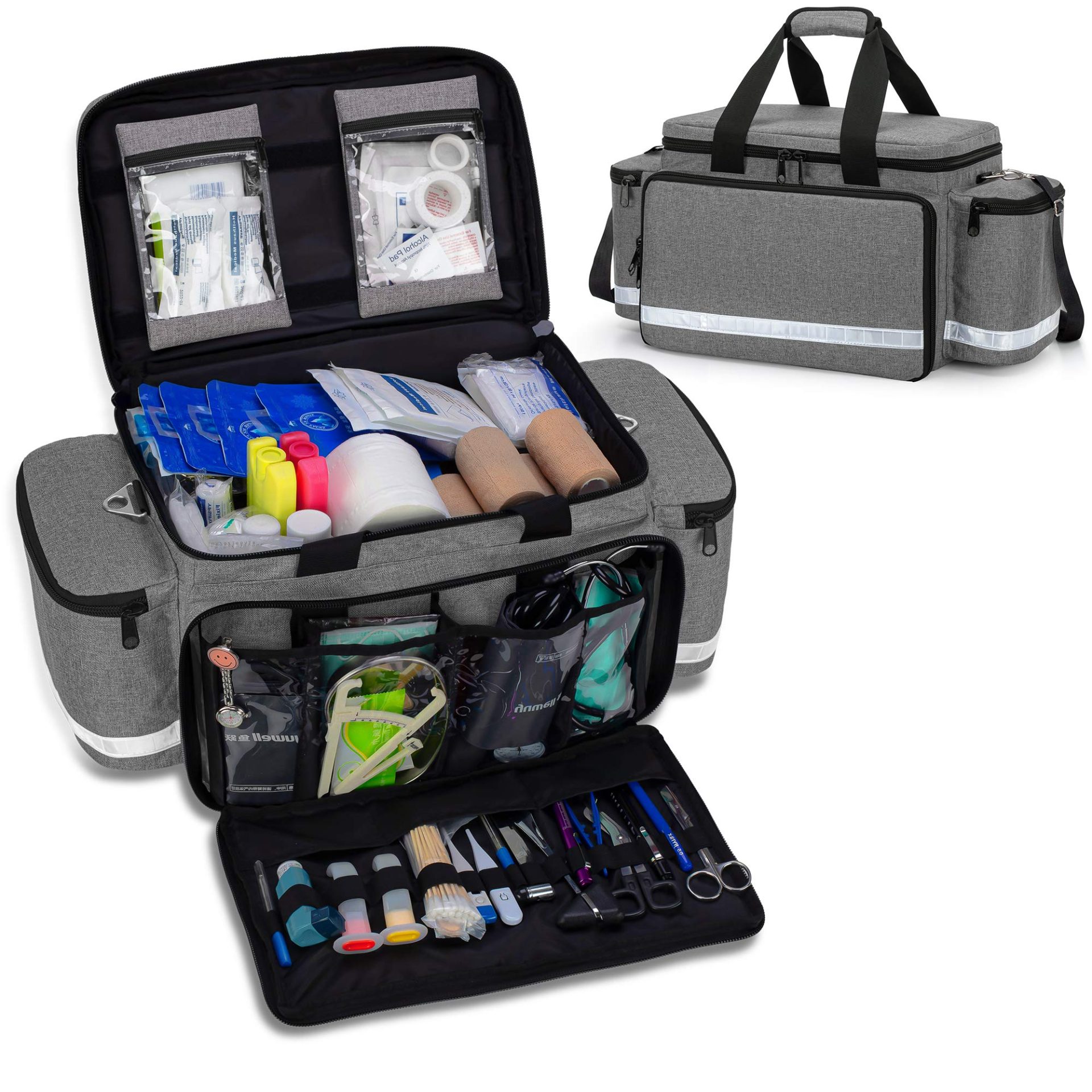
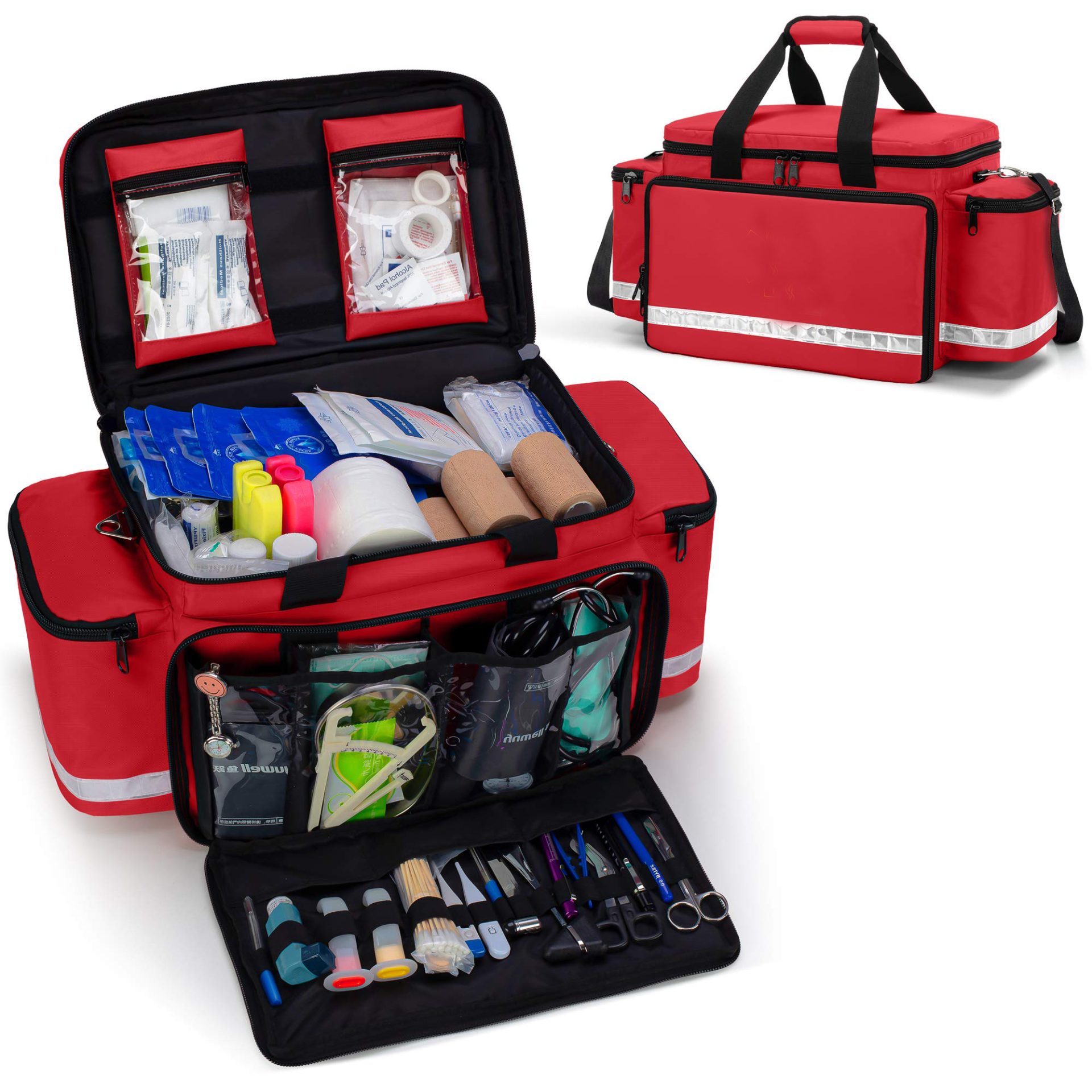
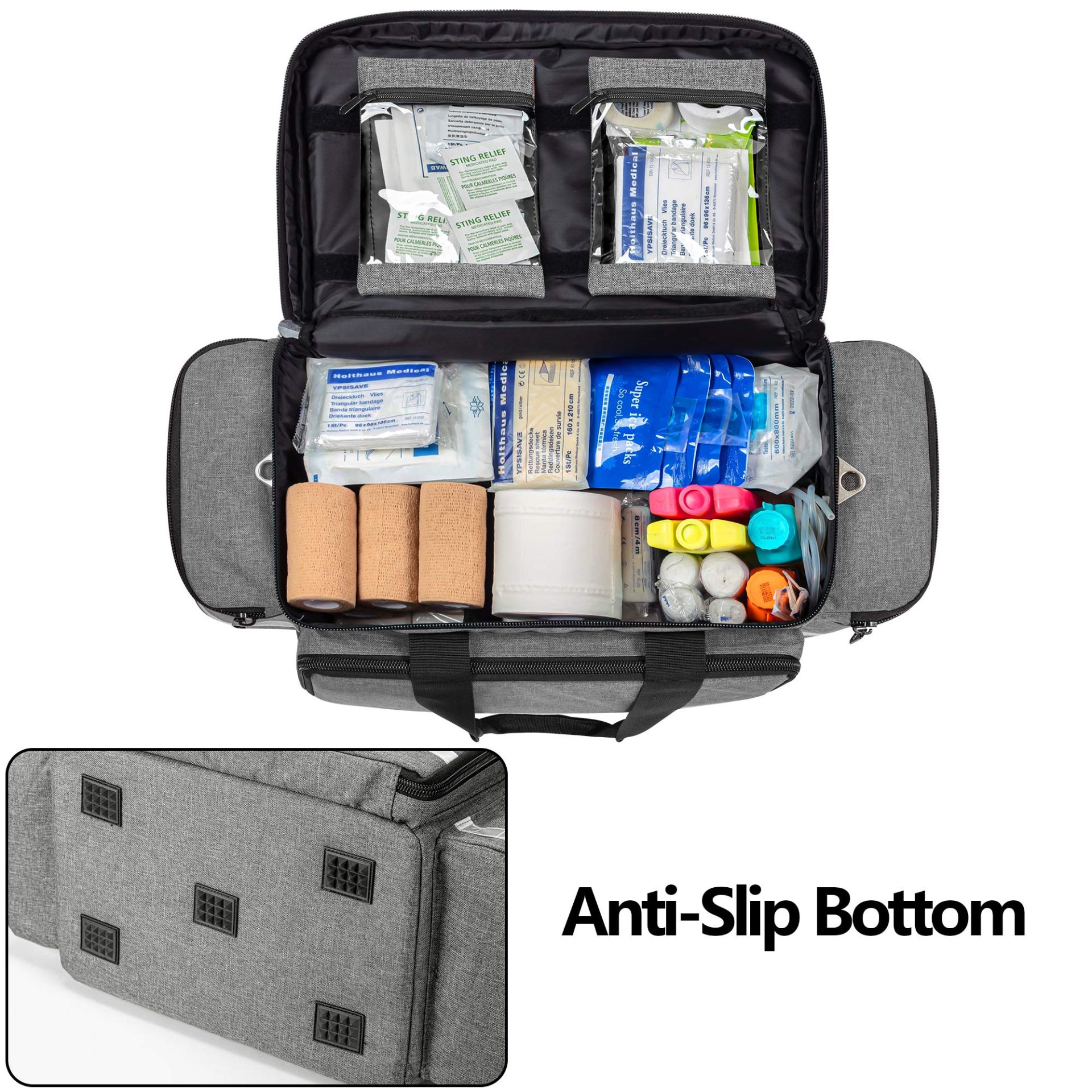
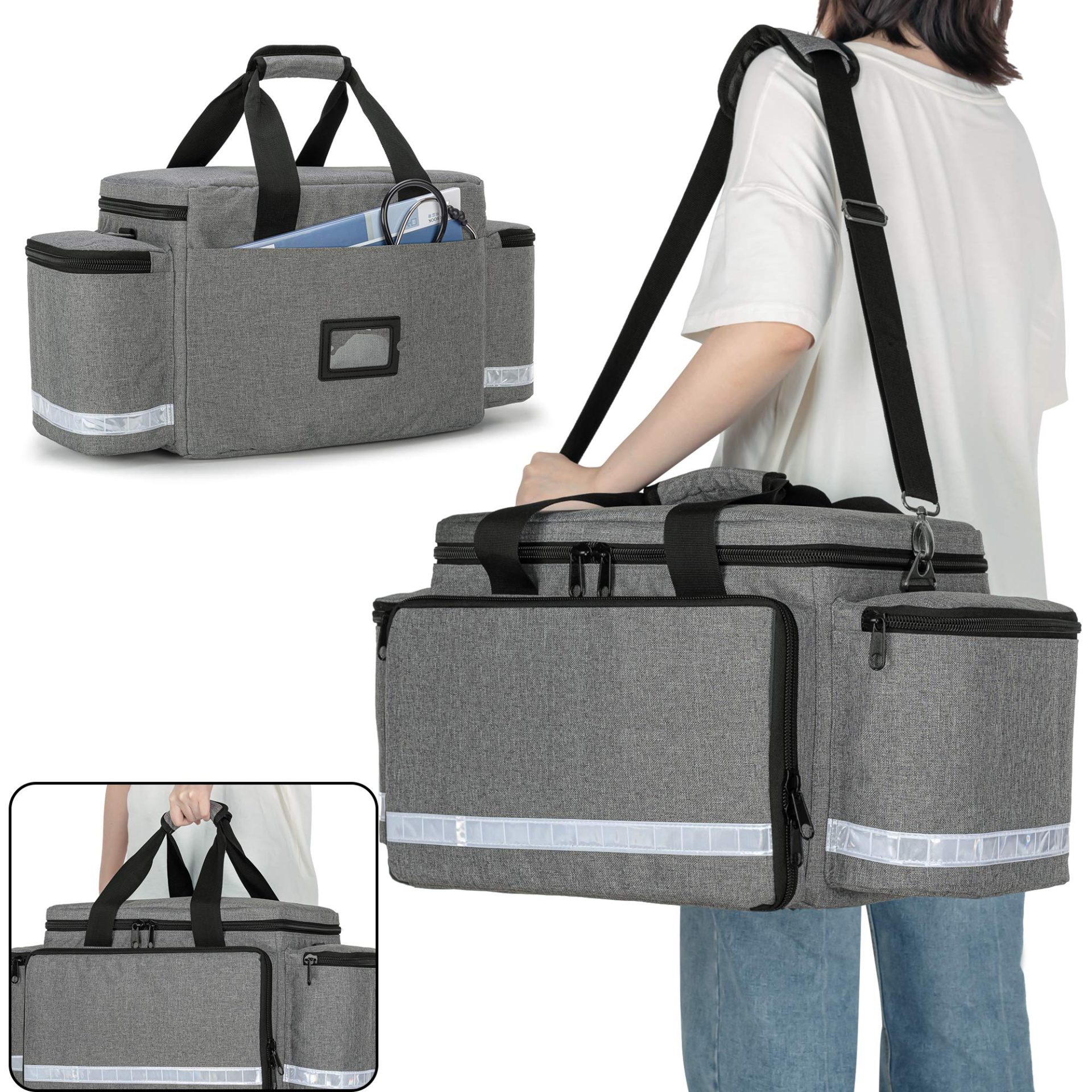
- This trauma bag is made of heavy-duty and tear-resistant nylon with padded PE foam liner, well stitches, strong zippers, anti-slip feet, and reflective strips.
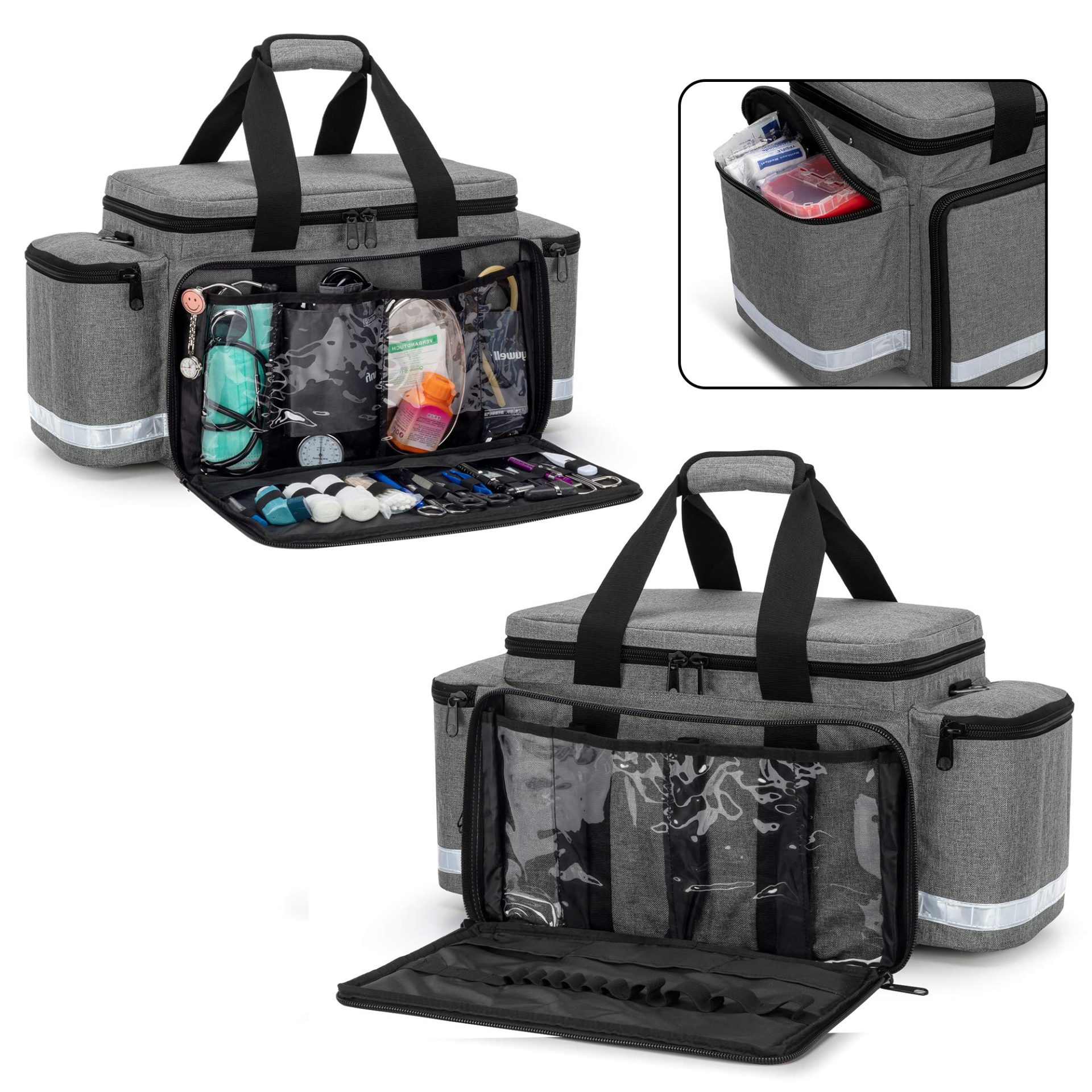
- The front compartment of this medical doctor bag has multiple elastic loops with bottom slots for specialized tools. 4 transparent pockets for quick finding. And combining large side and back pockets.
- Padded handle and adjustable & removable shoulder strap are convenient to carry your emergency supplies, perfect for the event of an emergency.
- This ems trauma bag is a great choice for medical doctors, experts, or professional first responders. Suitable for camping, trip, or any outdoor activities also.
Description
Trauma Bag for EMT, EMS and First Responders — Built to PHTLS Standards
A trauma bag is a purpose-built carry system for pre-hospital emergency care — designed to keep hemorrhage-control supplies, airway devices, chest-seal materials and IV components separated, visible and reachable within seconds. Unlike a generic first-aid pouch, a trauma bag follows the organizational logic of trauma assessment protocols so that a provider under stress can pull the right tool without searching. This trauma bag from Quanzhou Junyuan is engineered around the NAEMT PHTLS (Prehospital Trauma Life Support) framework, which teaches that multi-system trauma patients require a systematic approach to equipment organization and rapid intervention. The result is a bag that supports, rather than hinders, clinical decision-making in the first critical minutes of an emergency response.
Built for EMS agencies, ambulance services, tactical-medical teams and hospital emergency departments, this bag combines 1050D heavy-duty nylon, a padded PE foam liner, bar-tack reinforced stress points, anti-slip base feet and 360° reflective strips — all produced through an OEM/ODM program backed by an SGS-verified affiliated factory.

What Fits Inside — Compartment Layout Aligned to MARCH
The interior of this trauma bag is organized around the TECC (Tactical Emergency Casualty Care) MARCH assessment sequence — Massive hemorrhage, Airway, Respiration, Circulation, Hypothermia — so that compartments map directly to the clinical priorities a provider works through on scene.
- Massive hemorrhage zone: Dedicated elastic-loop holders for CAT or SOF-T tourniquets (×2), hemostatic gauze rolls and pressure dressings, positioned for one-handed extraction.
- Airway zone: Sized pocket for BVM mask, OPA/NPA airway set, and a portable suction unit.
- Respiration zone: Flat pocket for chest seals (vented and occlusive), decompression needle kit and pulse-oximeter.
- Circulation zone: Transparent PVC pocket for IV start kit, fluid bags, and blood-pressure cuff.
- Hypothermia / adjuncts zone: Large main compartment for thermal blankets, splints, cervical collar and backboard strap set.
The front panel features four transparent zip pockets for at-a-glance identification of small items, plus reinforced elastic loops with bottom pass-through slots for long instruments. A wide-opening side pocket accommodates an oxygen cylinder up to D-size; the rear mesh pocket holds a hydration pack or documentation folder.

Materials and Build — Why This Bag Survives Field Use
Emergency-response equipment must withstand daily loading, vehicle vibration, temperature swings and surface decontamination. This trauma bag is constructed from 1050D heavy-duty nylon with a padded PE foam liner that protects fragile instruments (laryngoscopes, glass suction catheters) from impact damage during transport.
| Component | Specification | Field Benefit |
|---|---|---|
| Shell fabric | 1050D ballistic nylon, PU-coated | Tear-resistant; wipe-cleanable after contamination events |
| Interior lining | PE foam, 10 mm | Shock absorption for delicate airway and monitoring devices |
| Zippers | YKK #10, oversized pulls | Gloved-hand operation; 10,000+ cycle rated |
| Stress points | Bar-tack reinforced | Prevents seam separation under full load (≈12 kg typical) |
| Base | 4× anti-slip rubber feet | Stability on wet or uneven surfaces; keeps bag off contaminated ground |
| Visibility | 360° reflective strips | Night-scene and low-light identification per NAEMSP equipment-visibility guidance |
| Handle | Padded grab handle + adjustable shoulder strap | Two carry modes; reduces fatigue during prolonged transport |
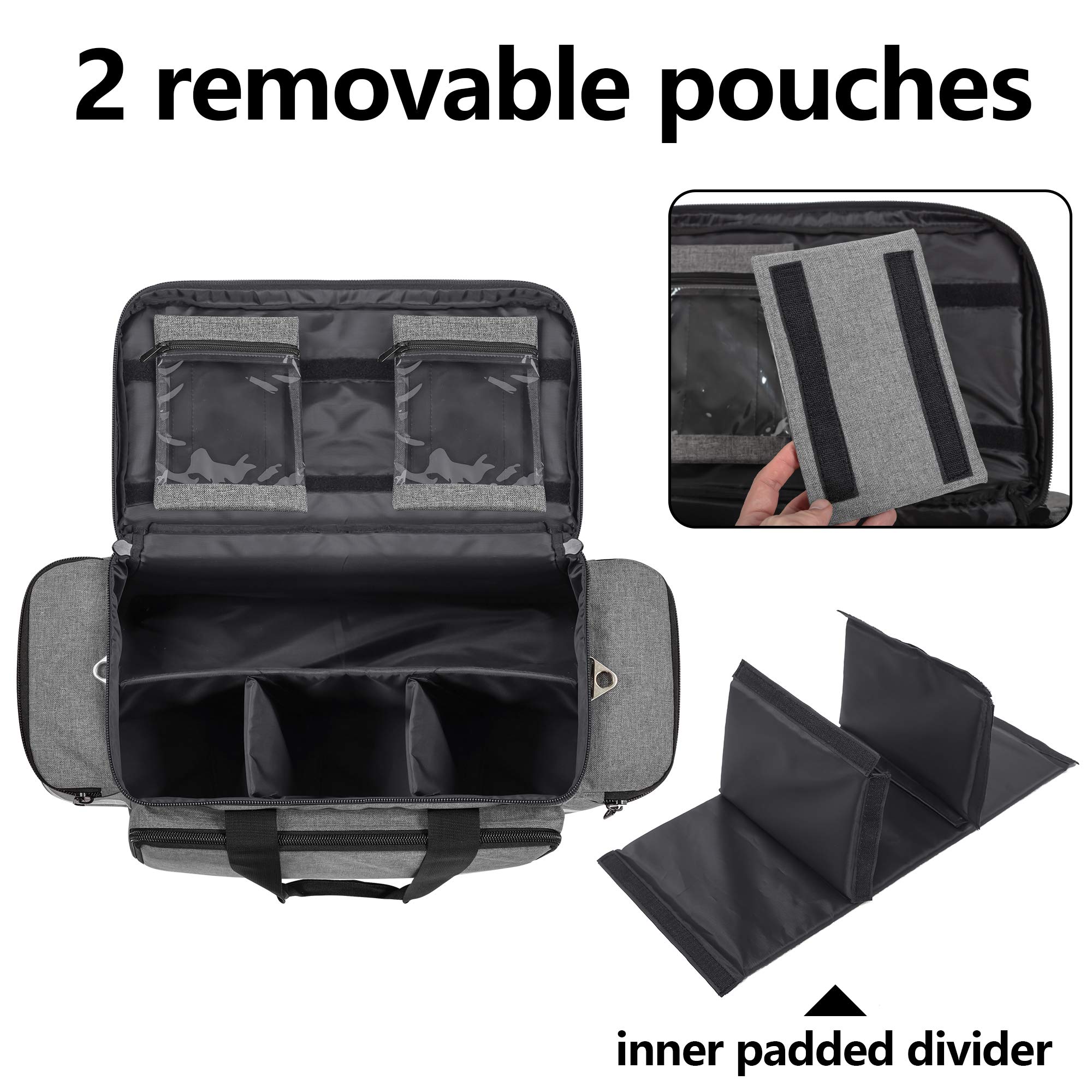
Compared with a standard medical bag, this trauma-specific build prioritizes durability and speed of access over aesthetic finish — the fabric is heavier, the zipper pulls are oversized for gloved use, and the interior dividers are rigid and removable for rapid reconfiguration between call types. For a comparison with our doctor-style medical bag, see the doctor medical bag page.


Designed for the TCCC Three-Phase Care Model
The TCCC (Tactical Combat Casualty Care) guidelines define three phases of care — Care Under Fire, Tactical Field Care and Tactical Evacuation Care — each with different equipment needs. This trauma bag is designed to support all three:
- Care Under Fire (return fire / suppress): External quick-pull tab on the main zipper allows one-handed access to tourniquets and hemostatic agents — the only interventions proven to save life in this phase.
- Tactical Field Care (scene treatment): Full bag opening exposes all five MARCH compartments simultaneously, enabling a systematic primary survey without repacking or re-searching.
- Tactical Evacuation Care (en-route): The padded shoulder strap and grab handle allow hands-free carry during litter transport; the reflective strips support identification during helicopter or vehicle loading.
This multi-phase design philosophy is aligned with CDC field triage guidelines and the NAEMT PHTLS organizational framework, making the bag equally suitable for civilian EMS, law-enforcement tactical teams and military medical supply programs. For tactical-specific configurations, explore our tactical medic bag line.

Who Is This Trauma Bag For?
This bag is designed for organizations and distributors that equip front-line emergency medical personnel. Typical buyers include:
EMS Agencies & Ambulance Services — equip every rig with a standardized trauma loadout per AHA 2024 first-aid guidelines.
Fire Departments — complement engine-company medical caches with a portable, MARCH-organized bag.
Tactical Law Enforcement — issue to SWAT medics and tactical officers as an IFAK-to-bag upgrade.
Hospital Emergency Departments — stock trauma bay crash-cart adjuncts and rapid-response corridor bags.
Military Medical Distributors — fulfill DoD and allied-nation medical supply contracts with TCCC-aligned gear.
First Aid Training Centers — use as teaching aids in PHTLS, TCCC and TECC certification courses.

OEM Customization for Volume Orders
Every dimension of this trauma bag is customizable through our OEM/ODM service:
- Size & layout: Interior dividers, pocket count and elastic-loop configuration built to your agency’s specific loadout protocol.
- Fabric & color: Choose from standard 1050D nylon, Cordura® blends, or water-resistant PU-coated polyester. Any Pantone-matched color is available for volume orders.
- Branding: Logo application via embroidery, silk-screen, heat transfer, woven label, rubber patch or metal plate — on bag body, zipper pulls and packaging.
- Packaging: Custom carton markings, poly bags, hangtags, care labels and retail inserts for distributor or FBA fulfillment.
Production is anchored on our SGS-verified affiliated factory — 4,950 sqm, 7 production lines, 149 machines, 137 staff including 8 dedicated QC — with a monthly line capacity of 200,000 pieces. The factory was verified by SGS for Alibaba.com in March 2026.

Quality Control and Compliance
Every trauma bag passes through a multi-stage QC process before shipment:
- Incoming material inspection: Fabric weight, coating thickness, zipper pull-force and color fastness tested against spec sheet.
- In-line sewing audit: Stitch density (≥8 SPI), bar-tack coverage and seam alignment checked at every production stage.
- Finished-bag inspection: Dimensional accuracy, zipper cycle test (1,000 open/close), strap pull-test (≥15 kg), and reflective-strip luminance check.
- Pre-shipment AQL sampling: Statistical sampling per ANSI/ASQ Z1.4 Level II, AQL 2.5 for critical defects and AQL 4.0 for major defects.
The 8-person QC team at the affiliated factory performs 100% inspection on first-article samples and random-inspects every subsequent lot. Third-party inspections by SGS, Bureau Veritas or Intertek are welcome at any stage. Export documentation includes Certificate of Origin, Form A, and test reports as required by destination market.

Frequently Asked Questions About Trauma Bags
What’s the difference between a trauma bag and a standard first-aid kit?
A first-aid kit is a passive container for basic supplies (bandages, antiseptic, tape). A trauma bag is an organized carry system designed around clinical assessment protocols (MARCH / PHTLS) — it separates hemorrhage-control, airway, respiration and circulation supplies into dedicated, labeled compartments so a trained provider can locate tools under stress without searching. Trauma bags also use heavier materials, oversized zipper pulls for gloved operation and rigid dividers for instrument protection.
Can this bag hold a BVM and portable O₂ cylinder?
Yes. The main compartment accommodates a standard adult BVM mask with reservoir, and the reinforced side pocket is sized for a D-size oxygen cylinder. For larger C-size cylinders, we can customize the side pocket dimensions through the OEM program.
Do you offer custom divider sets for specific protocols?
Absolutely. Send us your loadout list or protocol document, and we’ll engineer a divider set that maps each compartment to your specific supply list. This is a core part of the OEM program — we’ve built custom layouts for agencies following PHTLS, TCCC, TECC and agency-specific protocols.
What’s the lead time for 500-piece orders?
For custom-color bags with logo: approximately 30–45 days after sample approval, depending on order volume and production season. Your sales contact will confirm exact dates for each order. Stock-fabric orders with logo decoration can ship faster.
Can you private-label with our EMS agency branding?
Yes. Private labeling is a core service. We apply your agency’s logo, colors and branding across the bag body, zipper pulls, shoulder strap, hangtags, care labels, poly bags and retail carton. All packaging can be customized to your specifications.
Is this bag suitable for military or tactical use?
Yes. The build (1050D nylon, bar-tack reinforcement, reflective strips) meets the durability requirements for tactical environments. We produce trauma bags for military medical distributors and law-enforcement tactical teams. For MOLLE-compatible configurations, see our tactical medic bag.
What’s the minimum order quantity?
MOQ depends on the customization level. Custom colors and fabric carry higher minimums than stock-fabric bags with logo decoration. Contact us with your target quantity and configuration for an exact MOQ for your program.
Do you supply other medical bag styles?
Yes. Alongside this trauma bag we manufacture doctor medical bags, nurse tote bags, first-aid kit bags, tactical medic pouches and IV carrying cases. The full range is in the medical bag category.
Ready to Equip Your Team?
Whether you need 100 bags for your EMS fleet or 10,000 for a national supply contract, we can configure this trauma bag to your exact protocol, branding and compliance requirements.
Frequently Asked Questions
What size trauma bags do you manufacture?
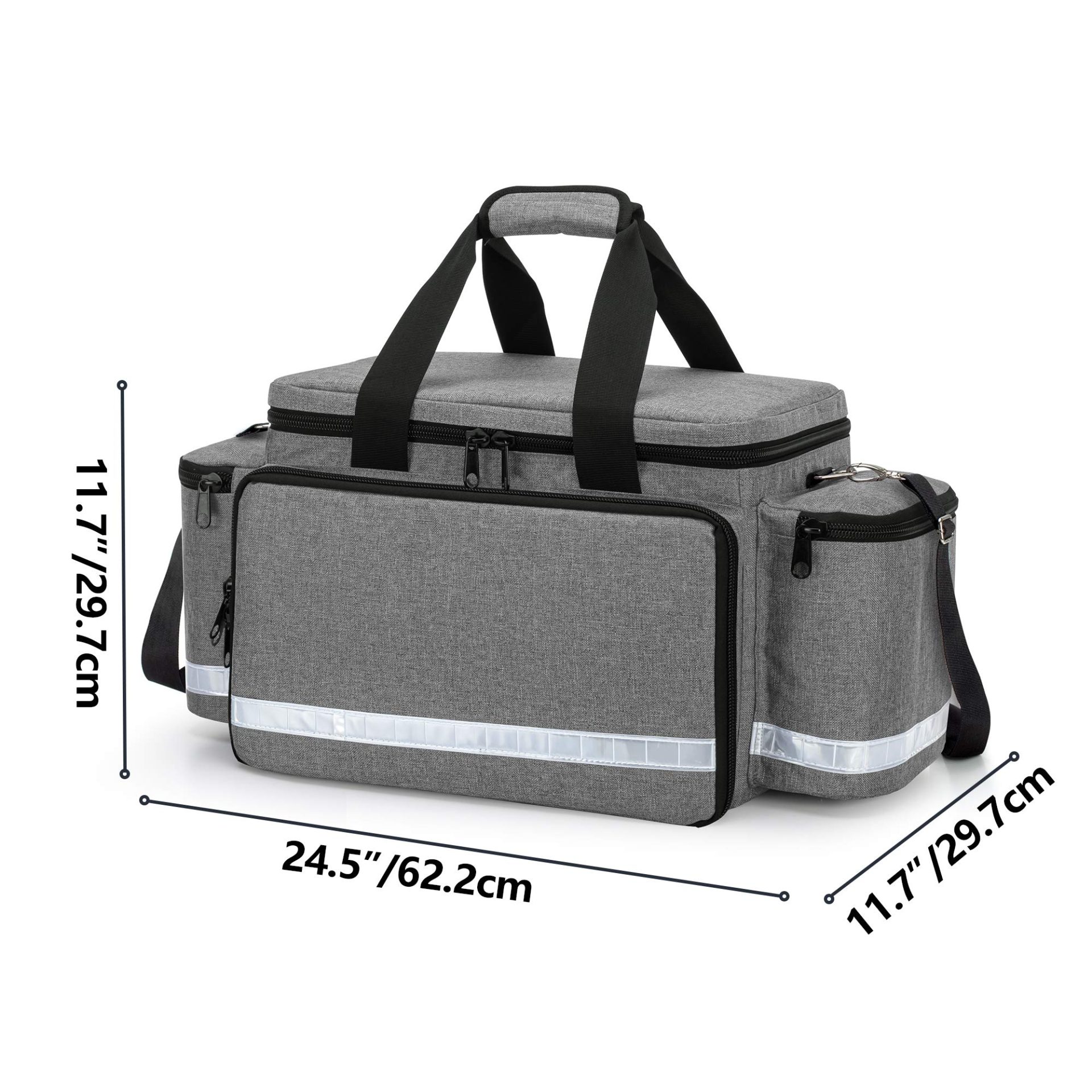
We manufacture from compact response bags (12x8x8 inches) to full-size EMS trauma bags (24x12x12 inches). Custom dimensions available based on your supply requirements.
How do trauma bags maintain shape when fully loaded?
Reinforced bottoms with PE foam liners prevent sagging. Stitch density is 8-10 stitches per inch at stress points with bar-tacked seams for strength.
Are trauma bags suitable for ALS-level equipment?
Yes. Configurable compartments accommodate cardiac monitors, IV sets, advanced airway tools, and medication organizers. Interior dividers are fully customizable.
What testing do trauma bags undergo?
SGS-verified facility. Materials tested for tear strength, water resistance, and color fastness. Bags undergo load testing, zipper cycle testing, and seam strength verification.
Additional information
| Logo Customization | MOQ 500pcs can accept logo customization |
|---|