
How Buyers Verify Us Before Placing an Order
A documented six-stage verification path — business licence and material test reports, category fit, sample sign-off, facility walkthrough, inline QC and final AQL inspection. Every stage is open to your own team or to a third party you nominate.
The Six-Stage Verification Path
In the order a buyer normally works through it — each stage produces a document or a decision before the next one starts.
Documentation Review
Business licence, export registration and product test reports from accredited third-party laboratories are shared as PDF before any commercial discussion begins. You see the entity you will be contracting with, and the reports that cover the materials in your brief — not a brochure set.
Category & Capability Fit
We confirm which bag categories, constructions and materials sit inside our partner facilities’ proven range — and say plainly when a specification sits outside it. A supplier who quotes everything is telling you nothing about where they are actually strong.
Sample Verification
Proto and pre-production samples in 6–10 days from design approval. Nothing moves to bulk until you sign both the sample and the material card behind it — the signed sample becomes the physical reference the final inspection is measured against.
Facility Walkthrough
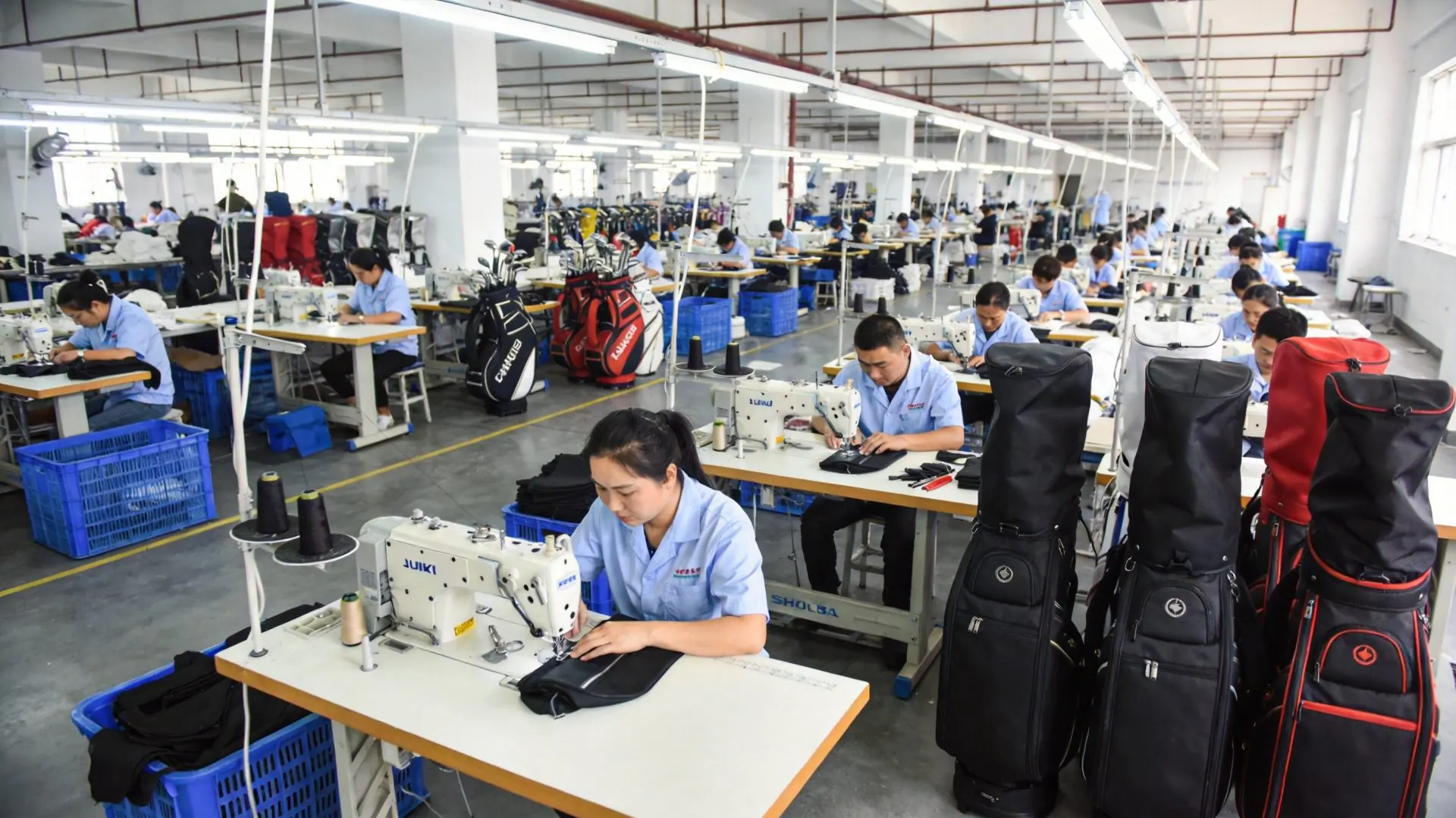
On-site or live video walkthrough of the affiliated partner facility producing your order — the lines, the QC stations and the material store, not a showroom. You are looking at where your goods will physically be made, and you are welcome to bring your own auditor.
Inline & Final QC
Inline checks at agreed milestones, then a final inspection to AQL 2.5 major / 4.0 minor before packing. Reports are issued against the lot, not the programme — so the paperwork in front of you describes the goods in the cartons, not last season’s run.
Third-Party Inspection
You are welcome to nominate your own inspection company. We book the slot, prepare the goods for sampling and hand over the agreed sampling plan. We do not select the inspector, and we do not sit in on the count.
What Each Stage Actually Produces
A verification path is only useful if each step ends in something you can hold. This is what comes out of each stage, how long it takes, and the decision it is meant to support.
| Stage | Typical duration | What you receive | Decision it supports |
|---|---|---|---|
| Documentation review | 1–3 working days | Business licence, export registration, material test reports matched to your destination market | Is this a real, contractable supplier for my market? |
| Category & capability fit | 2–5 working days | Written capability statement naming the constructions we will and will not quote | Is my brief inside their proven range? |
| Sample verification | 6–10 days from design approval | Proto or pre-production sample, material card, construction spec sheet | Does the physical sample match my tech pack? |
| Facility walkthrough | Half to one day | Visit record, line and QC station walkthrough, material store review | Can this site make my order to my standard? |
| Inline & final QC | Inline at milestones; final 1–2 days before packing | Inline check records, final AQL inspection report per lot | Do I release the balance payment and the shipment? |
| Third-party inspection | 1–3 days, scheduled by you | Your nominated inspector’s own report, issued directly to you | Does an independent party agree with the result? |
Before You Audit: The Preparation Checklist
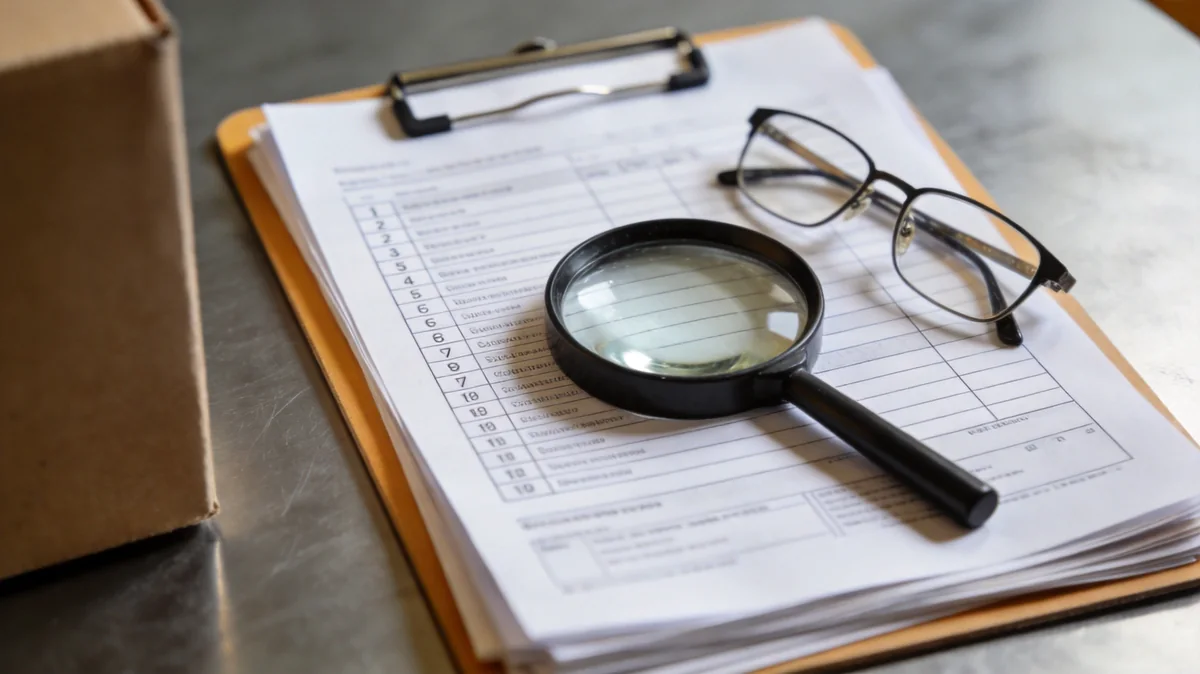
Most failed audits fail on preparation, not on the supplier. Buyers who arrive with these six items settled get a decision out of the visit; buyers who arrive without them leave with a folder of photographs.
| Prepare this | Owner | When | Why it matters |
|---|---|---|---|
| Written specification or tech pack | Your design / sourcing team | Before the first call | Without it, the supplier quotes a guess and the sample tests nothing |
| Destination market and applicable regulation | Your compliance team | Before document review | Decides which test reports are relevant — EU and US requirements are not interchangeable |
| Target order quantity per design and colourway | Your planning team | Before quoting | MOQ is set per design; splitting colours across designs changes the answer |
| Target FOB, landed cost ceiling and ship window | Your commercial team | Before quoting | Lets the supplier say “not at this price” early instead of late |
| Defect tolerances you will actually enforce | Your QC team | Before sample sign-off | Fixing AQL levels after production starts turns the final inspection into a negotiation |
| Audit scope: who attends, what they inspect | Your sourcing lead | One week before the visit | Unannounced scope creep on the day is the most common reason a visit gets repeated |
Documents Available on Request
Sent as a document set matched to your category and destination market — not a generic company brochure.
We do not publish client names, order volumes or facility output figures. Commercial references are shared case by case, with your written consent and theirs. What we will not do is hand you a reference list you cannot verify.
- Business licence and export registration
- Product test reports from accredited third-party laboratories, matched to your destination market
- Material and component certificates held by upstream suppliers
- Signed sample and material approval records for your programme
- Inline check records and final AQL inspection reports, per lot
- Packing list, carton mark artwork and loading photographs
| Document | Format | Issued when | Issued by |
|---|---|---|---|
| Business licence and export registration | PDF scan | During document review, before quoting | JUNYUAN BAGS |
| Material test reports (REACH, LFGB, CPSIA, Prop 65 as applicable) | PDF, accredited laboratory letterhead | During document review, scoped to your materials | Testing laboratory, passed through unaltered |
| Capability statement | PDF or email | End of category fit stage | JUNYUAN BAGS |
| Sample and material approval record | Signed PDF + retained physical sample | At sample sign-off | Both parties sign |
| Inline check record | PDF with dated photographs | At each agreed milestone | Partner facility QC, countersigned |
| Final AQL inspection report | PDF per lot, with sampling plan attached | Before packing release | Partner facility QC; your inspector may issue their own |
| Packing list, carton marks, loading photos | PDF + image set | At shipment | JUNYUAN BAGS |
AQL Sampling, Explained Without the Jargon
Every final inspection we run is a statistical sample, not a full count. If nobody has shown you the numbers behind that sample, you do not know what you agreed to. Here they are.
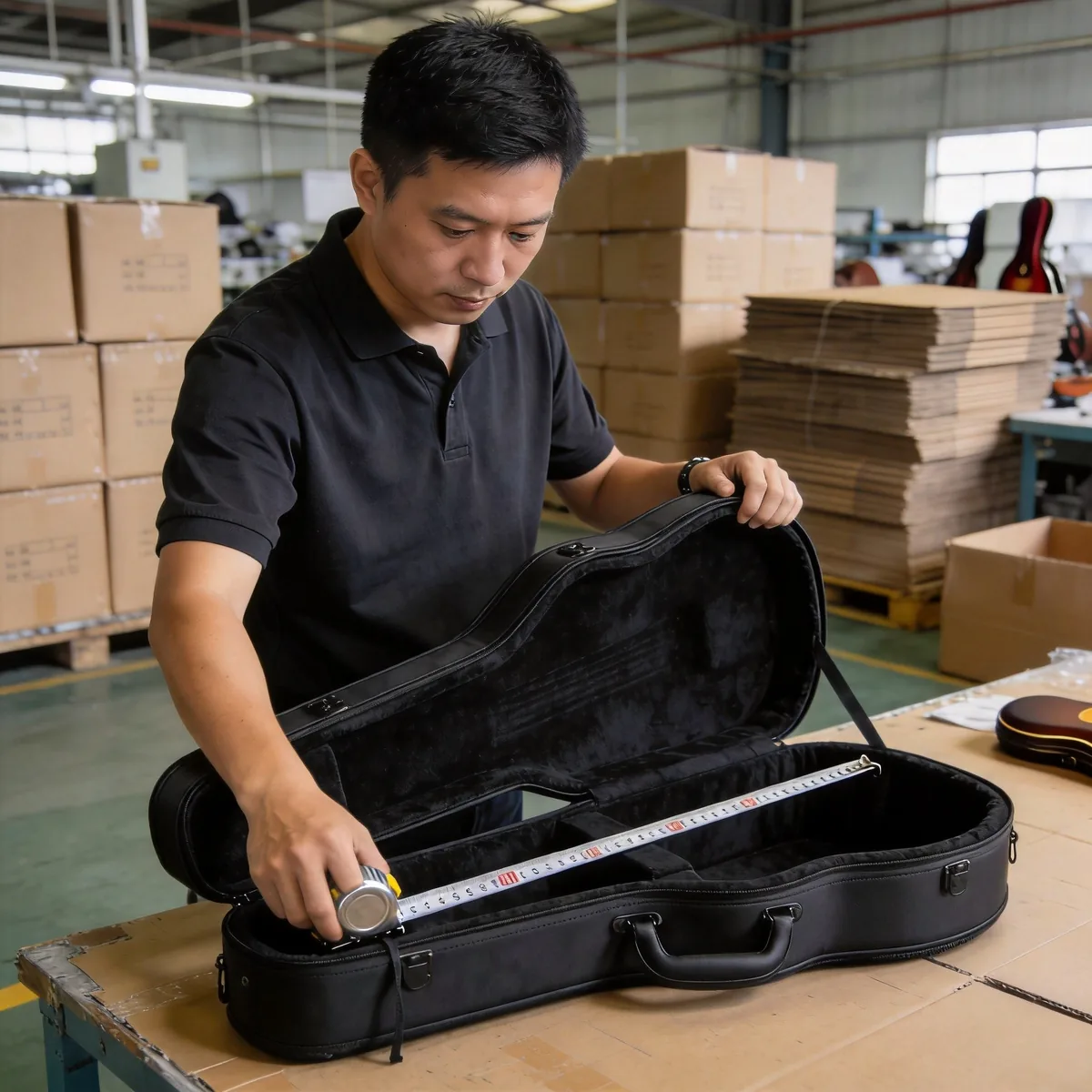
AQL stands for Acceptance Quality Limit. It is the worst defect rate you are willing to accept as a lot average — not a promise that every unit is perfect. The inspection draws a fixed number of pieces from the lot; if the number of defects found is at or below the acceptance number (Ac), the lot passes. If it reaches the rejection number (Re), the lot fails. Sampling follows ISO 2859-1, the international equivalent of ANSI/ASQ Z1.4, at General Inspection Level II, single sampling, normal severity.
| Lot size (pcs) | Code | Sample size | AQL 2.5 major (Ac / Re) | AQL 4.0 minor (Ac / Re) |
|---|---|---|---|---|
| 151 – 280 | G | 32 | 2 / 3 | 3 / 4 |
| 281 – 500 | H | 50 | 3 / 4 | 5 / 6 |
| 501 – 1,200 | J | 80 | 5 / 6 | 7 / 8 |
| 1,201 – 3,200 | K | 125 | 7 / 8 | 10 / 11 |
| 3,201 – 10,000 | L | 200 | 10 / 11 | 14 / 15 |
| 10,001 – 35,000 | M | 315 | 14 / 15 | 21 / 22 |
Read the sample column before you read the defect column. At a 500-piece lot we inspect 50 pieces — 10% of the order. That is the standard, and it is why a clean AQL result is evidence rather than proof. If your risk profile needs more coverage, say so before sampling sign-off and we will write a tighter plan; we will not quietly apply a looser one.
How We Classify Defects
A defect count means nothing until both sides agree what counts as a defect. This classification is fixed in writing at sampling sign-off, before production starts.
| Class | Definition | Typical examples | Acceptance |
|---|---|---|---|
| Critical | Unsafe, illegal to sell, or unusable for its stated purpose | Sharp edge or point exposed; small part detachable within the applicable small-parts gauge; restricted substance above the limit for your market; strap or handle attachment that fails under the specified load | Zero. One finding fails the lot, regardless of the AQL result. |
| Major | Affects function, saleability or the customer’s reasonable expectation | Zipper that does not run or self-opens; seam failure at a load point; hardware detaching; dimensions outside the signed spec tolerance; lining or panel colour outside the approved standard | AQL 2.5 |
| Minor | Visible on close inspection; does not affect function or sale | Loose thread ends; uneven topstitch; light handling marks; a logo stitch that is slightly off-register; carton print imperfection | AQL 4.0 |
Where a buyer’s own classification is stricter than this, the buyer’s version governs — provided it is agreed before production. Reclassifying a defect after the inspection has happened is not a quality process, it is a price negotiation.
The Standards We Are Measured Against
Agreed in writing before production starts, so the inspection result is a fact rather than a negotiation.
Sampling follows ISO 2859-1, the international equivalent of ANSI/ASQ Z1.4. Defect classification for your programme is fixed at sampling sign-off, not after the goods are made. The 12-month workmanship warranty covers stitching, hardware attachment and construction — it does not cover wear from use, nor damage caused by the customer.
Signals Worth Treating as Red Flags
We would rather you spotted these in any supplier you shortlist, including us. A verification process that only ever produces green lights is not a verification process.
- Certificates quoted by scheme name, never by document. If a supplier names a social-compliance scheme but cannot send the audit report carrying the facility name and validity date, the claim is doing work the evidence is not.
- A quote that covers every category you asked about. Broad capability usually means the work is subcontracted, and the QC you inspected is not the QC making your order.
- No willingness to name the site that will run your order. You cannot audit a site nobody will identify. Ask which facility, then ask to visit that one.
- AQL levels raised at the last minute. If the sampling plan loosens after production starts, the inspection is decorative.
- Inspection reports with no lot number and no date. A report that could describe any shipment describes none of them.
- Sample approved verbally. Without a signed sample and material card retained by both sides, the final inspection has no reference and the argument is unwinnable.
- Pressure to skip the sample stage. “We have made this before” is not a substitute for you signing the piece your money is buying.
On our side: certification sits with the affiliated partner facility that runs your category, not with us as a trading entity. We send the certificates that facility actually holds — and only those — once your category and market are confirmed. We will not quote a scheme name in advance of you seeing the document behind it.
How This Maps to Your Category
The verification path above is category-neutral. What changes is which constructions are inside the proven range, which test reports apply, and which MOQ tier you fall into. These pages set out the category-specific detail.

Questions Buyers Ask During Verification
Can we visit the facility before placing an order?
Yes. Tell us the category you are sourcing and we arrange a visit or a live video walkthrough of the affiliated partner facility that would run your order. Buyers commonly combine the visit with sample review on the same trip, so the walkthrough and the sample discussion happen against the same reference.
Do you hold social compliance or quality management certification?
Certification sits with the affiliated partner facility that runs your category, not with us as a trading entity. We share the certificates that facility actually holds — and only those — once your category and destination market are confirmed. We do not quote a scheme name in advance of you seeing the document behind it.
Which test reports can you provide for the EU and US markets?
Reports are issued per material and per market by accredited third-party laboratories — REACH and LFGB for the EU, CPSIA and California Proposition 65 for the US. You receive the report covering the exact material in your specification, not a general certificate for a different grade.
What happens if the final inspection fails?
The lot is reworked or re-made at our cost and re-inspected against the same sampling plan. Nothing ships against a failed AQL result, and we do not ask a buyer to accept a concession on a major defect. Where a critical defect is found, the lot fails on that finding alone regardless of how the rest of the sample scored.
How do you handle a specification outside your proven range?
We say so before quoting. If a construction needs tooling or a material we cannot source to your standard, we decline the order rather than substitute something close and hope it passes. A declined brief costs you a week; a substituted material costs you a season.
Who owns the drawings, tech pack and tooling?
You do. Drawings, tech packs and any moulds commissioned for your programme remain your property, are not reused for other clients, and are returned or destroyed at your instruction when the programme ends. That includes pattern files derived from your tech pack, not only the files you sent us.
What is the minimum order quantity, and how is it calculated?
Standard custom OEM/ODM bag programmes start at 500 pieces per design. Golf bag programmes, including cart, stand and staff constructions, start at 200 pieces per design because the construction and material set differ from general bag lines. MOQ is counted per design, so splitting one style across four colourways does not multiply the allowance — confirm the split before quoting, not after.
How long does sampling and bulk production take?
Sampling takes 6–10 days from design approval, depending on material lead time and how many rounds of revision your brief needs. Bulk production takes 35–50 days from sample sign-off. Both clocks start at a signature, not at the first email — which is why the sample stage is worth doing properly rather than quickly.
Can you produce from our existing pattern or a competitor sample?
We can work from a tech pack, an existing production pattern, or a physical reference sample. Where the reference is a third party’s product, we will produce to the construction and measurements you specify but we will not reproduce protected branding, logos or patented hardware. Send the reference and we will tell you which parts we can match and which we will redesign.
What happens if a problem shows up after the goods arrive?
Tell us the lot number and what you found, with photographs. If the finding falls inside the classification we agreed at sampling sign-off, we cover rework or replacement under the 12-month workmanship warranty. If it falls outside it — wear, misuse, or a requirement that was never in the agreed spec — we will still tell you what we think happened and what it would take to fix it. What we will not do is dispute the sampling plan we both signed.
Start With the Documents, Not the Price List
Send your specification and destination market — we reply within one business day with an FOB Xiamen quotation and the document set that applies to your category. If your brief sits outside our proven range, that reply will say so.