
Most wallet buyers do not fail because they picked the wrong factory. They fail because the specification they sent was not tight enough to be quoted accurately. A wallet looks like the simplest product in a bag range — two panels, a few card slots, a zip — and that is exactly why it gets under-specified. When the card slot tolerance is not written down, three factories will quote three different products, and the cheapest quote will win for the wrong reason.
This page is written for sourcing managers, brand owners and product developers who need to buy custom wallets at volume and want to understand what actually drives cost, what actually breaks, and what to put in a tech pack before the first sample is cut. Junyuan has been manufacturing small leather goods and bags since 2014, and wallets sit at the small end of our range where tolerances are tightest.
Your Trusted Custom Wallet Manufacturer — OEM/ODM Since 2014
Junyuan Bags is a wallet and bag manufacturer based in Quanzhou, Fujian — the cluster that has supplied global leather goods brands for three decades. We run OEM and ODM programmes for bifold and trifold wallets, card holders, coin purses, travel organisers, money clips, passport holders and zip-around styles, in genuine leather, split leather, PU, microfiber and recycled textile.
Our wallet work is deliberately specification-led. Every order starts from a written construction sheet: leather grade and thickness per panel, lining and interlining, RFID layer type and position, stitch type and stitch density, edge treatment, hardware plating, and the dimensional tolerances that decide whether a card slides in with one finger or needs two hands. That sheet is what we sample against, what we inspect against, and what we quote against.
What we do not do is quote from a photo. A photo tells us the silhouette. It does not tell us that the card slot needs 86.5 mm clear width, that the edge paint needs three passes with sanding between each, or that the RFID liner has to sit behind the card slots rather than behind the outer panel. Those are the details that separate a wallet that survives daily use from one that delaminates in eight months.
Why Wallet Sourcing Is Harder Than It Looks
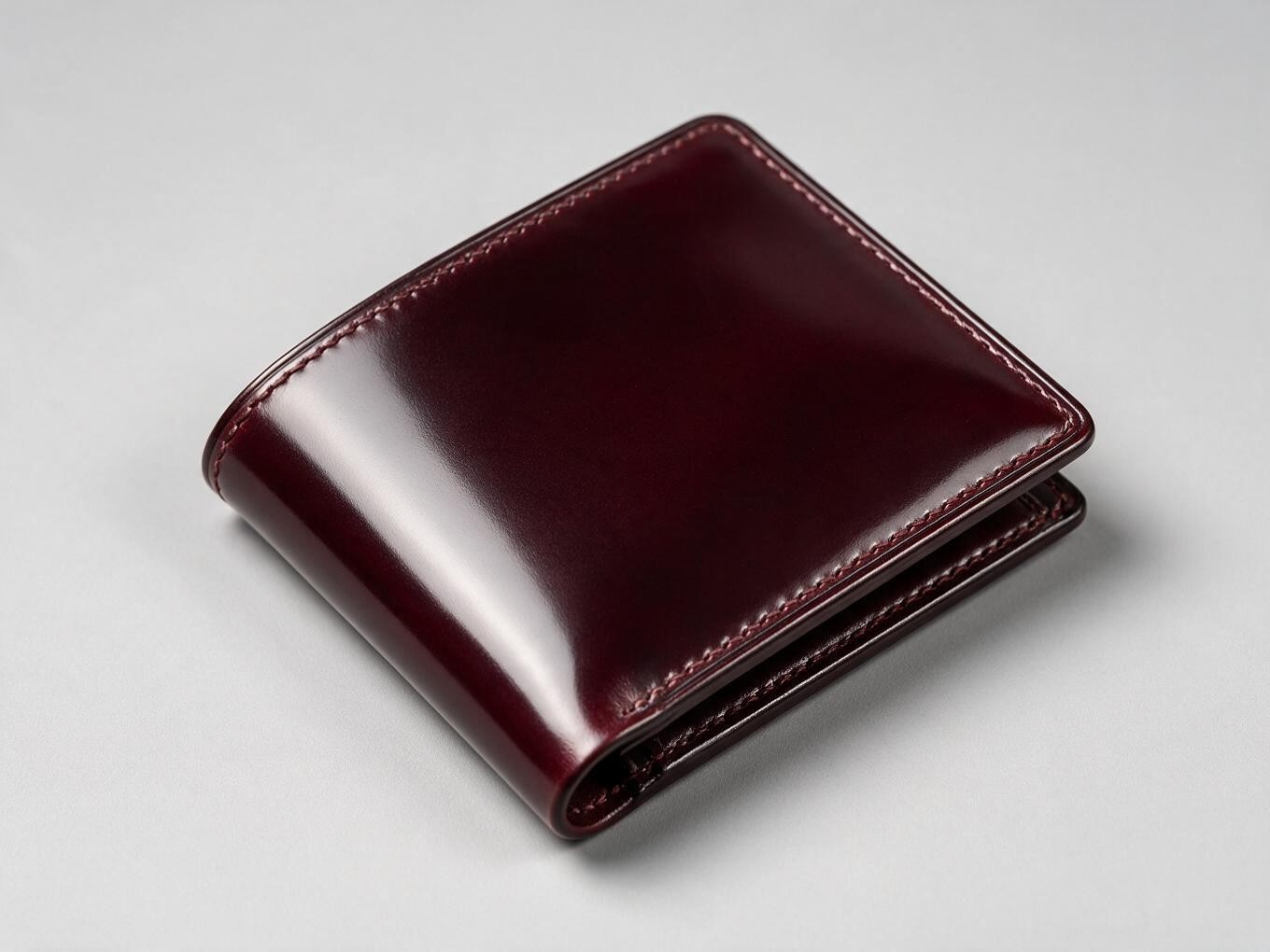
Wallets are the highest-tolerance, lowest-ticket item in most bag ranges. That combination creates a specific set of problems that do not show up in tote bags or backpacks.
First, the dimensional budget is brutal. A payment card is 85.60 × 53.98 mm to ISO/IEC 7810 ID-1. A card slot built at exactly that size will not work, because leather has thickness, the lining has thickness, and stitching pulls the panel in. The slot has to be built to roughly 86.5 × 55 mm clear, with the tolerance written as plus 0.5 / minus 0 mm — never symmetric. If a factory quotes without asking about this, they are quoting a shape, not a product.
Second, the material cost is dominated by yield, not price per square metre. Wallet panels are small and curved. A hide that is 15% cheaper per square foot can be 30% more expensive per wallet if its usable area is worse, because the card slot panels have to be cut from the clean centre of the hide. Two suppliers quoting the “same” full-grain leather can be quoting materially different products.
Third, RFID is specified far more often than it is understood. Buyers ask for “RFID blocking” and get a foil layer stapled behind the outer panel. That blocks the outer face and leaves the card slots readable from the open side. The layer has to be positioned to cover the card stack, and it has to be tested, not assumed.
Fourth, the failure modes are invisible at QC unless you know where to look. Edge paint that has not been sanded between coats looks perfect on day one and peels at month six. Under-cured adhesive passes a pull test at room temperature and fails in a car in summer. Stitch density that is too loose looks fine flat and gaps at the fold.
None of this is exotic. It is simply the difference between buying a wallet and buying a specification.
Junyuan — Custom Wallet Factory in Quanzhou, China
Our facility runs dedicated small-goods lines alongside our bag production, which matters for wallets more than it sounds. Small goods need different cutting equipment, different skiving settings and different operators than bag panels. A factory that runs wallets on a bag line will cut corners on skiving, and skiving is where wallet quality is actually decided.
The practical consequences of that setup:
- Dedicated small-goods cutting and skiving. Card slot panels are skived to 0.6–0.8 mm so the assembled stack does not bulge. Outer panels run 1.0–1.2 mm. If the skiving is inconsistent, the wallet will not close flat.
- In-house sampling. Wallet samples are cut and assembled on site, so a revision cycle is measured in days rather than in shipping weeks.
- Written inspection criteria. Wallet QC is done against a checklist that names the tolerance, not against a visual impression.
- One owner per order. A single merchandiser carries the order from tech pack review through to shipment, so the person who approved the sample is the person who signs off the bulk.
We work with brands that need 500 pieces per style and colour as a starting order, and we work with established programmes that reorder seasonally. We are not the cheapest quote you will receive, and we do not try to be — the quotes we lose are usually the ones where the buyer later discovers the specification was never comparable in the first place.
Custom Wallet Product Showcase
These are production styles from our current wallet range, all available for OEM and ODM development. Each can be re-specified — leather grade, slot configuration, RFID, hardware, logo method and packaging — rather than simply re-branded.

Slim RFID Card Holder with Coin Pocket
A front-pocket build for brands targeting the travel and commuter segment. PU leather outer, RFID liner behind the card stack, integrated coin compartment and ID window. Typically specified at 4–6 card slots with a central note sleeve.
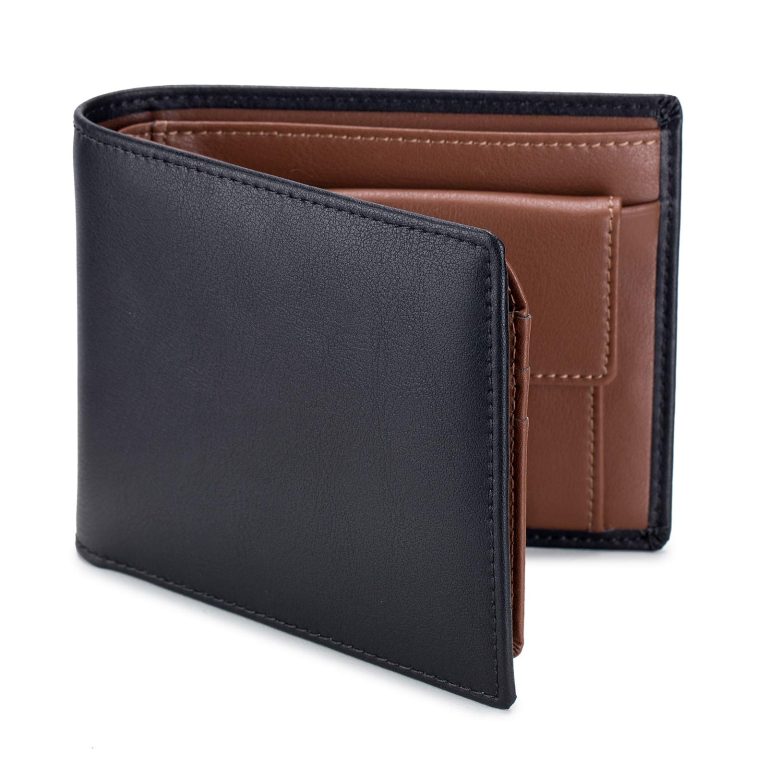
Men’s Bifold RFID-Blocking Front Pocket Wallet
Classic bifold geometry with a front-pocket footprint. Genuine leather outer with a reinforced spine, 6–8 card slots, two note compartments and a hidden slip pocket. The most commonly reordered men’s configuration in our range.

Women’s Small Bifold Card Case
Compact card-case format with a snap or press-stud closure. Suited to brands building a gift or accessory add-on line, where the wallet sits alongside a handbag rather than as a standalone SKU.

Women’s Genuine Leather Bifold with RFID
Full bifold with genuine leather outer and a larger card-holder interior. Available with or without RFID depending on the destination market and the brand’s claim policy.

KEEP PERFECT Women’s Bifold with ID Window
Thin-profile bifold with a clear ID window. This is the format most often requested for private label and corporate gifting programmes, where the ID window and a debossed logo do most of the commercial work.

KEEP PERFECT Custom Leather Wallet
An ODM development example from our KEEP PERFECT line, showing the level of edge finishing and stitch consistency we hold on a production run rather than on a one-off sample.
If none of these match your target, they are still useful as a starting point — most of our wallet programmes begin by modifying an existing pattern rather than cutting a new one, which shortens the sampling cycle considerably.
Wallet Customization Capabilities — Complete OEM/ODM
Leather and material selection
Material choice drives both the hand-feel and the landed cost, and it is the single decision most often made too early. We hold and source:
- Full-grain leather — the strongest and most expensive option. Visible natural grain, develops patina, minimal finishing. Suited to premium lines where the leather is the product story.
- Top-grain leather — lightly sanded and finished. More uniform surface, better for consistent logo embossing across a large run, lower cost than full grain.
- Split leather — the lower layer of the hide, usually coated. Cheaper, less durable at the fold, common in volume promotional work.
- PU and microfiber — synthetic options with predictable colour matching and no hide-yield risk. The right answer for tight-margin programmes and for brands avoiding animal material.
- Recycled and coated textile — RPET, recycled nylon and coated canvas for brands with a sustainability claim that has to be documented rather than implied.
For a cost-versus-durability comparison of the leather grades we run, our custom leather bag manufacturing page covers the material side in more depth. Wallet-specific thickness and skiving specifications are set per panel, not per product.
RFID blocking configuration
RFID specification has to name three things: the frequency to be blocked, the layer material, and the position of the layer. Most wallets in the market shield high-frequency (13.56 MHz) cards — payment cards, transit cards, passports — and do not shield low-frequency (125 kHz) access cards, which is a legitimate engineering choice but must be stated honestly in the brand’s marketing.

The layer options we run, in ascending order of cost and durability:
- Aluminium foil laminate — lowest cost, effective when intact, but creases and can crack at the fold over time. Acceptable for low-price programmes with a short replacement cycle.
- Copper or nickel-copper mesh fabric — more flexible, survives repeated folding, consistent attenuation. The default for mid and premium programmes.
- Shielding textile with documented surface resistance — the option to choose when the brand intends to make a testable claim, because the supplier can provide the attenuation data rather than a marketing statement.
Position matters as much as material. A liner behind the outer panel shields one face of the wallet. A liner behind the card stack, extending to the full card footprint plus 5 mm, shields the cards from both open faces. We build to the second arrangement by default, because the first is the most common cause of a customer complaint that the “RFID wallet does not work”.
If your brand is making an RFID claim, read our technical note on how RFID blocking interacts with tracking tags before writing the packaging copy — the interaction between a blocking wallet and an AirTag-style tracker is a common source of returns.
Slot configuration and dimensional tolerance
We build to the following starting specifications, adjusted per design:
- Card slot clear width: 86.5 mm, tolerance +0.5 / −0 mm
- Card slot clear height: 55 mm
- Slot depth: 35–40 mm exposed card, so the card sits proud enough to grip
- Note compartment: sized to the destination market’s currency — EUR and GBP notes require a taller compartment than USD
- Panel skiving: 0.6–0.8 mm for slot panels, 1.0–1.2 mm for outer panels
The currency point is worth flagging early. A wallet built to a USD note height will crease euro notes, and that is a review complaint in every European market. It is a two-minute change at the pattern stage and a full re-cut later.
Logo and branding methods
Debossing, hot foil stamping, laser engraving, woven labels, metal badges and printed lining are all available. For wallets the choice is usually driven by run size and by the leather grade: hot foil reads cleanly on top-grain and finished leather but is inconsistent on full grain, where debossing is the better answer. Laser engraving gives the most precise result on coated and PU surfaces.
Hardware and closures
Snap buttons, press studs, zips, magnetic closures and money clips are sourced with plating options — nickel, brushed nickel, gunmetal, light gold, antique brass. Zip quality is the most common downgrade we see in competitor quotes; a wallet zip is small but it is the first thing a customer touches.
Where Each Build Usually Fails — Wallet Construction Risks
This section exists because it is the most useful thing we can give a buyer before they place an order. These are the failure modes we see across the category, in order of how often they turn into a claim.
Edge paint peeling at the fold. The most common wallet defect. Caused by skipping the sanding step between coats, or by applying two coats where the construction needs three. The correct process is: cut, skive, sand the raw edge, apply a base coat, sand, apply a build coat, sand, apply a finish coat. A factory running two coats without sanding will deliver a wallet that looks correct and fails in six to nine months of daily folding. Ask how many coats, and ask whether sanding happens between them.
Card slot stretching out. A slot built to the exact card size works when new and becomes loose as the leather relaxes. Building to 86.5 mm with a plus-only tolerance gives the leather somewhere to relax into. A slot that starts tight is a slot that will be right in a month; a slot that starts perfect is a slot that will be loose in a month.
RFID attenuation lost at the crease. Foil laminates crack along the fold line. If the wallet folds where the liner sits, the shield fails progressively and invisibly. Mesh fabrics tolerate folding far better, which is why they are our default for any wallet that will actually be carried in a pocket rather than a bag.
Stitch gapping at the spine. Stitch density that is adequate on a flat panel becomes inadequate when the panel is folded and under load. Wallet spines need tighter stitch density and often a reinforced spine strip. Gapping at the spine is a structural failure, not a cosmetic one.
Adhesive failure in heat. Wallets live in pockets and cars. An adhesive that passes a room-temperature pull test can fail at 60 °C. If your market includes hot-climate regions, specify heat resistance and ask for the test condition, not just the test result.
Colour mismatch across panels. Wallet panels are cut from different areas of a hide, and small panels are the hardest to match. On a large run this is a real risk with natural leather. Two mitigations: cut all panels for one wallet from adjacent hide areas, or accept a documented shade range in the specification so that a legitimate variation does not become a rejection.
Logo placement drift. Debossing on a curved or skived panel drifts more than buyers expect. Placement tolerance has to be written in millimetres, and on small panels it is usually ±1.5 mm rather than the ±3 mm used on bag panels.
Materials and Cost Engineering — What Actually Moves FOB
Buyers often ask for a cheaper wallet and get offered a thinner leather. That is the wrong lever. The four levers that actually move wallet FOB, in order of impact:
1. Hide yield, not hide price. A wallet consumes a small area of leather but requires clean, unscarred material for the visible panels. The usable-area percentage of a hide matters more than its per-square-foot price. When comparing quotes, ask what usable yield the quote assumes. A quote built on an optimistic yield will be renegotiated at bulk.
2. Number of components. Each additional card slot, slip pocket or compartment adds cutting, skiving, edge finishing and stitching time. Moving from six to eight card slots is not a marginal change; it is roughly a third more assembly labour on the interior. This is the first place to look when a target price is not reachable.
3. Edge treatment. Painted edges with sanding between coats are the most labour-intensive finishing option and also the most durable. Folded-and-stitched edges are cheaper and suit casual constructions. Raw edges are cheapest and suit only specific design languages. The cost gap between painted and folded edges on a wallet is larger than most buyers expect, because it is hand work.
4. RFID layer. Foil laminate is cheap; mesh fabric is a real cost; documented shielding textile is the highest. If the RFID claim is central to the product, the cost is justified. If it is a checkbox on the packaging, foil may be adequate — provided the brand’s claim wording matches what the layer actually does.
What does not move cost much, despite common assumptions: hardware plating on a snap button, lining print, and packaging. Those are the last places to cut, because they are the first things a customer notices.
Certifications & Compliance
Wallet compliance questions concentrate in a few areas, and they differ by destination market:
- REACH — relevant for leather and coated materials entering the EU. We work with tanneries that provide current SVHC declarations rather than generic statements, because the candidate list changes and an old declaration is not a defence.
- California Proposition 65 — relevant for the US market, particularly on dyed leather and coated textiles. We can supply test reports on request for the specific materials used in an order.
- GPSR (EU General Product Safety Regulation) — since December 2024 this has required an identified EU responsible person and traceability information on consumer products sold in the EU. For wallets this affects labelling and packaging as much as the product. Our GPSR compliance page covers what we provide and what the brand must supply.
- Animal material documentation — for brands making leather-origin claims, we can supply tannery documentation on request.
- Recycled content claims — RPET and recycled textile programmes can be supported with supplier documentation, which is necessary because recycled claims are increasingly audited.
We do not certify your product for you. What we do is supply the material-level documentation that your compliance process needs, and tell you early when a requested claim cannot be substantiated from the material we can actually buy.
OEM/ODM Wallet Manufacturing Process
The sequence below is what a wallet programme actually looks like, with the decisions that have to be made at each stage:
Step 1 — Tech pack review (2–3 business days). You send the design, target price, destination market and any reference sample. We come back with a construction sheet and a list of the specification points that are missing or ambiguous. This is where most cost problems are avoided, because a vague brief gets a vague quote.
Step 2 — Material sourcing and confirmation (3–5 business days). Leather, lining, RFID layer and hardware are confirmed with physical swatches or documented alternatives. Where a material has a lead time, we say so now rather than at bulk.
Step 3 — Sampling (6–10 business days). A pre-production sample is cut and assembled. Sample fees apply and are credited against the bulk order once it reaches the agreed volume.
Step 4 — Sample review and revision. You check the sample against the construction sheet, not just against your impression. Fit of a standard card, slot tension, edge finish, logo position and colour are the five things to check physically. One revision round is normal; two is common.
Step 5 — Bulk production (35–50 days). Production runs against the approved sample and construction sheet, with in-line inspection at cutting, assembly and finishing.
Step 6 — Final inspection. AQL 2.5 major / 4.0 minor is our standard. Third-party inspection is welcome and we schedule for it.
Step 7 — Shipping. FOB, CIF or DDP depending on the arrangement, with export documentation prepared for the destination market.
Every wallet order carries a 12-month warranty against manufacturing defects — stitching failure, hardware failure, and delamination of bonded layers. It does not cover wear from use, which is a different category and is why the edge paint and leather grade conversation matters up front.
Frequently Asked Questions — Custom Wallet Manufacturing
What is your minimum order quantity for custom wallets?
500 pieces per style and colour. Mixed colourways within one style are counted separately because each colour is a separate cutting and setting run. If you are testing a market, the practical route is to start with one style in two or three colours rather than three styles in one colour.
How long does sampling take?
6–10 business days from an approved construction sheet and confirmed materials. If a specified leather has to be sourced, add the sourcing lead time — which is why step 2 exists as a separate stage rather than being folded into sampling.
How long is bulk production?
35–50 days after sample approval and deposit. Wallet programmes with heavy hand finishing sit at the longer end. We do not quote a shorter lead time to win an order and then extend it.
Is the sample fee refundable?
Yes, against the bulk order once it reaches the agreed volume. The fee covers materials and labour on a one-off build, which is genuinely a cost rather than a deposit.
Can we supply our own leather?
Yes, with two conditions: we need enough material to cover the run plus a documented allowance for defects and yield loss, and we need to test it before cutting. Customer-supplied leather that fails skiving or edge finishing is a common cause of schedule slip, and it is better to discover that on a test panel than on the production floor.
How do you test RFID blocking?
By measuring attenuation across the frequency band the wallet is specified to block, on a finished wallet rather than on a flat liner sample. This matters because the crease and the assembly change the result. If your brand is making a specific performance claim, tell us the claim during tech pack review so the layer and position are chosen to support it.
Can you do private label and white label?
Yes. Private label means your branding on our existing patterns, which is the fastest and cheapest route. ODM development means modifying or creating a pattern for you, which carries a development cost but produces something you own.
What payment terms do you offer?
Standard terms are a deposit with the balance before shipment. Terms for established, long-running accounts are agreed individually. We do not offer open credit on first orders.
What is the warranty?
12 months against manufacturing defects — stitching, hardware and bonded layer delamination. Claims are assessed against the construction sheet and the approved sample.
Can you handle Amazon FBA packaging requirements?
Yes. FBA labelling, poly bagging with suffocation warnings, and carton marking can all be built into the packing specification. Tell us the marketplace during tech pack review, because the requirements differ.
Which port do you ship from?
Xiamen or Shenzhen depending on the routing and the buyer’s forwarder. Quanzhou is close to Xiamen, which is usually the faster option for full containers.
Can we order a small trial run below MOQ?
For a first order below 500 pieces, the usual structure is a sample-level run at sample pricing so you can validate the product and the market before committing to a bulk quantity. It is not an efficient way to buy, but it is a reasonable way to de-risk a first launch.
What design files do you need?
Vector artwork for logos (AI, EPS or PDF), dimensioned drawings or a clear technical sketch for the construction, and physical reference samples if you have them. A photo alone cannot be quoted accurately — it does not carry dimensions, materials or construction.
Do you make wallets in vegan or non-animal materials?
Yes — PU, microfiber, and recycled textile constructions. Vegan programmes usually need more attention to edge finishing, because synthetic edges are less forgiving of a skipped sanding step than leather.
Can you match a competitor’s wallet we already sell?
We can develop against a reference sample, provided the design is not protected by an active registered design or patent in your market. Matching an existing product is a specification exercise; whether you are entitled to sell the result is a legal question that sits with you, not with us.
Why Choose Junyuan as Your Wallet Manufacturer
Most sourcing decisions come down to whether the factory can hold a specification across a run. That is the thing we are organised around: written construction sheets, sampling against the sheet rather than against a photo, in-line inspection at the three stages where wallet defects originate, and a single merchandiser who owns the order end to end.
We are also deliberately narrow. We make bags and small leather goods, and we do not spread across unrelated categories. That focus is why we can tell a buyer in the first conversation that a target price is not reachable at their specification, instead of discovering it after sampling.
If you are sourcing wallets alongside other categories, we run comparable programmes for custom backpacks, custom tote bags, travel bags, duffel bags and canvas shopping bags, which means one specification conversation and one shipment rather than several.
For background on wallet formats before you specify — bifold, trifold, card holder, travel organiser — our guides on wallet types and selection, the most common wallet constructions and women’s wallet styles are useful starting references. The current production range is on our wallet product page.
Start Your Custom Wallet Project Today
Send us the design, the target price and the destination market. We will come back with a construction sheet that names every specification point we need, and a quote built on that sheet — so that when you compare it with another supplier, you are comparing the same product.
What to include in your first message:
- Style reference or technical sketch, with dimensions if you have them
- Material preference, or the requirement you are trying to meet
- Target quantity per style and colour
- Destination market, so compliance and currency sizing are right first time
- Any claim you intend to make on the packaging — RFID, recycled content, leather origin
Email: [email protected]
Phone / WhatsApp: +86 17750020688
Factory: C201-207, Huachuang Park, Tiyu Street, Huada Street, Fengze District, Quanzhou City, Fujian Province, China
Junyuan Bags — custom wallet manufacturer, OEM/ODM since 2014. MOQ 500 pieces per style and colour, sampling in 6–10 business days, bulk in 35–50 days, AQL 2.5 major / 4.0 minor, 12-month warranty against manufacturing defects.