
By 2026, stricter airline weight policies and the rise of one-bag travel have made lightweight travel bags essential. Modern bags now combine advanced materials like Ultra 200X and recycled polyester with smart designs, offering high capacity-to-weight ratios (e.g., 15.47 liters per pound). These bags cater to diverse needs, from urban travelers to outdoor adventurers, with features like expandable compartments, laptop sleeves, and stowable straps.
Key Takeaways:
- Airline Compliance: Airlines in Europe and Asia now weigh personal items and carry-ons, often capping limits at 15 lbs.
- Efficiency: Look for bags with at least 10 liters of capacity per pound; top models achieve up to 18 liters per pound.
- 材料: Lightweight options include recycled polyester (RPET), high-tenacity nylon, and advanced laminates like UHMWPE for durability.
- Comfort: Features like padded straps, ventilated back panels, and load lifters reduce strain during long trips.
- Sizes: Choose based on trip length – 20L for day trips, 30–40L for one-bag travel, and 50L+ for extended adventures.
Invest in a quality travel bag that suits your needs, and consider testing it with your gear before committing. For tailored solutions, JUNYUAN BAGS offers customization options, including logos, dimensions, and materials.
A lighter bag means more comfort, fewer fees, and a better travel experience.
Best Lightweight Travel Backpacks for 2026 (Tested Head to Head)
sbb-itb-1e6451b
Why Lightweight Bags Matter for 2026 Travel
Carrying a 5-pound bag might not seem much different from a 2-pound one – until you’ve been hauling it for hours. A lighter bag means less strain on your shoulders and back, leaving you with more energy to explore rather than recover from the effort. When you’re navigating crowded train stations, climbing endless stairs, or tackling cobblestone streets where wheeled luggage struggles, every ounce makes a difference. And with airlines tightening their weight restrictions, this is more important than ever.
By 2026, airlines have ramped up their enforcement of weight policies. In Europe and Asia, it’s now common for both carry-ons and personal items to be weighed, with international weight limits often capped at just 15 pounds. Aaron Radcliffe from Nomads Nation notes, "Airlines are getting stricter than ever, especially in Europe and Asia. It’s not just your carry-on anymore, even your personal item can end up on the scale". A lightweight bag gives you the flexibility to pack essentials without risking those hefty gate-check fees, which can climb to $100.
The growing popularity of remote work and adventure tourism has also shaped the demand for versatile bags. Digital nomads need options that protect their laptops and keep things organized without being bulky, while adventure travelers prioritize durability and mobility. Modern lightweight bags strike this balance, often weighing just 2 pounds while offering an impressive 55–60 liters of storage capacity.
"Going light means going farther, faster, and more comfortably." – GearJunkie
The rise of the one-bag travel movement has taken this efficiency to the next level. Travelers using a single 35–45 liter backpack can bypass checked bag fees entirely, saving $200–$300 on long-haul flights, while breezing through airports with ease. It’s a smart way to pack efficiently, stay mobile, and avoid unnecessary costs.
Materials Used in 2026 Lightweight Travel Bags
The materials used in travel bags play a huge role in determining how well they hold up during frequent use. Modern designs aim to strike a balance between weight, durability, and style, shedding unnecessary pounds without compromising strength. Let’s dive into how materials like high-denier nylon and advanced laminates are shaping the future of lightweight travel bags.
Nylon and Recycled Polyester
Nylon continues to be a go-to material for lightweight luggage. High-tenacity options, especially those with high denier counts (ranging from 1000D to 1680D), are often used in areas prone to wear, like the bottoms of bags or where straps attach. Meanwhile, lower-denier versions help shave off weight, making them ideal for carry-ons. However, nylon does have its drawbacks – it tends to sag when wet and can fade with prolonged sun exposure.
Recycled polyester (RPET) has gained traction with eco-conscious travelers. Brands like ECOPAK™ are leading the charge with three-layer laminate constructions made entirely from recycled polyester. These materials absorb 80% less moisture than traditional nylon and offer impressive environmental benefits: each bag can recycle more than 25 plastic bottles and reduce CO₂ emissions by 1.25 pounds – 50% lower than nylon and 38% lower than virgin polyester. Recycled polyester also retains color better under sunlight and holds its shape better than nylon, making it a great option for bags exposed to rain or UV rays.
PU Leather
PU (polyurethane) leather delivers a sleek, professional appearance without the weight or upkeep of genuine leather. It’s crafted by coating a fabric backing, like polyester or cotton, with polyurethane to mimic the look of leather. This material is perfect for weekender bags that need to transition effortlessly from the plane to a meeting. Maintenance is simple – just wipe it down with a damp cloth and avoid harsh cleaning products. While PU leather doesn’t develop the breathability or patina of genuine leather, it’s a trade-off most travelers are happy to make for its lighter weight and lower cost.
Advanced Polyester Options
Polyester has seen some impressive advancements in recent years. Advanced laminates such as ECOPAK™ EPX use multi-layer recycled polyester sailcloth to provide full waterproofing and exceptional tear resistance while keeping weight to a minimum. These laminates are inherently waterproof thanks to their lamination process, eliminating the need for coatings that can wear off over time.
Molecularly bonded materials, like Aluula Graflyte, take things a step further by fusing polymer films at the molecular level. This approach avoids the need for heavy adhesive layers, resulting in ultra-light yet incredibly strong shells that resist delamination – a common issue with traditional laminates. For those who demand the highest performance, woven UHMWPE (Ultra-High-Molecular-Weight Polyethylene) laminates offer up to 10 times the abrasion resistance of older non-woven versions, all while remaining exceptionally lightweight.
Features That Improve Durability and Comfort
When it comes to travel bags, durability and comfort are just as important as the materials used. Even the toughest fabric won’t mean much if zippers jam or straps give out when you’re on the move. That’s why smart design features are key to ensuring a bag performs well under pressure.
Zipper and Closure Quality
Zippers may seem like a small detail, but they can make or break a bag’s reliability. High-quality zippers, such as PU-coated YKK models, are a popular choice for their durability and water resistance. YKK zippers are known for their precise engineering, which helps prevent issues like jamming or teeth misalignment – even after thousands of uses. Some premium bags go a step further by including lockable zippers with pulls designed for padlock attachment, offering extra security for your belongings. For ultralight models, roll-top closures are often preferred. These closures eliminate the risk of zipper failure while making it easy to adjust the bag’s volume as needed.
But closures are just one part of the equation. To truly excel, a bag must also prioritize comfort for long-term use.
Comfort-Focused Design Elements
Durability alone doesn’t cut it – carrying comfort is equally important, especially on longer journeys. Well-designed travel bags focus on distributing weight effectively. Features like ergonomic shoulder straps with dense foam padding and built-in sternum straps help stabilize the load, reducing strain on your shoulders. Larger bags (typically over 35 liters) often include load lifter straps, which pull the bag closer to your back and shift weight from your shoulders to your hips.
Ventilated back panels are another thoughtful addition. By promoting airflow, these panels help keep your back cool and reduce sweat buildup, even in warm conditions. Impressively, some ultralight travel bags manage to include full ventilated back panels while weighing as little as 1.85 pounds. For frequent flyers, stowable straps are a lifesaver. These straps can be tucked away to prevent snags on airport conveyor belts or when stowing the bag in overhead bins.
Expandable Storage Compartments
Modern travel bags are also designed with adaptability in mind. Expandable compartments add flexibility without unnecessary bulk. For instance, some models can expand from 26 to 32 liters, providing extra space for last-minute additions. Others offer even greater capacity adjustments, expanding from 35 liters to as much as 45 liters – adding up to 10 liters of extra room when needed. These expandable features strike a balance between lightweight design and practical functionality, making them ideal for travelers who need versatility on the go.
Matching Bag Size and Weight to Your Travel Type
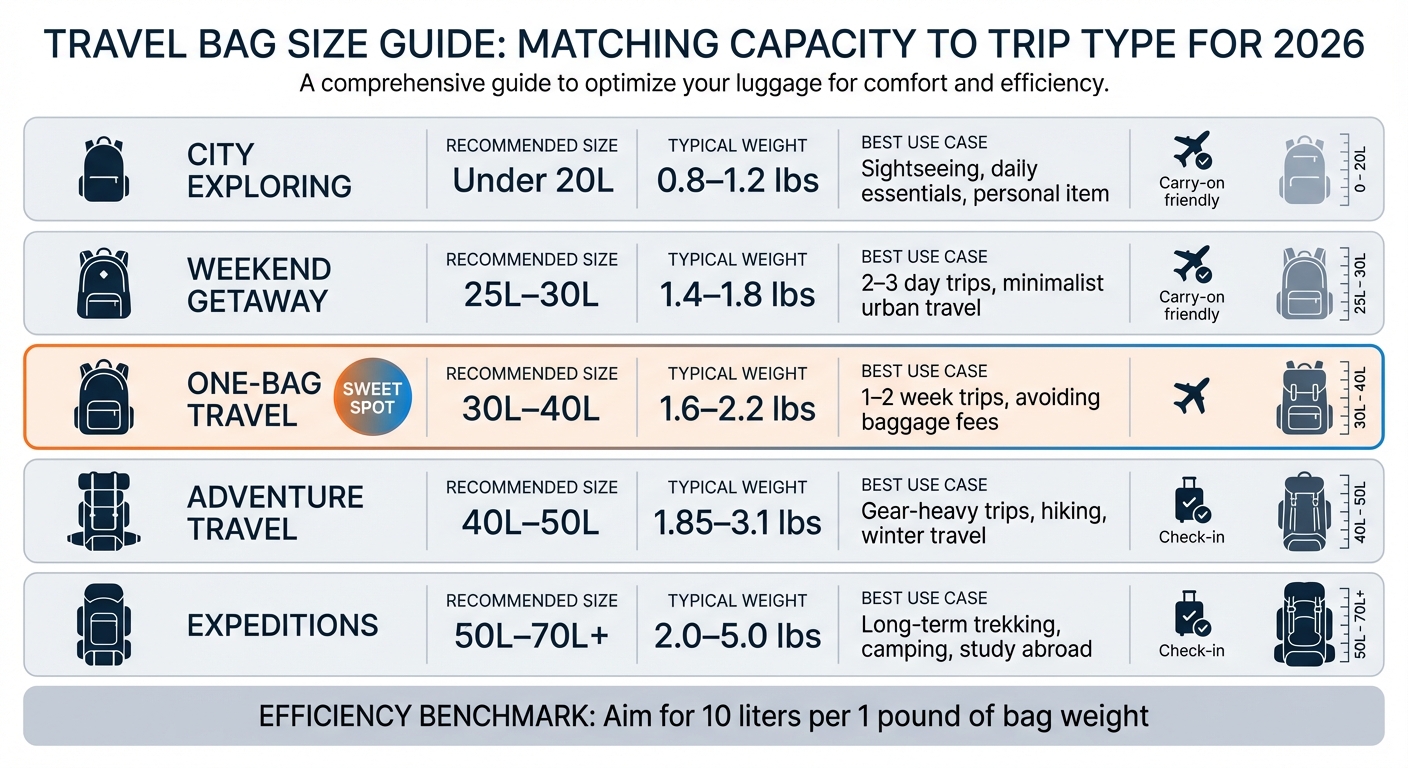
Travel Bag Size Guide: Matching Capacity to Trip Type
Once you’ve considered durability and comfort, the next step is choosing the right bag size to match your travel plans. The balance between capacity and weight plays a key role in ensuring your trip runs smoothly. For example, a 50-liter pack would be excessive for a short weekend in the city.
For city exploring or day trips, opt for bags under 20 liters. These typically weigh less than 1.2 lbs and can fit as personal items on flights. Weekend getaways, on the other hand, are well-suited to 25–30L bags, which can hold everything you need for 2–3 days. As Aaron Radcliffe, Founder of Nomads Nation, explains:
"30L–40L is the One-Bag Travel Sweet Spot… Big enough for one- to two-week trips, small enough for carry-on".
If you’re looking for lightweight efficiency, consider the benchmark of 10 liters per 1 pound. Models like the Patagonia Black Hole 25L and ULA Dragonfly go even further, offering about 18 liters per pound.
Adventure travel demands more room, typically 40–50 liters, to store gear such as hiking boots or winter clothing. These bags weigh between 1.85 and 3.1 lbs and often feature harness systems to evenly distribute weight to your hips. For longer expeditions or study-abroad programs, you’ll need 50–70+ liter bags. These larger packs can handle extended trips but usually need to be checked at the airport.
| Travel Type | Recommended Size | Typical Weight | Best Use Case |
|---|---|---|---|
| City Exploring | Under 20L | 0.8–1.2 lbs | Sightseeing, daily essentials, personal item |
| Weekend Getaway | 25L–30L | 1.4–1.8 lbs | 2–3 day trips, minimalist urban travel |
| One-Bag Travel | 30L–40L | 1.6–2.2 lbs | 1–2 week trips, avoiding baggage fees |
| Adventure Travel | 40L–50L | 1.85–3.1 lbs | Gear-heavy trips, hiking, winter travel |
| Expeditions | 50L–70L+ | 2.0–5.0 lbs | Long-term trekking, camping, study abroad |
Once you’ve identified the ideal size for your needs, consider customization options to make your bag even more suited to your travel style.
Custom Design Options with JUNYUAN BAGS

JUNYUAN BAGS goes beyond offering advanced bag features by tailoring both style and functionality to meet the ever-changing needs of travelers.
Personalizing Logos, Sizes, and Materials
JUNYUAN BAGS lets you customize your travel gear to fit your exact needs. You can personalize logos, dimensions, and materials, whether you’re looking for a sleek weekend duffel with your company logo or a laptop backpack with precise measurements. The customization process covers everything from logo placement to fabric selection.
Material options include recycled polyester (RPET) for eco-conscious designs, athletic-grade fabrics for extra durability, and other specialty materials suited to different bag styles. Logos can be applied using embroidery, heat transfer, or silk screen printing, giving you control over the look and performance of your bag. These customization options work for individuals wanting unique gear and businesses aiming for branded solutions.
Getting started is easy – use the "Add To Quote" feature on the JUNYUAN BAGS website to customize items like the Weekend Duffel or Custom Travel Bag. You can also reach JUNYUAN BAGS through WhatsApp or WeChat at +86 17750020688, or via email at [email protected].
For businesses needing larger-scale solutions, JUNYUAN BAGS also offers specialized manufacturing services.
OEM/ODM Manufacturing Services
JUNYUAN BAGS provides OEM (Original Equipment Manufacturing) and ODM (Original Design Manufacturing) services, catering to a range of business needs. If you want full control over your bag design, their OEM services allow you to create products tailored to your specifications, including custom ergonomics and unique features. Development fees for these projects range from $5,000 to over $20,000.
Alternatively, if speed to market is a priority, the ODM (Private Label) service is a great option. You can choose from pre-existing designs and customize elements like colors, trims, and branding. This approach has lower minimum order quantities – starting at just 200 units compared to the typical 500–1,000 units for OEM projects – and faster lead times of 8–12 weeks instead of 10–16 weeks.
The manufacturing process includes sample development, where prototypes are rigorously tested for factors like comfort, load distribution, and seam strength. Businesses can also place smaller pilot orders of 100–200 units to evaluate quality and defect rates before committing to larger production runs.
How to Choose the Right Lightweight Travel Bag
Evaluating Your Travel Requirements
Start by thinking about where you’re headed and how long you’ll be gone. A sleek, organized bag with anti-theft features like lockable zippers and RFID-safe pockets is perfect for a weekend city getaway. On the flip side, if you’re planning a two-week outdoor adventure, you’ll need a more rugged option with weather-resistant materials and a focus on technical functionality.
A good rule of thumb for lightweight bags is to aim for about 10 liters of capacity per pound of bag weight. For example, the Osprey Daylite 26+6 offers 32 liters of space at just 1.85 pounds, giving it an impressive 17.30 liters-per-pound ratio. This balance of capacity and weight is especially important for international travel since many airlines, particularly in Europe and Asia, now weigh personal items.
Think about how much you usually carry. If your load is over 20–25 pounds, a bag with a supportive frame is essential to avoid straining your shoulders. For lighter loads under 15 pounds, frameless ultralight bags are a great way to keep things simple and lightweight.
Once you’ve nailed down your travel needs, it’s time to weigh cost against quality.
Balancing Cost and Quality
After figuring out what you need in a bag, consider the balance between price and quality. Pay attention to construction details like double stitching, folded seams, and durable zippers (YKK or PU-coated are great options). These features ensure your bag will last for years. If you’re on a budget, options like the Bagsmart Blast ($70–$80) or Osprey Daylite 26+6 ($100) offer excellent value. If you’re ready to splurge, premium choices like the ULA Dragonfly ($240) use advanced materials that resist wear and tear.
"More expense upfront often translates to gear with a longer lifespan, nicer styles, more versatility, and less wear and tear on your body because you’re not carrying so much weight on your back." – OutdoorGearLab
Don’t overlook warranty coverage – it can make a higher upfront cost worth it. For instance, Osprey offers lifetime warranties, making their bags a long-term investment. Some lightweight bags skip internal linings or thick padding to save weight. This isn’t a sign of poor quality; it’s a deliberate design choice for efficiency.
Once you’ve balanced your budget with quality, it’s time to ensure the bag is comfortable and fits your needs.
Checking Comfort and Fit Before Buying
Comfort is key, so test the bag with a 30-pound load before committing. Walk around, bend over, squat, and move your arms to check if the weight stays balanced. The padded hip belt should sit snugly on your iliac crest (the top of your hip bone) and fasten securely across your belly button.
"The weight should sit primarily on the hips, not the shoulders. You should feel balanced… and the hip belt should not be digging uncomfortably into the skin." – OutdoorGearLab
Make sure the weight is distributed to your hips without causing discomfort. Look for thick, single-piece shoulder strap padding that won’t wear out or split over time. Adjust load-stabilizing straps so the weight stays close to your body, and position the sternum strap so it sits comfortably across your chest. If you’re shopping online, consider ordering multiple bags to test at home with your travel gear before making a final decision.
Conclusion: Choosing Your 2026 Lightweight Travel Bag
When it comes to picking the perfect lightweight travel bag for 2026, it’s all about aligning your personal travel needs with the right materials and features. The 10 liters per pound ratio is a standout metric to keep in mind. Modern materials now offer the durability you need while keeping the weight to a minimum.
Comfort plays a huge role, too. Features like ventilated back panels, adjustable harness systems, and sturdy zippers are essential for handling the challenges of today’s travel demands. Whether you’re navigating bustling city streets or trekking through rugged landscapes, your bag should seamlessly support your journey.
For those seeking something tailored, JUNYUAN BAGS offers a level of customization that’s hard to match. You can adjust everything – logos, sizes, materials, and patterns – to ensure your bag fits airline requirements and your specific travel style.
"Choosing the right bag is important, and this depends on the trip you’re taking." – Rani Cheema, Culinary Travel Specialist
Investing in a quality bag means investing in long-term comfort and efficiency. Take the time to evaluate your travel habits, test the bag with realistic loads, and choose materials that suit your destinations. As Pack Hacker puts it: "A lightweight travel backpack feels like a weight has been lifted off your shoulders… because it has!"
FAQs
What materials should I look for in a lightweight travel bag for 2026?
When picking a lightweight travel bag for 2026, it’s all about finding materials that combine strength, lightness, and practicality. A standout choice is nylon, prized for being light and water-resistant. For even greater durability, ballistic nylon is a solid option, offering exceptional toughness and long-lasting performance. If you’re leaning toward a hard-shell bag, polycarbonate is a great pick – it’s both sturdy and lightweight.
These materials are designed to meet the needs of today’s travelers, whether you’re navigating city streets or heading off on rugged outdoor adventures. They make sure your bag stays manageable to carry while handling the wear and tear of regular travel.
How can I pick the right size travel bag for different trip durations?
Choosing the right travel bag size depends largely on how long you’ll be away and your packing habits. Here’s a quick guide to help:
- Short trips (up to 3 days): A 20–30 liter bag works well for light packers and spontaneous getaways. It’s compact and easy to carry while still holding the essentials.
- Week-long trips: A 30–40 liter bag offers enough room for clothes, toiletries, and other necessities without feeling bulky.
- Longer trips (2 weeks or more): For extended travel, a 40–60 liter bag is a solid choice, especially if you need to pack extra items or won’t have regular access to laundry.
Look for bags with smart design features like compartments or compression straps – they can help you make the most of the space. Ultimately, choose a bag that fits your needs while keeping things organized and comfortable for the journey.
Why are airlines becoming stricter about the weight of carry-ons and personal items?
Airlines are cracking down on weight limits for carry-ons and personal items. The goal? To make boarding faster, ensure everyone gets fair access to overhead bin space, and keep flights running smoothly. Stricter rules help cut down on delays caused by bins overflowing or passengers struggling to stash oversized bags.
On top of that, airlines often make a good chunk of money from checked baggage fees. These tighter policies might nudge more travelers to check their bags instead. Sticking to the weight limits isn’t just about avoiding extra fees – it also makes your travel experience less stressful.



 モバイル/What's App/Wechat
 Eメール
Eメール 追加
追加