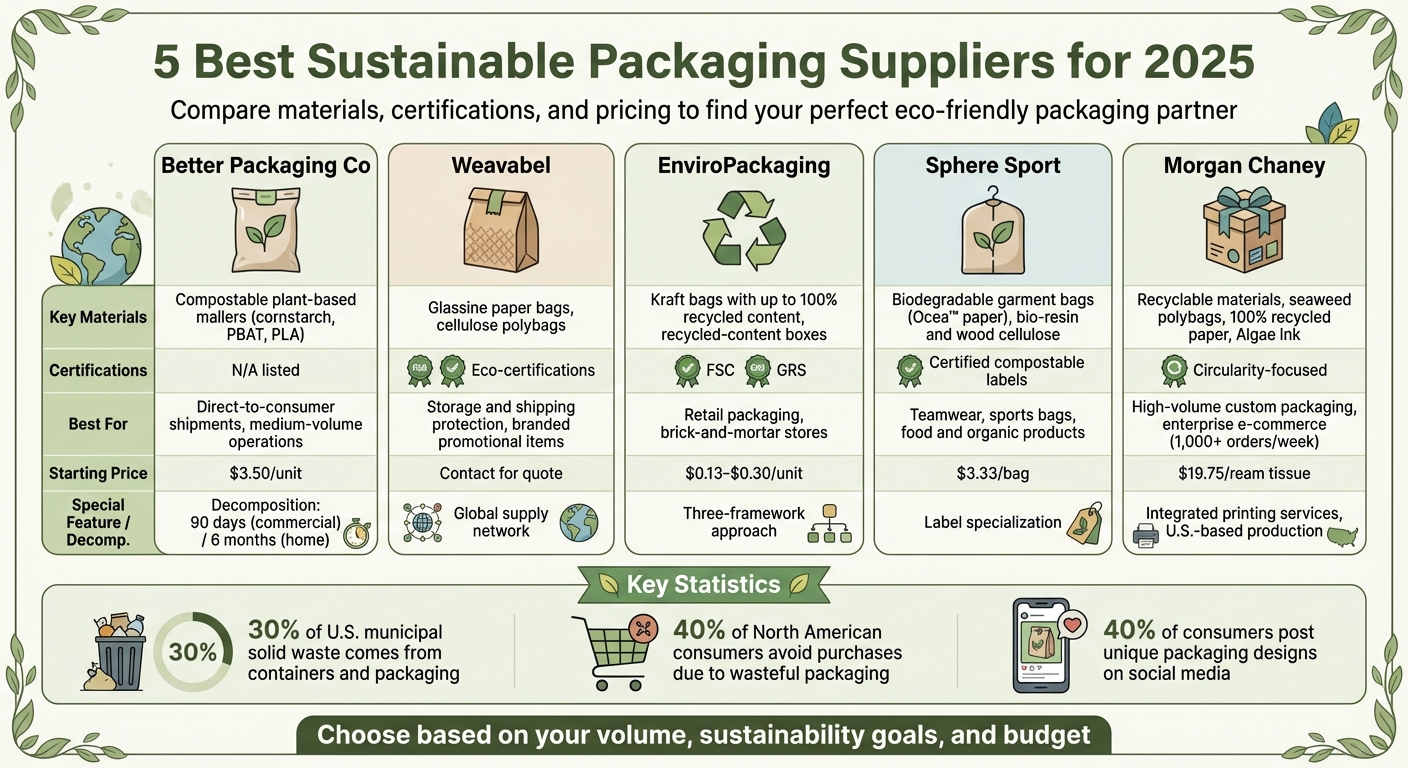
Looking for sustainable packaging suppliers in 2025? Here’s a quick guide to the best options available. With increasing consumer demand for eco-friendly materials and stricter regulations like Extended Producer Responsibility (EPR), businesses are turning to packaging that reduces waste and cuts emissions. Whether you need compostable mailers, recycled content, or innovative materials like seaweed-based options, these suppliers have you covered:
- Better Packaging Co: Compostable mailers made from plant-based materials, starting at $3.50 per unit.
- Weavabel: Glassine paper bags and cellulose polybags for dust and moisture protection.
- EnviroPackaging: Retail packaging like kraft bags with up to 100% recycled content.
- Sphere Sport: Biodegradable garment bags and certified compostable labels.
- Morgan Chaney: Custom packaging solutions with recyclable and biodegradable materials.
Each supplier offers unique materials, certifications, and customization options to fit various business needs. Below is a quick comparison to help you choose the right partner.
Quick Comparison
| Supplier | Key Materials | Certifications | Best For | Starting Price |
|---|---|---|---|---|
| Better Packaging Co | Compostable plant-based mailers | N/A | Direct-to-consumer shipments | $3.50/unit |
| Weavabel | Glassine bags, cellulose polybags | FSC, eco-certifications | Storage and shipping protection | Contact for quote |
| EnviroPackaging | Kraft bags, recycled content | FSC, GRS | Retail packaging | $0.13–$0.30/unit |
| Sphere Sport | Biodegradable garment bags | Certified compostable | Teamwear and sports bags | $3.33/bag |
| Morgan Chaney | Recyclable, seaweed polybags | Circularity-focused | High-volume custom packaging | $19.75/ream tissue |
Choose based on your volume, sustainability goals, and budget. The article below dives deeper into how these suppliers can meet your needs.
Sustainable Packaging Suppliers Comparison: Materials, Certifications, and Pricing for 2025
2025 Packaging Trends: Insights from the World’s Best Designers
What to Look for in a Sustainable Packaging Supplier
Selecting the right supplier for sustainable packaging involves weighing factors like operational needs, costs, and environmental impact. Consider this: nearly 30% of municipal solid waste in the U.S. comes from containers and packaging, and over 40% of North American consumers have avoided purchases due to wasteful packaging practices. Here’s what to focus on when evaluating suppliers.
Materials and Certifications
Look for suppliers offering packaging made from 100% recycled post-consumer content, FSC-certified paper or cardboard, and compostable polymers designed for various conditions. Innovative materials like seaweed-based films, mushroom mycelium, and sheep wool cushioning are also becoming popular. For example, Woola, a certified B-Corp, replaced 200,000 square meters of plastic film with wool-based envelopes for well-known brands.
Certifications are key to ensuring claims of sustainability are credible. Some to look for include:
- FSC for responsibly sourced paper
- GRS or RCS for recycled plastics and textiles
- BPI for compostability standards
- How2Recycle for clear disposal instructions
Avoid mixed-material products – like padded mailers combining plastic and paper – as they complicate recycling processes. Suppliers should also provide verifiable data, such as a Bill of Materials or impact reports detailing greenhouse gas and water savings. For instance, Tetra Pak has delivered 11 billion plant-based packages, cutting 47 kilotonnes of CO₂ emissions compared to fossil-based alternatives.
Customization and Branding Options
Suppliers offering digital design tools and right-sizing technology can help you customize and optimize packaging, which reduces material waste and shipping costs. For heavier items, request samples of durable materials like 36pt paperboard or reinforced water-activated tape to ensure your goods arrive intact.
Some suppliers now integrate smart features, like QR codes or NFC tags, into eco-friendly materials such as recycled or plant-based mailers. These additions enhance interactivity without compromising sustainability standards.
Pricing and Shipping for U.S. Buyers
Pricing often depends on order size and customization. Stock items may start at quantities as low as 1–25 units, while custom-branded options typically require minimum orders of 100 to 500 units. For instance, EcoEnclose offers 100% recycled tissue paper at $19.75 per ream (480 sheets), while The Better Packaging Co. prices poly mailers at around $3.50 each. High-volume operations (1,000+ units per week) can often negotiate better per-unit rates.
Lead times are improving, with some suppliers like EcoPackables offering production times as short as 25 business days. Choosing U.S.-based manufacturers can further reduce transportation emissions, simplify quality control, and protect against tariff issues. As EcoEnclose explains:
"We prioritize domestic manufacturing to drive packaging circularity, ensure supply chain transparency, support local economies, and build tariff resilience against global trade disruptions."
Finally, request sample packs to evaluate the durability and appearance of packaging before committing to a bulk order. This ensures your chosen supplier meets both your functional and aesthetic needs.
5 Best Suppliers for Sustainable Packaging in 2025
These suppliers are dedicated to eco-friendly materials and industry certifications, offering practical options for custom bag manufacturers. From direct-to-consumer shipments to retail packaging, here are the top suppliers shaping the future of sustainable packaging in 2025.
Better Packaging Co offers compostable mailers crafted from cornstarch, PBAT, and PLA. These mailers decompose into organic fertilizer within 90 days in commercial composting facilities or six months in home composting setups. Their poly mailers are priced at approximately $3.50 each, making them ideal for medium-volume operations.
Weavabel specializes in branded promotional items like hangtags and trims, along with recyclable poly bags. Their glassine paper bags and cellulose polybags are designed to protect custom bags from dust, moisture, and scratches during storage and shipping. With a global supply network and adherence to eco-certifications, they ensure consistent branding while prioritizing sustainability.
EnviroPackaging focuses on retail packaging, offering kraft shopping bags made with up to 100% post-consumer recycled content, as well as recycled-content boxes. Their twisted-handle retail bags are priced between $0.13 and $0.30 per unit. For U.S.-based bag manufacturers, their FSC-certified paper options provide a polished, sustainable look for brick-and-mortar stores and pop-up shops.
Sphere Sport provides eco-friendly packaging tailored to teamwear and sports bag needs. Their biodegradable garment bags, including Ocea™ paper garment bags, offer a greener alternative to traditional plastic covers. All materials are recycled and certified, reflecting their commitment to sustainability.
Morgan Chaney specializes in custom sustainable packaging solutions, focusing on recyclable and biodegradable materials. Their expertise in branded packaging design helps custom bag manufacturers deliver eco-friendly unboxing experiences that align with brand values while meeting environmental standards.
sbb-itb-1e6451b
どのように JUNYUAN BAGS Can Use These Sustainable Packaging Solutions

JUNYUAN BAGS has the opportunity to integrate eco-friendly packaging options into its production and shipping processes, ensuring product protection while elevating the customer experience. The solutions provided by the highlighted suppliers are versatile, accommodating different order sizes and bag types. Here’s how these sustainable strategies can be applied across various production scenarios.
Direct-to-Consumer Shipments
When shipping lightweight items, 100% recycled poly mailers are a great option to minimize shipping weight. For heavier products, water-resistant paperboard mailers or corrugated boxes made from 95% post-consumer waste provide a durable, environmentally conscious alternative. Adding reusable adhesive closures to mailers can encourage customers to reuse the packaging for returns, extending its lifecycle before recycling.
Custom branding can turn simple packaging into a marketing opportunity. As EcoEnclose puts it:
Your shipped package is the only marketing tool at your disposal with a 100% open rate. So make sure it tells your story.
To enhance this, JUNYUAN BAGS could use Algae Ink for logo printing. This carbon-negative ink technology absorbs more carbon than it emits, aligning with sustainability goals. For extra protection during transit, replacing traditional plastic polybags with FSC-certified tissue paper or glassine bags can shield products from dust and moisture while being eco-friendly.
OEM/ODM Production Runs
For large-scale manufacturing orders, consistent branding across inner and outer packaging is key. Inline printing is a cost-efficient way to create full-coverage designs, especially for runs of 5,000 units or more. JUNYUAN BAGS can also include FSC-certified hang tags and recycled notecards with sustainability-focused messaging, reinforcing its commitment to eco-conscious practices throughout the customer journey.
To protect finished products during storage and distribution, glassine bags offer a recyclable alternative to traditional materials. Inline printing and sample testing ensure that branded packaging maintains quality and stays budget-friendly.
Branded Packaging Coordination
A cohesive brand presentation ties together logos, colors, and messaging across all packaging elements. For a premium unboxing experience, JUNYUAN BAGS could combine custom-printed outer mailers with branded tissue paper and water-activated tape featuring the company logo. This approach not only elevates the customer experience but also encourages social sharing, as nearly 40% of consumers post unique packaging designs on social media.
Suppliers like Suprpack offer custom-branded compostable mailers, with pricing for custom options starting around $40–$50. This allows JUNYUAN BAGS to explore limited-edition sustainable packaging designs. Printing clear disposal instructions, such as "Curbside Recyclable" or "Home Compostable", directly on the packaging helps educate customers and reinforces the company’s dedication to sustainability.
Supplier Comparison and Recommendations
Comparison Table
| Supplier | Key Materials | Certifications | Customization | Best For | Starting Price |
|---|---|---|---|---|---|
| Better Packaging Co | Ocean-bound recycled plastic (via POLLAST!C line) | N/A | Moderate | High-volume mailers | $3.50/unit |
| EnviroPackaging | Compostable polymers, recycled plastics, FSC paper | FSC, GRS | Three-framework approach | Mixed material needs | Contact for quote |
| Morgan Chaney | 100% recycled paper, seaweed polybags, Algae Ink | Circularity-focused | Integrated printing services (for 1,000+ orders/week) | Enterprise e-commerce | $19.75/ream tissue |
| Sphere Sport | Bio-resin and wood cellulose | Certified compostable labels | Label specialization | Food and organic products | $3.33/bag |
The table above highlights the core features of each supplier, making it easier to select the right partner based on your operational needs.
Which Supplier to Choose
Selecting the right supplier depends on your business scale and packaging priorities. Here’s a breakdown to help you decide:
If you’re an enterprise-level brand shipping over 1,000 orders weekly, Morgan Chaney is the go-to choice. Their U.S.-based production, combined with integrated printing services and materials like seaweed-based polybags and Algae Ink, supports high-volume demands while maintaining a focus on sustainability.
For small- to mid-sized businesses prioritizing ocean plastic recovery, Better Packaging Co’s POLLAST!C line is an excellent option. With a starting price of $3.50 per mailer, it’s a cost-effective solution for direct-to-consumer shipments where affordability and eco-consciousness are key.
If you need versatile eco-friendly packaging, EnviroPackaging stands out with its three-framework system, offering both compostable and recyclable options. Meanwhile, for businesses requiring certified compostable packaging, Sphere Sport is ideal. Their specialized certified compostable labels cater specifically to food and organic product packaging needs.
FAQs
What key certifications should I check for when choosing a sustainable packaging supplier?
When choosing a packaging supplier with an eye toward sustainability, certifications can be a great way to verify eco-conscious practices and materials. Here are some key ones to look for:
- FSC (Forest Stewardship Council) and SFI (Sustainable Forestry Initiative): These confirm that wood-based materials are sourced responsibly.
- GRS (Global Recycled Standard) and RecyClass: Both focus on verifying recycled content in materials.
- Cradle-to-Cradle Certified and Green Seal: These highlight eco-design and biodegradability.
- B Corp and ISO 14001: Broader certifications that reflect a commitment to sustainable management.
- APR (Association of Plastic Recyclers): Ensures compliance with plastic recycling standards.
These certifications act as proof that a supplier meets stringent environmental criteria, helping you make greener, more informed decisions.
How does using sustainable packaging benefit my brand?
Choosing sustainable packaging sends a strong message to your customers: your brand cares about the planet and embraces responsible practices. In fact, research shows that 90% of consumers are more inclined to support brands that use eco-friendly packaging. Why? Because it builds trust, fosters loyalty, and creates a positive emotional connection. By opting for recyclable, compostable, or bio-based materials, you not only differentiate yourself in a crowded market but also meet regulatory standards and appeal to Millennials and Gen Z shoppers who value sustainability.
For custom bag manufacturers, incorporating eco-friendly materials into your designs can elevate your brand’s narrative. JUNYUAN BAGS provides customizable options, letting you choose materials like recycled fabrics without compromising on quality or branding. This strategy aligns with modern consumer expectations and reinforces your brand’s commitment to responsible practices.
What should I consider when evaluating the costs of switching to sustainable packaging?
Switching to eco-friendly packaging often comes with a mix of costs to weigh. These can range from the price of materials and potential premiums for greener options to expenses tied to manufacturing adjustments or meeting regulatory requirements. However, there’s also the potential for long-term savings through reduced material usage, improved efficiency, or even tax breaks.
For a clearer picture of costs, it’s a good idea to connect directly with suppliers of sustainable packaging. They can provide specific pricing details, including any volume discounts or tailored solutions they might offer. Industry reports can also be a helpful resource for understanding broader pricing trends.



 モバイル/What's App/Wechat
 Eメール
Eメール 追加
追加