
Golf and pickleball gear is often exposed to harsh conditions like rain, dew, and humidity. Without proper protection, equipment like paddles, clubs, and electronics can suffer from warping, rust, and water damage. Waterproof bags solve this problem by using durable materials, sealed seams, and water-resistant zippers to keep your gear safe.
Key Highlights:
- Materials Matter: Golf bags often use tough 900D Oxford fabric, while pickleball bags favor lightweight 210D-420D nylon with TPU or PVC coatings for waterproofing.
- Hardware Design: Waterproof zippers, heat-welded seams, and corrosion-resistant buckles ensure maximum protection.
- Sport-Specific Features: Golf bags include club dividers and rain hoods, while pickleball bags focus on paddle safety, thermal compartments, and ventilated pockets.
- Customization Options: Add logos, colors, and tailored features like insulated pockets or tech compartments for personal or team use.
- Weather-Ready: Designed to handle everything from heavy rain to intense sun, these bags are built for U.S. outdoor conditions.
Whether you’re a casual player or managing a team, investing in a waterproof bag ensures your gear stays dry, organized, and ready to perform in any weather.
Waterproof Materials and Features
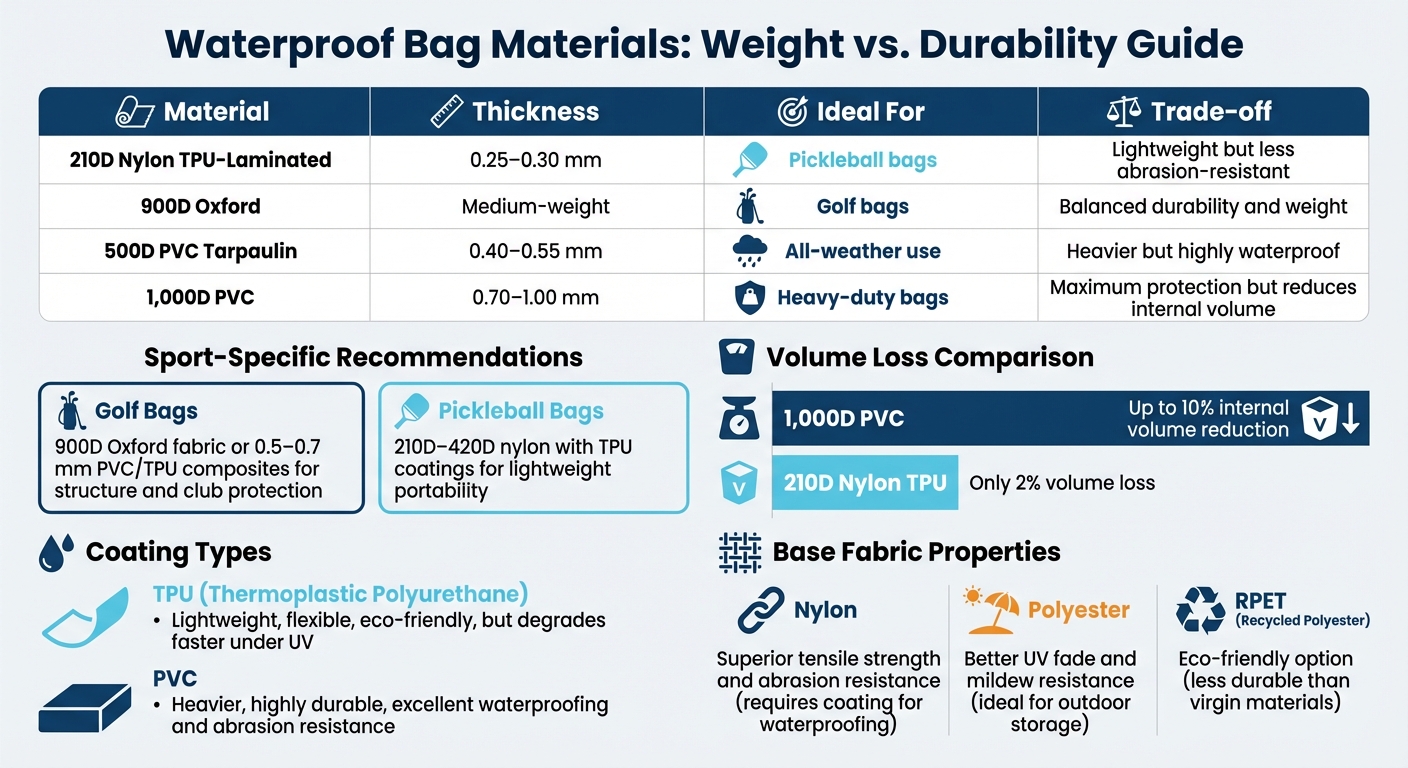
Waterproof Bag Materials Comparison: Weight vs Durability for Golf and Pickleball
A bag’s ability to keep water out depends on three key factors: the quality of its outer material, the hardware used, and how well it’s put together. Each element works together to shield your gear from moisture while standing up to the demands of outdoor activities.
Waterproof Materials: Shells, Linings, and Coatings
The outer material is the first line of defense against water and physical wear. For golf bags, 900D Oxford fabric stands out for its toughness and water resistance. Heavier deniers like 900D or 1,000D are thicker and resist punctures, making them ideal for protecting heavy golf clubs during travel. On the other hand, lighter options like 210D–420D nylon are better suited for pickleball bags, where portability is key. These lighter fabrics, when coated, still provide reliable waterproofing.
Coatings like TPU (Thermoplastic Polyurethane) and PVC are often applied to fabrics to create effective moisture barriers. TPU is lightweight, more flexible, and considered more environmentally friendly than PVC, but it can degrade faster under UV exposure. PVC, while heavier, is highly durable and excels at waterproofing and abrasion resistance. For a premium look, PU leather (synthetic leather) is a great option – it’s not only stylish but also easy to clean after a muddy game.
Inside the bag, soft linings protect delicate items like pickleball paddles or golf club heads from scratches. Some bags go a step further with insulated linings in cooler compartments, keeping your drinks cold on hot days. For items exposed to sweat or humidity, ventilated sections with mesh panels help prevent odors caused by moisture buildup.
"Waterproof sports bags protect equipment from water damage… these bags are often made from durable, water-resistant materials and have sealed zippers and reinforced stitching."
– Junyuan Bags
Next, let’s look at how hardware design strengthens a bag’s waterproofing capabilities.
Waterproof Hardware: Zippers, Seams, and Accessories
Zippers are often the weakest link when it comes to water resistance. Waterproof zippers, especially those from trusted brands like YKK, provide a reliable seal to keep water out. These zippers may add a bit of weight (about 2–4 oz or 60–120 g), but they’re essential for safeguarding valuables like electronics and wallets.
Another critical feature is sealed or heat-welded seams, which eliminate the tiny holes left by stitching. Heat-welded seams are particularly important for bags exposed to heavy rain or those with cooler compartments, as they can maintain stable internal conditions for up to 10 hours. Additionally, reinforced stitching at stress points – like strap attachments or dividers – ensures the bag can handle heavy loads without tearing.
Other hardware components, such as corrosion-resistant buckles and clips, are treated to withstand exposure to sweat and dew, ensuring they won’t rust. Some golf bags even include detachable rain covers for extra protection during downpours, while others integrate UV-resistant materials to prevent fading or degradation under the sun.
"Our waterproof bags use TPU or PVC coated fabrics and sealed seams, keeping your gear safe in rain, snow, or water sports."
– Junyuan Bags
These hardware choices strike a balance between functionality and waterproofing, ensuring your gear stays protected no matter the conditions.
Weight vs. Durability
Choosing the right balance between weight and durability depends on how you plan to use the bag. Golf bags often rely on heavier materials like 900D Oxford or 0.5–0.7 mm PVC/TPU composites. These materials provide the structure needed to protect clubs and keep the bag upright on the course. Meanwhile, pickleball bags prioritize lightweight materials such as 210D–420D nylon with TPU coatings, offering adequate protection without adding bulk.
It’s worth noting that some materials impact the bag’s internal volume. For instance, 1,000D PVC can reduce internal space by up to 10% due to its thickness, while lightweight 210D nylon with TPU lamination results in only a 2% volume loss.
The type of base fabric also matters. Nylon offers superior tensile strength and abrasion resistance, making it ideal for heavy-duty use, though it requires a coating to be fully waterproof. Polyester, on the other hand, resists UV fading and mildew better, making it suitable for bags stored outdoors. For environmentally conscious buyers, RPET (Recycled Polyester) is an option, though it may not be as durable as virgin materials.
| Material | Thickness | Ideal For | Trade-off |
|---|---|---|---|
| 210D Nylon TPU-Laminated | 0.25–0.30 mm | Pickleball bags | Lightweight but less abrasion-resistant |
| 900D Oxford | Medium-weight | Golf bags | Balanced durability and weight |
| 500D PVC Tarpaulin | 0.40–0.55 mm | All-weather use | Heavier but highly waterproof |
| 1,000D PVC | 0.70–1.00 mm | Heavy-duty bags | Maximum protection but reduces internal volume |
JUNYUAN BAGS can help you choose the right fabric and coating based on your specific needs, whether it’s a lightweight bag for pickleball or a rugged, structured ゴルフバッグ built to last.
Design Requirements for Golf and Pickleball Bags
Modern waterproof construction lays the groundwork for keeping your gear safe and organized in all conditions. However, golf and pickleball bags cater to very different needs, so their designs reflect how players use them during games or practice sessions. Let’s dive into what makes each type of bag tick.
Golf Bags: Club Storage and Accessories
Golf bags are designed with club organization and player convenience in mind. They come in three main types:
- Carry bags: Lightweight (2–4 lbs) and built for the essentials.
- Stand bags: Slightly heavier (4–6 lbs) with built-in legs and backpack straps.
- Cart bags: The heaviest option (6–8+ lbs), featuring full-length dividers and multiple pockets for maximum storage.
Because of their open-top design, golf bags often include a rain hood to prevent water from pooling, even when seam-sealed zippers are fully closed. As Scottsdale Golf notes, "The modern-day waterproof ゴルフバッグ is completely impervious to rain and can withstand even the heaviest of downpours if you follow a couple of simple rules".
Inside, full-length dividers in cart bags keep clubs separated from top to bottom, while shorter dividers in carry and stand bags help reduce weight. Specialized pockets for valuables like phones and wallets, as well as balls, tees, and rangefinders, make it easy to stay organized. For example, JUNYUAN BAGS designs golf bags with lightweight frames and padded straps to ensure comfort throughout an 18-hole round.
While golf bags focus on protecting clubs and organizing accessories, pickleball bags are all about paddle care and quick access to gear.
Pickleball Bags: Paddle Protection and Storage
Pickleball bags are tailored to the needs of players, with designs that prioritize paddle safety and easy gear access. Popular styles include:
- Sling bags: Compact and ideal for casual players, holding 1–3 paddles.
- Backpacks: Roomier, with space for 2–4 paddles and extras like a laptop for players coming straight from work.
- Tour or duffel bags: Designed for serious players or coaches, these can hold 4–6+ paddles, along with shoes, towels, and other tournament essentials.
Many pickleball bags feature padded or thermally lined paddle compartments to prevent damage or warping from extreme temperatures. Some even have side-access pockets, so you can grab a paddle without opening the entire bag. For ball storage, thermal-lined exterior pockets help maintain consistent ball performance in hot weather, while internal mesh organizers keep them easy to find.
Other practical features include ventilated compartments for shoes or sweaty gear, which help prevent odor buildup. Hidden "dirty laundry" pockets also keep used items separate from clean ones. External mesh pockets accommodate large water bottles (up to 40 oz), while felt-lined interior pockets protect delicate items like phones and glasses. Some high-end bags even come with fence hooks to keep them off wet or dirty court surfaces.
As SportsEdTV advises, "A well-ventilated bag prevents moisture buildup, which can lead to mold or mildew on your gear".
Features for Both Golf and Pickleball Bags
Despite their differences, golf and pickleball bags share several features that enhance functionality:
- Padded, adjustable straps: Distribute weight evenly for better comfort.
- Reinforced handles: Built with heavy-duty stitching to handle the weight of clubs or multiple paddles.
- Waterproof zippers and sealed seams: Keep valuables safe from the elements.
- Insulated cooler pockets: Perfect for keeping drinks cold during long games.
- Towel hooks, umbrella sleeves, and D-rings: Add-ons for attaching extra gear.
- Reflective strips: Improve visibility during early morning or evening play.
A sturdy base is also essential for both types of bags. Golf stand bags often use lightweight aluminum or carbon-fiber stands, while pickleball bags rely on durable bottoms to remain upright on court surfaces. These shared features ensure that no matter which sport you’re playing, your gear stays protected and ready to go.
Customization Options for Individuals and Organizations
Whether you’re gearing up for a weekend adventure or managing a team’s equipment, custom waterproof bags offer a level of personalization that standard models just can’t match. From branding and colors to specialized features and bulk pricing, there’s plenty to consider when creating a bag that’s uniquely yours.
Logos, Branding, and Colors
Adding your logo or team design to a waterproof bag is a great way to make it stand out. Options like embroidery work well for intricate logos with up to eight colors, while silk screening is perfect for bold, simple designs with no size constraints. For high-quality, full-color designs, heat transfer ensures crisp, vibrant results. If you’re looking to elevate the look, premium options like leather patches, foil stamping, or metal logos are also available.
Color consistency is key. By providing precise Pantone color codes, you can ensure your bags perfectly match your brand or team colors. This attention to detail avoids the frustration of receiving hundreds of bags that don’t quite align with your vision. For sharp, professional logo reproduction, submit your designs in vector formats like AI or EPS files.
Once your branding is set, you can focus on customizing the bag’s size and features to meet your specific needs.
Custom Sizes and Features
While standard bag models provide a solid base, the real advantage lies in tailoring dimensions and features to how you plan to use them. These customizations go hand-in-hand with waterproof construction, offering both functionality and protection for any sport or activity. Options include adjustable dimensions, divider systems (like 7-way dividers for golf), paddle compartments with thermal insulation, ventilated shoe pockets, fence hooks, rain hoods, and even insulated cooler pockets.
For a tech-savvy touch, you can add compartments for GPS devices, tracking modules, or USB charging ports, turning your bag into a smart training accessory. Production timelines typically range from 30 to 45 days after sample approval, but expedited options can deliver in as little as 20 days if you’re on a tight schedule.
Bulk Orders for Clubs and Events
For teams, clubs, and events, custom waterproof bags offer more than just personalization – they provide uniformity and efficiency. Bulk orders ensure cohesive branding and cost advantages. For example, JUNYUAN BAGS typically requires 200 to 300 pieces per design for standard orders, though smaller test orders of 100 pieces are available for golf bags or premium materials. In one standout project, the company delivered 300 custom basketball bags with NCAA team logos two days ahead of a 20-day deadline, achieving a 0% defect rate.
Before committing to large-scale production, it’s wise to validate samples. A pre-production sample, ready in 7 to 12 days, lets you inspect material quality, hardware functionality, and color accuracy. Best of all, sample fees are fully refundable once you place your bulk order, making it a no-risk way to ensure your custom bags meet every expectation.
"We’ve delivered 5000+ successful custom projects for brands across 30 countries. Let’s create your signature product line."
– Marvin Zhang, Senior Product Engineer at JUNYUAN BAGS
sbb-itb-1e6451b
Waterproof Construction and Testing Methods
Construction Techniques
Creating a truly waterproof bag involves more than just using water-resistant materials – it requires precision in construction. One key technique is heat-welding, where seams are fused using heat instead of traditional stitching. This eliminates the tiny holes left by needles, ensuring a completely leakproof bond. In cases where stitching is necessary for added strength, manufacturers seal the stitch lines with TPU or PVC tape to block water.
For closures, many high-quality bags rely on YKK waterproof zippers, which are specifically designed to protect against water exposure. The bag’s outer shell, typically made from durable fabrics like 1680D nylon or 900D Oxford coated with TPU or PVC, acts as the first line of defense against moisture.
These construction techniques are the foundation for the rigorous testing methods used to ensure waterproof performance.
Testing Methods
Waterproof bags undergo a series of standardized tests to verify their performance. The hydrostatic pressure test (ISO 811) evaluates a fabric’s ability to resist water penetration. Bags with ratings between 5,000–10,000 mm are considered waterproof, while those exceeding 10,000 mm fall into the highly waterproof category.
For fully assembled bags, rain simulation testing (DIN 53888) replicates different levels of rainfall, ranging from 1 to 100 mm per hour, for up to 24 hours. Another method, the water spray test (AATCC 22), simulates rain hitting the bag at a 45° angle and assigns a wetness rating from 0 (completely wet) to 100 (completely dry).
For bags designed to survive accidental submersion, water immersion testing (ASTM D5511) involves submerging sealed bags at depths of 3 to 10 feet for 30 minutes. JUNYUAN BAGS employs a thorough 5-stage quality control process, including material inspections, in-process checks, pre-shipment audits using AQL Level II standards, zipper and strap functionality tests, and random final inspections of 10–15% of units.
These tests ensure the bags meet performance standards for various conditions across the U.S.
Performance in U.S. Weather Conditions
The diverse weather across the U.S. – from Florida’s humid summers to Seattle’s constant drizzle and Arizona’s intense sun – demands waterproof bags that can handle more than just rain. UV-resistant coatings protect against sun damage and fading in hot, sunny regions, while anti-microbial treatments prevent mold and mildew in humid climates. Temperature cycling tests ensure that materials remain durable, resisting cracking in freezing conditions or delaminating under extreme heat.
With heat-welded seams and durable waterproof zippers, these bags are built to keep gear dry year after year, no matter the weather – from torrential downpours to the blazing sun.
Conclusion
Choosing the right waterproof bag means finding one tailored to the demands of your sport. Start with materials like coated nylon, TPU-laminated fabrics, or premium synthetic leather, paired with dependable waterproof zippers, to keep your gear safe. For added convenience, opt for padded, adjustable straps – especially if you’re carrying your equipment over long distances or through varied conditions. This combination ensures your gear stays protected, even in the unpredictable extremes of U.S. weather.
But functionality doesn’t mean you have to sacrifice style. Add a personal touch with custom logos, team colors, or unique layouts that showcase your identity while maintaining waterproof protection and keeping your gear well-organized.
JUNYUAN BAGS excels in creating custom waterproof sports bags for activities like golf and pickleball. They offer a full-service approach, from selecting the right materials and applying logos to producing bulk orders and handling global shipping. With options to customize sizes, materials, pocket configurations, and branding, they cater to both individual players and organizations. Plus, their strict quality control and 24-month warranty provide peace of mind.
Whether you’re a casual player safeguarding a single paddle or a club manager ordering hundreds of branded bags for a tournament, the right waterproof bag – crafted with sport-specific design and precision – ensures your gear stays dry, organized, and ready for action in any weather. With JUNYUAN BAGS, you get a partner who understands your needs and delivers reliable, high-quality solutions every time.
FAQs
Why is TPU a better choice than PVC for waterproof bags?
TPU, or thermoplastic polyurethane, is a standout material for waterproof bags thanks to its exceptional flexibility and strong resistance to abrasions, tears, and chemicals. It holds up better in cold conditions and boasts superior tensile and bending strength when compared to PVC. On top of that, TPU offers better protection against UV rays, oil, and fuel, ensuring your waterproof bag stays reliable over time.
Although PVC is a popular choice, TPU shines with its long-lasting durability and environmentally friendly properties, making it an excellent pick for custom sports bags, whether for golf, pickleball, or other activities.
What should I consider when choosing a waterproof bag for my sport?
When picking a waterproof bag for your sport, it’s crucial to think about the gear you’ll be carrying and how well the bag can shield it from the elements. For golf, you’ll need a bag that can hold a full set of clubs (usually around 30-35 lbs), plus shoes, rain gear, and other essentials. Look for features like reinforced seams, waterproof zippers, and compartments specifically designed for shoes or gloves to keep everything organized and dry.
For pickleball, a lighter option like a tote, sling, or backpack with a waterproof liner and a paddle holder works best. These bags should comfortably fit paddles, balls, and smaller items like a towel or water bottle.
Choosing durable materials such as TPU-coated nylon or PVC-laminated fabric, combined with welded seams and secure closures, ensures your equipment stays dry even in wet conditions. Extras like ergonomic straps and quick-access pockets can make carrying your gear more comfortable and convenient. If off-the-shelf bags don’t meet your needs, you might want to customize the size, materials, or layout to suit your sport. By focusing on the specific demands of your activity, you can find a bag that keeps your gear safe and ready whenever you are.
Can I personalize the design and features of a waterproof sports bag?
Looking for a waterproof sports bag that’s made just for you? Good news – you can customize every detail to match your needs. From the logo and color to the pattern, size, material, and even pocket layout, the options are endless. Whether you’re after a one-of-a-kind design for yourself or branded bags for your business, there’s plenty of room to make it your own.
Junyuan Bags specializes in creating bags that fit your lifestyle, whether you’re into golf, pickleball, or other sports. They combine practical features with stylish details, ensuring your bag not only looks great but also works perfectly for your activities.



 モバイル/What's App/Wechat
 Eメール
Eメール 追加
追加