
3D knitted handbags are shaking up luxury fashion by combining cutting-edge design with eco-friendly practices. Unlike traditional handbags, these are created using advanced knitting techniques that integrate features like pockets and closures directly into the bag’s structure. They stand out for reducing waste, supporting local production, and offering customization options.
Key points:
- Eco-conscious production: Minimal waste, local manufacturing, and recyclable materials.
- Integrated design: Features like hinges and clasps are built into the structure.
- Price range: From $275 (Paris Clutch) to $1,320 (London Tote Bag).
- Challenges: Public skepticism about durability and practicality.
While traditional luxury bags focus on craftsmanship and timeless materials, 3D knitted bags cater to modern buyers seeking innovation and sustainability. However, their success depends on overcoming doubts and proving their value in a competitive market.
1. 3D Knitted Handbags
3D knitted handbags represent a leap in manufacturing by replacing traditional cutting and sewing with a process that directly creates items from yarn through 3D printing. Boston-based Ministry of Supply has been a trailblazer in this space with their "3D Print-Knit" technique, which eliminates the need for traditional assembly. This method not only allows for seamless construction but also integrates features like hinges, clasps, and pockets directly into the design during printing. This shift opens up exciting possibilities for material innovation and design flexibility.
Material innovation plays a central role in the appeal of 3D knitted handbags. For example, Julia Koerner’s JK3D brand uses bio-based materials like Hymenium of Fungi to craft their HY • MINI handbag, priced at $650.00. Similarly, NIA Clothing utilizes WHOLEGARMENT® knitting machines from Shima Seiki to work with natural and eco-friendly materials. These machines produce seamless items that maintain structural integrity without the need for traditional seams, resulting in soft, tactile textures that align with both aesthetic and environmental goals.
Die environmental advantages of 3D knitted handbags resonate with consumers seeking sustainable luxury. JK3D emphasizes "sustainable production" through local fabrication and eco-friendly materials, while Green-Knit’s 2024 Berlin Fashion Week collection highlighted "circular design", ensuring every component is recyclable. The additive manufacturing process minimizes waste by building products layer by layer, avoiding the scraps left behind by traditional cutting methods. Additionally, local production reduces the environmental impact of transportation. These practices not only support sustainability but also enhance the durability and adaptability of the products.
A key feature of 3D knitted handbags is their durability and customization. The knitting process allows for precise tailoring and rapid prototyping, breaking free from traditional sizing limitations. Berlin-based VOJD Studios has collaborated with luxury brands like Alexander McQueen, LOEWE, Carolina Herrera, Akrisund Prabal Gurung to incorporate 3D printing into high-fashion collections. This demonstrates the versatility of the technique in luxury applications. Similarly, Adidas‘s Futurecraft 4D shoe midsole, created with Carbon‘s Digital Light Synthesis technology, showcases how this approach produces high-quality, customizable products in less time.
Beyond sustainability and customization, 3D knitting enables designers to achieve intricate, technical designs that would be impossible – or prohibitively expensive – with traditional methods. The process also shortens production times and reduces inventory costs, making it a game-changer for both creativity and business in the luxury fashion industry.
2. Traditional Luxury Handbags
Unlike the cutting-edge, tech-focused 3D knitting trend, traditional luxury handbags celebrate the artistry of handcrafting and the legacy of time-honored techniques.
These handbags stand out for their intricate craftsmanship and the skilled hands behind them, making each piece a symbol of exclusivity and expertise. This dedication to detail is matched by the use of high-quality materials, which play a key role in their allure.
From rare leathers to exotic skins and specially treated fabrics, these materials not only enhance the bags’ visual and tactile appeal but also embody a sense of timeless elegance. Designed to last, these handbags maintain their charm and structure for years, often becoming cherished heirlooms passed down through generations.
Personalization has also become a growing trend, allowing owners to add unique accessories like charms and beads to their bags. Industry expert Emily Hutchinson highlighted this trend in January 2024:
Personalized bags are expected to make a massive comeback in spring/summer 2024. Not only is it a fun and creative way to make your bag your own, but it’s also a solid way to invite some sustainability into your wardrobe, as a little DIY will effortlessly move your old bag into the new season.
Her insight emphasizes how adding a personal touch not only makes a bag uniquely yours but also gives it a fresh, sustainable update.
All these elements combine to showcase why traditional luxury handbags continue to hold their timeless appeal.
sbb-itb-1e6451b
Advantages and Disadvantages
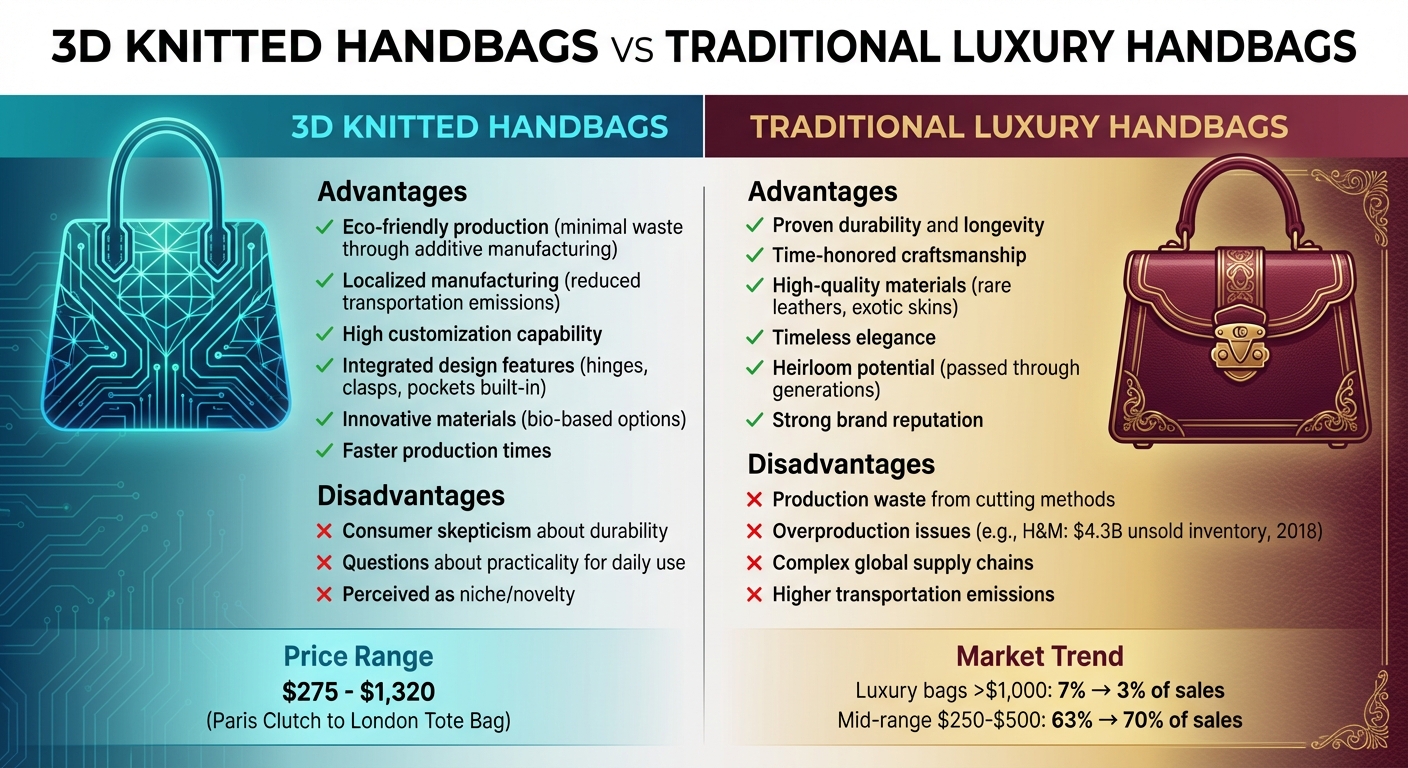
3D Knitted vs Traditional Luxury Handbags Comparison
When comparing 3D knitted handbags to traditional luxury handbags, it’s clear that each brings its own strengths and challenges, especially when considering sustainability and design.
3D knitted handbags stand out for their eco-friendly and forward-thinking approach. By using additive manufacturing, they significantly reduce waste during production. Localized manufacturing further cuts down on transportation emissions, and the technology enables a high degree of customization, allowing bags to be tailored to specific needs and preferences. On the design front, features like hinges, clasps, and pockets can be seamlessly incorporated into the bag’s structure. However, not everyone is convinced. Some consumers question their durability and whether these bags can hold up to the demands of daily use.
On the other hand, traditional luxury handbags are celebrated for their enduring reputation and classic appeal. Made with superior materials and crafted using time-honored techniques, these bags are designed to last for generations, often becoming treasured heirlooms. But this approach isn’t without its drawbacks. Traditional production methods can lead to overproduction and waste, as evidenced by H&M’s $4.3 billion worth of unsold inventory in March 2018. Additionally, the reliance on complex global supply chains results in higher energy consumption and increased emissions from transportation.
Ultimately, the choice between these two styles comes down to personal priorities: a preference for cutting-edge sustainability or a deep appreciation for trusted craftsmanship. Both approaches have a place in the ever-changing world of luxury goods.
Schlussfolgerung
3D knitted handbags bring a fresh perspective to the luxury market but face significant obstacles on their path to widespread acceptance. These bags cater to modern luxury buyers by focusing on sustainability through reduced waste and localized production. They also stand out for their use of advanced technology, offering unique design possibilities. Collaborations between high-end brands and tech companies further underscore the potential of this innovation, positioning these handbags firmly in the premium and luxury categories.
However, shifting consumer preferences present a challenge. The luxury handbag market is softening, with bags priced over $1,000 now accounting for just 3% of total sales, down from 7%. At the same time, demand has surged for handbags in the $250–$500 range, growing from 63% to 70% of the market over the last three years. Today’s buyers are increasingly focused on value, craftsmanship, and versatility, making it harder for new entrants to justify premium pricing.
Another hurdle lies in public perception. Many consumers still see 3D-printed fashion as a niche concept, raising doubts about its practicality and durability for everyday use. To carve out a lasting place in the luxury world, brands must address these concerns head-on. Clear messaging about the durability, comfort, and functional benefits of 3D knitted handbags will be essential, alongside efforts to maintain an air of exclusivity.
While sustainable production and innovative design give these handbags a strong foundation, their ultimate success depends on bridging the gap between novelty and necessity. To win over today’s price-conscious and discerning consumers, brands must prove that these products deliver real value without compromising on quality or luxury appeal.
FAQs
How do 3D knitted handbags support sustainability in luxury fashion?
3D knitted handbags are making strides in sustainability by cutting down on material waste. Unlike conventional manufacturing methods, this technique produces seamless, one-piece designs, leaving little to no excess fabric or yarn behind.
What’s more, 3D knitting supports on-demand production, which helps prevent overproduction – a common issue in the fashion industry. This approach reduces the need for large storage spaces and limits the environmental toll of transportation. The process itself is also more efficient, involving fewer production stages, which means less energy use and lower emissions. Thanks to their durability and long-lasting design, these handbags appeal to eco-conscious shoppers and help push the fashion industry toward greener practices.
What challenges do 3D knitted handbags face in becoming popular in luxury fashion?
3D knitted handbags face a few obstacles when it comes to carving out their place in the luxury fashion world. One of the biggest challenges? Many people simply aren’t familiar with 3D knitting technology. This lack of awareness can lead to hesitation, as consumers may find it hard to trust something they don’t fully understand.
On top of that, producing these handbags often costs more than traditional manufacturing methods. This could push prices higher, making them less accessible to a broader audience.
There’s also the question of whether these handbags can truly deliver on the durability und elegant design that luxury buyers demand. Changing these perceptions will be key if 3D knitted handbags hope to stick around as more than just a passing trend in the high-end fashion market.
What makes 3D knitted handbags more customizable than traditional luxury bags?
3D knitted handbags bring a whole new level of personalization to the luxury accessory world. Unlike traditional handcrafted bags that stick to fixed styles and limited choices, 3D knitting technology opens the door to endless possibilities. You can fine-tune everything – shapes, textures, and even intricate details – creating a bag that matches your exact taste.
But it’s not just about looks. This cutting-edge method also lets you tweak functional features like size and the number of compartments to fit your lifestyle. The result? A luxury handbag that’s not only visually stunning but also uniquely tailored to you, blending modern design with a nod to sustainability.



 Mobile/What's App/Wechat
 E-Mail
 ADD
ADD