Flyknit handbags are transforming the fashion world with cutting-edge materials, near-zero waste production, and user-focused designs. Originally used in athletic footwear, Flyknit now dominates the handbag market by blending lightweight fabrics with eco-friendly methods. Here’s what you need to know about the top 2025 trends:
- High-Performance Materials: Durable, flexible bags crafted from recycled plastic bottles.
- Eco-Conscious Production: 3D-knitting minimizes waste while using renewable energy and recyclable materials.
- Customizable Designs: AI tools enable personalized colors, straps, and features.
- Practical Features: Lightweight, flexible designs cater to active lifestyles.
- Modern Aesthetics: Bold colors, textures, and bio-engineered textiles align with 2025’s fashion preferences.
Flyknit handbags combine functionality, style, and sustainability, offering a forward-thinking choice for consumers seeking more from their everyday accessories.
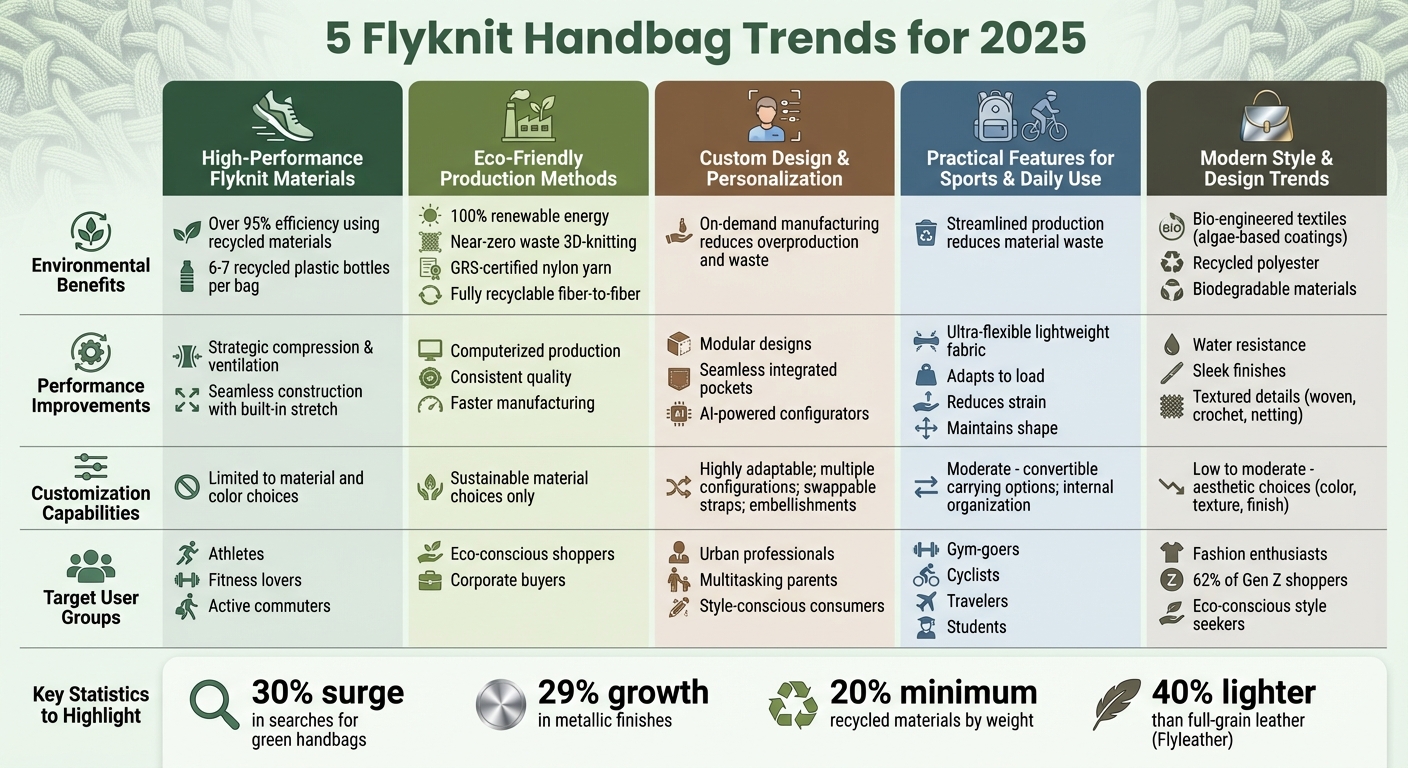
2025 Flyknit Handbag Trends Comparison: Sustainability, Performance & Customization
1. High-Performance Flyknit Materials
Material Innovation
Flyknit brings a cutting-edge approach to handbag design with its precision-engineered, lightweight fabric. This material allows for targeted reinforcement in areas that experience the most wear and tear, all while keeping the bag flexible and easy to carry. What’s even more impressive? Each handbag incorporates 6–7 recycled plastic bottles, giving waste a new purpose by transforming it into a strong, durable fabric.
Functional Features
Flyknit isn’t just about sustainability – it’s built for performance. Its ultra-flexible design caters to both athletic and everyday needs. Unlike stiff, traditional materials, Flyknit moves with you, adapting seamlessly to changes in movement and load. This ensures both comfort and support exactly where you need it.
2. Eco-Friendly Flyknit Production Methods
Sustainability Impact
Flyknit production goes beyond just using recycled materials – it actively reduces waste through advanced 3D-knitting technology. This method creates handbag bodies in a single piece, cutting down on excess material typically lost during cutting and trimming processes. The result? A production model that comes close to generating zero waste.
GREEN KNIT operates facilities in Austria and Germany that produce 3D-knitted bags using 100% recycled, GRS-certified nylon yarn. These bags are crafted as a single, seamless piece, including integrated pockets, and the entire process runs on renewable energy. By sticking to a monomaterial approach, they ensure the bags are fully recyclable from fiber to fiber.
Nike also highlights how rethinking material production can improve performance while significantly reducing climate impact.
Material Innovation
Efficient production is just one piece of the puzzle – innovative materials take Flyknit’s sustainability to the next level. The Air VaporMax 2023 Flyknit, for example, demonstrates how using premium recycled materials combined with a lightweight design can make a big difference. This model incorporates at least 20% recycled materials by weight, helping to cut down on the use of new resources. Another standout material, Flyleather, is made from at least 50% recycled leather fiber. It’s about 40% lighter than full-grain leather while still offering excellent durability and resistance to wear.
3. Custom Design and Personalization Options
Customization Options
Flyknit handbags in 2025 are breaking away from the traditional one-size-fits-all approach. Brands are now offering modular designs that let users swap straps and add interchangeable embellishments. With the help of AI-powered configurators, creating a handbag that reflects your personal style has never been easier. These tools allow you to digitally customize everything from color schemes to specific functional features, meeting the growing demand for personalized accessories. This shift is also driving forward-thinking advancements in material design.
Material Innovation
Enter Nike FlyWeb, a groundbreaking 3D-printed TPU material that’s changing the game for Flyknit handbags. This technology gives designers millimeter-level control over material properties like density, airflow, and stretch. For handbags, this means you can reinforce high-stress areas for added durability while keeping the rest of the design lightweight and flexible.
"This is a true unlock, not just for bras but for how we design and build high-performance apparel going forward. It opens the door to entirely new ideas for how athletes experience sport through what they wear." – Janett Nichol, Nike VP of Innovation
Aesthetic Appeal
On top of these technical advancements, aesthetic customization is taking the user experience to the next level. For businesses making bulk orders, exclusive colorways have become a popular option. Companies can choose custom color palettes – ranging from earthy tones to metallic finishes – and even add logo embroidery to reinforce their brand identity. This trend aligns perfectly with the 2025 design ethos, which blends natural hues with bold, eye-catching details.
4. Practical Features for Sports and Daily Use
Functional Features
Flyknit handbags are crafted to handle the demands of an active lifestyle. The ultra-flexible and lightweight fabric adjusts seamlessly to whatever you’re carrying – whether it’s gym gear or your daily essentials. This thoughtful design ensures they’re easy to carry and comfortable, even during long commutes. By reducing unnecessary bulk while providing durable support, these bags cater to modern consumers who need accessories that work just as hard as they do across various situations.
Material Innovation
Flyknit’s lightweight material isn’t just about convenience – it’s about comfort too. Its engineered flexibility lets the bag move naturally with your body, easing strain during extended use. At the same time, it maintains its shape and durability, no matter the load.
This balance between function and design shines through in real-world examples. Take Surkana, for instance – they’ve introduced knitted backpack-bags with toiletry compartments and compact shoppers with double handles. These styles show off Flyknit’s ability to combine practical organization with its trademark lightweight feel, proving it’s just as suited for athletic needs as it is for everyday errands.
sbb-itb-1e6451b
5. Modern Style and Design Trends
Aesthetic Appeal
Flyknit handbags are making waves in 2025 with bold choices in color and texture, perfectly aligning with the year’s fashion trends. Green shades – ranging from soft sage to deep emerald – are stealing the spotlight, with searches for "green handbags" surging by 30% over the past year. Metallic finishes are also gaining traction, boasting a 29% growth, while 62% of Gen Z shoppers are gravitating toward futuristic, tech-inspired designs. This vibrant palette reflects an eco-conscious attitude that’s reshaping the fashion industry.
In addition to color, Flyknit designs are leaning into knit and cable-knit materials, creating soft and lightweight surfaces that feel distinctly modern. Designers are also pushing creative boundaries with textured details like woven patterns, crochet accents, and netting, offering tactile experiences that make these bags stand out. For a touch of luxury, some styles incorporate satin finishes or velvet elements, delivering a high-gloss, polished look. These innovative design choices not only capture the essence of contemporary fashion but also pave the way for more sustainable practices in material use.
Sustainability Impact
Sustainability is becoming a cornerstone of Flyknit handbag design, shaping both aesthetics and production methods. Nancy Zeng, senior sales manager for a handbag manufacturer, highlights this shift:
"Prioritize bio-engineered textiles like algae-based coatings for 2025 Handbag Trends – these materials offer water resistance and biodegradability while reducing dependency on petroleum-based synthetics, aligning with EU’s 2025 Circular Fashion mandates."
These eco-friendly materials bring a distinct visual appeal to modern handbags. Algae-based coatings, for instance, deliver sleek finishes that are both stylish and functional. Recycled polyester is being used to create unique textures in bucket bags, while canvas-leather hybrids – crafted from sustainably sourced canvas – offer a chic yet practical option for environmentally conscious consumers. Some brands are even collaborating with companies like Tesla to repurpose recycled car-seat leather into one-of-a-kind tote bags. This innovative approach to material sourcing demonstrates how sustainability can drive both creativity and functionality in handbag design.
Trend Comparison Table
Here’s a snapshot of how the trends we’ve explored contribute to sustainability, performance, and personalization in the Flyknit handbag market for 2025. This table highlights their unique strengths and the user groups they cater to.
| Trend | Environmental Benefits | Performance Improvements | Customization Capabilities | Target User Groups |
|---|---|---|---|---|
| High-Performance Flyknit Materials | Achieves over 95% efficiency using recycled materials | Boosts comfort with strategic compression and ventilation while eliminating seams through built-in stretch | Limited to material and color choices | Athletes, fitness lovers, active commuters |
| Eco-Friendly Flyknit Production Methods | Employs renewable energy, cuts supply chain emissions, and minimizes landfill waste | Speeds up production with computerized methods that maintain consistent quality | Focused on sustainable material choices rather than extensive design flexibility | Eco-conscious shoppers, corporate buyers |
| Custom Design and Personalization Options | Reduces overproduction and waste through on-demand manufacturing | Modular designs add functionality with seamless, integrated pockets | Highly adaptable, offering multiple configurations | Urban professionals, multitasking parents, style-conscious consumers |
| Practical Features for Sports and Daily Use | Streamlined production reduces material waste | Offers adaptable designs for diverse lifestyles | Moderate adaptability with convertible carrying options and internal organization | Gym-goers, cyclists, travelers, students |
| Modern Style and Design Trends | Uses bio-engineered textiles for biodegradability and recycled polyester for unique textures | Combines sleek finishes and textured details for a stylish yet functional look | Low to moderate – focused on aesthetic choices like color, texture, and finish | Fashion enthusiasts, 62% of Gen Z shoppers, eco-conscious style seekers |
Conclusion
The trends shaping Flyknit handbags in 2025 highlight how advancements in materials, eco-conscious practices, and user-centered design are coming together to tackle modern demands. These bags offer practical solutions that benefit both consumers and the planet.
Flyknit handbags are designed to adapt to various lifestyles without sacrificing quality. They provide the durability needed for daily commutes or gym trips, the polished look required for professional environments, and the sustainability that aligns with increasing environmental awareness. With close-to-zero-waste production methods and monomaterial designs, these bags can be fully recycled through closed-loop fiber-to-fiber systems. By utilizing materials like GRS-certified nylon yarn and repurposed plastic bottles, they address the common trade-offs in traditional manufacturing.
This blend of innovation not only changes how handbags are made but also raises the bar for what consumers can expect. Whether you’re an athlete looking for performance features, a professional seeking versatile style, or someone dedicated to reducing waste, Flyknit handbags offer a forward-looking choice.
When shopping for your next handbag in 2025, consider options that incorporate 3D-knitted construction, recycled materials, customizable elements, and multifunctional designs. These trends are reshaping the way handbags are created and used in everyday life.
FAQs
How are Flyknit handbags making fashion more sustainable?
Flyknit handbags are making waves in the fashion world by cutting material waste by up to 60% compared to traditional manufacturing methods. This is achieved through precision knitting techniques that use exactly the amount of material required, leaving little to no excess behind.
What’s more, many Flyknit handbags feature recycled materials, like polyester made from recycled plastic bottles. By repurposing waste, these bags not only reduce the strain on resources but also lower the production’s environmental footprint. The result? A chic, sustainable option for shoppers who care about style and the planet.
What are the customization options for Flyknit handbags?
Flyknit handbags come with a range of customization features that cater to personal tastes and styles. You can often choose from various color combinations, patterns, and strap designs to create something that feels uniquely yours. Some brands even go a step further by offering options for personalized monograms or logos, adding an extra layer of individuality.
Beyond aesthetics, many manufacturers let you tailor functional aspects, like the size of the bag, the number of compartments, or even the mix of materials used. This blend of style and practicality makes Flyknit handbags a flexible option for a variety of needs.
What makes Flyknit handbags perfect for an active lifestyle?
Flyknit handbags are a fantastic choice for those with busy, on-the-go lifestyles. Why? They offer a perfect mix of being lightweight and tough enough to handle daily wear and tear. The Flyknit material is flexible and breathable, making these bags comfortable to carry whether you’re tackling errands, traveling, or hitting the gym.
What’s more, these bags are designed with practicality at their core. Expect features like roomy compartments to keep your essentials organized, secure closures for peace of mind, and ergonomic straps that make carrying them a breeze. On top of all that, many Flyknit handbags are made with eco-conscious practices, offering a stylish and functional option for anyone looking to make more sustainable choices.



 モバイル/What's App/Wechat
 Eメール
Eメール 追加
追加