
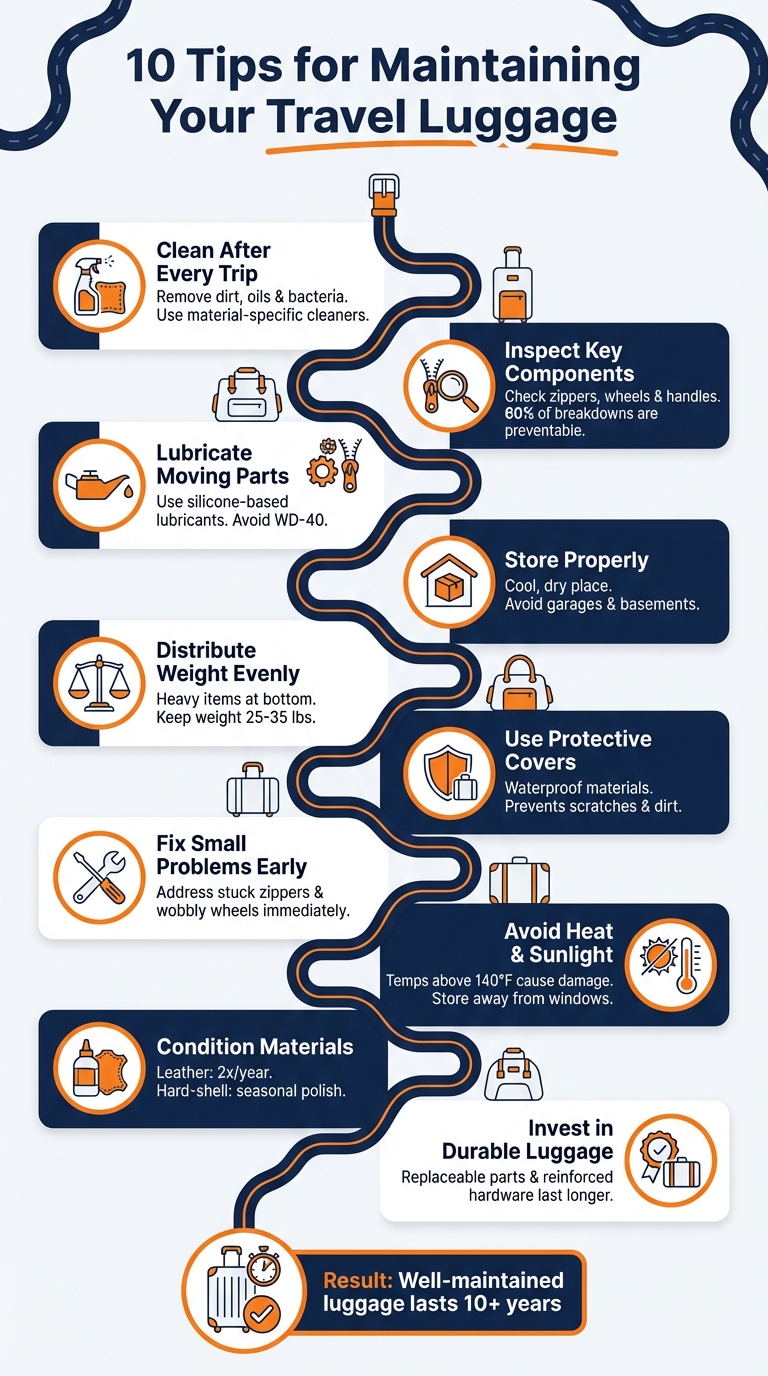
Want your luggage to last longer? Proper care can save you money and prevent travel headaches. Here’s how:
- Clean after every trip: Dirt, oils, and bacteria weaken materials. Use the right cleaning products for your bag’s material (e.g., PU leather, fabric, or hard-shell).
- Inspect zippers, wheels, and handles: Small issues like grit in zippers or stiff wheels can lead to bigger problems.
- Lubricate moving parts: Use silicone-based lubricants to keep wheels, zippers, and handles working smoothly. Avoid petroleum-based products like WD-40.
- Store properly: Keep bags in a cool, dry place. Avoid garages or basements where humidity can cause damage.
- Pack smart: Distribute weight evenly to reduce strain on zippers and handles. Avoid overpacking.
- Use protective covers: Shields against scratches, dirt, and moisture during travel.
- Fix small problems early: Address stuck zippers, wobbly wheels, or tears before they worsen.
- Avoid heat and sunlight: High temperatures and UV rays can weaken materials and cause fading or cracks.
- Condition materials: Use leather conditioner, car polish, or fabric protectors based on your luggage type.
- Invest in durable luggage: Bags with replaceable parts and reinforced hardware last longer.
Key takeaway: Regular maintenance ensures your luggage stays reliable and lasts for years.
10 Essential Luggage Maintenance Tips to Extend Lifespan
The Best Way to Clean Your Suitcase!
sbb-itb-1e6451b
1. Clean Your Luggage After Each Trip
Traveling exposes your luggage to dirt, oils, and bacteria, especially on high-contact areas like handles and zippers. To keep things hygienic, wipe these spots down with disinfecting wipes containing at least 60% alcohol. Make sure the surface stays wet for at least 30 seconds for effective sanitization.
The cleaning process depends on the material of your luggage:
- PU Leather: Dust weekly using a microfiber cloth dampened with warm water. For deeper cleaning, a pH-neutral cleaner or mild dish soap solution works well. If you’re dealing with stubborn stains, try a 1:1 mix of vinegar and water, applying it gently.
- Fabric Luggage (Nylon/Polyester): Start by vacuuming both the interior and exterior. Spot-clean any stains using a mild detergent and a soft brush. For tougher spots, apply a paste made of baking soda, let it sit briefly, and then rinse.
- Hard-Shell Luggage: Use a damp cloth with mild soap to wipe it down. For scuff marks, a magic eraser or baking soda paste can do the trick.
Michael Hodgson, an Eagle Creek expert and author, underscores the importance of this routine:
"Knowing how to properly clean and sanitize luggage before you store it will help ensure you are not welcoming interlopers into your house that could cause trouble for you down the road".
To take extra precautions, consider leaving your luggage in a garage or on the porch when you first return home. This step helps prevent germs or pests from entering your living space.
Be cautious with cleaning products – avoid harsh chemicals like bleach or ammonia, as they can damage materials and cause discoloration. Similarly, skip hair dryers or room heaters for drying, as high heat can harm synthetic fabrics and PU leather. Instead, air-dry in a cool, ventilated area. For PU leather bags, stuffing them with newspapers or fabric can help them keep their shape while drying.
If you’re a frequent traveler, aim for a deep clean every quarter. However, after long international trips or exposure to rain, snow, sand, or salt, it’s best to clean your luggage thoroughly as soon as possible.
2. Check Zippers, Wheels, and Handles for Damage
Zippers, wheels, and handles take the brunt of wear and tear during travel. After cleaning your luggage, it’s smart to inspect these key components to catch small issues before they turn into expensive repairs. In fact, over 60% of travelers report luggage breakdowns due to skipping regular maintenance.
Start with the zippers. Slide the zipper pull along its entire length to check for sticking, bent teeth, or debris. If you notice sand or grit in the tracks, use a soft brush to clear it out. This simple step is part of keeping the mechanism in good working order.
"Don’t forget to remove sand, grit and dirt from the zippers, so they continue to work the way they should".
Next, move on to the wheels. Spin them manually to ensure they rotate smoothly. For spinner luggage, confirm that the wheels swivel a full 360 degrees. Watch out for anything stuck in the wheel housings – common culprits include hair, gravel, and mud. If the wheels feel stiff, you might need to remove them for a more thorough cleaning.
"Check that there’s nothing stuck in your wheels like gravel, hair, rope, or mud so that your luggage moves freely".
Finally, test the telescoping handle. Extend and retract it several times to make sure it operates smoothly and doesn’t wobble.
"Test the handle for smooth extension and retraction [and] tighten any loose screws".
If you can, open the interior lining to check for any loose screws or hardware. And here’s a tip: never lift a fully packed suitcase by its telescoping handle – it’s not designed to bear that kind of weight. Use the fixed top or side handles instead to avoid damaging the mechanism.
For zippers, try positioning the pulls in the middle of the suitcase rather than at the corners. Corners tend to take the most impact during handling, and this small adjustment can protect the zipper tracks. Regular inspections like these, paired with proper cleaning, will help your luggage stay reliable trip after trip.
Quick Tip: Leave zippers slightly open during storage to prevent mildew buildup.
3. Lubricate Moving Parts for Better Performance
After checking your luggage for any damage, the next step is to ensure its moving parts stay in top shape. Proper lubrication reduces friction, helping wheels, zippers, and handles work smoothly. The trick lies in picking the right lubricant and applying it the right way. A little effort here can make a big difference in keeping your luggage functioning well over time.
Silicone-based lubricants are ideal for wheels and zippers because they resist dust and dirt, unlike petroleum-based products that leave a sticky residue and attract grime over time. For this reason, avoid using WD-40, as it tends to gather debris.
Wheels
Start by cleaning the axles and bearings with a microfiber cloth to remove hair, dirt, or grit. Then, apply a silicone-based lubricant to the axles and spin the wheels to distribute it evenly. Be sure to wipe off any excess to prevent drips or stains. If your luggage has rubber wheels, you might find that light machine oil works better than silicone.
Zippers
For zippers, use either a silicone spray or a specialized zipper wax. Begin by brushing away any trapped sand or debris from the zipper teeth. Then, apply a thin layer of lubricant along the teeth and run the zipper back and forth several times to ensure the product spreads evenly.
Telescoping Handles
To lubricate telescoping handles, you’ll need to access the mechanism by removing the inner liner. Spray a multipurpose lubricant, like Gear Hugger Eco Multipurpose Lubricant or 3-IN-ONE® Oil, into the toggle button housing on both sides. Then, press the release button and slide the handle up and down to distribute the lubricant across the mechanism.
For optimal performance, lubricate the wheels every few months – or monthly if you’re a frequent traveler. Reapply whenever you notice squeaking or resistance. A little maintenance goes a long way in keeping your luggage travel-ready!
4. Store Your Luggage Properly Between Trips
Taking care of your luggage doesn’t end with cleaning – it’s equally important to store it the right way. Poor storage can lead to expensive damage. For instance, if moisture gets trapped inside bags with polyurethane coatings, it can trigger hydrolysis. This chemical reaction softens the coating, making it sticky and prone to peeling. Similarly, damp conditions can cause mildew, which might lead to delamination.
"Attics, basements, and garages may seem like logical places to store suitcases, but are best avoided. Temperature changes and excess humidity in such locations can damage bags." – Travelpro
The best place for your luggage is a cool, dry area inside your home with stable conditions. Here are some tips to keep your bags in great shape:
- Avoid sunlight exposure: Keep your luggage away from windows to prevent UV rays from fading colors or warping materials, especially leather.
- Ensure dryness: Always store luggage completely dry. Air it out for a day after a trip to remove any lingering moisture.
- Combat humidity: If you’re storing bags in a humid area, toss a few silica gel packets inside and replace them regularly to keep moisture at bay.
For hard-sided luggage, lay spinner suitcases on their sides instead of upright to reduce stress on the wheels. Don’t stack heavy items on empty suitcases, as this can bend the frame or strain the zippers. For soft-sided bags, stuff them with crumpled paper or old blankets to help them keep their shape.
Leave zippers slightly open to let the bag breathe. To keep odors away, place a dryer sheet, a small container of baking soda, or a charcoal pouch inside. If you have pets, store your luggage on high shelves or behind closed doors to protect it from scratches, chewing, or marking.
5. Distribute Weight Evenly When Packing
Once your bag is clean, checked, and lubricated, packing it correctly becomes the next crucial step in keeping it in top shape. The way you organize your items directly affects the durability of your luggage. Uneven packing can strain zippers, wheels, and handles, leading to wear and tear much faster than expected.
For rolling suitcases, place heavier items – like shoes or bulky gear – at the bottom, near the wheels. This lowers the center of gravity, making the bag easier to maneuver and less likely to tip over. Pack shoes with their soles down and fill them with smaller items like socks to save space. If you’re using a travel backpack, position heavy items in the middle, close to the back panel. This alignment helps distribute the weight along your torso, making it much more comfortable to carry.
"Avoid overstuffing; excess load strains zippers, seams, and other key parts." – Vittag Luggage
Overpacking is one of the quickest ways to damage your bag. It puts unnecessary stress on zippers and weakens corners, increasing the chance of rips or tears. To avoid this, use smaller items to fill corners and edges, ensuring you maximize space without overloading the bag. Internal compression straps are also handy for keeping everything secure and preventing items from shifting during transit.
When lifting your suitcase, always use both the top carry handle and the side handle instead of relying on the telescopic pulling handle. The adjustable handle isn’t built to bear the full weight of a packed bag. As Briggs & Riley advises:
"Never pick up the bag by the adjustable handle. Always use the top carry handle".
This approach spreads the weight more evenly across the bag’s frame and reduces the risk of handle damage. For best results, aim to keep your bag’s total weight between 25–35 pounds. By packing thoughtfully and handling your luggage with care, you can protect its key components and extend its lifespan for years to come.
6. Use Protective Covers During Travel
Taking an extra step to protect your luggage during travel can make a big difference, and that’s where protective covers come in. These covers act as a shield, guarding your bags against scratches, scuffs, dirt, and even germs from TSA bins and frequent handling by airport staff. They’re especially useful for air travel, where rough handling is common.
Waterproof materials like PVC or treated polyester are great for keeping your suitcase and its contents safe from rain, snow, or accidental spills. In fact, tests on 50 covers revealed that thick neoprene can even prevent aluminum suitcases from denting when dropped from counter height. For fabric luggage, a water-resistant spray like Scotchgard can help repel moisture and stains.
When choosing a cover, make sure it matches your bag’s material. For hard-shell polycarbonate or ABS luggage, transparent PVC covers offer waterproof protection while keeping the design visible. Aluminum suitcases benefit from padded neoprene covers that provide extra impact resistance. Meanwhile, nylon and fabric bags do well with breathable polyester-spandex blends, which help prevent moisture buildup and mold. To ensure a proper fit, measure your suitcase height without including the wheels.
"Designed to protect your luggage from scratches, scrapes, dirt, and debris, they’re typically crafted from stretchy neoprene or waterproof PVC coating that acts as a barrier against external elements." – Sophie Dodd, Writer, Travel + Leisure
Covers with bright patterns or bold colors can serve a dual purpose: they not only protect your bag but also make it easier to spot on a crowded baggage carousel. For added convenience, look for covers with zippers or velcro closures that allow TSA agents to remove them quickly during inspections. Prices range from budget-friendly options at $13–$15 to premium covers costing $38–$65.
7. Fix Small Problems Before They Get Worse
Minor issues – like a stuck zipper or a wobbly wheel – can turn into major headaches if left unchecked. Tackling these problems as soon as they appear can save you from losing belongings or having to replace your luggage entirely.
Make it a habit to inspect your luggage regularly. For instance, stuck zippers are often caused by dirt, sand, or grit clogging the tracks. To fix this, rub a bit of candle wax or bar soap along the zipper teeth to help the slider move smoothly. If fabric gets caught in the zipper, carefully use tweezers to free it. For hard-shell luggage, a pencil eraser can buff out light scuffs, while deeper marks can often be reduced by gently scrubbing with a small amount of toothpaste and a toothbrush.
Check wheels and handles for any stiffness or looseness. Tighten screws and clean these parts to stop minor wear from becoming a bigger issue.
If you spot small fabric tears, grab a needle and some heavy-duty polyester or nylon thread. Stitch the rip in a zig-zag pattern to reinforce the area. For straight cuts, high-strength fabric glue can work wonders – just apply it to both edges, overlap them slightly, and hold them together for a few minutes. Mallika Sharma, a Certified Leather Care Technician, suggests:
"The best glue to repair rips in fabric luggage is an extra-strength fabric glue."
It’s also helpful to keep a small repair kit handy. Include essentials like a screwdriver, replacement zipper pulls (usually $10–$15), and a melamine sponge. Some premium luggage brands even sell DIY repair kits for common issues like broken wheels or corner guards, typically priced around $15. Considering that well-maintained luggage can last over a decade, these small fixes can go a long way in preserving your travel gear for future adventures.
8. Keep Luggage Away from Heat and Sun
Exposing your luggage to extreme heat and sunlight can cause serious damage over time. High temperatures evaporate essential oils and moisture, while UV rays fade colors and weaken fibers. For instance, leaving your suitcase in a parked car during summer can be disastrous – temperatures inside can easily surpass 140°F (60°C). This intense heat strips away the oils that keep materials flexible and durable.
Different materials react to heat and UV exposure in unique ways. Leather, for example, dries out and becomes brittle, leading to cracks that can’t be fixed. PU-coated fabrics face a chemical reaction called hydrolysis when exposed to heat and moisture, which makes the coating sticky and causes it to peel. Hard-shell luggage made from ABS plastic can warp under prolonged heat, while nylon and polyester fibers weaken as UV rays break them down over time.
To keep your luggage in good shape, store it in cool, dry places away from windows. Sunlight streaming through glass can amplify UV damage. If you need to air-dry your bag after cleaning, always do so in the shade rather than direct sunlight. Heidi Dale Allen, VP of Marketing at Nikwax, highlights the risks of heat, stating:
"dry out the leather, which can cause it to crack. It can also damage the glues, causing your shoes to fall apart faster."
If your luggage overheats, such as after being left in a hot trunk, allow it to cool naturally for 30–60 minutes before handling it. Sudden temperature changes can cause materials to contract too quickly, leading to immediate cracks. For leather luggage, regular conditioning is essential to replenish lost oils. Additionally, protective sprays with UV blockers can help shield fabrics from sun damage, especially if you often travel to sunny destinations.
While brief sun exposure (up to 1–2 hours) is usually harmless, prolonged exposure – like a week in direct sunlight – can lead to irreversible fading and structural damage. Taking these precautions will help maintain your luggage’s appearance and functionality for years to come.
9. Apply Conditioners Based on Material Type
Once you’ve cleaned and lubricated your luggage, the next step is conditioning. This step is critical for extending the life of your luggage, but the type of conditioner you use depends on the material. Here’s how to care for different types of luggage materials:
Leather luggage needs special attention. Use creams, oils, or waxes designed specifically for leather to restore moisture and prevent cracking. Cleaning leather every three months and conditioning it twice a year is a good rule of thumb. Apply the conditioner with a soft cloth, using gentle circular motions. Let it sit for a few minutes so it can absorb, then buff it out. As Steel Horse Leather puts it:
"If it’s not made specifically for leather → don’t put it on your bag."
Be cautious not to over-condition, as this can attract dust and dirt.
Hard-shell luggage benefits from a different approach. A thin layer of silicone-based car polish or wax-based furniture polish works wonders. It helps maintain the shine and provides a protective barrier against small scratches. Applying this treatment seasonally keeps the surface looking fresh and adds extra protection for travel.
Nylon and canvas bags don’t need oil-based products. Instead, use fabric protector sprays to boost water and stain resistance after cleaning. Spray evenly across the entire surface and let it dry completely before storing or using the bag. This creates an invisible shield without altering the fabric’s feel or appearance.
Always test any product on a small, hidden area – like a bottom corner – before applying it to the entire bag. This helps you avoid any unexpected discoloration or damage.
10. Choose Bags with Durable Custom Features from SACOS DE JUNYUAN

When it comes to keeping your luggage in great shape, starting with durable bags is key. Strong, well-made luggage is your first step toward easier maintenance and long-term use.
JUNYUAN BAGS offers travel luggage designed with customizable, reinforced hardware – like replaceable wheels, sturdy handles, and tough zipper pulls – that boosts durability and saves you money in the long run by reducing the need for replacements. Plus, this approach helps cut down on waste.
To protect against wear and tear, their bags feature aluminum bumpers that shield corners from impact damage. You can also tailor the materials, sizes, and patterns to suit your travel style, whether you’re jetting off for business meetings or heading out on a casual getaway.
JUNYUAN BAGS provides free custom design services and holds certifications like BSCI, CE, RoHS, and ISO9001, ensuring their products are built to last. With luggage designed for longevity, applying regular maintenance practices becomes even more effective, helping you get the most out of your investment.
Conclusão
Taking care of your luggage can make it last much longer. Simple steps like cleaning it after trips, inspecting zippers, wheels, and handles for damage, and storing it in a cool, dry spot can prevent wear and tear. As the travel experts at Delsey point out:
"Travel exposes your suitcase to wear that can shorten its lifespan and affect your next trip".
By maintaining your luggage, you can avoid the cost of replacing it often. Plus, proper care keeps your bags clean and reliable. Regular cleaning helps prevent mold or pests during storage, while disinfecting high-touch areas removes bacteria that might weaken the materials over time. Eminent‘s care guide highlights this:
"If you want to ensure your bag has a long life of travel ahead, caring and cleaning your bag will ensure you maximise the bag’s longevity".
FAQs
How do I know what material my luggage is?
To figure out what material your luggage is made of, start by looking at its texture and finish. Hard-shell suitcases are usually stiff and have either a glossy or matte surface. These are commonly crafted from materials like polycarbonate or ABS plastic. On the other hand, soft-sided luggage feels more pliable and is typically made from fabrics such as nylon or polyester. If you’re unsure, check for labels or tags on the luggage that might specify the material. You can also consult the product description or visit the manufacturer’s website for more details.
What should I do if my suitcase gets wet inside?
If the inside of your suitcase gets wet, make sure to dry it completely to prevent unpleasant odors or mold. For soft-sided luggage, gently clean the interior using mild soap and water. If you have a hard-shell suitcase, simply wipe it down with a damp cloth. Always let the suitcase dry thoroughly before storing it to avoid any potential damage.
When should I repair my luggage vs replace it?
If your luggage has minor issues, like loose wheels or a broken zipper, consider repairing it to extend its life. Fixing these small problems can keep your bag functional and save you money in the long run. However, if the damage is more severe – such as large tears, structural problems, or anything beyond repair – it’s time to replace it. Weigh the extent of the damage carefully to decide the best course of action.



 Telemóvel/What's App/Wechat
 E-Mail
 ADD
ADD