
Your Flyknit handbag is delicate yet durable, but it needs proper care to stay in top shape. Here’s a quick guide to maintaining its look and ensuring it lasts:
- Cleaning: Use a soft brush, mild detergent, and cool water. Avoid hot water, harsh chemicals, and machine washing, as they can damage the fabric.
- Spot-Cleaning: Handle stains like coffee, ink, or mud carefully with specific solutions like baking soda paste or rubbing alcohol.
- Drying: Air dry in a shaded, ventilated area. Avoid sunlight, heat sources, and wringing the bag.
- Storage: Keep it stuffed with tissue paper, stored in a breathable dust bag, and placed in a cool, dry spot away from humidity and sunlight.
- Daily Tips: Avoid overloading, handle with clean hands, and brush off dirt regularly to prevent buildup.
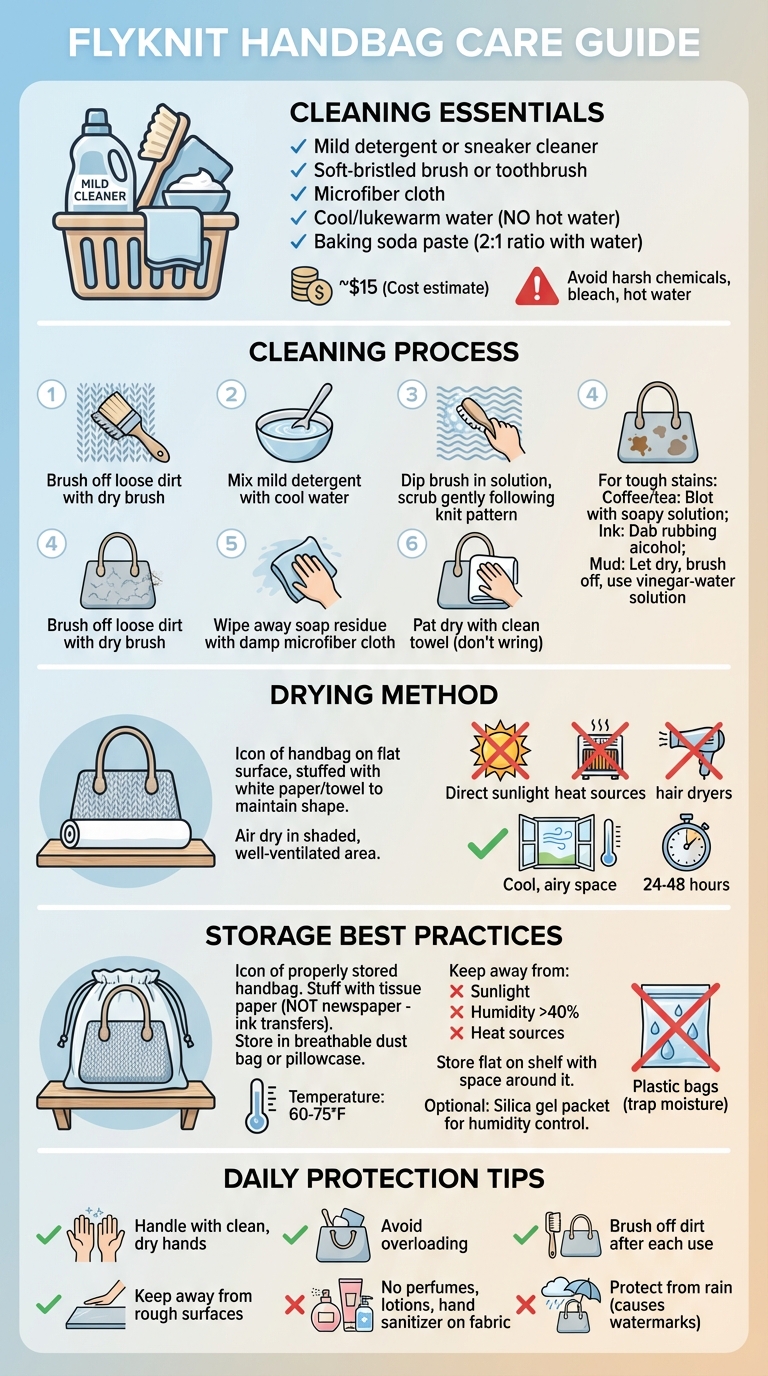
Complete Flyknit Handbag Care Guide: Cleaning, Drying, and Storage Steps
Cleaning Tools and Materials You’ll Need
Basic Cleaning Supplies
To clean your Flyknit handbag properly, you’ll need a few essentials to ensure the delicate fabric stays intact. Start with a mild laundry detergent or a sneaker cleaner designed for delicate materials – both are safe choices for Flyknit. Mix your cleaning solution in a small bowl or bucket with cool or lukewarm water (steer clear of hot water, as it can damage the fabric).
For scrubbing, grab a soft-bristled shoe brush or even a clean toothbrush. These tools are gentle enough to lift dirt without snagging the fabric. A microfiber cloth will come in handy for wiping away soap and blotting the fabric dry. If you encounter tough stains, try a simple paste made from two parts baking soda and one part water.
To keep your bag in shape while cleaning and drying, stuff it with newspaper. All these supplies together should cost around $15.
Why the Right Materials Matter
Flyknit’s knitted design is delicate, so choosing the right cleaning materials is key. Nike advises against using hot water or harsh chemicals, as they can distort the fabric, alter the dye, or weaken the fibers. Using the wrong tools – like stiff brushes or abrasive sponges – can lead to permanent damage, including snags or faded colors.
Gentle, fabric-safe cleaners are your best bet. They effectively remove dirt while preserving the bag’s color and finish. Always use soft brushes and follow the knit’s pattern to avoid snagging. Cool water helps maintain the bag’s shape and prevents color bleeding. Taking these precautions ensures your Flyknit handbag stays in great condition.
Up next, we’ll walk you through the step-by-step process of cleaning your bag.
How to Clean Your Flyknit Handbag
Spot-Cleaning for Small Stains
If your Flyknit handbag has minor spills or surface dirt, spot-cleaning is a quick way to freshen it up without needing a full wash. Start by brushing off any loose dirt with a dry, soft-bristled brush. Gently sweep away dust or debris before adding any moisture to avoid pushing dirt deeper into the fabric.
Next, dip the brush into a soapy solution and lightly scrub the stain, following the knit pattern to prevent snagging. For tougher stains, apply a more concentrated soap mixture directly to the area. Let it sit for a few minutes before scrubbing again.
For specific stains:
- Coffee or tea: Blot (don’t rub) the area with your soapy solution.
- Ink stains: Dab a small amount of rubbing alcohol onto the stain.
- Mud and grass stains: Allow the mud to dry completely, brush it off, and then use a cloth dipped in a vinegar-water solution to tackle any lingering marks.
Once the stain is gone, wipe away any soap residue using a clean microfiber cloth dampened with lukewarm water. This step is important because leftover soap can leave marks when the fabric dries. For white Flyknit, a baking soda paste (two parts baking soda to one part water) can work wonders. Apply it with a soft brush, let it sit for about 30 minutes, and then wipe it clean with a damp cloth.
If the stains are stubborn or the entire bag needs attention, it might be time for a deeper clean.
Deep-Cleaning by Hand
For more intense cleaning or when the whole bag looks like it needs some love, hand washing is your best bet. Avoid submerging the bag entirely, as this could harm the inner linings or any leather trims. Instead, clean it section by section using a soapy solution and a soft brush.
Using the same gentle technique as spot-cleaning, dip your brush into the solution and scrub lightly, following the knit pattern. Pay extra attention to high-use areas like the handles and base, as these tend to collect the most dirt. For stubborn grime, a stronger soap mixture can help – just let it sit briefly before scrubbing.
After cleaning each section, immediately wipe away any soap residue with a cloth dampened in plain lukewarm water. This prevents soap marks and keeps the fabric looking refreshed. Work methodically, section by section, and once finished, pat the bag dry with a clean cloth to remove excess moisture.
Drying and Storage Methods
Air Drying Your Handbag
Once you’ve cleaned your handbag, gently press it with a dry towel to remove excess water – avoid wringing or twisting, as this can damage the material. Reshape the bag by hand and use clean, crumpled materials like white paper, a small towel, or soft cloths to help it maintain its form.
Lay the bag flat on a clean towel or place it on a drying rack in a well-ventilated area. If you decide to hang it, make sure the fabric isn’t pulled or stretched, as this could permanently alter its shape. Keep your bag away from direct sunlight, which can fade its colors and weaken the material. Also, steer clear of artificial heat sources like hair dryers or heaters, as they can shrink or damage the fabric.
Allow the bag to dry naturally in a shaded, airy space. Depending on the humidity in your area, this process can take anywhere from 24 to 48 hours. Once it’s completely dry, you can move on to storing it properly to ensure it stays in great shape.
How to Store Your Flyknit Handbag
Proper storage is key to keeping your handbag in top condition. Before putting it away, double-check that it’s completely clean and dry – any lingering moisture can lead to mold or mildew, while small stains can become permanent over time.
To help the bag retain its shape, stuff it with crumpled tissue paper, bubble wrap, or cushion airbags. Avoid using newspaper, as the ink can transfer onto the fabric and leave stains. For bags with metal zippers or buckles, wrap those areas in a soft cloth to prevent them from leaving marks on the fabric.
Store your handbag in a cool, dry place where temperatures range between 60–75°F. Keep it out of direct sunlight and away from heat sources. Avoid areas like attics, basements, or garages, where temperature and humidity levels can fluctuate. High humidity (over 40%) can encourage mold growth, while excessively dry air can weaken the material. In humid environments, placing a silica gel packet inside the bag can help absorb excess moisture.
For added protection, place your bag in a breathable dust bag or a clean pillowcase to shield it from dust and scratches. Stay away from plastic or dry-cleaning bags, as they trap moisture and block airflow, which can lead to discoloration or mildew. Store the bag flat on a shelf to avoid putting strain on its handles. Make sure there’s enough space around it to prevent it from being squished by other items, as this could cause permanent deformation.
sbb-itb-1e6451b
Protecting Your Handbag from Damage
Common Risks to Avoid
Flyknit material is sturdy, but it’s not invincible. Certain factors can weaken or harm it over time. One major culprit? Sunlight. Prolonged exposure fades colors and weakens the fabric. As Captain Creps advises, "Direct exposure to sunlight can fade the colour. It’s better to air dry in a cool, shaded area". So, when you’re not using your handbag, store it away from windows or any spot with direct sunlight.
Heat is another risk. Placing your bag near radiators, heaters, or leaving it in a hot car can lead to shrinking or warping. If your bag gets wet, let it air dry completely to avoid mold and unpleasant odors, especially in humid conditions.
Chemicals can also wreak havoc on Flyknit fabric. Steer clear of bleach, strong detergents, or alcohol-based products. Everyday items like hand sanitizers, perfumes, lotions, and cosmetics can stain the fabric, so be cautious. And don’t forget – rain can leave unsightly watermarks, so keep your bag protected during wet weather.
By keeping these risks in mind, you’ll help your handbag stay in great shape for longer.
Daily Use and Handling Tips
How you handle your handbag each day plays a big role in its longevity. Start by always using clean, dry hands. Avoid handling the bag if you’ve just applied lotion, cream, or hand sanitizer, as residue can discolor the fabric. Also, keep your bag away from rough surfaces that might snag or tear the delicate weave.
Overloading your handbag is another pitfall. Carrying too much can stretch the material and distort its shape. Stick to the essentials to avoid unnecessary strain. After using your bag, take a moment to brush off any loose dirt with a soft-bristle brush. This simple step prevents dirt from settling into the fabric. For minor spills or marks, act quickly – gently blot the area with a microfiber cloth to stop stains from setting in.
These small, everyday habits can make a big difference in keeping your handbag looking its best.
How to Clean Your Sneakers with Jason Markk: Flyknit

Conclusión
Taking care of your Flyknit handbag is easier than you might think when you stick to a few simple steps.
Always hand wash your bag with a soft brush and mild detergent in cool or lukewarm water, brushing along the knit pattern to avoid snags. Skip the washing machine and dryer – heat and agitation can cause damage. After washing, gently pat away excess moisture and let the bag air dry in a shaded, well-ventilated spot. To help it keep its shape, stuff it with crumpled white paper or acid-free tissue.
When you’re not using your handbag, store it properly. Place it in its dust bag, keep it in a cool, dry, smoke-free area, and make sure it’s stuffed and stored upright to avoid creases.
Handle the bag with clean, dry hands, avoid overstuffing it, and keep it away from abrasive surfaces and harsh chemicals. A quick brush-off after each use can also help prevent dirt from building up. By sticking to these tips, you’ll keep your handbag looking great and lasting for years to come.
Preguntas frecuentes
What should I do if my Flyknit handbag gets wet in the rain?
If your Flyknit handbag gets wet, start by gently blotting away any excess water with a soft, absorbent cloth. Never wring or rub the fabric, as this can harm its delicate texture. Allow the handbag to air dry naturally in a well-ventilated space, keeping it away from direct heat sources like radiators or hair dryers, which could cause the material to shrink or lose its shape.
Once it’s completely dry, you might want to apply a fabric-safe conditioner or protector to help preserve the texture and strength of the Flyknit material. Taking these steps will keep your handbag looking stylish and in excellent shape for years to come.
What’s the best way to keep my Flyknit handbag from losing its shape?
To help your Flyknit handbag keep its shape, gently stuff it with tissue paper or use a handbag insert when it’s not in use. Be careful not to overfill it with heavy or bulky items, as this could stretch the material over time. Store the bag in a cool, dry spot, away from direct sunlight or high humidity, to preserve the Flyknit fabric and keep it looking its best.
What products should I use to clean my Flyknit handbag?
When it comes to cleaning Flyknit handbags, stick to gentle options like mild laundry detergent, a fabric cleaner made for delicate materials, or a gentle sneaker cleaner. These are effective at tackling dirt and stains while being kind to the Flyknit material.
Before diving in, always test the cleaner on a small, hidden spot to make sure it won’t cause discoloration or harm. For the actual cleaning, use a soft-bristled brush or a clean microfiber cloth to get the best results without risking damage.



 Móvil/What's App/Wechat
 Correo electrónico
 AÑADE
AÑADE