
Ventilation systems in sports bags are designed to keep your gear dry, odor-free, and in better condition. By incorporating features like mesh panels, air holes, and breathable compartments, these bags allow moisture to escape, preventing bacteria and mold growth. This means your bag stays cleaner and lasts longer.
Principais conclusões:
- Moisture Control: Ventilation prevents dampness, reducing bacterial growth and fabric damage.
- Odor Prevention: Continuous airflow disrupts the environment where odor-causing bacteria thrive.
- Durability: Materials like mesh and perforated fabrics maintain airflow while supporting the bag’s structure.
- Specialized Features: Shoe compartments with vents isolate odors, while airflow channels reduce humidity and improve comfort.
By choosing a bag with a proper ventilation system, you can protect your equipment, reduce unpleasant smells, and extend the life of your bag. Whether you’re heading to the gym or an outdoor activity, these features make a big difference in keeping your gear organized and ready to use.
The Airstream Duffle Bag | Combat Sport’s Ultimate Gym Bag
How Ventilation Systems Work in Sports Bags
Sports bags with ventilation systems rely on features like mesh panels, vent holes, and perforated walls to keep air circulating. This constant airflow helps regulate temperature and manage humidity, preventing condensation and moisture buildup caused by trapped heat inside the bag.
When you toss damp items into the bag, the fresh airflow speeds up evaporation and allows moisture to escape through specially designed openings. This simple yet effective mechanism prevents mold and mildew from forming. High-quality bags often use durable materials like 600D or 840D polyester to maintain their structure and support these ventilation features.
Another key benefit of ventilation is odor control. Continuous airflow disrupts the warm, damp environments where odor-causing bacteria thrive. Polygiene explica:
"Many bacteria produce unpleasant odors as part of their metabolic processes. In other words, when they feed and convert nutrients into energy, they produce byproducts. And those byproducts smell".
By keeping air moving, a well-designed ventilation system reduces the chances of bacterial growth and the odors they produce.
Some bags even include dedicated shoe compartments with their own ventilation – using mesh panels or air holes – to isolate odors from damp sneakers. This design ensures that fresh air can still circulate through the rest of the bag, keeping it more pleasant to use. These thoughtful airflow features not only enhance the bag’s functionality but also set the stage for maintaining it over the long haul.
Types of Ventilation Systems
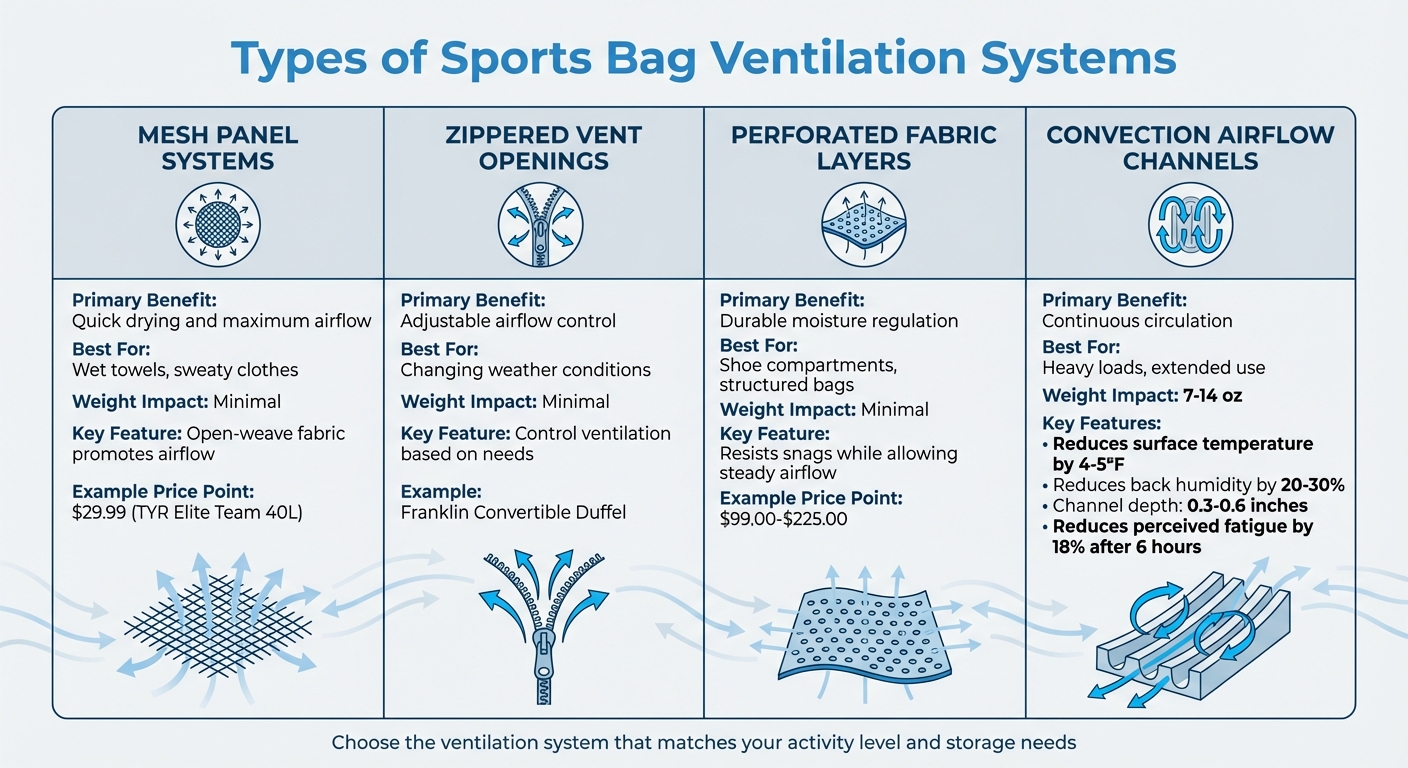
Types of Sports Bag Ventilation Systems: Features and Benefits Comparison
Sports bags come with various ventilation methods designed to manage moisture and odor, giving you the flexibility to choose a bag that suits your lifestyle and activities.
Mesh Panel Systems
Mesh panels use an open-weave fabric that promotes airflow, helping gear dry faster. Manufacturers often pair breathable mesh with traditional fabrics to improve ventilation. As sohan puts it:
"The secret weapon behind a well-ventilated gym bag is breathable fabrics and mesh panels. It’s what stops your gym materials from turning into garbage storage."
Some designs place mesh on back panels to create a space between your body and the bag, improving comfort and airflow. Others integrate mesh directly into main compartments, speeding up the drying process for damp items. A budget-friendly example is the TYR Elite Team 40L Mesh Backpack, available for $29.99, which incorporates this technology.
Zippered Vent Openings
Zippered vents offer adjustable airflow, letting you control ventilation based on your needs. Open the vents wide to dry damp items or partially close them for added weather protection. This feature is especially useful for athletes transitioning between indoor and outdoor activities. High-end bags like the Franklin Convertible Duffel combine these adjustable vents with weather-resistant materials, offering a balance between airflow and protection.
Perforated Fabric Layers
Perforated fabrics are designed with small, strategically placed holes that allow steady airflow while maintaining durability. Unlike mesh, this material resists snags and tears, making it ideal for shoe compartments. It helps regulate humidity and prevents odors from spreading to the rest of your gear. As hudefsport explica:
"Many pickleball bags have a separate shoe compartment with air holes. This keeps shoe smells from spreading to your other gear."
For example, the hudefsport Pickleball Bag (28L), priced at $99.00, uses perforated fabric to manage airflow in shoe compartments. Premium options like the ADV Pickleball Backpack V2, priced at $225.00, combine these layers with additional ventilation features for enhanced performance.
Convection Airflow Channels
Convection channels are designed to create natural airflow throughout the bag, reducing moisture buildup. These systems can lower surface temperatures by 4–5°F and reduce back surface humidity by 20–30% during extended use. Channels are typically 0.3–0.6 inches deep, allowing for effective convection without adding too much bulk. While this technology increases the bag’s weight by 7–14 ounces, it can significantly reduce perceived fatigue – by about 18% – after six hours of use.
| Ventilation Type | Primary Benefit | Best For | Weight Impact |
|---|---|---|---|
| Mesh Panels | Quick drying and maximum airflow | Wet towels, sweaty clothes | Minimal |
| Zippered Vents | Adjustable airflow control | Changing weather conditions | Minimal |
| Perforated Fabric | Durable moisture regulation | Shoe compartments, structured bags | Minimal |
| Airflow Channels | Continuous circulation | Heavy loads, extended use | 7–14 oz |
Benefits of Ventilation Systems in Sports Bags
Moisture Control
Ventilation systems in sports bags are designed to keep air circulating, which speeds up the drying process for sweat-drenched gear. This airflow helps reduce the dampness that bacteria, mold, and mildew thrive on, keeping your bag and its contents in better condition.
Without proper ventilation, trapped moisture can cause serious damage. Fabrics can weaken, leather and foam may deteriorate, and even metal parts can corrode. As Joshua Holcombe from Sport Scents points out:
"Humidity damage accumulates over time. Once mold, mildew, or rust have made their mark, it’s often irreversible."
Many bags include ventilated compartments, like mesh-lined pockets, to keep wet items – like towels or muddy shoes – separate from clean gear. This separation not only prevents moisture from spreading but also allows air to flow freely, especially if you avoid overpacking. By keeping moisture at bay, these systems also help reduce the conditions that lead to unpleasant odors.
Odor Prevention
Beyond protecting the integrity of your gear, ventilation systems are essential for keeping odors under control. By disrupting the warm, damp environment that odor-causing bacteria love, these systems help maintain a fresher bag. As Sohan from gymaccessoriesbd.com explains:
"A well-ventilated gym bag acts as a disposal system for these odors. This feature keeps your gym bag away from lingering and creating a more hygienic storage environment."
Consistent airflow prevents odors from embedding themselves into the fabric and eliminates stagnant air pockets. Features like ventilated shoe compartments with air holes are especially effective at isolating shoe-specific smells. With proper ventilation, your bag stays fresher for longer, reducing the need for constant washing and extending its overall lifespan.
sbb-itb-1e6451b
Designing Custom Sports Bags with Ventilation Systems
Creating a sports bag that effectively handles ventilation starts with thoughtful planning. This involves identifying areas prone to moisture, designing for optimal airflow, and choosing materials that are both durable and breathable. Custom manufacturing offers the flexibility to incorporate these features directly into the design, avoiding the limitations of off-the-shelf solutions.
Strategically placed ventilation features can make a big difference. For instance, mesh-lined compartments for wet items help damp towels and clothes dry faster, while airmesh padding on shoulder straps and back panels minimizes sweat buildup during use. Dedicated shoe compartments with perforated walls not only keep footwear odors contained but also ensure continuous airflow throughout the bag.
Material selection is another key factor. Options like 900D Oxford, recycled polyester (RPET), waterproof nylon, and breathable mesh each serve specific purposes – whether it’s protecting against the weather or promoting internal airflow. Combining waterproof fabrics with well-positioned mesh panels achieves a balance between keeping external moisture out and letting internal humidity escape. This thoughtful approach to ventilation and material choice enhances moisture management and extends the bag’s lifespan.
Customization Options at SACOS DE JUNYUAN

JUNYUAN BAGS takes these principles to the next level, offering custom designs with advanced ventilation features. Their process starts with the development of a 3D Tech Pack within 48 hours, giving you a clear visual of where mesh panels, air holes, and ventilated compartments will be placed. Physical prototypes are ready in just 7–10 days, allowing for hands-on testing before full production begins.
In addition to ventilation, customization options include material choices like 1680D nylon for extra durability or RPET for an eco-friendly alternative. Ventilation features can also be paired with technical add-ons such as RFID-blocking pockets or hydration system compatibility. Branding options – like embroidery, silk printing, heat transfer, or silicone patches – are designed to integrate seamlessly with ventilated areas.
For businesses, the minimum order quantity is typically 500 pieces, though specialized items like golf bags may start at just 100 pieces. Production timelines range from 30 to 45 days after sample approval, with JUNYUAN’s six production lines capable of manufacturing over 200,000 pieces per month.
A standout example of their work is a project for an NCAA basketball team. The team needed 300 custom basketball bags featuring ventilated shoe compartments and ball storage. JUNYUAN delivered the order two days ahead of a tight 20-day schedule, achieving a 0% defect rate. Marvin Zhang, Senior Product Engineer at JUNYUAN BAGS, shared:
"We’ve delivered 5000+ successful custom projects for brands across 30 countries. Let’s create your signature product line."
Maintaining Ventilation Systems for Longevity
A well-maintained ventilation system ensures a sports bag performs effectively over time. Regular upkeep prevents clogged vents, trapped moisture, and unpleasant odors, keeping mesh panels, air holes, and perforated layers in top condition.
Here’s how to care for your bag’s ventilation system.
Cleaning and Maintenance
Hand washing with mild detergent and warm water is the safest way to clean sports bags with ventilation systems. Machine washing can damage structural components and 3D spacer fabrics, which are designed to retain over 90% of their thickness even after 50,000 compression cycles. After each use, empty your bag and clean the interior with disinfecting wipes and the exterior with a damp cloth.
For persistent odors, try soaking the bag overnight in a solution of 1 cup white vinegar and 32 oz water, or sprinkle baking soda inside and let it sit overnight before shaking it out. As BossSquash explica:
"White vinegar is a useful household disinfectant and the perfect ingredient to deodorize a gym bag. The acidity of the vinegar kills odor-causing bacteria and germs".
Pay close attention to mesh areas, zippers, seams, and small compartments where debris and moisture tend to gather. Use a soft brush and mild soap to avoid damaging delicate materials. For particularly stubborn smells, you can wrap the bag in plastic and place it in the freezer overnight to neutralize bacteria. Always air-dry your bag in a well-ventilated area, ideally turning it inside out to allow sunlight to help reduce bacteria. Avoid using harsh chemicals or bleach, as these can harm water-resistant coatings and synthetic mesh.
| Maintenance Task | Frequency | Method |
|---|---|---|
| Airing Out | After every use | Open all zippers and hang in a ventilated area |
| Spot Cleaning | Weekly | Wipe with a damp cloth or disinfecting wipe |
| Deep Wash | Monthly or as needed | Hand wash with mild detergent and air-dry |
| Odor Treatment | As needed | Use baking soda overnight or a vinegar soak |
Proper Storage Practices
Proper storage is just as important as cleaning when it comes to maintaining your bag’s ventilation system.
Always ensure your bag is completely dry before storing it. Damp bags or wet items left inside can restrict airflow and trap moisture, creating the perfect environment for bacteria to thrive. This practice complements the ventilation benefits discussed earlier. As Polygiene suggests:
"Whenever you are finished using your bag for the day, open all the compartments and ensure they are well-ventilated. If possible and practical, turn it inside out and hang it up".
Avoid placing heavy objects on bags with suspended mesh, as this can deform the ventilation channels. Store your bag in a dry, well-ventilated area, away from environments that could soften foam components or structural padding. Foam densities in ventilated systems typically range from 40–70 kg/m³, but exposure to high heat can reduce their effectiveness.
Conclusão
Ventilation systems have transformed sports bags from simple carriers into essential tools for managing gear effectively. As mentioned earlier, innovations like three-way mesh ventilation can cut down perspiration by 25%, while specialized airflow channels help maintain freshness between workouts.
The key lies in smart engineering. Features such as ventilated panels and isolated compartments not only improve airflow but also extend the life of the bag by combating mold, mildew, and fabric wear. These thoughtful design elements make a noticeable difference in performance and durability.
For those in search of reliable, high-performance sports bags, SACOS DE JUNYUAN stands out. With more than 20 years of manufacturing experience and certifications like ISO 9001 and BSCI, they offer fully customizable OEM/ODM services, allowing customers to tailor every detail – from materials to the finished product. Their dedication to advanced ventilation systems and quality design sets a new standard in sports bag manufacturing.
Selecting a bag with an effective ventilation system ensures better hygiene, protects your gear, and keeps you comfortable during use. It’s the difference between a bag that merely carries your equipment and one that actively supports your active lifestyle.
FAQs
How do ventilation systems in sports bags help reduce odors?
Ventilation systems in sports bags are designed with mesh panels or breathable materials to promote continuous airflow. This steady circulation helps to draw out sweat and moisture, keeping your gear dry and minimizing the damp environment where bacteria thrive – bacteria being the primary culprit behind those unpleasant odors.
By ensuring the interior stays dry and fresh, these systems not only help preserve your sports gear but also make your bag much more enjoyable to carry around after tough workouts or games.
What materials are used to make ventilated sports bags?
Ventilated sports bags are designed with breathable mesh fabrics to improve airflow, which helps minimize moisture buildup and unpleasant odors. They often feature tough materials like nylon (such as 420D or 900D) and polyester blends. These fabrics are not only strong and water-resistant but also help wick away moisture, ensuring your gear stays dry and fresh, ready for your next activity.
How can I keep my sports bag’s ventilation system working effectively?
To keep your sports bag’s ventilation system functioning effectively, here are a few practical tips:
- Take out wet or sweaty gear immediately: Leaving damp items in your bag can trap moisture and cause unpleasant odors. Make it a habit to empty your bag as soon as you’re done using it.
- Air out your bag regularly: Turn the bag inside out and place it in a well-ventilated spot to ensure it dries completely. This simple step helps prevent moisture from building up and keeps the airflow intact.
- Clean the ventilation panels carefully: Use a soft cloth or brush to gently remove dirt or lint from the mesh areas. If needed, spot-clean with a mild detergent and warm water, then let it air dry thoroughly.
By keeping your bag clean, dry, and unobstructed, you’ll preserve its ventilation, minimize odors, and help it last longer. JUNYUAN BAGS creates sports bags with reliable ventilation systems to keep your gear fresh and well-protected.



 Telemóvel/What's App/Wechat
 E-Mail
 ADD
ADD