
Protective padding in sports bags is crucial for safeguarding your gear, maintaining bag structure, and ensuring comfort. Here’s a quick breakdown of key points:
- Materiais: EVA foam offers durability and water resistance, PE foam provides structural support, and PU foam prioritizes comfort. Advanced options like gel padding and memory foam enhance shock absorption and fit but may add weight or require frequent replacement.
- Design Features: Padded compartments prevent damage, reinforced stress points extend bag lifespan, and breathable padding manages moisture and odors.
- Sports-Specific Needs: Tennis, golf, and pickleball bags often feature tailored padding for delicate equipment, while bags for basketball and other sports focus on ventilation and organization.
- Maintenance: Handwash with mild soap, air-dry, and store in dry environments to prolong padding performance. Replace padding when it loses shape, flattens, or fails to protect your gear.
For durable, well-padded sports bags, choose materials and designs suited to your gear and transportation needs. Regular cleaning and proper storage can keep your bag functional for years.
Padding Materials for Sports Bags
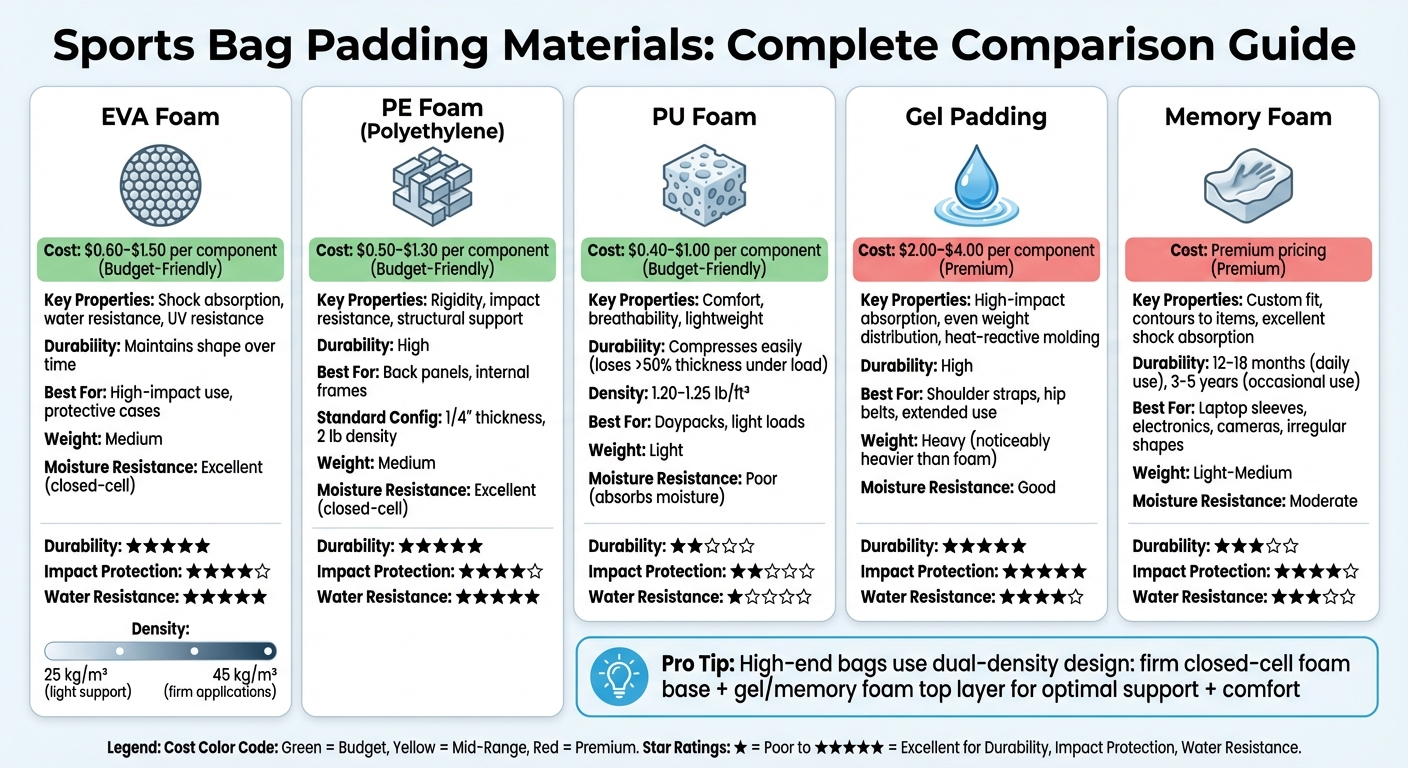
Sports Bag Padding Materials Comparison: EVA, PE, PU, Gel, and Memory Foam
EVA Foam, PU Foam, and PE Foam
Different types of foam play specific roles in sports bags, offering varying levels of protection and comfort. EVA foam stands out for its durability. It’s a closed-cell material known for absorbing shocks, resisting water, and standing up to UV exposure. It costs about $0.60–$1.50 per component and keeps its shape over time, making it a go-to choice for protective cases or sports bags designed for high-impact use.
PE foam (Polyethylene), on the other hand, is valued for its rigidity and impact resistance. Priced at $0.50–$1.30 per component, it’s often used in back panels or internal frames where structural support is key. For standard sports bags, a common configuration is cross-linked PE foam with a 1/4″ thickness and a density of 2 lb, striking a balance between support and flexibility.
PU foam takes a different approach, prioritizing comfort and breathability over impact protection. With a density of 1.20–1.25 lb/ft³ and costing $0.40–$1.00 per component, it’s a lightweight option ideal for daypacks. However, it compresses more easily – often losing more than half its thickness under heavy loads – and doesn’t hold up well in wet conditions, as it can absorb moisture.
"If your priority is durability over softness – especially for heavy loads or wet conditions – closed-cell foam is the material to choose for reliable performance in the long run." – American Society for Testing and Materials (ASTM)
To gauge foam quality, try squeezing it – high-quality foam will spring back immediately. For bags carrying heavy or sharp items, EVA or PE foam is a safer bet to prevent bottoming out. Save PU foam for situations where breathability is more important than durability. These materials form the backbone of padding solutions, setting the stage for more advanced options.
Gel-Based and Memory Foam Padding
For premium cushioning, gel padding e memory foam offer advanced options, albeit at higher costs. Gel padding, priced at $2.00–$4.00 per component, excels at absorbing high-impact forces by distributing weight evenly. It reacts to body heat, molding to the user for customized pressure relief, making it particularly effective in shoulder straps and hip belts for extended use. However, its downside is its weight, which is noticeably heavier than traditional foam options.
Memory foam, meanwhile, is designed for a tailored fit. It contours to delicate or irregularly shaped items, providing excellent shock absorption. This makes it a top choice for laptop sleeves or bags carrying electronics and cameras. However, memory foam’s durability can be a limitation. For daily use, it typically lasts 12 to 18 months, while occasional users may get 3 to 5 years before it begins to compress.
Many high-end sports bags now combine materials for a dual-density effect: a firm closed-cell foam base for structural support, topped with gel or memory foam for comfort where the bag contacts the skin.
Material Density and Protection Levels
The density of the foam plays a critical role in how well it protects your gear. Higher-density foams resist flattening under heavy loads and absorb shocks more effectively, making them ideal for fragile or heavy items. For example, EVA foam comes in densities ranging from 25 kg/m³ for light support to 45 kg/m³ for firmer applications. Sports bags carrying heavy equipment often use high-density closed-cell foam for back panels and bottoms.
Different parts of a bag benefit from tailored density levels. Laptop compartments often feature shock-absorbing closed-cell foam, while shoulder straps might use dual-density foam. This setup includes a firm base layer for load distribution and a softer top layer to reduce pressure points during long carries. While higher density offers better protection, it does add weight, so designers must strike a balance.
In hot climates, lower-density open-cell foams or materials with air mesh can improve airflow, even though they might offer slightly less impact protection. Plus, closed-cell foams like EVA and PE resist mold, mildew, and chemicals, which is a major advantage for bags used in damp environments like locker rooms or outdoor fields.
Design Features for Protective Padding
Padded Compartments for Equipment
Padded compartments are essential for keeping gear organized and protected from impacts. Take the CRBN Pro Team Backpack, for example – it uses internal padding to prevent gear from colliding with each other. Some bags also feature thermal-lined compartments, which help maintain stable temperatures. This is particularly useful for items like pickleball paddles, as it prevents them from warping in high heat. Additionally, customizable internal dividers can be adjusted to fit your gear perfectly, minimizing collisions and friction. For bags designed to carry electronics, padded foam laptop sleeves provide an extra layer of protection, cushioning devices against shocks from accidental drops or rough handling.
Reinforcing these compartments with additional padding at stress points takes durability to the next level.
Reinforced Padding at Stress Points
Certain areas of a bag, like corners, bottoms, and strap connection points, endure significant wear and tear over time. Reinforced padding in these spots can make a big difference. Features like pipe-seamed edges and sturdy strap attachments help prevent tearing and extend the bag’s lifespan. For instance, the CRBN Pro Team Backpack scores a 9/10 durability rating, thanks in part to its heavy-duty reinforcements. Additionally, breathable padding on back panels and shoulder straps not only distributes weight evenly but also protects these stress-prone areas. This is especially valuable for bags that double as duffels and backpacks. When evaluating a bag’s quality, look for details like YKK zippers, known for their durability, and tough exterior materials such as 500D polyester or 1000D Cordura, which resist wear and tear.
Breathable Padding with Moisture Management
Breathable padding plays a key role in managing moisture, complementing the structural reinforcements. Ventilated compartments are designed to prevent moisture buildup, which can lead to damage. A great example is the Six Zero Pro Tour Bag, which includes a fully ventilated mesh shoe compartment that excels at controlling odors.
"Mesh materials offer an ideal balance of airflow and strength. They prevent mold, mildew, and odor while protecting expensive gear from damage caused by trapped moisture." – Jonathan Abbey, President, Fieldtex Products
For sports that involve water exposure, such as swimming or diving, mesh padding offers an additional advantage. It allows for rinsing gear directly in the bag while ensuring thorough drying. Reinforcing mesh seams with folded fabric strips helps prevent unraveling, and some designs even include removable wash-nets or internal liners to separate moisture-prone sections.
For more examples of sports bags with these advanced protective padding features, check out SACOS DE JUNYUAN.
Choosing Padding for Specific Sports and Equipment
Sports-Specific Padding Requirements
Different sports call for padding tailored to the equipment’s size and fragility. Take tennis and pickleball, for example. These sports require protective solutions for delicate surfaces. Pickleball paddles, in particular, benefit from sleeves with semi-rigid exteriors and soft linings to prevent micro-scratches and edge damage during transport. Tennis rackets face similar challenges, but they also need protection to maintain string tension. Factors like heat and humidity can weaken string tension and reduce durability. To counter this, high-performance tennis bags often feature isothermal or thermal-lined compartments – like the Wilson Thermoguard 2.0 – to regulate temperature and humidity.
Golf bags, on the other hand, focus on safeguarding club heads. For air travel, premium golf travel bags use high-impact EVA or polyethylene shells – the same materials trusted by the U.S. military for containers – to endure rough handling. Budget-friendly travel bags typically offer about 5 mm of padding, while professional-grade options, like those used on the PGA Tour, incorporate thicker padding layers and weigh just over 10 lbs.
When it comes to basketball and general sports gear, organization and moisture control are key. These bags often include ventilated compartments to keep shoes and sweaty clothes fresh. Proper ventilation reduces moisture buildup, which can lead to mold. Additionally, foam-padded straps and ventilated back panels are common, ensuring comfort for athletes frequently on the go.
Next, let’s explore how your mode of transportation influences the type of padding you’ll need.
Matching Padding to Transportation Needs
Beyond the specific needs of your equipment, how you transport it plays a major role in determining the right padding. For air travel, hard-shell padding made from high-impact EVA or polyethylene is ideal. High-quality golf travel covers, for example, often start at around $200. For car travel, soft-sided padded bags with internal foam layers are a better fit since they’re easier to store and adapt to tight spaces without compromising protection.
The frequency of use also matters. If you’re a daily player, look for features like S-curve straps, ventilated panels, and sternum supports to distribute weight evenly. Always test the bag with your gear to ensure there are no uncomfortable pressure points. Tournament players and frequent travelers might prefer Tour-style bags with hideaway backpack straps, luggage pass-throughs, and lockable zippers. Entry-level travel bags are often made from durable 600D polyester, while frequent travelers should consider ballistic nylon for its long-term durability.
Environmental factors are another consideration. If you often play outdoors, choose bags with water-repellent coatings and self-standing, wipe-clean bases to protect your gear from wet courts or damp grass.
"Under-sizing leads to overstuffing and busted zippers; over-sizing becomes a drag to carry" – Dianne Eugenio, Ramsports.
Ultimately, match your bag’s capacity to your actual needs. A compact sling bag priced at $59.99 might work for quick sessions, while a premium tour bag, priced between $139.00 and $325.00, offers ample space for tournament days with extra rackets and clothing changes.
For custom sports bags designed with sport-specific padding and transportation needs in mind, SACOS DE JUNYUAN offers tailored solutions built with structural engineering and material expertise to keep your gear safe and secure.
sbb-itb-1e6451b
Maintaining and Extending Padding Performance
Taking care of your bag’s padding doesn’t just ensure better protection – it also helps your bag last longer.
Cleaning and Maintenance Tips
To clean padded sports bags, stick to handwashing with mild soap, warm water, and a soft cloth. Be gentle with the padded areas, and steer clear of harsh chemicals like bleach or ammonia. High heat is another no-go since it can weaken synthetic materials and compromise foam density. For a deeper clean, if your bag’s design allows, remove internal foam or metal framing. Then, soak the bag in soapy water – using a utility sink or bathtub works well – and scrub gently.
"Machine-washing your backpack is not a good idea, as the agitation can damage the straps and hardware while high heat can cause the fabric and padding to become deformed." – Pelican
After washing, air-dry your bag in a well-ventilated space. To help it keep its shape, stuff large padded compartments with dry towels to absorb moisture. If you spill something, blot the area with a dry towel immediately to prevent the liquid from seeping into the padding or fabric. For dirt and debris stuck in tight corners, a handheld vacuum works wonders.
Once your bag is clean, how you store it plays a big role in keeping the padding in good shape.
Storage Recommendations
Always store your bag in a dry, climate-controlled environment. Avoid leaving it in hot car trunks or humid garages, as extreme temperatures and moisture can speed up material breakdown. To keep humidity in check, toss silica gel packets or bamboo charcoal bags into the compartments – these help prevent mold growth. Instead of hanging your bag by its straps, store it flat or leaning against a wall. Prolonged hanging can stretch the seams and wear down the padding.
"Mildew can grow on damp fabric, causing delamination (a breakdown of the bag’s materials) and foul odors (and there is no cure for mildew damage, unfortunately)." – Jane Bianchi, Freelance Writer
Make sure all compartments and pockets are fully open before storing. This allows airflow to dry out any trapped sweat or moisture. If your bag has a stand mechanism, lay it flat during storage rather than relying on the stand, especially on hard floors. Over time, this can strain the stand’s legs, causing the bag to collapse.
Even with the best care, there comes a time when padding needs replacing.
When to Replace Padding
It’s time to consider a new bag if the padding feels flat, holds onto moldy odors that cleaning can’t fix, or loses its shape under weight. Another red flag? If your gear starts showing scratches or dings despite being stored in padded compartments, the padding is likely no longer doing its job.
"Neglected bags are prone to issues like fading, mildew, fraying straps, broken zippers, and even frame warping." – Miranda Nodwell, Vessel Golf
To test your bag’s padding, load it up fully and carry it for five minutes. If you feel pressure points or notice your gear shifting around, the padding has probably collapsed and isn’t distributing weight properly. Also, if your bag can no longer stand upright on its own, it’s a sign that the internal padding or frame has failed.
Taking these steps will ensure your bag stays in top condition for as long as possible.
Conclusão
A well-designed and properly maintained sports bag can make all the difference in ensuring durability and performance. Materials like EVA foam are excellent for shock absorption, while PE foam adds sturdy support. For those seeking a balance, dual-density foam provides layered cushioning, making it ideal for extended use. In compartments like those for laptops, closed-cell foam offers waterproof protection, while mesh-backed or perforated padding in areas prone to moisture helps reduce buildup and extends the lifespan of both the bag and its contents.
Regular maintenance is key to keeping your bag’s padding in top shape. For instance, memory foam padding typically maintains its optimal performance for 12–18 months, depending on usage, after which it may need replacing. Signs like loss of resiliency or visible damage indicate it’s time for an update.
This guide emphasizes the importance of selecting the right padding to protect your gear. Invest in quality and customization to ensure your sports bag meets your needs. Compartments tailored to your equipment’s dimensions minimize internal movement and reduce the risk of damage during transport.
"Designing your own saco de golfe allows you to create a unique and personalized accessory to enhance your whole golfing experience." – Gloria, Junyuan Bags
For fully customized sports bags with specialized padding and compartment layouts, check out SACOS DE JUNYUAN.
FAQs
What type of foam is best for protecting fragile sports equipment?
EVA foam stands out as an excellent choice for protecting delicate sports equipment. Known for its superior shock absorption, it offers both durability and resistance to losing its shape over time. Its soft yet sturdy composition keeps your gear well-cushioned and secure, whether you’re transporting it or using it in action.
What’s the best way to care for the padding in my sports bag to make it last longer?
To keep the padding in your sports bag in good shape, a little regular care goes a long way. Avoid folding or pressing down on the padding too much, as this can reduce its ability to protect your gear. If it gets dirty or sweaty, clean it gently using mild soap and water – harsh chemicals can harm the material, so steer clear of those.
Make it a habit to check the padding for any signs of wear or damage. When you’re not using the bag, store it in a cool, dry spot to keep moisture and heat from causing issues. These simple steps can help your bag’s padding stay functional and last much longer.
How do I know when to replace the padding in my sports bag?
If the padding in your sports bag starts to show signs of wear – like fraying, tears, or thinning – it’s a clear signal that it’s time for a replacement. Over time, padding loses its cushioning, making it less effective at protecting your gear.
Feeling discomfort while carrying your bag or noticing that your equipment isn’t as well-protected as it used to be are also strong indicators that the padding needs attention. By checking the condition of your bag’s padding regularly, you can ensure it stays comfortable to carry and keeps your gear safe.



 Telemóvel/What's App/Wechat
 E-Mail
 ADD
ADD